🎯시작 전 목표
- SQL 문법 실전문제 4번~ 풀기
💻Today I learned
✔ SQL 문법 실전문제 4번~ 풀기
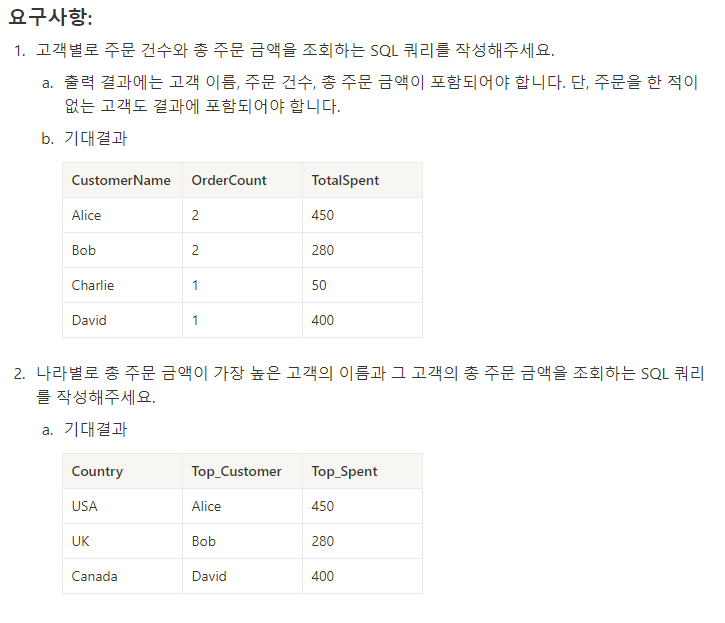
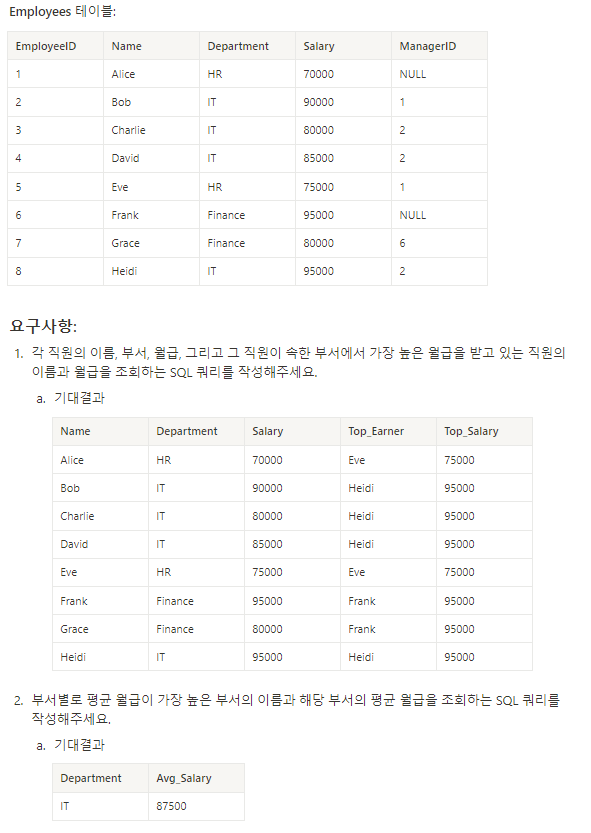
실전문제 4번
갑자기 난이도가 급상승했다.
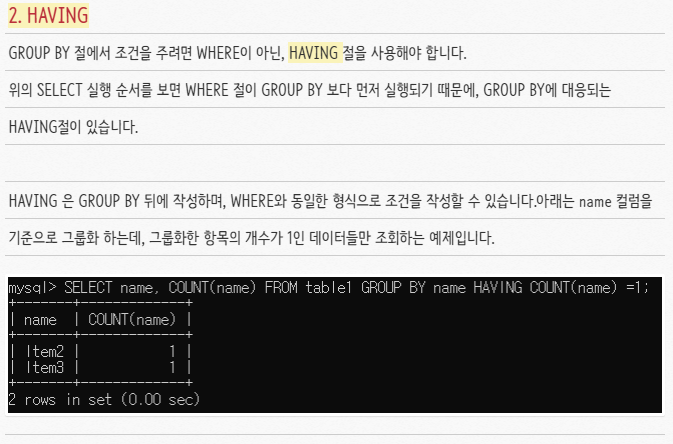
더군다나 Having이라는 초면인 문법을 사용하라는 요구가 있어 찾아보았다.
아하~
더군다나 캡쳐에는 나와있지 않지만, 두 문제 모두 subquary, join, group by, having등을 사용해 풀 수 있어야 한다는 조건이 있는데, 필수적으로 모두 사용해야 한다는 것인지, 적재적소로 알맞게 사용하라는 것인지 잘 모르겠다.
덤으로 데이터베이스도 만들어야하는 상홯
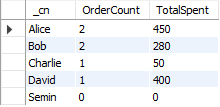
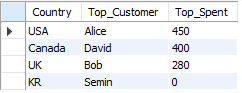
일단은 되도록 많이 사용해 쿼리를 깔끔하게 만든다는 생각으로 작성해보았다.Select _cn, COUNT(_oi) OrderCount, coalesce(sum(_ta), 0) TotalSpent from( Select c.CustomerName _cn, o.orderID _oi, o.totalAmount _ta from Customers c left join Orders o on c.CustomerID = o.CustomerID ) a group by 1 having count(_oi) >= 0; Select c.Country, c.CustomerName Top_Customer, coalesce(sum(o.TotalAmount),0) Top_Spent from Customers c left join Orders o on c.CustomerID = o.CustomerID group by 1, 2 having coalesce(sum(o.TotalAmount),0) = ( Select max(totalSpent) from ( Select c2.Country, coalesce(sum(o2.TotalAmount),0) totalSpent from Customers c2 left join Orders o2 on c2.CustomerID = o2.CustomerID group by 1, c2.CustomerID ) ct where ct.Country = c.Country )order by 3 desc;인생은 생각대로만 되지는 않는다는 것을 다시금 깨닫게 되었다.
쿼리의 실행결과는 다음과 같다.
참고로 semin은 원래 예제에 없는 데이터인데 확인을 위해 넣어봤다.
다음 레벨로 넘어가도록 하자.
실전문제 4-2번이 문제도 전 문제와 마찬가지로 subquary, join, group by, having등을 사용해 풀 수 있어야 한다는 조건이 있는 것을 보아 꼭 다 쓰란 말은 아니고 가진 능력을 여과없이 활용해 보다 효율적으로 쿼리를 작성하라는 의도가 아닌가 싶다.
또한 여기서 추측할 수 있는 건, 한 테이블을 subquary를 이용해 여러 번 사용하는 것이 가능하다는 사실이다.
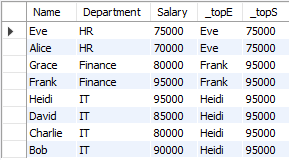
이를 생각하며 작성한 쿼리는 다음과 같다.Select e.Name, e.Department, e.Salary, top_earner._topE, top_earner._topS from employees e join ( Select Department, Name _topE, Salary _topS from Employees where (Department, Salary) in(Select Department, MAX(Salary) from Employees group by 1) ) top_earner ON e.Department = top_earner.Department;첫 번째 문제는 어렵지 않게 풀 수 있었으나
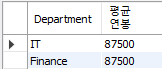
두 번째 문제는 간단한 걸 꼬아서 하려니 되려 힘들었다.Select Department, round(avg(Salary)) from Employees group by 1 order by 2 desc limit 1; //그냥 이렇게 하면 되는 거 아닌가? 싶은 생각이 들었지만.. Select Department, round(avg(Salary)) '평균연봉' from Employees group by 1 having avg(Salary) = ( Select max(avg_s) from ( Select avg(Salary) avg_s from Employees group by Department)avg_salaries );두 쿼리의 결과는 이러하다.
나는 자비로워서 공동 1등도 1등으로 취급했지만 그게 싫다면 끝에 limit 1을 붙여도 된다.
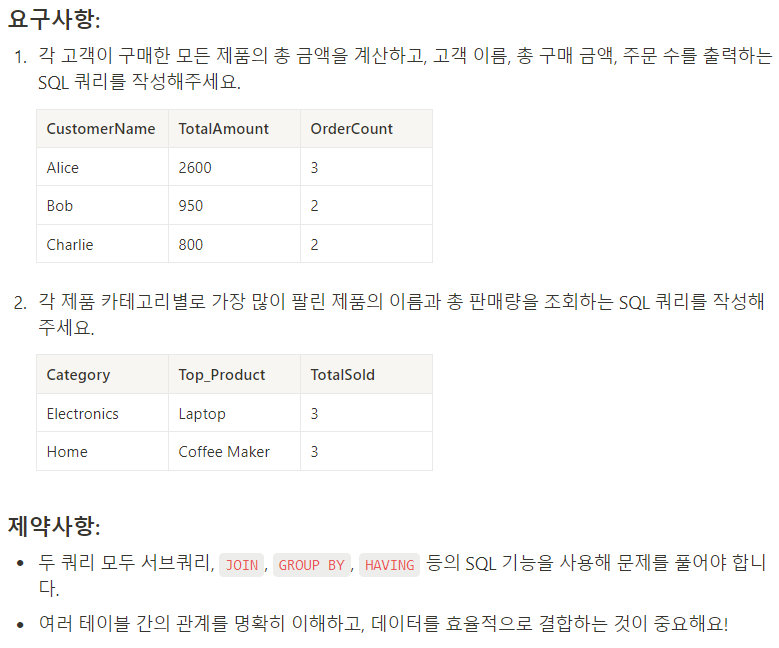
실전문제 5번아 3줄요약좀요
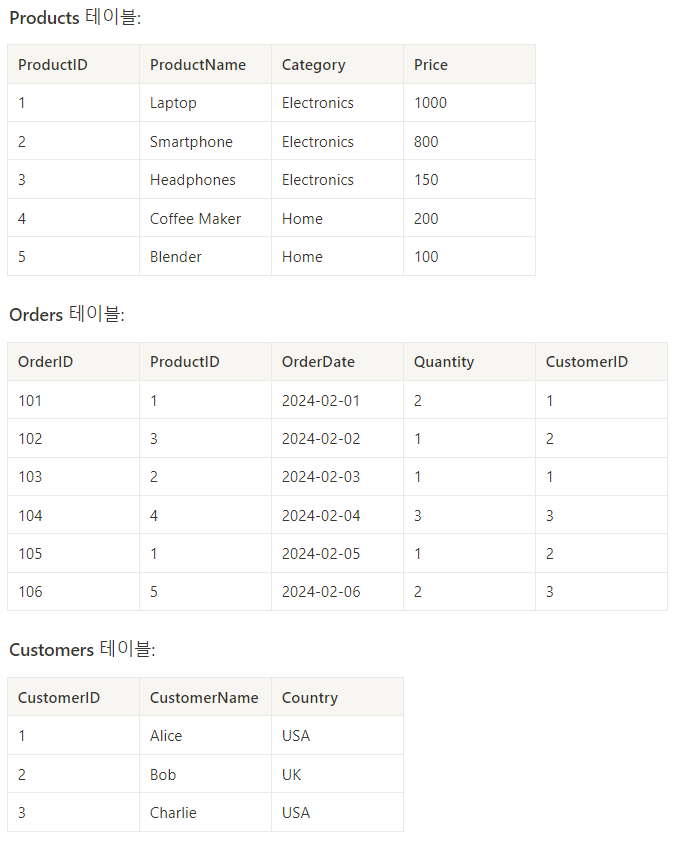
매우 귀찮지만 끝이 얼마남지 않은 관계로 테이블부터 추가해줬다.
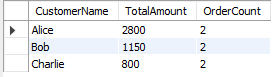
차근차근 하니 생각보다 할만하고 슬슬 감이 잡히는 것 같다.Select CustomerName, _ta TotalAmount, _cnt OrderCount from customers c join (Select CustomerID _ci, sum(p.price*o.quantity) _ta, count(1) _cnt from orders o left join products p on o.ProductID = p.ProductID group by 1 )_aa on _aa._ci= c.CustomerID; Select p.Category, p.ProductName, SUM(o.Quantity) TotalSolid from Products p left join Orders o on p.ProductID = o.ProductID group by 1,2 having sum(o.Quantity) = ( Select max(total_solid) from( Select sum(o2.Quantity) total_solid from Products p2 left join Orders o2 on p2.ProductID = o2.ProductID where p2.Category = p.Category group by p2.ProductID ) dsa );쿼리 실행결과는 다음과 같다.
대망의 마지막 문제가 남았다.
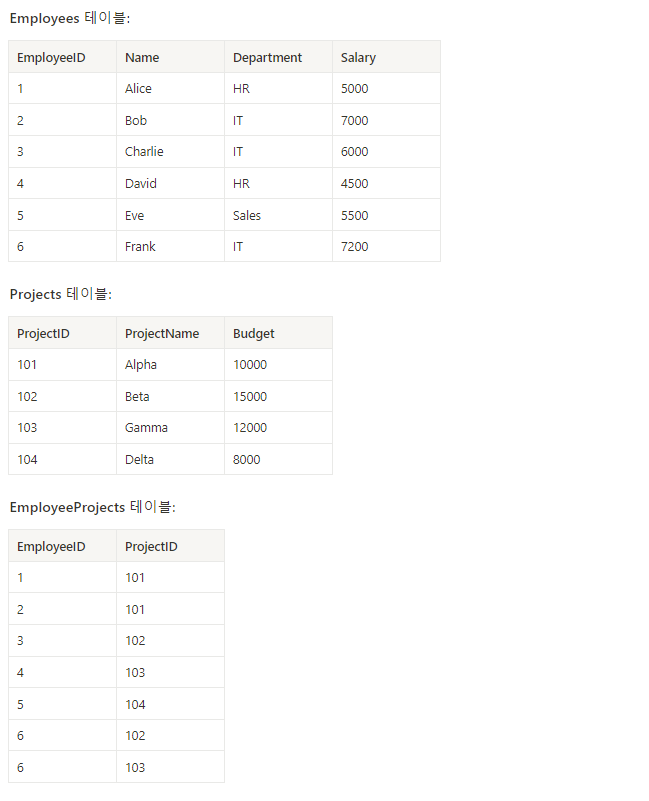
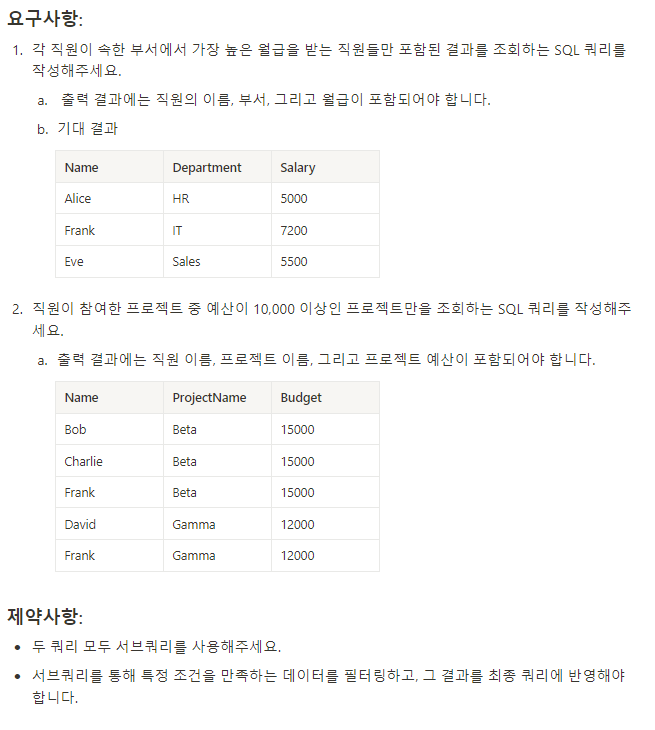
실전문제 5-2번 Last
문제만 봤을 땐 그다지 어려워 보이진 않는다.
Select e.Name, e.Department, e.Salary from Employees e join (
    Select Department, max(Salary) MaxSalary from Employees group by Department
	) max_salaries on e.Department = max_salaries.Department and e.Salary = max_salaries.MaxSalary;

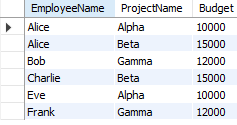
Select e.Name AS EmployeeName, p.ProjectName, p.Budget from Employees e join EmployeeProjects ep ON e.EmployeeID = ep.EmployeeID
	join Projects p ON ep.ProjectID = p.ProjectID where p.ProjectID in( Select ProjectID from Projects where Budget >= 10000 );
실행 결과는 다음과 같다.
이로써 사전캠프 퀘스트 문제는 모두 풀었다.


#마치며
물론 오늘 공부한 게 끝은 아니고 글을 올린 뒤 데일리 루틴도 최대한 풀어 볼 생각이지만
자잘자잘하게 일일이 올리긴 좀 그래서 앞으로는 고난을 겪은 문제만을 가지고 와서 정리하는 것이 낫다고 생각한 만큼 양보단 질에 초점을 맞춰 TIL도 마찬가지로 점점 개선해나가야 하겠다는 생각이 든다.