백준 2841 java : 큐, 스택
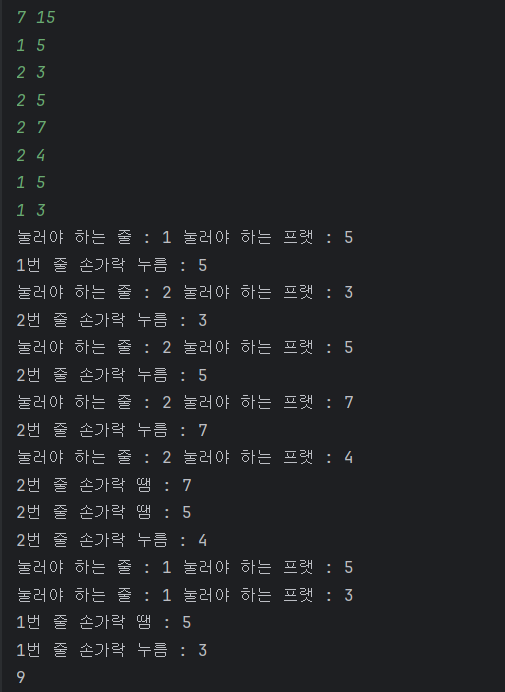
왜 큐, 스택 자료구조를 사용했는가?
사실 큐는 필요가 없었다. 순서대로 나오게 구현하면 배열도 상관없다. 대신 예외를 발생하지 않는 offer,peek, poll 메서드를 연습했다.
각 줄을 스택으로 만들어,
- 해당하는 라인을 확인해서, 현재 누르고 있는 프랫이 눌러야 하는 프랫보다 높다면, 낮은 프랫이 나올때까지 스택에서 꺼내기
- 누르고 있는 프랫이 눌러야 하는 프랫과 같다면 다음 순회로 통과
- 프랫을 누를 수 있는 조건이 되면 해당하는 줄의 해당하는 프랫 누르고 스택에 넣기
을 반복해서 손가락이 움직인 횟수를 갱신한다.
import java.util.*;

public class BJ2841 {
    static class Melody{
        int lineNum;
        int fretNum;
    }

    static Scanner scanner = new Scanner(System.in);
    static int N, P;
    static Queue<Melody> melodyQueue = new LinkedList<>();

    public static void main(String[] args) {
        inputData();
        System.out.println(findAnswer());

        scanner.close();
    }

    public static void inputData(){
        int i;

        N = scanner.nextInt();
        P = scanner.nextInt();
        for(i = 0; i < N; i++){
            Melody melody = new Melody();

            melody.lineNum = scanner.nextInt();
            melody.fretNum = scanner.nextInt();
            melodyQueue.offer(melody);
        }
    }

    public static int findAnswer(){
        int answer = 0;
        int nextLine, nextFret;
        int i;

        Stack<Integer>[] guitar = new Stack[7];
        for (i = 1; i <= 6; i++) {
            guitar[i] = new Stack<>();
        }

        while(!melodyQueue.isEmpty()){
            nextLine = melodyQueue.peek().lineNum;
            nextFret = melodyQueue.peek().fretNum;
            melodyQueue.poll();

            System.out.println("눌러야 하는 줄 : " + nextLine + " 눌러야 하는 프랫 : " + nextFret);//디버그

            //해당 라인에 누르고 있는 프랫이 있고, 눌러야 하는 프랫이 가장 높은 누르고 있는 프랫보다 낮은 경우
            while (!guitar[nextLine].isEmpty() && guitar[nextLine].peek() > nextFret) {

                System.out.println(nextLine + "번 줄 손가락 땜 : " + guitar[nextLine].peek());//디버그

                guitar[nextLine].pop();//해당 라인에 앞으로 눌러야 하는 프랫보다 낮은 프랫이 나올 때까지 손가락 땜
                answer++;
            }

            if (!guitar[nextLine].isEmpty() && guitar[nextLine].peek() == nextFret) {//누르고 있는 프랫이 눌러야 하는 프랫이랑 동일하면 그대로 통과
                continue;
            }

            //해당 라인을 누르는 손이 없는 경우 또는 눌러야 하는 프랫이 가장 높은 누르고 있는 프랫보다 높은 경우 손가락 하나만 누르면 됨
            guitar[nextLine].push(nextFret);
            System.out.println(nextLine + "번 줄 손가락 누름 : " + guitar[nextLine].peek());//디버그
            answer++;
        }

        return answer;
    }
}
