
📅 2025-12-15
➡️ Shadcn/ui, Next js Supabase에 대해 새롭게 알게 된 것 또는 헷갈리는 부분 정리
🔎 학습 리마인드
📌 Shadcn/ui
🔗 The Foundation for your Design System - shadcn/ui
- vercel에서 만든 UI 도구로 Tailwind CSS 기반으로 하는 컴포넌트 라이브러리
설치
npx shadcn@latest init예시 - 버튼
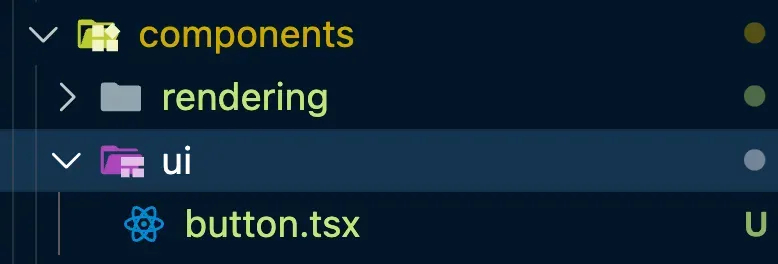
npx shadcn@latest add button- components 폴더 안에 ui 폴더가 생성 되고, button.tsx 파일이 생성됨
📌 Next.js + Supabase
🔗 Creating a Supabase client for SSR | Supabase Docs
- Next.js(App Router)에서 Supabase를 사용하려면, 클라이언트 / 서버 / 미들웨어를 분리해서 설정해야 함
설치
npm i @supabase/supabase-js @supabase/ssr환경 변수 설정
.env파일NEXT_PUBLIC_SUPABASE_URL=supabase_project_url NEXT_PUBLIC_SUPABASE_PUBLISHABLE_KEY=supabase_publishable_key
Supabase Client 구조
| 구분 | 사용 위치 | 특징 |
|---|---|---|
| client.ts | Client Component | 브라우저용 |
| server.ts | Server Component / Server Action | 요청마다 새로 생성 |
| middleware.ts | Middleware | 세션 유지 / 보호 라우트 |
utils/client.tsimport { createBrowserClient } from "@supabase/ssr"; export function createClient() { return createBrowserClient( process.env.NEXT_PUBLIC_SUPABASE_URL!, process.env.NEXT_PUBLIC_SUPABASE_PUBLISHABLE_KEY! ); } const browserClient = createClient(); export default browserClient;.env의 정보들을 이용해서 클라이언트를 생성하고, 브라우저에서 1개의 클라이언트를 공유하여 사용
utils/server.tsimport { createServerClient } from '@supabase/ssr' import { cookies } from 'next/headers' export async function createClient() { const cookieStore = await cookies() return createServerClient( process.env.NEXT_PUBLIC_SUPABASE_URL!, process.env.NEXT_PUBLIC_SUPABASE_PUBLISHABLE_KEY!, { cookies: { getAll() { return cookieStore.getAll() }, setAll(cookiesToSet) { try { cookiesToSet.forEach(({ name, value, options }) => cookieStore.set(name, value, options)) } catch { // The `setAll` method was called from a Server Component. // This can be ignored if you have middleware refreshing // user sessions. } }, }, } ) };- 서버에서는 클라이언트를 생성하고, 사용할 때마다
createClient를 불러서 사용
- 서버에서는 클라이언트를 생성하고, 사용할 때마다
utils/middleware.tsimport { createServerClient } from '@supabase/ssr' import { NextResponse, type NextRequest } from 'next/server' export async function updateSession(request: NextRequest) { let supabaseResponse = NextResponse.next({ request, }) // With Fluid compute, don't put this client in a global environment // variable. Always create a new one on each request. const supabase = createServerClient( process.env.NEXT_PUBLIC_SUPABASE_URL!, process.env.NEXT_PUBLIC_SUPABASE_PUBLISHABLE_KEY!, { cookies: { getAll() { return request.cookies.getAll() }, setAll(cookiesToSet) { cookiesToSet.forEach(({ name, value }) => request.cookies.set(name, value)) supabaseResponse = NextResponse.next({ request, }) cookiesToSet.forEach(({ name, value, options }) => supabaseResponse.cookies.set(name, value, options)) }, }, } ) // Do not run code between createServerClient and // supabase.auth.getClaims(). A simple mistake could make it very hard to debug // issues with users being randomly logged out. // IMPORTANT: If you remove getClaims() and you use server-side rendering // with the Supabase client, your users may be randomly logged out. const { data } = await supabase.auth.getClaims() const user = data?.claims if ( !user && !request.nextUrl.pathname.startsWith('/login') && !request.nextUrl.pathname.startsWith('/auth') ) { // no user, potentially respond by redirecting the user to the login page const url = request.nextUrl.clone() url.pathname = '/login' return NextResponse.redirect(url) } // IMPORTANT: You *must* return the supabaseResponse object as it is. If you're // creating a new response object with NextResponse.next() make sure to: // 1. Pass the request in it, like so: // const myNewResponse = NextResponse.next({ request }) // 2. Copy over the cookies, like so: // myNewResponse.cookies.setAll(supabaseResponse.cookies.getAll()) // 3. Change the myNewResponse object to fit your needs, but avoid changing // the cookies! // 4. Finally: // return myNewResponse // If this is not done, you may be causing the browser and server to go out // of sync and terminate the user's session prematurely! return supabaseResponse }- 세션 자동 갱신
- 새로고침 시 로그아웃 방지
- 보호된 페이지 접근 제어