
[BST] Binary Search Tree Insertion
난이도: ★☆☆☆☆ • solved on: 2025-12-07
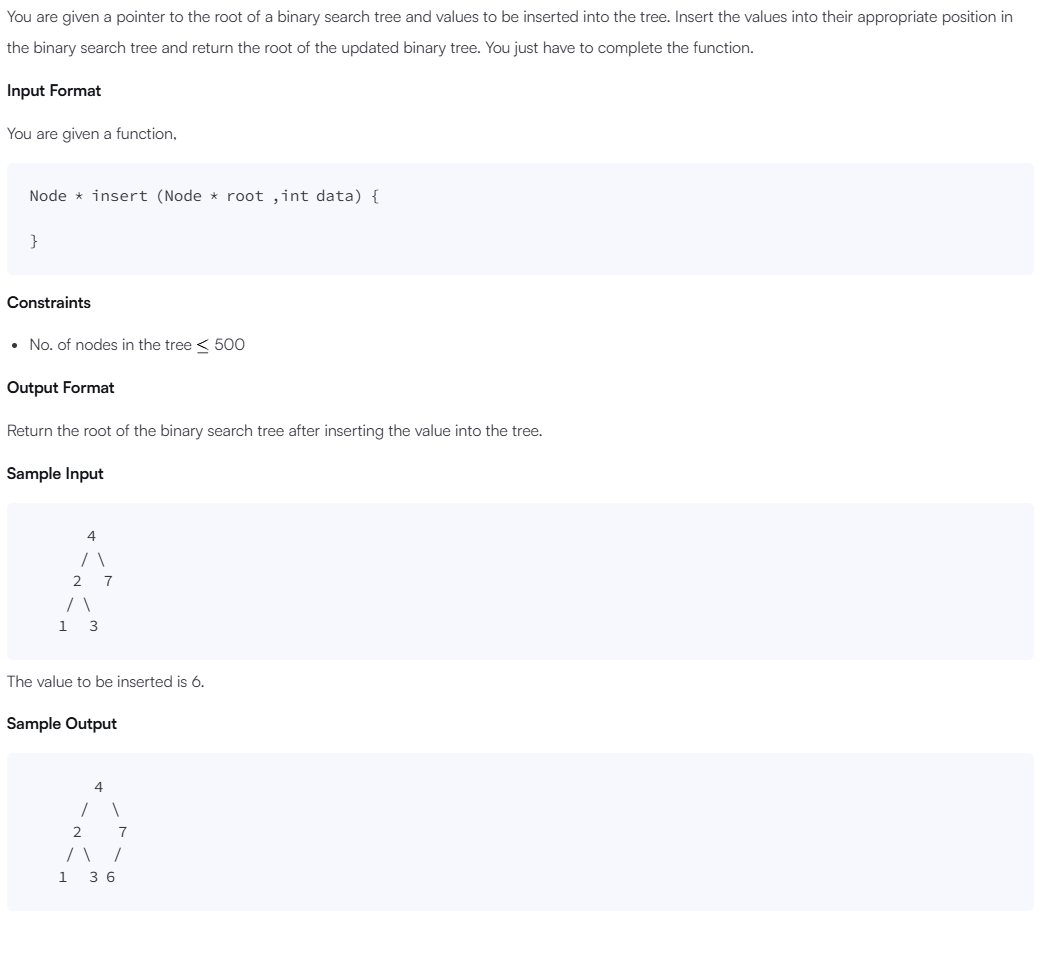
문제 요약
- 문제 유형: 이진 탐색 트리(BST), 재귀·반복 삽입
- 요구사항: 주어진 BST에
data값을 삽입한 뒤 root 노드 전체를 반환해야 한다.
사용 개념
-
자료구조
Node:data,left,right를 가지는 기본 트리 구조
-
알고리즘/기법
-
BST 규칙:
data < node.data→ 왼쪽 이동data > node.data→ 오른쪽 이동
-
재귀 또는 반복 기반 삽입
-
-
핵심 키워드
- BST property
- insertion
- traversal without modifying existing structure
풀이 아이디어 및 코드
방법 1: 반복문 기반 최초 풀이
문제 분해
root == null인 경우 초기 트리를 만드는 상황이므로new Node(data)반환.그렇지 않으면
currentNode를 루트부터 따라 내려가며:
data > currentNode.data→ 오른쪽으로 이동data <= currentNode.data→ 왼쪽으로 이동해당 위치에 자식이 없으면 새 노드를 삽입하고 전체 트리의 root 반환.
핵심 로직 흐름
current = root
while (current != null):
    if data < current.data:
        왼쪽이 null이면 삽입 후 종료
        아니면 왼쪽으로 계속 이동
    else:
        오른쪽이 null이면 삽입 후 종료
        아니면 오른쪽으로 이동
코드
public static Node insert(Node root, int data) {
    if (root == null) {
        return new Node(data);
    }

    Node currentNode = root;

    while (currentNode != null) {
        if (currentNode.data < data) {
            if (currentNode.right == null) {
                currentNode.right = new Node(data);
                return root;
            }
            currentNode = currentNode.right;
            continue;
        }

        if (data <= currentNode.data) {
            if (currentNode.left == null) {
                currentNode.left = new Node(data);
                return root;
            }
            currentNode = currentNode.left;
            continue;
        }
    }
    return root;
}
예외 처리
- 초기 트리 생성 시(
root == null)을 반드시 고려해야 한다. - 빈 트리에서부터 삽입을 반복 호출하는 구조이므로
null케이스 없으면 실패한다.
방법 2: 재귀 기반 풀이
재귀를 쓰면 코드를 크게 줄이면서 BST 삽입 규칙을 그대로 표현할 수 있다.
문제 분해
root == null이면 삽입 위치 도달 →new Node(data)반환.data < root.data→ 왼쪽 서브트리에 삽입.data > root.data→ 오른쪽 서브트리에 삽입.- 자식이 갱신된 root를 그대로 반환.
핵심 로직 흐름
if root == null → 새 노드 생성
if data < root.data → root.left = insert(root.left, data)
if data > root.data → root.right = insert(root.right, data)
return root
코드
public static Node insert(Node root, int data) {

    if (root == null) {
        return new Node(data);
    }

    if (data <= root.data) {
        root.left = insert(root.left, data);
    } else {
        root.right = insert(root.right, data);
    }

    return root;
}
시간·공간 복잡도
| 방법 | 시간 복잡도 | 공간 복잡도 |
|---|---|---|
| 방법 1(반복문) | 평균 O(h), 최악 O(N) | O(1) |
| 방법 2(재귀) | 평균 O(h), 최악 O(N) | O(h) (재귀 스택) |
(h는 트리 높이, N은 전체 노드 수)
어려웠던 점
root가 처음에는 null이며, 삽입 요청을 반복 호출해 트리를 구성한다는 점을 알기 전까지root == null케이스를 고려하지 못했다.- 이미 완성된 트리에 삽입한다고 생각해 문제 의도와 입력 구조를 오해한 점이 있었다.
배운 점 및 팁
- 재귀 방식이 논리적으로 가장 직관적이며 유지보수가 쉽다. (하지만 효율적이진 않다)
- 반복 방식은 재귀 오버헤드가 없고 스택 사용이 없어 효율적이다. 상황에 따라 선택해도 된다.
- BST 문제는
while(true)보다는 빠른 반환(return) 패턴이 더 깔끔하게 동작한다.
참고 및 링크
- 문제 링크: https://www.hackerrank.com/challenges/binary-search-tree-insertion/problem
- 참고 블로그/깃허브: 없음
추가 연습 문제

생각이 현실이 될 수 있도록 노력하는 중입니다.