Software Testing Life Cycle (STLC): A Complete Guide to Building Better Software Quality
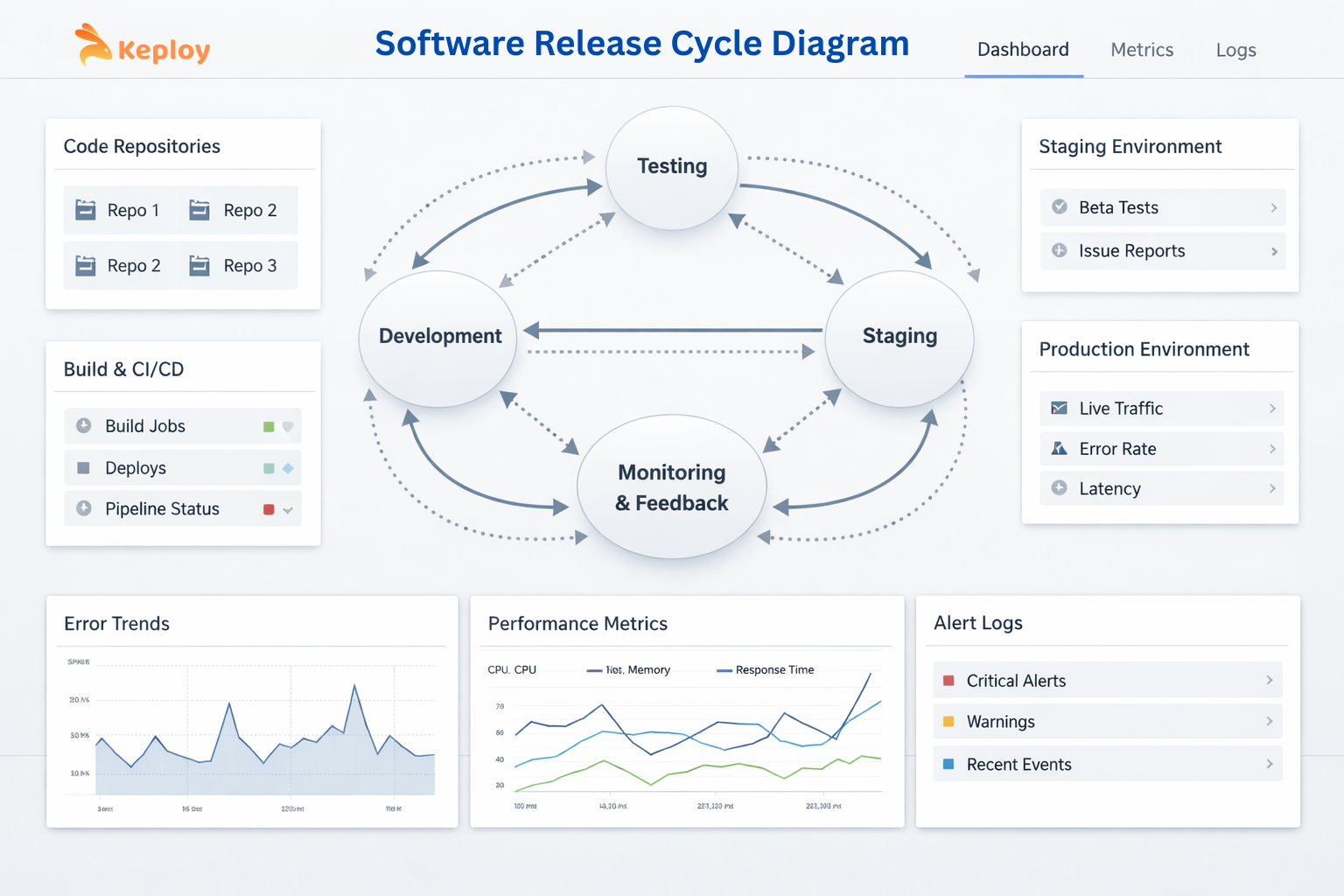
Software quality does not happen by accident.
Behind every reliable application is a structured testing process designed to identify defects, validate functionality, and ensure a smooth user experience.
As software systems become more complex, testing can no longer be treated as a final step before release. Modern engineering teams need organized workflows that integrate quality assurance throughout development.
That’s where the Software Testing Life Cycle (STLC) becomes essential.
The Software Testing Life Cycle provides a systematic approach to software testing by defining clear phases, objectives, deliverables, and responsibilities.
Instead of testing randomly, STLC helps teams follow a structured process that improves software quality, reduces production issues, and accelerates delivery.
What Is the Software Testing Life Cycle?
The Software Testing Life Cycle (STLC) is a sequence of testing activities performed during software development to ensure the application meets quality standards.
STLC defines:
- Testing phases
- Objectives for each stage
- Required deliverables
- Validation processes
- Exit criteria
It helps teams manage testing activities in a disciplined and organized manner.
The main goal of STLC is to ensure software works correctly, performs reliably, and meets business requirements before release.
Why STLC Matters
Many software failures occur because testing is rushed, inconsistent, or poorly planned.
Without a structured testing lifecycle, teams often face:
- Missed defects
- Incomplete test coverage
- Delayed releases
- Poor communication
- Increased production bugs
- Higher maintenance costs
STLC helps reduce these problems by introducing clear testing workflows.
It improves:
- Testing efficiency
- Collaboration
- Quality assurance
- Release confidence
- Defect management
For modern Agile and DevOps environments, a strong testing lifecycle is critical for continuous delivery.
Phases of the Software Testing Life Cycle
The Software Testing Life Cycle typically consists of several important phases.
Each phase has specific goals and outputs.
1. Requirement Analysis
The first stage of STLC involves understanding project requirements.
Testing teams analyze:
- Functional requirements
- Business logic
- System behavior
- Technical specifications
- User expectations
The objective is to identify:
- Testable requirements
- Testing scope
- Potential risks
- Automation opportunities
At this stage, testers collaborate closely with developers, business analysts, and stakeholders.
A clear understanding of requirements helps prevent confusion later in the project.
2. Test Planning
Test planning is one of the most important stages in STLC.
During this phase, teams define the overall testing strategy.
This includes:
- Testing objectives
- Resource allocation
- Test schedules
- Tool selection
- Budget estimation
- Risk assessment
- Test environment requirements
The primary deliverable is the Test Plan document.
A strong test plan helps teams execute testing efficiently and avoid delays.
3. Test Case Development
In this phase, testers create test scenarios and test cases based on project requirements.
Test cases define:
- Inputs
- Expected outputs
- Execution steps
- Validation conditions
Teams may also prepare:
- Test scripts
- Automation workflows
- Test data
- Traceability matrices
Good test cases improve coverage and reduce the chances of missing critical defects.
4. Test Environment Setup
Testing requires environments that simulate real-world application behavior.
During this phase, teams configure:
- Servers
- Databases
- APIs
- Network settings
- Testing tools
- Authentication systems
The testing environment should closely resemble production.
Environment stability is important for reliable test execution.
Poor environments often cause inaccurate results and flaky tests.
5. Test Execution
This is the stage where testers execute test cases.
The application is validated against expected behavior.
During execution, teams identify:
- Functional issues
- UI problems
- Performance bottlenecks
- Integration failures
- Security vulnerabilities
Defects discovered during testing are logged and shared with development teams for resolution.
Test execution may involve:
- Manual testing
- Automated testing
- API testing
- Performance testing
- Regression testing
This phase continues until testing objectives are achieved.
6. Defect Reporting and Tracking
When issues are identified, they are documented in defect tracking systems.
A defect report usually includes:
- Bug description
- Severity level
- Steps to reproduce
- Screenshots or logs
- Environment details
Developers fix the issues, and testers retest the application.
Efficient defect management improves communication between QA and development teams.
7. Test Closure
The final phase of STLC evaluates testing outcomes.
Teams analyze:
- Test coverage
- Defect metrics
- Test execution results
- Release readiness
- Lessons learned
A test closure report summarizes the overall testing process.
This phase also helps teams improve future testing strategies.
Key Benefits of the Software Testing Life Cycle
Organizations that follow a structured STLC process gain several advantages.
Improved Software Quality
STLC helps teams identify defects early.
Early bug detection reduces production failures and improves user experience.
Better Test Coverage
A structured testing approach ensures critical workflows are validated thoroughly.
This minimizes the risk of missing important scenarios.
Faster Release Cycles
Well-planned testing workflows reduce confusion and delays.
Automation and CI/CD integration further accelerate delivery.
Reduced Costs
Fixing defects early is significantly cheaper than resolving production incidents.
STLC helps reduce long-term maintenance costs.
Enhanced Collaboration
Defined testing processes improve communication between:
- Developers
- QA teams
- Product managers
- Stakeholders
This leads to smoother project execution.
STLC vs SDLC
Many people confuse STLC with SDLC.
Although they are related, they serve different purposes.
SDLC (Software Development Life Cycle)
SDLC focuses on the complete software development process, including:
- Requirement gathering
- Design
- Development
- Testing
- Deployment
- Maintenance
STLC (Software Testing Life Cycle)
STLC specifically focuses on testing activities within the development process.
It ensures quality validation at every testing stage.
In simple terms:
- SDLC builds the software
- STLC validates the software
Challenges in STLC
Despite its advantages, implementing STLC effectively can be challenging.
Common issues include:
- Incomplete requirements
- Tight deadlines
- Unstable environments
- Poor test data management
- Communication gaps
- Frequent requirement changes
Modern Agile development environments require testing teams to adapt quickly.
This has increased the importance of automation and continuous testing.
Role of Automation in STLC
Automation has transformed modern software testing.
Instead of relying entirely on manual execution, teams now automate:
- Regression tests
- API testing
- Smoke testing
- Performance validation
- CI/CD workflows
Automation improves:
- Speed
- Accuracy
- Repeatability
- Scalability
Tools like Selenium, Playwright, Cypress, and Keploy help teams streamline testing workflows.
Automation is especially important for applications with frequent deployments.
STLC in Agile and DevOps
Traditional testing models often treated testing as a final development phase.
Modern Agile and DevOps practices integrate testing throughout the development lifecycle.
Today, testing happens continuously.
This approach is known as Continuous Testing.
Continuous testing enables:
- Faster feedback
- Earlier defect detection
- Safer deployments
- Improved collaboration
STLC remains highly relevant, but its implementation has evolved to support faster release cycles.
Best Practices for an Effective STLC Process
Organizations can improve software quality by following these best practices:
Start Testing Early
Early testing reduces the cost of fixing defects.
Requirement-level testing helps identify issues before development begins.
Automate Repetitive Testing
Automation improves efficiency for repetitive workflows.
Regression testing is especially valuable for automation.
Maintain Clear Documentation
Well-documented test cases and reports improve collaboration and traceability.
Use Realistic Test Data
Testing with production-like data improves accuracy and reliability.
Continuously Improve Testing Processes
Teams should regularly evaluate testing outcomes and optimize workflows.
Continuous improvement strengthens long-term software quality.
The Future of Software Testing Life Cycle
The future of STLC is increasingly driven by:
- AI-assisted testing
- Self-healing automation
- Predictive analytics
- Intelligent test generation
- Cloud-based testing
Testing is becoming faster, smarter, and more integrated with development workflows.
Organizations are shifting from traditional reactive testing to proactive quality engineering.
This transformation is redefining how teams approach software reliability.
Final Thoughts
The Software Testing Life Cycle provides a structured foundation for delivering high-quality software.
By organizing testing into clear phases, STLC helps teams improve efficiency, reduce defects, and build more reliable applications.
As software systems continue to grow in complexity, disciplined testing processes become even more important.
Whether teams follow Agile, DevOps, or traditional development models, a strong STLC strategy remains essential for successful software delivery.
In modern software engineering, quality is not just about finding bugs.
It’s about building confidence in every release.
And the Software Testing Life Cycle plays a central role in making that possible.
Reference : https://keploy.io/blog/community/software-testing-life-cycle
