Top UAT Testing Software Tools Every QA Team Should Know
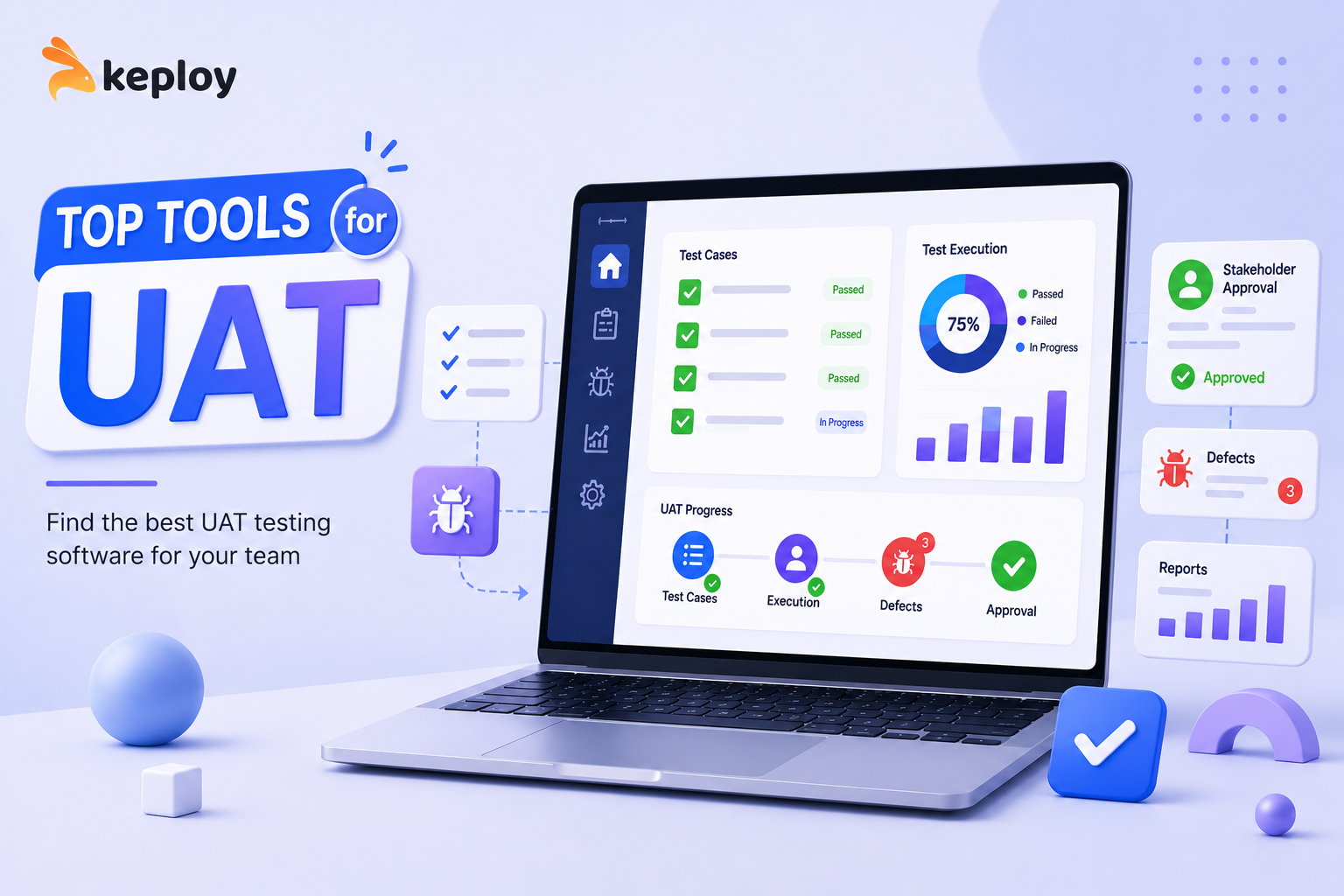
In today's competitive software landscape, delivering bug-free applications is only part of the equation. Successful software must also meet business objectives and satisfy user expectations. This is where User Acceptance Testing (UAT) plays a critical role. Before a product reaches production, organizations need a structured process to validate that the software works as intended in real-world scenarios.
As applications become more complex and release cycles accelerate, teams are increasingly adopting dedicated UAT testing software to streamline acceptance testing. These tools help manage test cases, collect stakeholder feedback, track defects, and ensure complete requirement coverage. By using the right UAT platform, organizations can reduce release risks and improve software quality.
In this article, we'll explore the importance of UAT testing, key features to look for in a solution, and the top UAT testing software tools—including Keploy, an emerging AI-powered testing platform that is helping teams simplify software testing workflows.
What Is User Acceptance Testing?
User Acceptance Testing (UAT) is the final phase of software testing before deployment. Unlike unit testing or integration testing, which focus on technical correctness, UAT validates whether the software fulfills business requirements and delivers the expected user experience.
Typically performed by stakeholders, clients, product owners, or end users, UAT helps answer a simple question:
"Is this software ready for real users?"
Common UAT objectives include:
- Verifying business workflows
- Validating requirements
- Testing real-world use cases
- Identifying usability issues
- Ensuring stakeholder satisfaction
A successful UAT process reduces production issues and improves customer confidence in the final product.
Why Organizations Need UAT Testing Software
Traditional acceptance testing often relies on spreadsheets, email chains, and manual documentation. While this may work for smaller projects, it quickly becomes difficult to manage as applications grow.
Modern UAT testing tools provide:
Better Collaboration
Business users, QA teams, and developers can work together from a centralized platform.
Test Case Management
Teams can create, organize, execute, and monitor test cases efficiently.
Defect Tracking
Issues discovered during testing can be documented and assigned immediately.
Requirement Traceability
Requirements can be mapped directly to test cases, ensuring complete validation.
Reporting and Analytics
Real-time dashboards provide visibility into testing progress and release readiness.
Key Features to Look for in UAT Testing Software
When evaluating UAT solutions, organizations should prioritize:
- Test case management
- Requirement traceability
- Defect tracking
- Collaboration tools
- Reporting dashboards
- Integration with development platforms
- Automation support
- Scalability
The right combination of features depends on project complexity, team size, and testing goals.
Top UAT Testing Software Tools
1. Keploy
Keploy is an AI-powered testing platform designed to simplify software testing by automatically generating test cases from API calls and application traffic. While traditionally known for API testing and automated test generation, Keploy can significantly support UAT processes by helping teams validate business workflows faster and with less manual effort.
Key Features
- AI-generated test cases
- API testing automation
- Test data generation
- CI/CD integration
- Regression testing support
- Open-source platform
Benefits
Keploy reduces the effort required to create and maintain test cases, allowing teams to focus on validating business requirements rather than writing repetitive tests. Organizations practicing continuous delivery can use Keploy to ensure application behavior remains consistent throughout the development lifecycle.
Learn more about software testing best practices and UAT tools here:
Best UAT Testing Software Tools
2. TestRail
TestRail is one of the most widely adopted test management solutions for QA teams.
Key Features
- Test case management
- Requirement tracking
- Execution monitoring
- Reporting dashboards
- Jira integration
Benefits
TestRail provides excellent visibility into testing progress and supports both manual and automated testing workflows.
3. Zephyr
Zephyr is a popular testing platform designed for teams using Jira.
Key Features
- Native Jira integration
- Test planning
- Test execution tracking
- Defect management
- Agile support
Benefits
Teams already invested in the Atlassian ecosystem can manage acceptance testing without leaving Jira.
4. PractiTest
PractiTest offers comprehensive test management capabilities for enterprise QA teams.
Key Features
- End-to-end traceability
- Custom workflows
- Centralized repository
- Analytics dashboards
- Third-party integrations
Benefits
Its strong reporting and governance capabilities make it suitable for large-scale projects.
5. qTest
qTest by Tricentis is a powerful quality management platform designed for modern software development environments.
Key Features
- Manual testing
- Automated testing integration
- Requirement management
- Defect tracking
- Agile support
Benefits
qTest provides a scalable solution for organizations managing complex testing processes.
6. Xray
Xray extends Jira's functionality by adding advanced testing capabilities.
Key Features
- Test management
- Requirement traceability
- Reporting tools
- Automation integration
- Test execution tracking
Benefits
Organizations using Jira can seamlessly integrate testing into existing workflows.
7. TestLink
TestLink is a long-standing open-source test management solution.
Key Features
- Test case management
- Requirement tracking
- Reporting
- Role-based access
- Open-source flexibility
Benefits
It remains a popular choice for organizations seeking cost-effective testing solutions.
8. Azure Test Plans
Microsoft's Azure Test Plans is integrated into the Azure DevOps ecosystem.
Key Features
- Manual testing support
- Exploratory testing
- Requirement mapping
- Automated testing integration
- Rich reporting
Benefits
Ideal for teams already using Microsoft development tools.
9. UserTesting
UserTesting focuses on collecting feedback directly from real users.
Key Features
- User session recordings
- Customer feedback
- Usability testing
- Experience analytics
- Behavioral insights
Benefits
Provides valuable insights into actual user interactions and business workflows.
10. Tuskr
Tuskr is a cloud-based test management platform designed for simplicity and collaboration.
Key Features
- Test case organization
- Defect tracking
- Requirement management
- Reporting dashboards
- Team collaboration
Benefits
Its intuitive interface makes acceptance testing accessible to both technical and non-technical users.
11. SpiraTest
SpiraTest combines testing, requirements management, and issue tracking into a single platform.
Key Features
- Test management
- Defect tracking
- Requirement traceability
- Workflow automation
- Reporting tools
Benefits
Offers a complete quality management solution for enterprise teams.
How Keploy Complements UAT Testing
While many traditional UAT tools focus on test management, Keploy introduces automation and AI-driven testing capabilities that can significantly enhance acceptance testing workflows.
Organizations can use Keploy to:
- Automatically generate test cases from real user traffic
- Reduce manual test creation effort
- Validate API behavior before UAT begins
- Detect regressions earlier in the development lifecycle
- Accelerate release cycles
This combination of automation and acceptance testing helps teams achieve higher software quality while reducing testing overhead.
Best Practices for Successful UAT
To maximize the effectiveness of acceptance testing:
- Define clear acceptance criteria.
- Involve stakeholders early.
- Use realistic business scenarios.
- Maintain requirement traceability.
- Prioritize high-impact workflows.
- Document and track issues consistently.
- Combine manual validation with automated testing platforms such as Keploy.
Conclusion
User Acceptance Testing remains one of the most important stages of software development. It ensures that applications not only function correctly but also deliver the value users and stakeholders expect.
Modern tools such as TestRail, Zephyr, PractiTest, qTest, Xray, TestLink, Azure Test Plans, UserTesting, Tuskr, SpiraTest, and Keploy help organizations improve collaboration, manage testing efficiently, and release software with greater confidence.
As development teams continue embracing automation and AI-driven workflows, platforms like Keploy are becoming valuable additions to the UAT ecosystem by reducing manual effort and enabling faster, more reliable software delivery.
