Will AI Replace End-to-End Testing? A Practical Answer for Developers
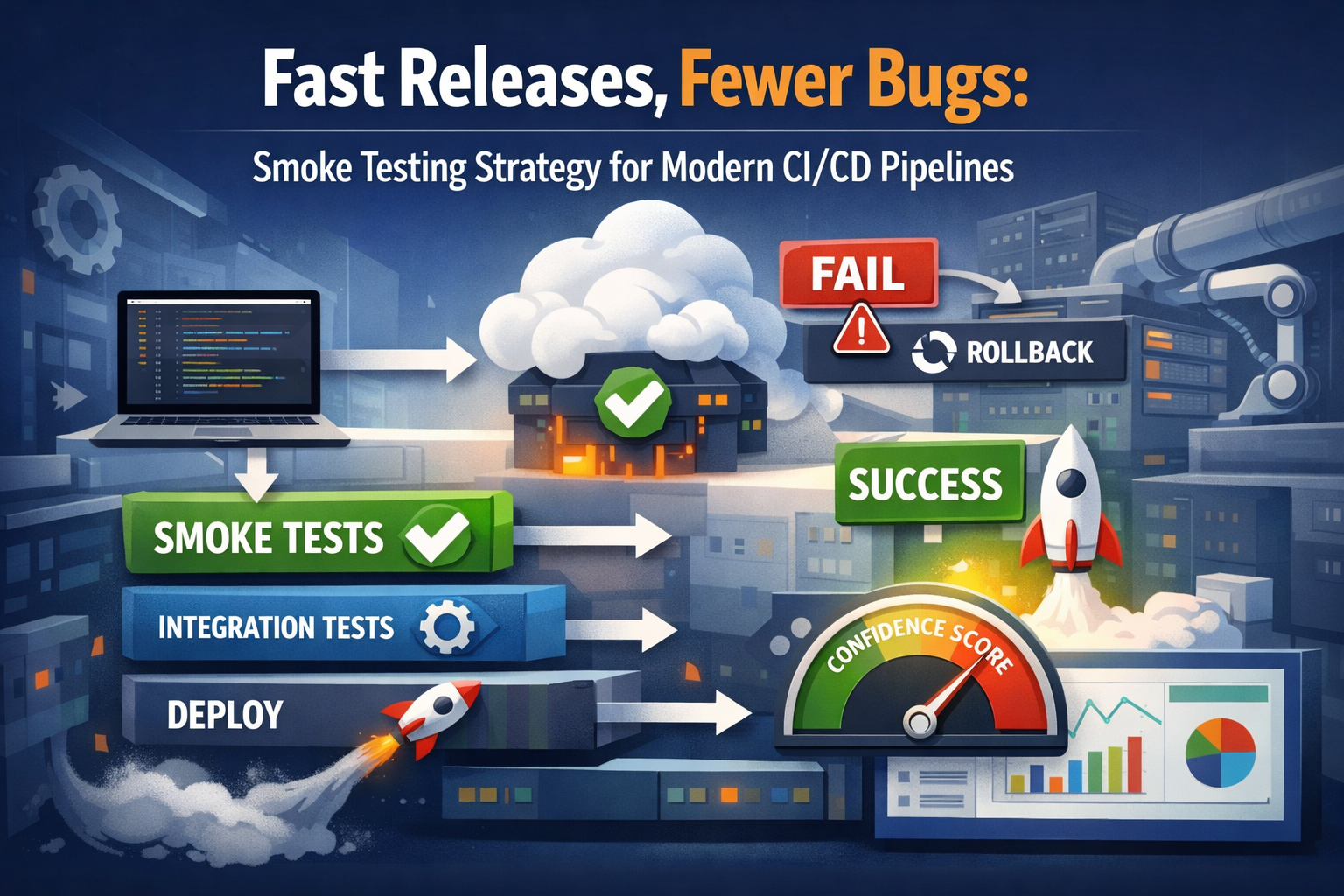
Artificial intelligence is rapidly entering software development workflows. Code generation, bug detection, documentation writing, and even test creation can now be automated. Naturally, this raises a serious question among engineers: if AI can generate tests automatically, will end-to-end testing eventually disappear?
The short answer is no. But the longer answer is far more interesting. AI is not replacing end-to-end testing. It is redefining how it is created, maintained, and trusted.
End-to-end testing exists to verify real user behavior across the entire system. AI excels at pattern prediction, but product correctness is not just pattern matching. It requires understanding business intent, edge conditions, and real-world outcomes. The difference between these two ideas explains why AI will transform testing rather than eliminate it.
What AI Is Actually Good At
AI models learn from data. They detect common flows, predict typical user actions, and generate scenarios based on probability. In testing, this means AI can automatically produce large numbers of test cases covering expected user behavior.
For example, if most users log in, search, and checkout, AI easily generates variations of those flows. It can also detect missing validation checks, unused UI paths, and repetitive patterns faster than humans.
AI is extremely effective at coverage expansion. It increases how much of the application gets exercised without developers manually writing every test. This reduces the initial effort of building a test suite and accelerates early-stage development.
But coverage is not correctness. A system can be heavily tested yet still wrong in critical business situations.
What AI Cannot Understand
Software systems operate on rules that depend on intent rather than frequency. A payment system may allow refunds only after settlement. A trading platform may reject orders during specific market states. A healthcare app may require audit logging for legal compliance.
These rules are rare, conditional, and context-dependent. AI struggles because it relies on historical patterns. If an edge case rarely appears in training data, the model does not prioritize it. Yet those rare cases often represent the most important correctness requirements.
End-to-end testing validates whether the system behaves properly when real-world logic matters, not just when common actions occur. Humans define correctness based on meaning, while AI predicts likelihood based on repetition. The two complement each other rather than compete.
The Illusion of Fully Automated Testing
Many teams imagine a future where AI observes an application and instantly creates a perfect test suite. In reality, automatically generated tests frequently validate superficial behavior.
An AI-generated test may confirm that clicking a button returns a success message. However, it may not verify whether inventory was actually reserved, payment captured, and notification scheduled correctly. The UI response alone does not guarantee business success.
This creates a false confidence problem. The application appears well tested because numerous automated scenarios exist, but the most critical business outcomes remain unchecked. End-to-end testing continues to exist because it focuses on meaningful verification rather than visible response.
Where AI Actually Helps E2E Testing
AI becomes powerful when assisting rather than replacing. Instead of writing final assertions, it can remove the tedious parts of testing workflows.
AI can identify repetitive flows and generate baseline scenarios. Engineers then refine them to match business intent. This shortens development time without sacrificing correctness.
AI can also analyze historical failures and detect unstable tests. By recognizing patterns in flaky behavior, it helps teams stabilize pipelines faster. Instead of spending hours debugging inconsistent failures, developers receive guidance on probable causes.
Another strong contribution is test maintenance. When UI elements change or APIs evolve, AI can suggest updates to selectors and request structures. The test suite stays relevant without constant manual refactoring.
The Future Workflow: Human Intent, Machine Assistance
Modern testing is shifting from manual scripting to assisted verification. Humans define what must be true. Machines help explore how it might break.
Engineers describe expected outcomes such as successful order placement or proper access restriction. AI expands permutations, generates variations, and explores paths humans might not anticipate. The collaboration produces broader validation while preserving meaningful guarantees.
This balance solves a long-standing problem in testing: either too few tests created by humans or too many shallow tests created automatically. Combining intent with generation produces both depth and coverage.
Why End-to-End Testing Still Matters
End-to-end testing answers a simple question: does the system accomplish the user’s goal correctly? That question depends on business meaning, not interface appearance.
A system may render the correct page yet charge the wrong amount. It may send confirmation while failing to persist data. It may display success while background processing fails silently. Only a full workflow validation can detect these problems.
AI can suggest where to look, but correctness requires deliberate verification of outcomes that matter beyond the screen.
A More Realistic Future
Instead of replacing testing, AI reduces friction around it. Writing tests becomes easier, maintaining them becomes faster, and exploring scenarios becomes broader. The role of engineers evolves from script writers to correctness designers.
Developers spend less time describing every click and more time defining what success means. AI handles repetition while humans ensure meaning.
The result is not fewer tests but smarter tests. Suites become smaller yet more powerful because they verify outcomes rather than actions.
Final Thoughts
The fear that AI will eliminate end-to-end testing comes from misunderstanding what testing provides. Testing is not the act of writing steps. It is the act of verifying truth.
AI automates generation, discovery, and maintenance. It does not replace responsibility. As long as software must behave correctly in real situations, end-to-end testing remains necessary.
The future of testing is collaborative intelligence. Machines explore possibilities, and humans confirm correctness. Instead of disappearing, end-to-end testing becomes more important because systems grow more complex and automation grows more powerful.
reference article: https://keploy.io/blog/community/end-to-end-testing-guide
