Driver Relay System – The Future of Long Haul Trucking
Imagine receiving a call from an important client. A manufacturing giant is frustrated as their raw materials are delayed again and production has stopped. Every delay leads to lost time, extra costs, and unhappy partners.
In logistics, punctuality and reliability matter, especially in the world of long haul trucking, where precision is key. That’s where the Driver Relay System steps in. Instead of one driver hauling freight across thousands of kilometers, multiple drivers take shorter segments of the route. They switch at planned relay points, stay well-rested, and keep the truck in motion. The result? Safer roads, faster deliveries, and better resource use.
![null][(https://velog.velcdn.com/images/mobisoftinfotech/post/42c14ce0-b2c6-43e8-9314-884c41e29fd4/image.png)](https://mobisoftinfotech.com/products/truck-dispatch-software-solution?utm_source=blog&utm_medium=referral&utm_campaign=driver-relay-system-long-haul-trucking-cta1)
Fleet management GPS tracking system for real-time truck location and ETA alerts.
Why the Industry Needs Driver Relay Systems
Long Haul Trucking Faces Challenges That Demand Innovation.
Driver Shortage
The American Trucking Associations (ATA) estimates that the industry is short over 80,000 drivers. The gap could double by 2030. Annual turnover rates hover around 90%, making it hard to keep fleets fully staffed.
Growing Demand for Faster Deliveries
E-commerce sales grew 55% from 2019 to 2023. Customers now expect same-day or next-day delivery. Logistics teams must meet this growing demand in freight transportation systems without compromising driver safety.
Safety Concerns & Fatigue Management
Driver fatigue causes 13% of major truck accidents. While driving hours are regulated, traditional long haul routes often push drivers too far. That puts both the driver and everyone on the road at risk.
Truck driver fatigue and its impact on safety in long haul trucking.

What is a Driver Relay System?
A Driver Relay System splits long routes into shorter stretches, usually around 250 to 300 km. Instead of one driver doing the whole trip, drivers switch at planned points. This keeps the truck moving without long stops and helps drivers stay rested and alert.
How It Works
Route Segmentation: The journey is divided into manageable segments, optimizing truck fleet efficiency.
Predefined Relay Points: Locations are strategically selected where drivers switch to reduce truck driver fatigue.
Driver Handover: A fresh driver takes over, ensuring that rest times are respected and driver relay networks function smoothly.
By using a Truck Dispatch System, fleets can ensure smoother transitions and better coordination.
Continuous Movement: The truck remains in motion longer, reducing overall long haul trucking times and ensuring faster deliveries.
Example Scenario
John starts in Los Angeles (LA) with Truck1.
Mike starts in San Francisco (SF) with Truck2.
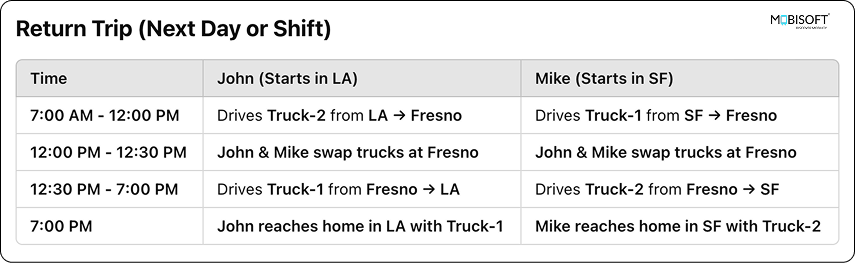
Both meet at a relay point in Fresno, swap trucks, and return home.
Both meet at a relay point in Fresno, swap trucks and return home.
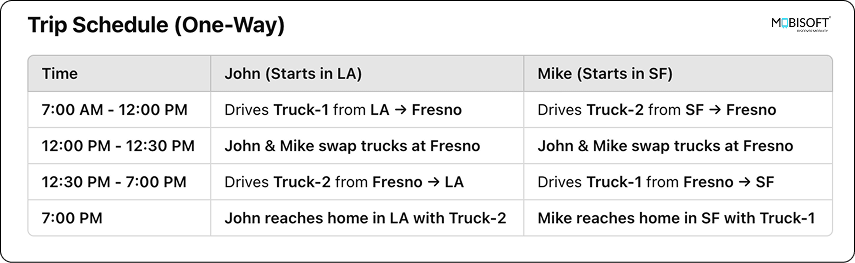
One-way trip schedule for truck routes in logistics operations.
Return trip schedule for truck drivers in relay systems.
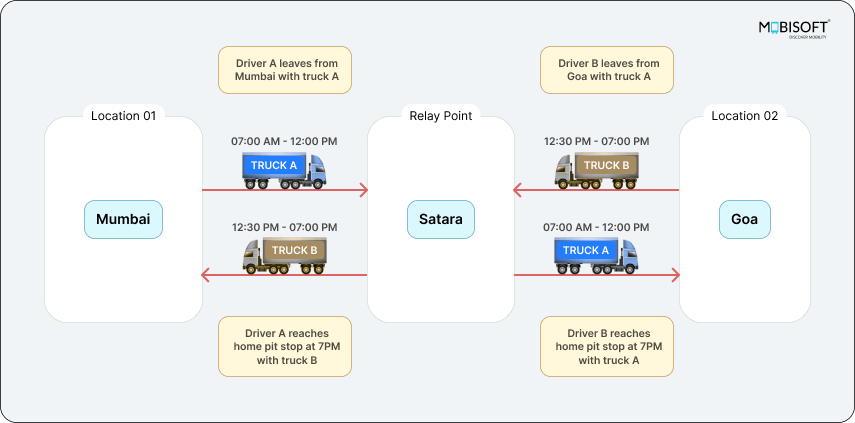
Strategic relay points for truck driver handovers in long haul trucking.
Key Benefits
John & Mike sleep at home every night (no long haul stress).
Trucks move continuously, reducing downtime.
More efficiency, lower operational costs and faster deliveries.
Key Benefits of Driver Relay Systems
Reduced Transit Time
Relay systems help trucks stay on the move with fewer long breaks. This cuts the travel time by up to 50%. (Source: MIT Center for Transportation & Logistics) Companies like Rivigo have already seen success. They’ve completed trips like Delhi to Guwahati or Chennai in just three days instead of a full week (Source: Fortune India). This means businesses can meet delivery deadlines more easily, reduce waiting time for customers, and keep goods moving through the supply chain without delays.
To learn more about how companies optimize fleet efficiency, check out our case study on streamlining supply chain management with logistics solutions.
Compliance and Safety
Long hours on the road can be tough. Relay models help companies follow Hours of Service (HOS) regulations by giving drivers shorter shifts. That means less fatigue, better focus, and safer roads. It also shows that the company values both safety and its people, which builds trust and reduces the risk of accidents.
For more on regulatory compliance in the trucking industry, read our blog: How Will Digital Freight Matching Revolutionize The Trucking Industry?.
Improved Driver Satisfaction
Relay driving gives drivers a better work-life balance. They stay closer to home, spend more time with family, and avoid the stress of traditional long haul trucking. This keeps them happy and encourages them to stay longer with the company. Truck driver efficiency is greatly enhanced when drivers feel supported.
Cost Efficiency
Relay systems make better use of both time and fuel. With fewer stops and less idling, fuel costs drop, and maintenance needs go down. Companies experience significant savings, which can be reinvested into the business.
Companies seeking to improve their overall fleet efficiency can also look into fleet tracking software for added benefits. Find out more about fleet tracking software.
Read More: https://mobisoftinfotech.com/resources/blog/transportation-logistics/driver-relay-system-long-haul-trucking