How to Build an AI-Driven Product Roadmap for Startups with Real Examples including Best Practises
A product roadmap is the first step for any startup. It sets the direction by clarifying the vision and choosing the right features. Alongside resource planning, it connects user needs with market demand. With the rise of AI-driven product roadmap approaches, startups can leverage automation and predictive planning from the MVP stage onwards.
In this blog, we will walk you through a real-world product roadmap example from the insurance claims settlement space, explain how to build a step-by-step AI product roadmap, and share a reusable product roadmap template for startups that you can apply to your own idea.
To streamline this process further, many startups rely on product discovery software services to validate ideas and align product vision.
Problem Context: The Complexity of Insurance Claims
As discussed with one of the startup founders, they have highlighted a real pain point: insurance claim settlements are often complex, stressful, and time-consuming.
Whether it’s for:
- Health Insurance
- Life Insurance
- Term Insurance
- Accidental Insurance
- Motor Insurance Claims
- Loan protection policy Claims
- Overseas Travel Insurance Claims, etc.
Users often struggle with multiple forms, insurer coordination, documentation issues, and long wait times.
There’s a huge opportunity to simplify this process using AI roadmap planning tools and digital platforms powered by AI-driven intelligence, automation, and empathy.
Our Example Startup: ClaimSpark (Fictional)
Let’s imagine you’re building a startup called ClaimSpark.
Your vision: “Expert Guidance for Your Stress-Free Insurance Claims Settlement.”
Here’s a product management roadmap example of how you might frame a naming prompt for such a product:
Suggest a unique and impactful name for a startup product focused on the insurance claim settlement domain. The name should reflect trust, efficiency, and expertise in handling rejected or delayed claims. Consider that in India, a competitor’s product is named ‘ClaimsNidan,’ which blends the word ‘claims’ with a culturally meaningful local term. Please suggest similarly creative and brandable names. However, the suggestions should remain original, regionally relevant (depending on culture, language, and emotional context), and carefully balanced to avoid IP conflicts or copyright issues..
Step-by-Step: Designing the Product Roadmap with AI
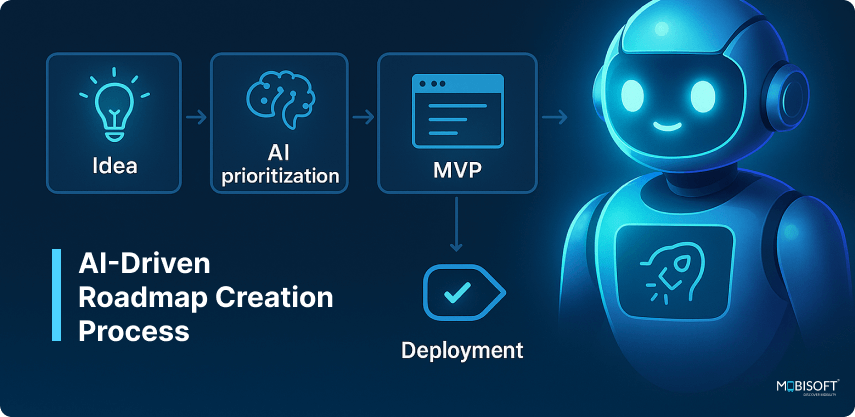
Step 1: Define the Vision and Product Goals
Vision: ClaimSpark believes insurance claims shouldn’t cause stress. The goal is to design an AI product management roadmap that clarifies, standardizes, and accelerates the process. By adopting product roadmap best practices, the platform fosters trust and delivers expert assistance to help settle claims on time.
Goals:
Simplify the Claims Journey: Provide a seamless and intuitive platform that demystifies the complex insurance claim process with the help of AI product roadmap tools.
Accelerate Settlements: Leverage expert intervention and smart workflows to reduce delays and fast-track claim approvals, following an agile product roadmap approach.
Resolve Rejected Claims: Offer specialized guidance to help users understand, appeal, and recover denied claims with confidence through structured product development roadmap planning.
Build Trust Through Expertise: Deliver reliable, step-by-step assistance from industry professionals to ensure every user feels informed and supported.
Deliver a Stress-Free Experience: Minimize friction and frustration by combining technology with human empathy for a hassle-free settlement experience.
Prompt to help you define the Vision and Product Goals:
Provide a concise and compelling description of the Vision and Product Goals for my startup product “Claimspark”, which focuses on the insurance claim settlement domain. The description should highlight how “Claimspark” aims to make the insurance claim process faster, simpler, and more user-friendly. Emphasize its core values of trust, efficiency, and expertise, particularly in resolving rejected or delayed claims. Mention that the platform offers expert guidance to help users achieve stress-free claim settlements.
To maximize efficiency, many teams now rely on AI project management tools that bring predictive insights and automation into planning.
Step 2: Identify Core Use Cases
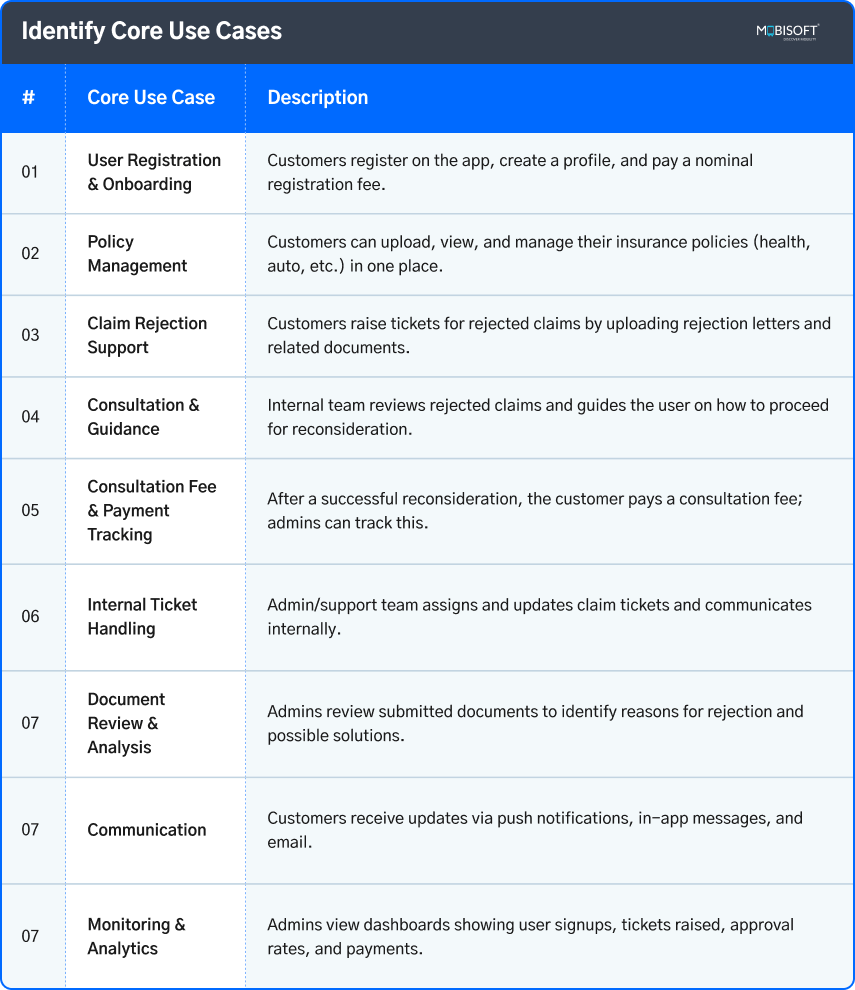
How AI Helps
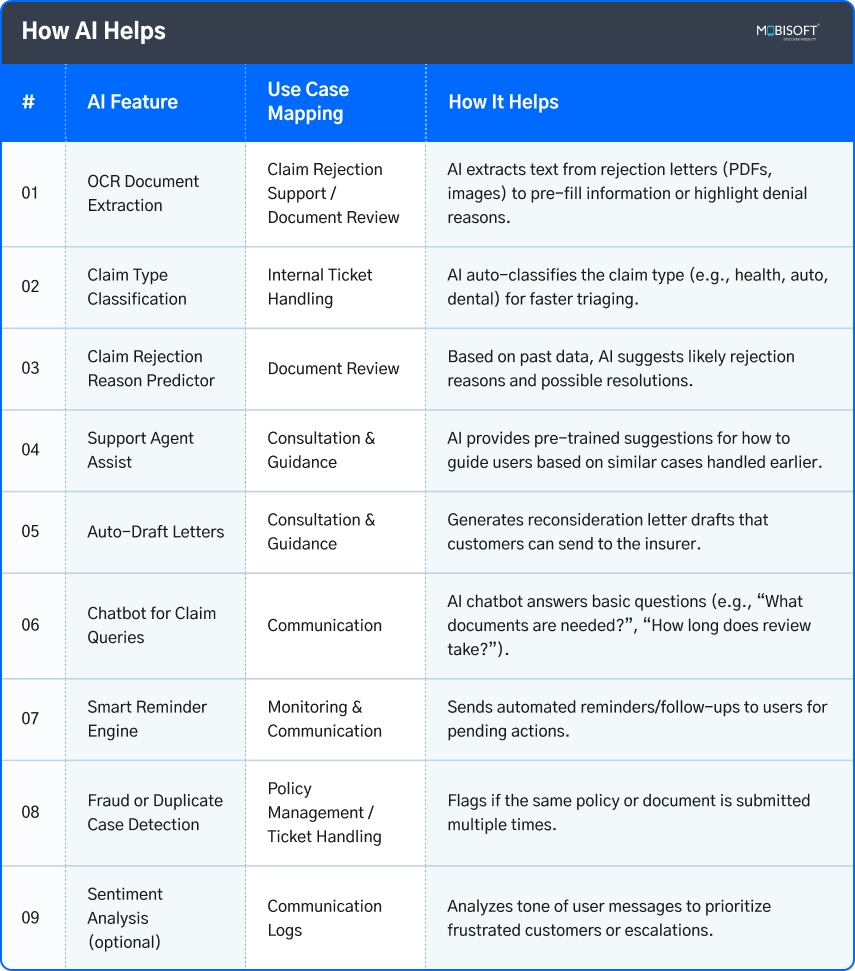
Prompt to Uncover Key Insurance Claim Use Cases and AI Enhancements:
Identify the core use cases in the insurance claim settlement domain and explain how AI can enhance each use case. Focus on how an AI product roadmap improves efficiency, accuracy, decision-making, and user experience throughout the claim lifecycle from document verification and fraud detection to claim approval and dispute resolution.
Such implementations also benefit from agile product lifecycle management practices to ensure iterative delivery and adaptability
Step 3: Identify Feature List
A. Mobile App (Customer Facing)
Onboarding & User Account
- User Registration (Email, Phone, OTP)
- User Login/Logout
- Profile Management
- KYC Upload (optional for premium support)
Payment System
- Registration Fee Payment (via Razorpay/Stripe/etc.)
- Payment History
- Consultation Fee Payment after Claim
- Reconsideration
Policy Management
- Add Insurance Policies (Health, Life, Auto, etc.)
- View/Manage Registered Policies
- Upload Policy Documents
Claim Support
- Raise a Ticket for Rejected Claim
- Upload Claim Rejection Letter & Related Documents
- View Ticket Status
- Chat/Message with Support Team
Notifications & Updates
- In-App Notifications
- SMS/Email Alerts for status updates
- Push Notifications (reminders, messages from support)
Others
- FAQ & Help Center
- Contact Support
- Rate our Service/Feedback
B. Admin Panel (Staff and CMS Users)
User Management
- View/Edit Registered Users
- Block/Activate User Accounts
- View Payment Status
Policy & Claim Ticket Management
- View Submitted Policies
- View/Raise Claim Tickets
- Assign Support Agent
- Internal Notes for Case
- Update Ticket Status (Pending, Under Review, Approved, Rejected, Escalated)
Payments & Invoicing
- View Payment Reports
- Mark Consultation Fee Payment Status
- Generate Invoice (PDF)
AI Support Tools
- AI Claim Triage (initial auto-classification)
- Document Text Extraction (OCR for PDFs)
- Smart Suggestions for Support Agents (Based on Similar Past Cases)
- MIAIChat Plugin for Standard Reply Suggestions
Admin Utilities
- Dashboard: Stats on Users, Claims, Payments
- Ticket History/Logs
- Notifications & Alerts
This shift is part of a larger wave of digital transformation in startups, changing the next era of innovation.
Read More: How to Build an AI-Driven Product Roadmap for Startups with Real Examples including Best Practises