AOP
AOP란?
- AOP(Aspect Oriented Programming)은 관점 지향 프로그래밍의 약자로, 프로그래밍 로직을 핵심적인 관심사와 부가적인 관심사로 나누어 모듈화한다는 의미입니다.
- 여기서 핵심적인 관심사는 핵심 관심사, 부가적인 관심사는 횡단 관심사(Crosscutting Concerns)라고 불립니다.

- 핵심 관심사: 서비스 단에서 핵심 비즈니스 로직을 의미합니다.
예) 데이터 조회, 저장, 삭제 등 - 횡단 관심사: 여러 비즈니스 로직에 중복으로 들어가면서 강하게 결합된 로직을 의미합니다.
예) 로깅, 보안, 트랜잭션 관리 등
예제 코드
public class StudentService {
    private final IdentityStudentRepository identityStudentRepository;
    private final SequenceStudentRepository sequenceStudentRepository;
    private int insertNum = 1000;

    public void saveIdentity() {
        for (int i = 0; i < insertNum; i++) {
            System.out.println("save I: " + i);
            identityStudentRepository.save(IdentityStudent.builder()
                    .num(i)
                    .build());
        }
    }

    public void saveSequence() {
        for (int i = 0; i < insertNum; i++) {
            System.out.println("save I: " + i);
            SequenceStudent save = sequenceStudentRepository.save(SequenceStudent.builder()
                    .num(i)
                    .build());
            System.out.println("save id: " + save.getId());
        }
    }
}
문제점
- 위 코드에서 메서드 실행 전과 실행 후 시간을 출력하여 성능 비교를 하고자 한다면, 실행 시간 측정 코드를 각 메서드에 중복 작성해야 합니다.
- 이러한 중복된 코드들은 핵심 로직(저장 로직)과 강하게 결합되어 있어 코드의 분리가 어렵고 유지보수성이 떨어집니다.
AOP 적용 효과
- AOP를 사용하면 중복된 코드를 제거하고, 횡단 관심사 코드를 한 곳에 모아 응집도를 높일 수 있습니다.
- 이를 통해 핵심 로직과 부가 로직을 분리하여 OOP의 설계 원칙을 더욱 잘 실현할 수 있습니다.
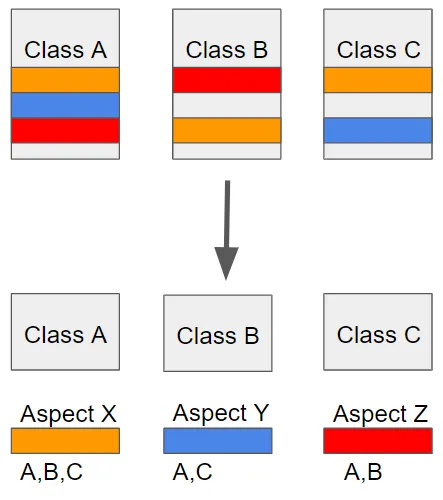
AOP 용어
1. Target
- 부가기능을 적용할 대상
- 예) 특정 메서드, 객체, 클래스
2. Advice
- 부가기능을 모듈화한 코드
- "어떤 시점에 어떤 기능을 실행할지"를 정의
3. Join Point
- Advice가 적용될 수 있는 실행 지점
- 예) 메서드 실행 전, 실행 후 (Spring AOP에서는 메서드 실행 단계)
4. Pointcut
- Advice를 적용할 Join Point를 선별하는 작업
- 예) 특정 메서드나 클래스만 선택적으로 적용
5. Advisor
- Pointcut과 Advice를 포함하는 객체
- 예) "어떤 기능을, 어느 시점에, 어떤 메서드에 적용할지"를 결정
6. Weaving
- Join Point에 Advice를 적용하는 과정
- Spring AOP에서는 Runtime Weaving을 사용하여 애플리케이션 실행 시 프록시 객체를 생성합니다.
스프링 AOP 동작 방식
- Spring AOP는 프록시 패턴을 기반으로 동작합니다.

동작 흐름
- 클라이언트가 메서드를 호출하면, 프록시 객체가 이를 가로챕니다.
- 프록시는 Advice를 실행합니다.
- Advice 실행 후 타깃(Target) 메서드를 호출합니다.
- 타깃 메서드 실행 결과를 다시 프록시가 받아, 클라이언트에게 반환합니다.
프록시 객체 생성 과정

- Runtime Weaving은 Spring AOP의 핵심으로, 프록시 객체를 생성합니다.
- 프록시 객체 생성은 Spring의 BeanPostProcessor를 이용하여 다음 순서로 진행됩니다:
- 객체가 생성된 후, 빈 후처리기(BeanPostProcessor)로 전달됩니다.
- Advisor의 Pointcut을 통해 해당 객체가 AOP 대상인지 판별합니다.
- AOP 대상이라면 프록시 객체를 생성하여 반환합니다.
- 그렇지 않다면 원래 객체를 그대로 반환합니다.
- 프록시 또는 원래 객체가 Spring 컨테이너에 등록됩니다.
AOP 적용 방법
커스텀 어노테이션 사용
스프링 AOP를 적용할 때, 커스텀 어노테이션을 사용하면 특정 메서드에 유연하게 AOP를 적용할 수 있습니다.
@Target(ElementType.METHOD)
@Retention(RetentionPolicy.RUNTIME)
public @interface TimeTrace {
}

### Aspect 클래스 구현

```java
@Log4j2
@Component
@Aspect
public class TimeTraceAspect {

    // Pointcut: AOP를 적용할 범위 설정
    @Pointcut("@annotation(com.example.Aop.TimeTrace)")
    private void timeTracePointcut() {
    }

    // Around Advice: 실행 전후로 부가기능 실행
    @Around("timeTracePointcut()")
    public Object traceTime(ProceedingJoinPoint joinPoint) throws Throwable {
        StopWatch stopWatch = new StopWatch();
        try {
            stopWatch.start();
            return joinPoint.proceed(); // 실제 타깃 메서드 호출
        } finally {
            stopWatch.stop();
            log.debug("{} - Total time = {}s",
                    joinPoint.getSignature().toShortString(),
                    stopWatch.getTotalTimeSeconds());
        }
    }
}
설명
-
@TimeTrace: AOP가 적용될 메서드에 붙이는 커스텀 어노테이션.
@Target: 어노테이션이 적용될 대상(여기서는 메서드).@Retention: 어노테이션 유지 시점(런타임).
-
TimeTraceAspect: AOP 로직을 구현하는 클래스.
@Pointcut: AOP를 적용할 범위를 정의합니다. 위에서는@TimeTrace어노테이션이 붙은 메서드만 적용됩니다.@Around: Advice의 일종으로, 메서드 실행 전후에 부가기능을 실행합니다.ProceedingJoinPoint: AOP 대상 메서드 호출 컨텍스트로, 실제 메서드를 호출하기 위해 사용됩니다.
AOP 적용 결과
- 중복 코드 제거: 부가기능을 한 곳에 모아 관리할 수 있습니다.
- 핵심 로직과 부가기능의 분리: 비즈니스 로직과 횡단 관심사를 분리하여 코드의 가독성과 유지보수성을 높입니다.
- OOP 강화: 모듈화된 설계를 통해 객체 지향 프로그래밍의 원칙을 더 잘 실현합니다.
참고자료: https://www.youtube.com/watch?v=7BNS6wtcbY8

🐶개발 블로그