이전 내용에서의 Stack과 Queue는, 배열을 이용하여 구현하였음 => 저장할 수 있는 데이터의 양에 한계 존재
Push할 때마다 메모리 할당을 받을 순 없을까?
=> Dynamic Array를 이용한 구현
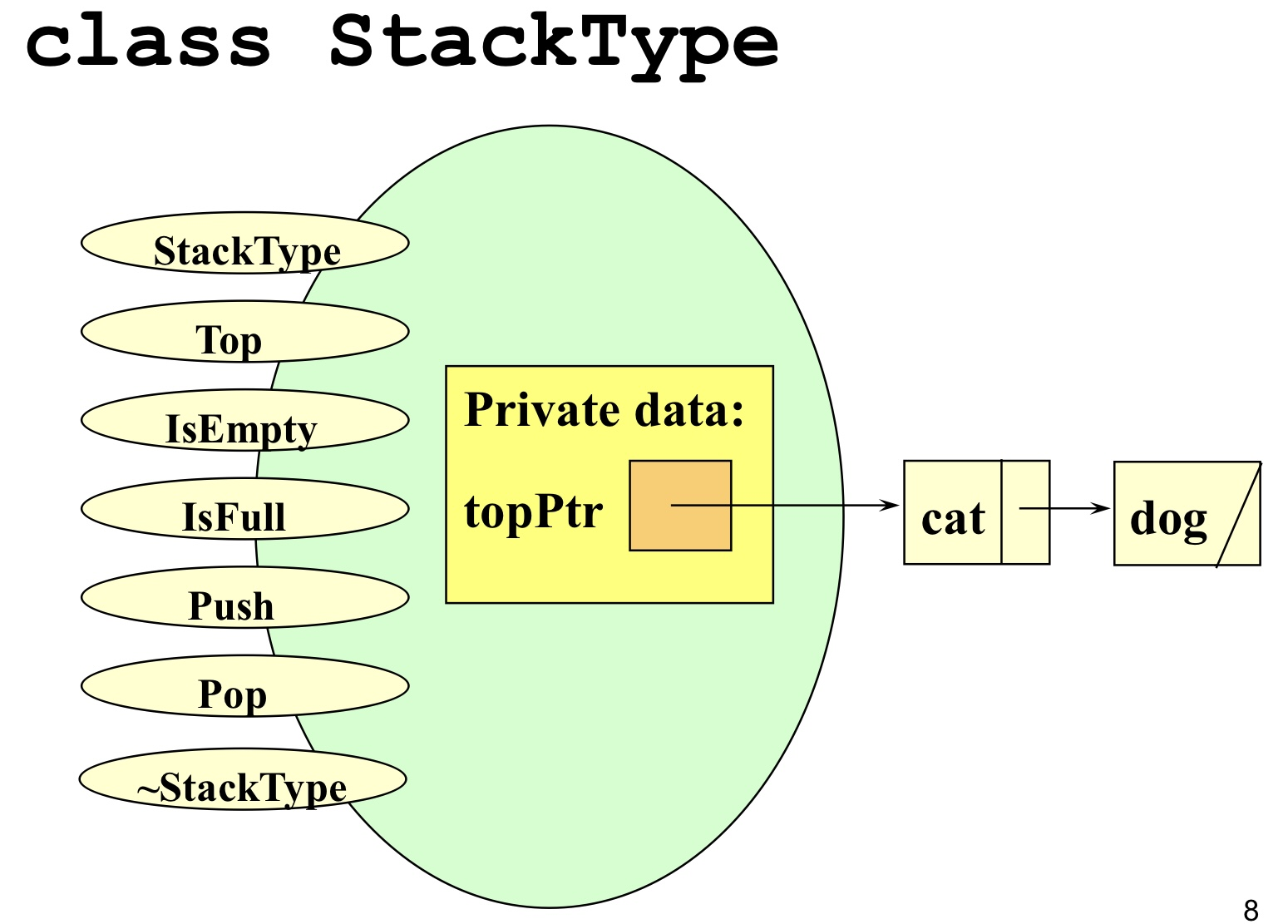
이런 식으로, 현재의 값과 다음 노드로 향하는 포인터를 포함하는 Node를 만들면 됨
new & delete
- new: 요청된 object를 할당하고, 적합한 pointer를 반환함.
int *p = new int;
- delete: 동적으로 할당된 해당 pointer가 가리키는 오브젝트 할당을 해제함.
delete p;
new로 할당해 주었으면, delete까지 해야 가비지가 생기지 않는다.
구현
NodeType.h
#pragma once

template<class ItemType>
struct NodeType
{
	ItemType info;
	NodeType* next;
};
DynamicAllocStackType.h
#pragma once
#include "NodeType.h"

class FullStack {};
class EmptyStack {};

template<class ItemType>
class StackType
{
public:
	StackType();
	~StackType();
	bool IsEmpty() const;
	bool IsFull() const;
	void Pop();
	void Push(ItemType newItem);
	ItemType Top();
private:
	NodeType<ItemType>* topPtr;
};
DynamicAllocStackType.cpp
#include "DynamicAllocStackType.h"
#include <stdexcept>

template<class ItemType>
StackType<ItemType>::StackType()
{
	topPtr = nullptr;
}

template<class ItemType>
bool StackType<ItemType>::IsFull() const
{
	NodeType<ItemType>* location;
	try
	{
		// 새로운 Node를 받는 것이 가능함 => false
		location = new NodeType<ItemType>;
		delete location;
		return false;
	}
	catch (std::bad_alloc exception)
	{
		// Node를 받으려 해도 안 받아질 때 => true
		return true;
	}
}

template<class ItemType>
bool StackType<ItemType>::IsEmpty() const
{
	return (topPtr == nullptr);
}

template<class ItemType>
ItemType StackType<ItemType>::Top()
{
	if (IsEmpty())
		throw EmptyStack();
	else
		return topPtr->info;
}
중요한 점
- Push를 할 땐, new 키워드를 이용하여 새로운 Node를 만들고, topPtr이 해당 Node를 가리키게 한다.
template<class ItemType>
void StackType<ItemType>::Push(ItemType newItem)
{
	if (IsFull())
		throw FullStack();

	NodeType<ItemType>* location;
	location = new NodeType<ItemType>;

	location->info = newItem;
	location->next = topPtr;
	topPtr = location;
}- 해당 Stack이 지역 변수로 선언되고, 해당 범위를 벗어나게 되면, 멤버변수 topPtr은 자동적으로 할당 해제된다.
그러나 topPtr이 가리키는 노드는 자동적으로 할당 해제되지 않으며, 우리가 이를 해제해 줘야 한다.
=> 소멸자에서, 멤버변수 topPtr이 가리키는 dynamic memory들을 해제해 주어야 한다.
template<class ItemType>
StackType<ItemType>::~StackType()
{
	NodeType<ItemType>* tempPtr;

	while (topPtr != nullptr)
	{
		tempPtr = topPtr;
		topPtr = topPtr->next;
		delete tempPtr;
	}
}
이는 Pop을 할 때에도 마찬가지
template<class ItemType>
void StackType<ItemType>::Pop()
{
	if (IsEmpty())
		throw EmptyStack();
	else
	{
		NodeType<ItemType>* tempPtr;
		tempPtr = topPtr;
		topPtr = topPtr->next;
		delete tempPtr;
	}
}
이후 메인 함수에서 아래와 같이 쓰면, 5와 3이 연달아 프린트된다.
int main()
{
	StackType<int> stack;
	stack.Push(3);
	stack.Push(5);

	cout << stack.Top() << endl;
	stack.Pop();
	cout << stack.Top() << endl;
	stack.Pop();
}
비교
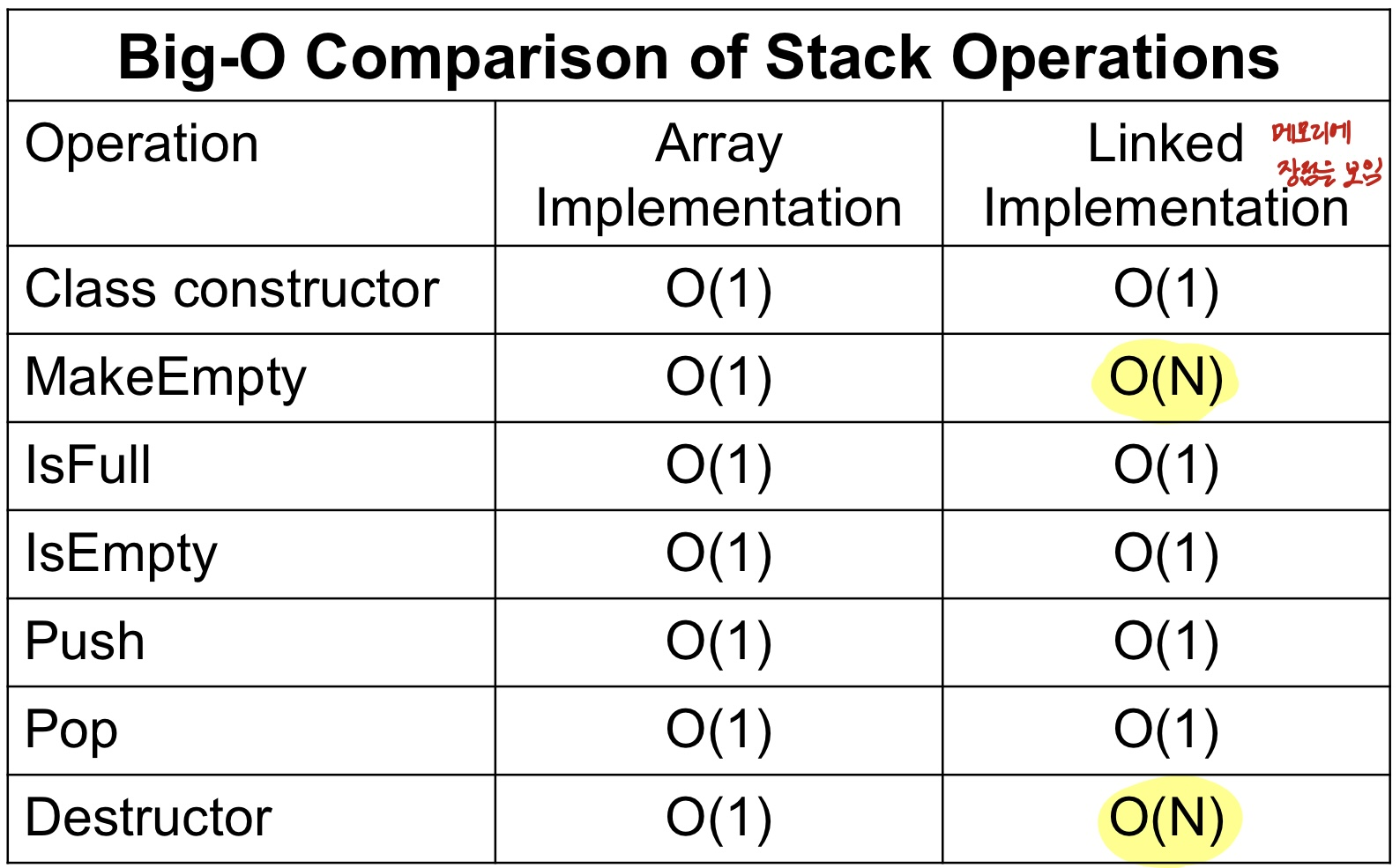
배열로 구현했을 때보다 시간복잡도에서 더 느릴 수 있다.
그러나 Linked로 구현하면 메모리를 적게 소요할 수 있다.