
Univariate Regression
- Choose a suitable probability distribution defined over the domain of the predictions y with distribution parameters .
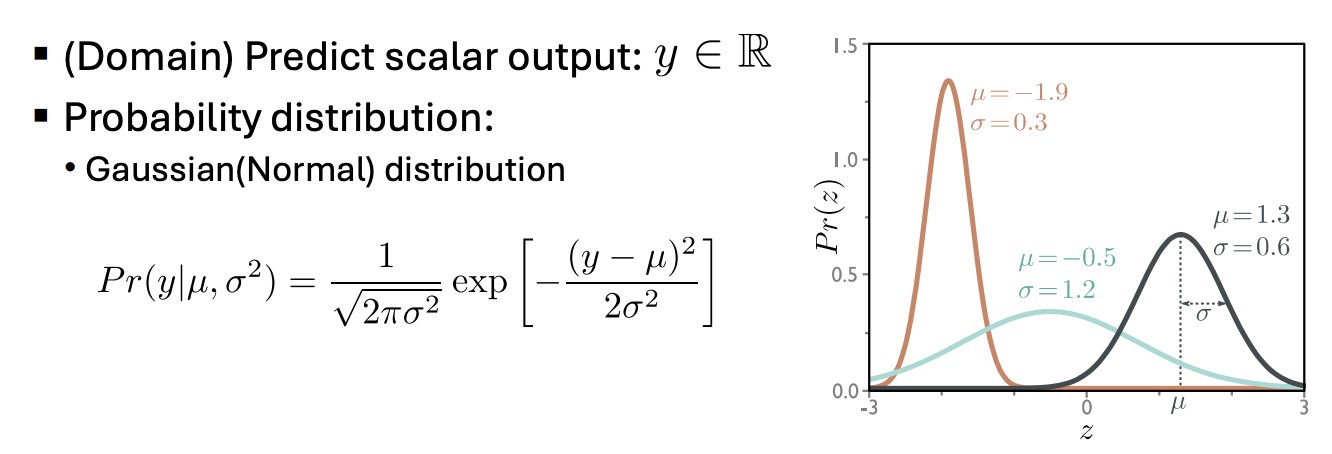
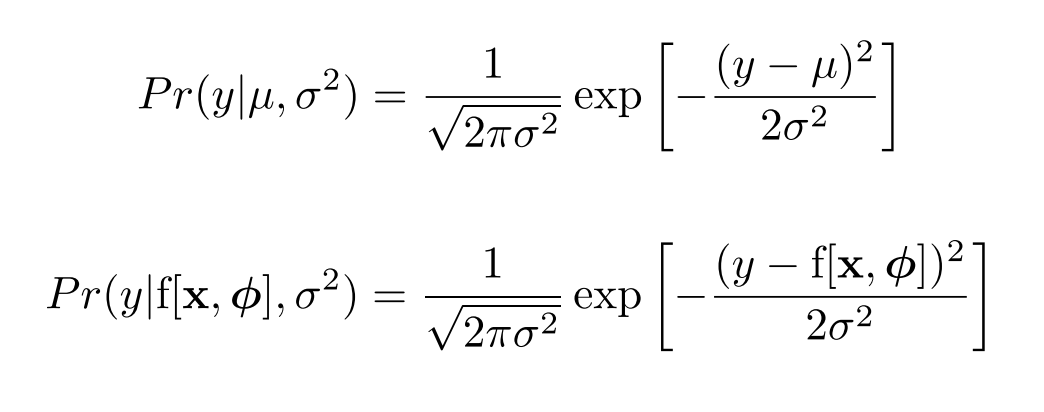
- Set the machine learning model to predict one or more of these parameters, so and
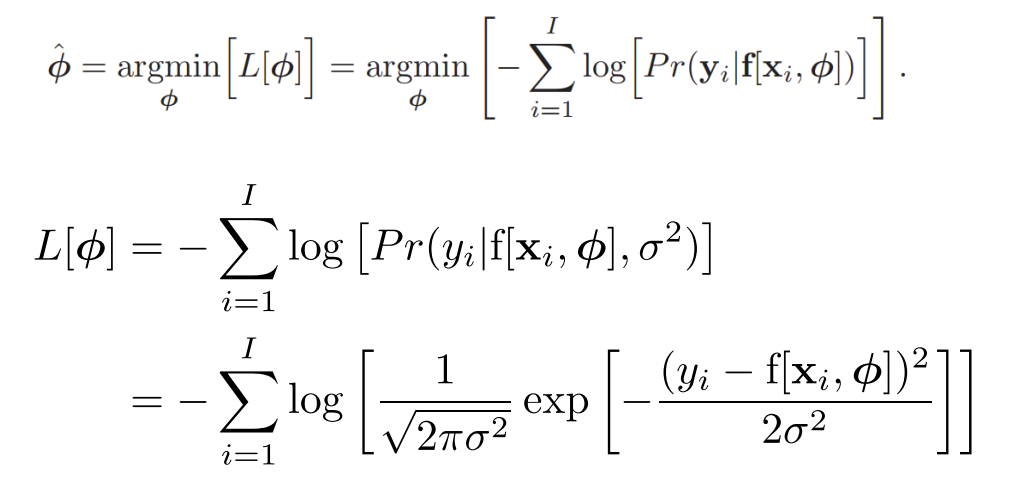
- To train the model, find the network parameters that minimize the negative log-likelihood loss function over the training dataset pairs :
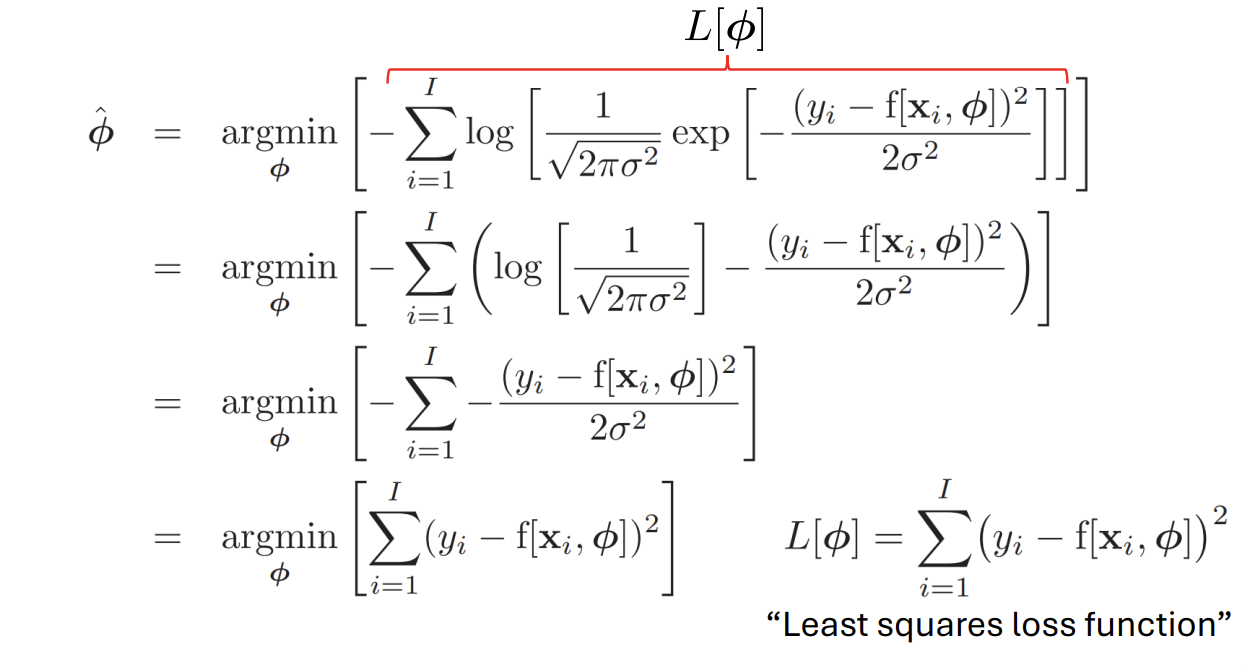
- To perform inference for a new test example x, return either the full distribution $Pr(y|f[x, \hat{\phi}]) or the value where this distribution is maximized.
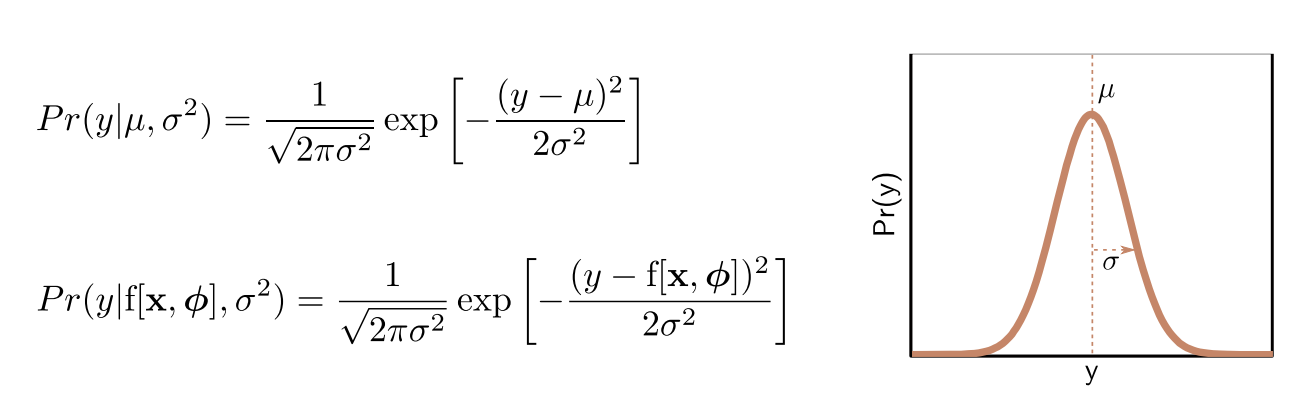
Heteroscedastic Regression
개념 요약
기존 회귀에서는 다음과 같은 가정을 한다.
즉, 모든 데이터에서 오차 분산이 동일한 Homoscedastic 상황이다.
하지만 현실 데이터는 그렇지 않다.
입력 x에 따라 노이즈 크기가 달라지는 경우가 많다.
그래서 다음과 같이 확장한다.
즉, 데이터에 따라 분산이 달라지는 회귀 모델이 바로 Heteroscedastic Regression이다.
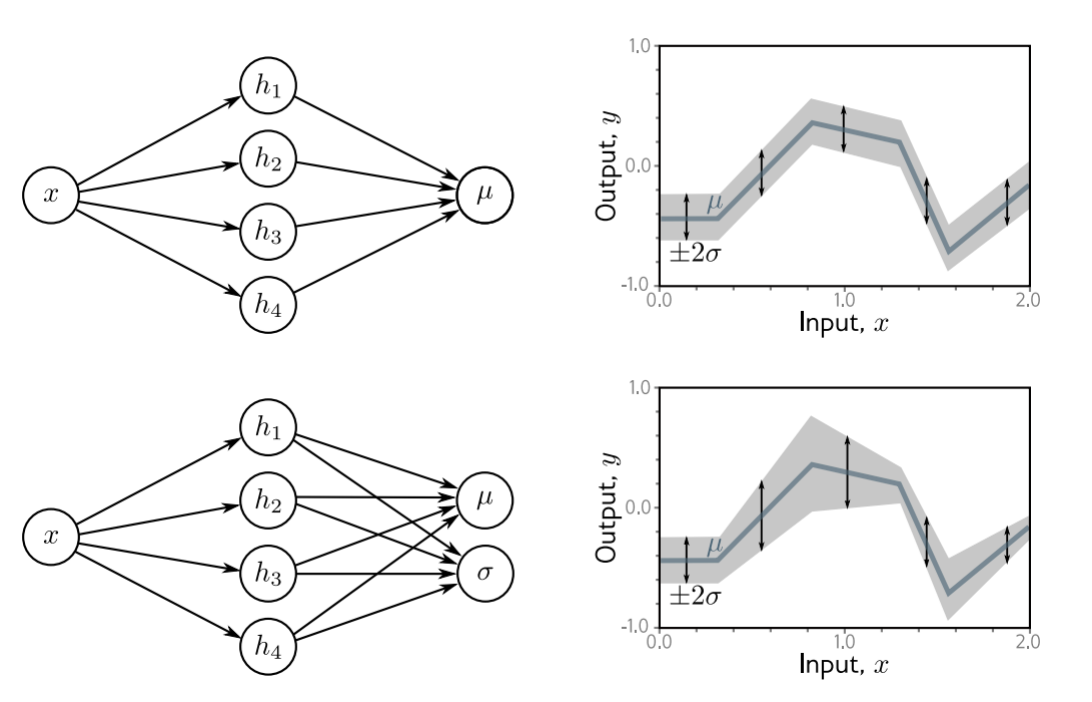
모델 구조
이 모델은 하나의 출력이 아니라, 두 개를 동시에 예측한다.
-
평균 (예측값)
-
분산 (불확실성)
핵심은 다음과 같다.하나의 모델이 값과 불확실성을 동시에 학습한다.
직관
기존 MSE 기반 회귀는 모든 데이터를 동일하게 본다.
하지만 이 모델은 다르다.
- 노이즈가 큰 데이터 -> 덜 신뢰
- 노이즈가 작은 데이터 -> 더 강하게 반영
즉, 데이터마다 "신뢰도(weight)"를 다르게 두고 학습하는 방식이다.
Loss Fuction (핵심)
이 모델은 정규분포 기반 최대우도측정(MLE)을 사용한다.
수식해석 :
- 분산이 크면, 패널티가 감소한다.
- 분산이 작으면, 패널티가 증가한다.
즉, 모델이 무작성 분산을 키우지 못하게 제어한다.
오차 항 :
- 분산이 크면 오차 영향이 작아진다.
- 분산이 작으면 오차 영향이 커진다.
한줄 정리
Heteroscedastic Regression은 값 + 불확실성을 함께 예측하면서, 데이터별 신뢰도를 반영하는 회귀 모델이다.
Binary Classification
- Choose a suitable probability distribution defined over the domain of the predictions y with distribution parameters .
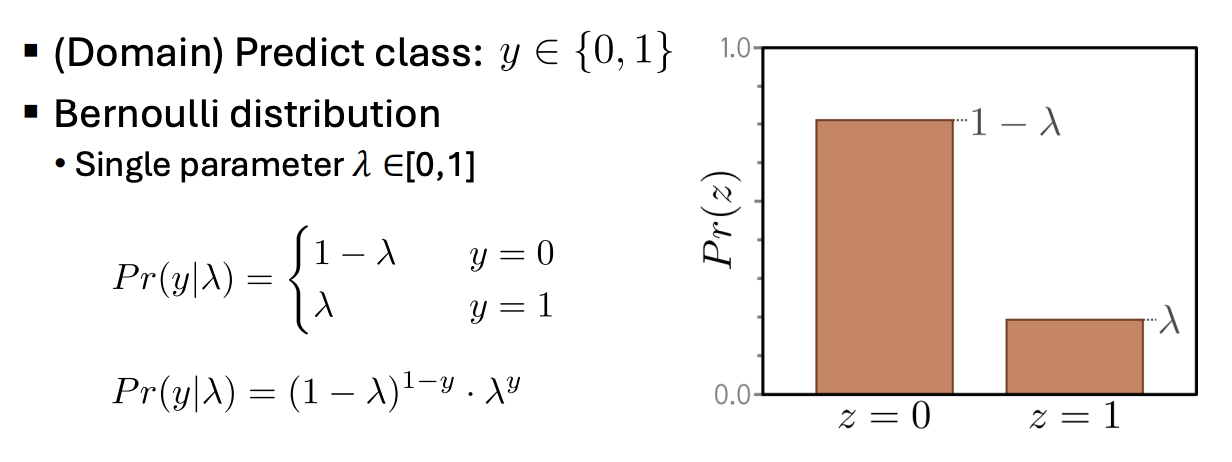
- Set the machine learning model to predict one or more of these parameters, so and $Pr(y|\theta) = Pr(y|f[x, \phi]).
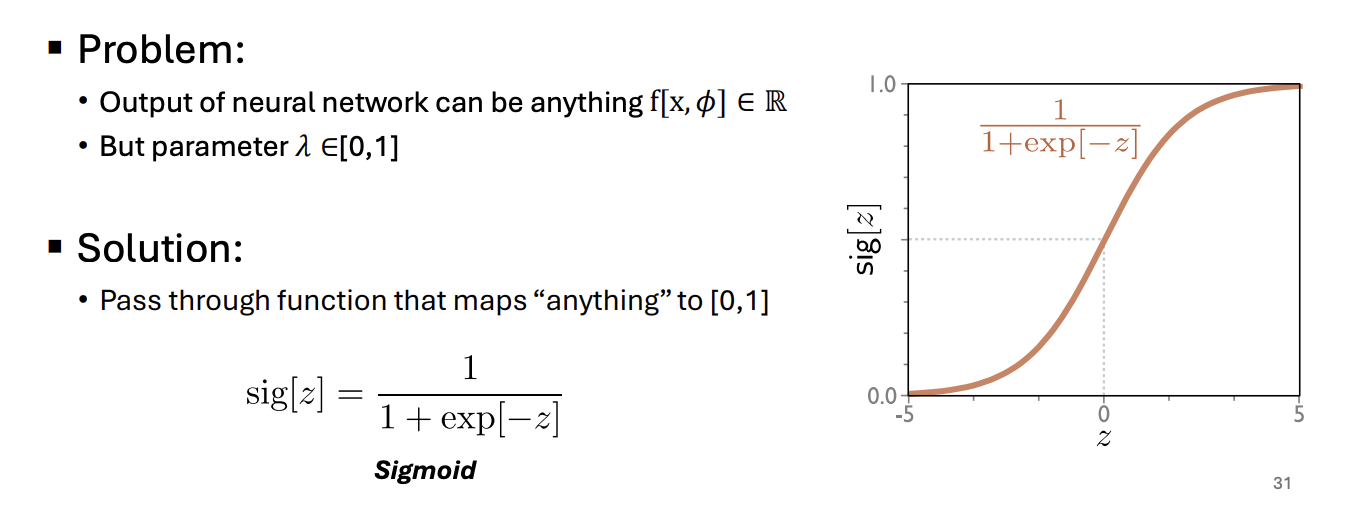
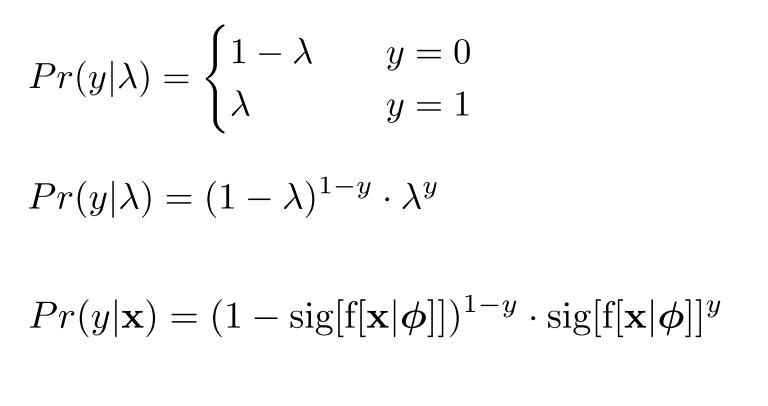
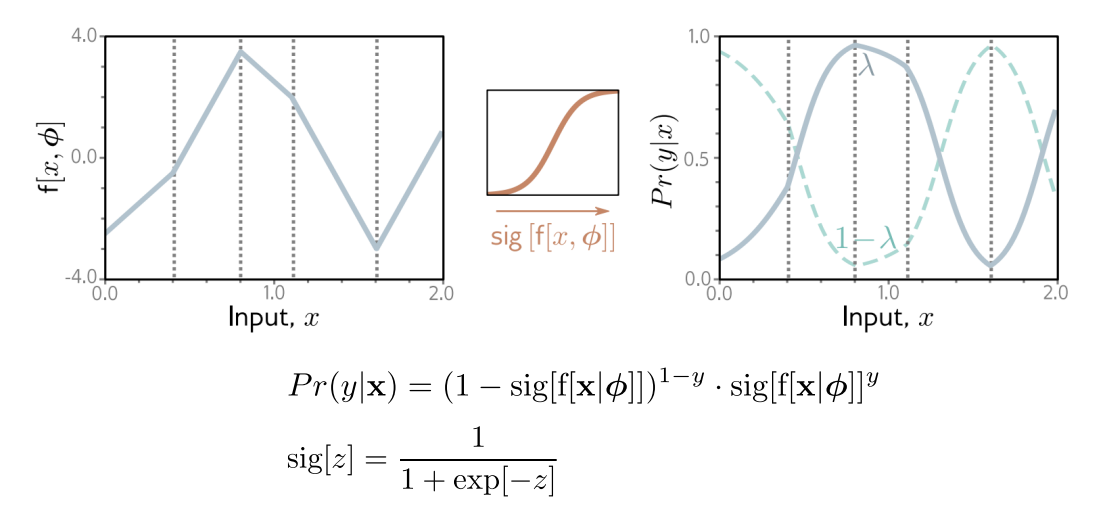
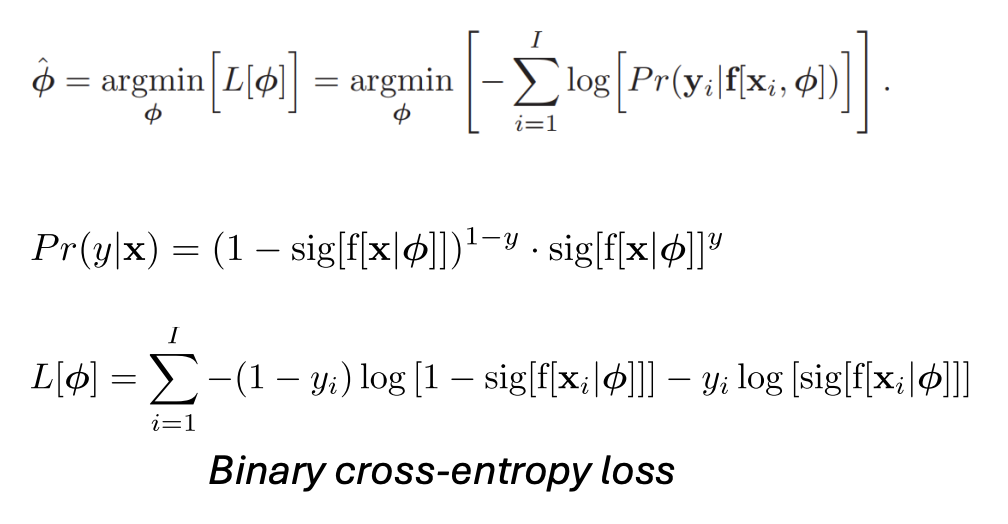
- To train the model, find the network parameters that minimize the negative log-likelihood loss function over the training dataset pairs
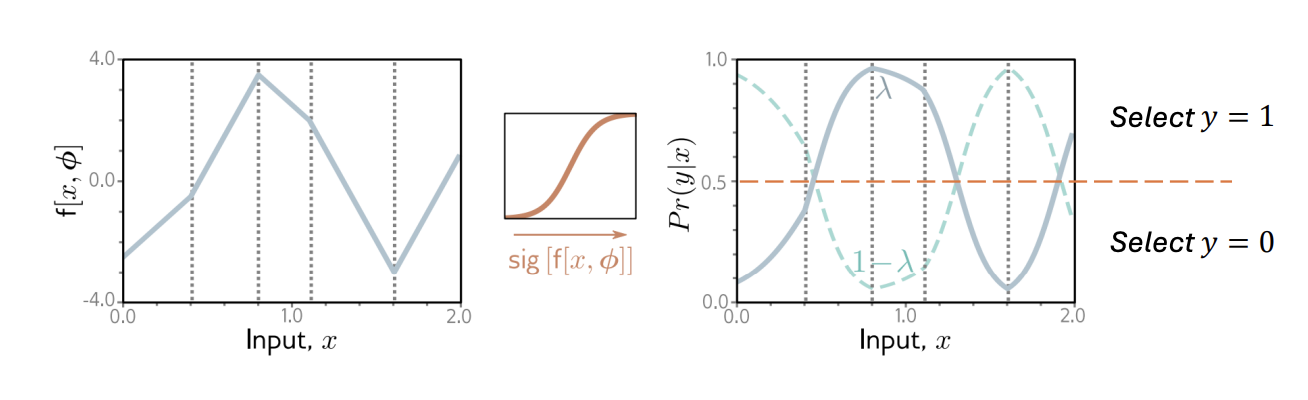
- To perform inference for a new test example x, return either the full distribution $Pr(y|f[x, \hat{\phi}]) or the value where this distribution is maximized.
Multiclass Classification
- Choose a suitable probability distribution defined over the domain of the predictions y with distribution parameters .
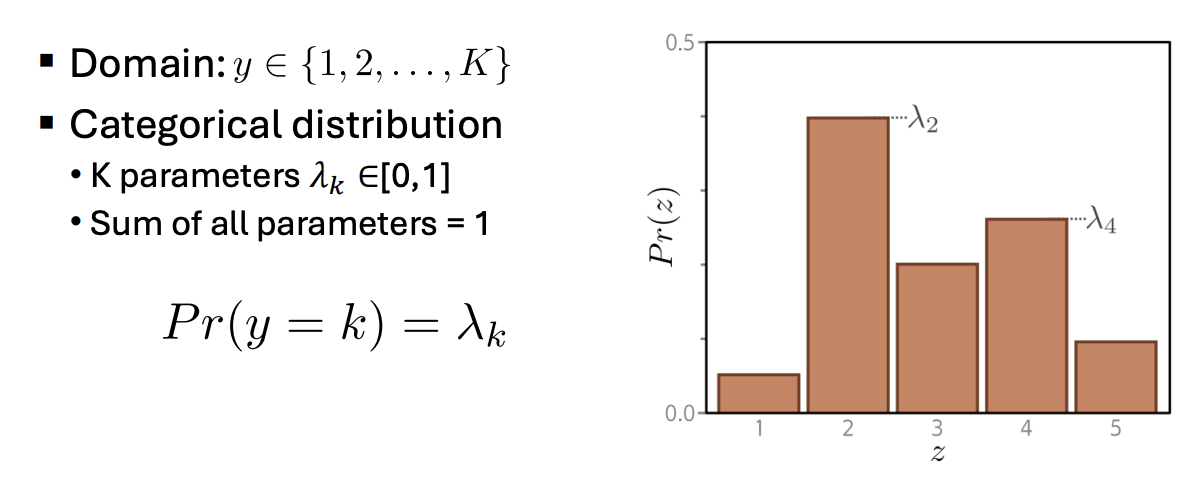
- Set the machine learning model to predict one or more of these parameters, so and $Pr(y|\theta) = Pr(y|f[x, \phi]).
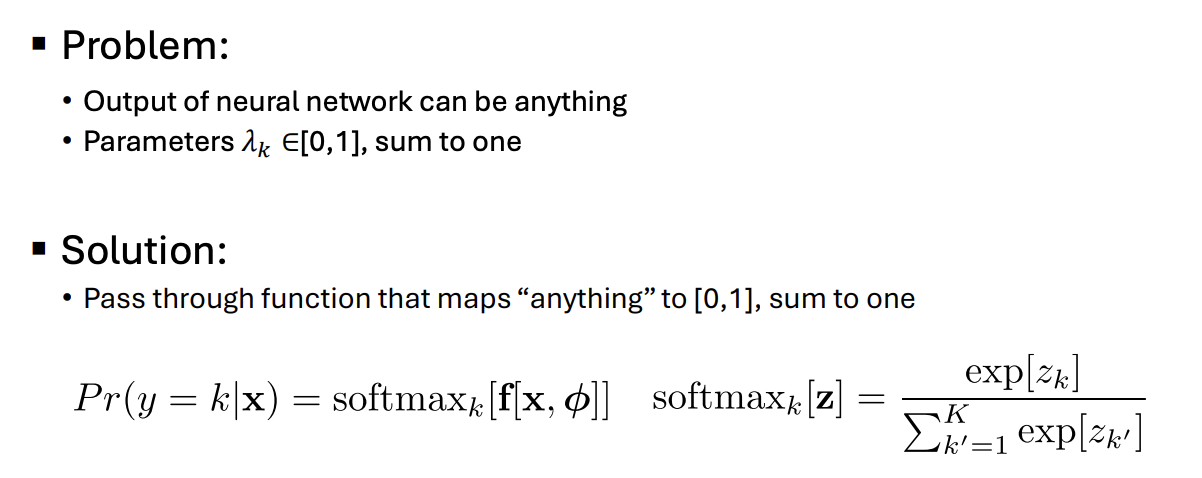
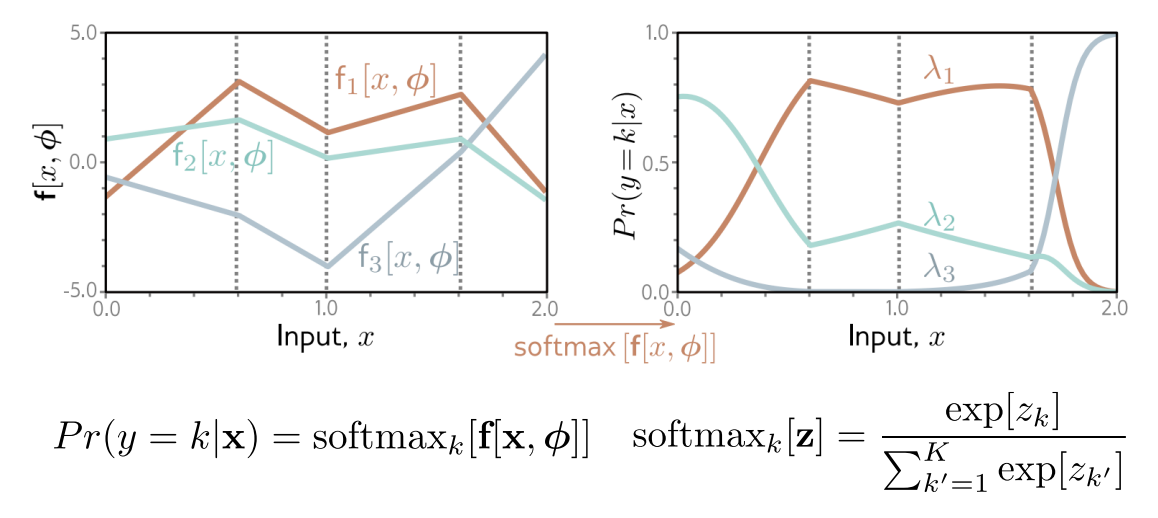
- To train the model, find the network parameters that minimize the negative log-likelihood loss function over the training dataset pairs
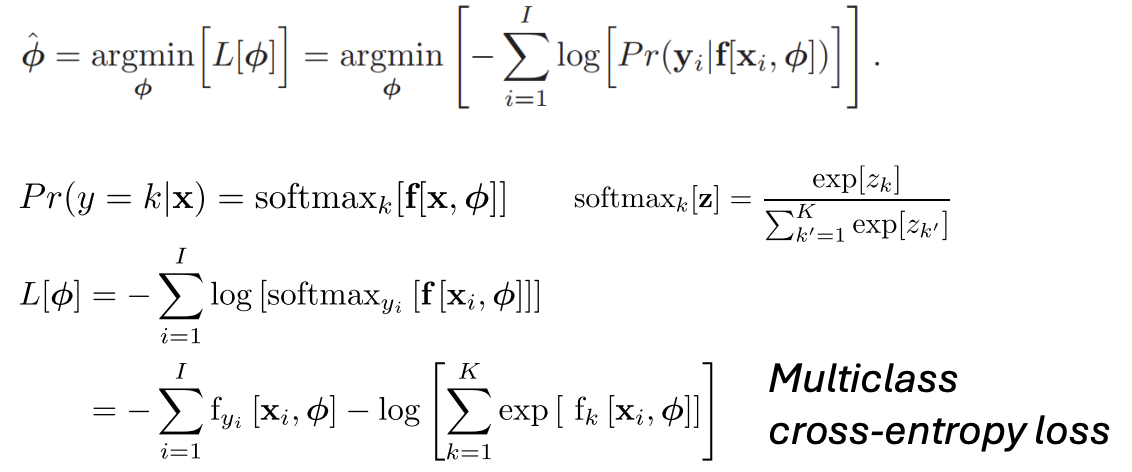
- To perform inference for a new test example x, return either the full distribution $Pr(y|f[x, \hat{\phi}]) or the value where this distribution is maximized.
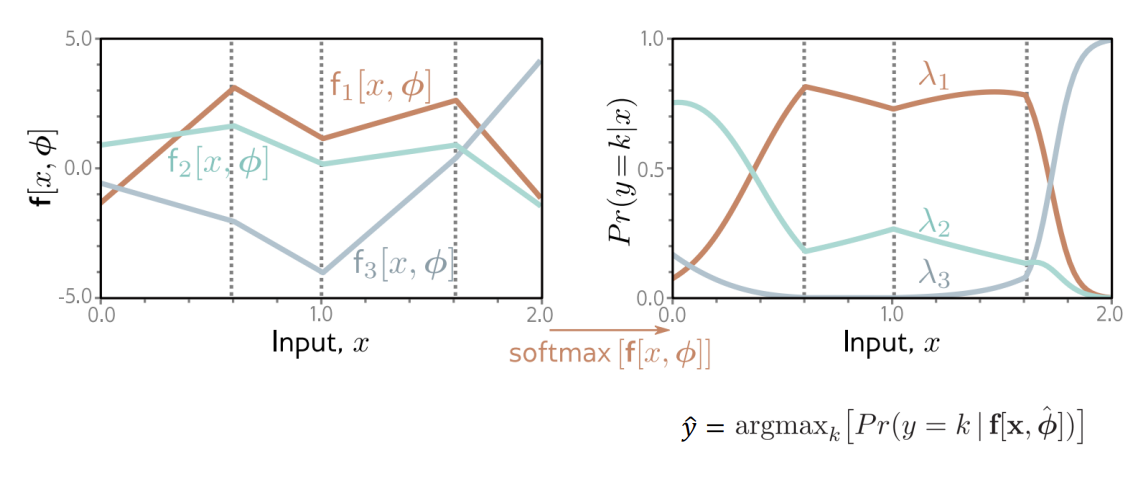
Multiple Outputs (다중 출력 모델)
개념 요약
출력이 하나가 아니라 벡터인 경우를 생각해보자.
예:
- 좌표 예측 -> (x, y)
- 여러 타겟 -> (가격, 수요량, 위험도)
확률 분해
각 확률들은 독립이다는 가정하에, Joint Probability가 이렇게 쪼개진다.
Cross Entropy Loss & KL Divergence
핵심 개념
Cross Entropy는 사실 이것과 연결된다.
-> KL Eivergence (분포 간 거리)
KL Divergence 정의
의미 해석
- q(z) : 실제 데이터 분포
- p(z) : 모델이 만든 분포
KL Divergence는 모델 분포 p가 실제 분포 q와 얼마나 다른지를 보여준다.
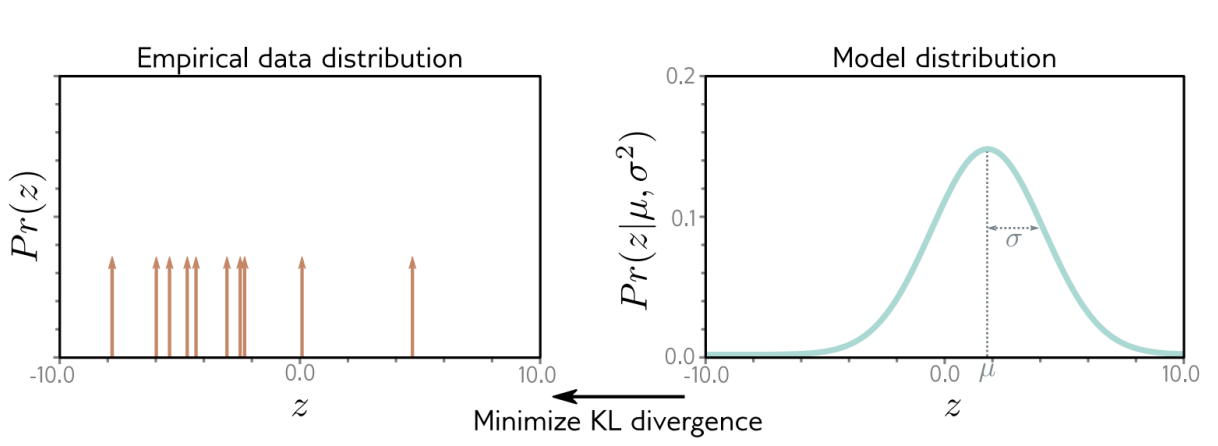
그림 직관
왼쪽 그래프는 실제 데이터 분포를 보여준다. 오른쪽은 모델이 만든 분포 Gaussian을 보여준다.
왜 Cross Entropy가 나오냐
KL식을 다시 보면,
앞에 q(z)log(q(z)는 데이터로 고정된다. 즉, 학습과 무관한 상수이다. 그래서, 우리가 실제로 최소화 하는건 뒤에 적분 식이다.
의미는 정답 분포에서 샘플 뽑아서 모델이 얼마나 잘 맞추는지를 평가한다.
Cross Entropy는 모델 분포를 실제 데이터 분포에 맞추기 위해 KL divergence를 최소화한 것이다.
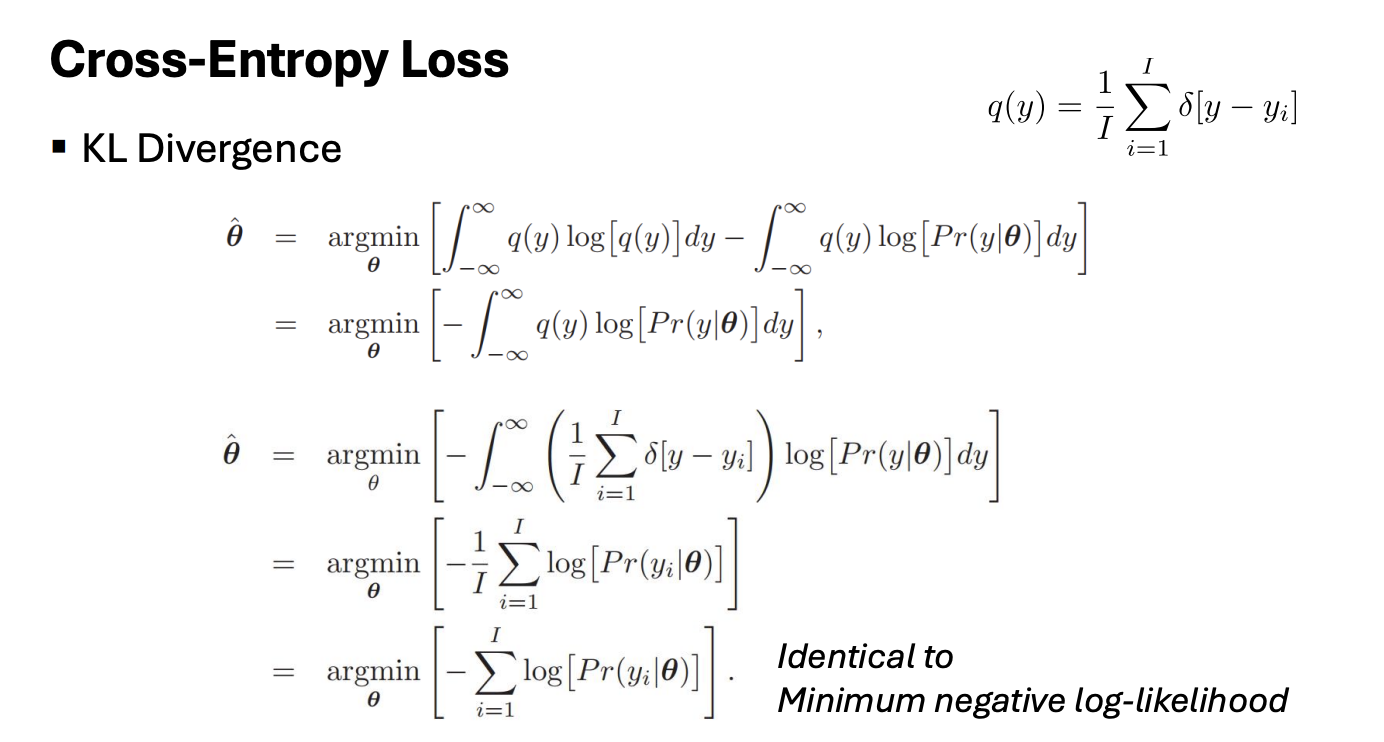
Cross Entropy를 최소화 하는것은 데이터에 대한 Likelihood를 최대화하는것과 동일하다.