데이터베이스 오류에 따라서 특정 예외는 복구하고 싶을 수 있다.
예를 들어서 회원 가입시 DB에 이미 같은 ID가 있으면 ID 뒤에 숫자를 붙여서 새로운 ID를 만들어야 한다고 가정해보자.
ID를 hello 라고 가입 시도 했는데, 이미 같은 아이디가 있으면 hello12345 와 같이 뒤에 임의의 숫자를 붙여서 가입하는 것이다.
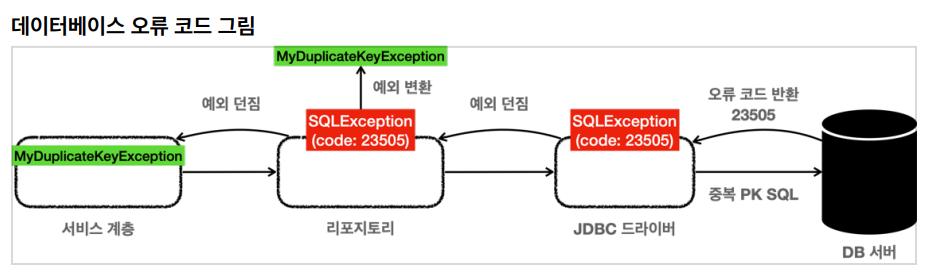
데이터를 DB에 저장할 때 같은 ID가 이미 데이터베이스에 저장되어 있다면, 데이터베이스는 오류 코드를 반환하고, 이 오류 코드를 받은 JDBC 드라이버는 SQLException 을 던진다. 그리고 SQLException 에는 데이터베이스가 제공하는 errorCode 라는 것이 들어있다.
H2 데이터베이스의 키 중복 오류 코드
e.getErrorCode() == 23505SQLException 내부에 들어있는 errorCode 를 활용하면 데이터베이스에서 어떤 문제가 발생했는지 확인할 수 있다.
참고로 같은 오류여도 각각의 데이터베이스마다 정의된 오류 코드가 다르다. 따라서 오류 코드를 사용할 때는 데이터베이스 메뉴얼을 확인해야 한다.
서비스 계층에서는 예외 복구를 위해 키 중복 오류를 확인할 수 있어야 한다. 그래야 새로운 ID를 만들어서 다시 저장을 시도할 수 있기 때문이다. 이러한 과정이 바로 예외를 확인해서 복구하는 과정이다. 리포지토리는 SQLException 을 서비스 계층에 던지고 서비스 계층은 이 예외의 오류 코드를 확인해서 키 중복 오류( 23505 )인 경우 새로운 ID를 만들어서 다시 저장하면 된다.
그런데 SQLException 에 들어있는 오류 코드를 활용하기 위해 SQLException 을 서비스 계층으로 던지게 되면, 서비스 계층이 SQLException 이라는 JDBC 기술에 의존하게 되면서, 지금까지 우리가 고민했던 서비스 계층의 순수성이 무너진다.
이 문제를 해결하려면 앞서 배운 것 처럼 리포지토리에서 예외를 변환해서 던지면 된다.
SQLException -> MyDuplicateKeyException
MyDuplicateKeyException
package hello.jdbc.repository.ex;

public class MyDuplicateKeyException extends MyDbException {
    public MyDuplicateKeyException() {
    }

    public MyDuplicateKeyException(String message) {
        super(message);
    }

    public MyDuplicateKeyException(String message, Throwable cause) {
        super(message, cause);
    }

    public MyDuplicateKeyException(Throwable cause) {
        super(cause);
    }
}
- 기존에 사용했던 MyDbException 을 상속받아서 의미있는 계층을 형성한다. 이렇게하면 데이터베이스 관련 예외라는 계층을 만들 수 있다.
- 그리고 이름도 MyDuplicateKeyException 이라는 이름을 지었다. 이 예외는 데이터 중복의 경우에만 던져야 한다.
- 이 예외는 우리가 직접 만든 것이기 때문에, JDBC나 JPA 같은 특정 기술에 종속적이지 않다. 따라서 이 예외를 사용하더라도 서비스 계층의 순수성을 유지할 수 있다. (향후 JDBC에서 다른 기술로 바꾸어도 이 예외는 그대로 유지할 수 있다.)
실제 예제 코드를 만들어서 확인해보자.
ExTranslatorV1Test
package hello.jdbc.exception.translator;

import hello.jdbc.connection.ConnectionConst;
import hello.jdbc.domain.Member;
import hello.jdbc.repository.ex.MyDbException;
import hello.jdbc.repository.ex.MyDuplicateKeyException;
import lombok.RequiredArgsConstructor;
import lombok.extern.slf4j.Slf4j;
import org.junit.jupiter.api.BeforeEach;
import org.junit.jupiter.api.Test;
import org.springframework.jdbc.datasource.DriverManagerDataSource;
import org.springframework.jdbc.support.JdbcUtils;

import javax.sql.DataSource;
import java.sql.Connection;
import java.sql.PreparedStatement;
import java.sql.SQLException;
import java.util.Random;

import static hello.jdbc.connection.ConnectionConst.*;

public class ExTranslatorV1Test {

    Repository repository;
    Service service;

    @BeforeEach
    void init() {
        DriverManagerDataSource dataSource = new DriverManagerDataSource(URL, USERNAME, PASSWORD);
        repository = new Repository(dataSource);
        service = new Service(repository);
    }

    @Test
    void duplicateKeySave() {
        service.create("myId");
        service.create("myId"); //같은 아이디 저장 시도
    }


    @Slf4j
    @RequiredArgsConstructor
    static class Service {
        private final Repository repository;

        public void create(String memberId) {
            try {
                repository.save(new Member(memberId, 0));
                log.info("saveId={}", memberId);
            } catch (MyDuplicateKeyException e) {
                log.info("키 중복, 복구 시도");
                String retryId = generateNewId(memberId);
                log.info("retryId={}", retryId);
                repository.save(new Member(retryId, 0));
            } catch (MyDbException e) {
                log.info("데이터 접근 계층 예외", e);
                throw e;
            }

        }

        private String generateNewId(String memberId) {
            return memberId + new Random().nextInt(10000);
        }
    }

    @RequiredArgsConstructor
    static class Repository {
        private final DataSource dataSource;

        public Member save(Member member) {
            String sql = "insert into member(member_id, money) values(?, ?)";

            Connection con = null;
            PreparedStatement pstmt = null;

            try {
                con = dataSource.getConnection();
                pstmt = con.prepareStatement(sql);
                pstmt.setString(1, member.getMemberId());
                pstmt.setInt(2, member.getMoney());
                pstmt.executeUpdate();
                return member;
            } catch (SQLException e) {
                //h2 db
                if (e.getErrorCode() == 23505) {
                    throw new MyDuplicateKeyException(e);
                }
                throw new MyDbException(e);
            } finally {
                JdbcUtils.closeStatement(pstmt);
                JdbcUtils.closeConnection(con);
            }
        }

    }
}
실행해보면 다음과 같은 로그를 확인할 수 있다.
Service - saveId=myId
Service - 키 중복, 복구 시도
Service - retryId=myId492
같은 ID를 저장했지만, 중간에 예외를 잡아서 복구한 것을 확인할 수 있다.
리포지토리 부터 중요한 부분을 살펴보자
catch (SQLException e) {
                //h2 db
                if (e.getErrorCode() == 23505) {
                    throw new MyDuplicateKeyException(e);
                }
throw new MyDbException(e);- e.getErrorCode() == 23505 : 오류 코드가 키 중복 오류( 23505 )인 경우
MyDuplicateKeyException 을 새로 만들어서 서비스 계층에 던진다. - 나머지 경우 기존에 만들었던 MyDbException 을 던진다.
서비스의 중요한 부분을 살펴보자.
 			try {
                repository.save(new Member(memberId, 0));
                log.info("saveId={}", memberId);
            } catch (MyDuplicateKeyException e) {
                log.info("키 중복, 복구 시도");
                String retryId = generateNewId(memberId);
                log.info("retryId={}", retryId);
                repository.save(new Member(retryId, 0));
            } catch (MyDbException e) {
                log.info("데이터 접근 계층 예외", e);
                throw e;
}- 처음에 저장을 시도한다. 만약 리포지토리에서 MyDuplicateKeyException 예외가 올라오면 이 예외를 잡는다.
- 예외를 잡아서 generateNewId(memberId) 로 새로운 ID 생성을 시도한다. 그리고 다시 저장한다. 여기가 예외를 복구하는 부분이다.
- 만약 복구할 수 없는 예외( MyDbException )면 로그만 남기고 다시 예외를 던진다.
- 참고로 이 경우 여기서 예외 로그를 남기지 않아도 된다. 어차피 복구할 수 없는 예외는 예외를 공통으로 처리하는 부분까지 전달되기 때문이다. 따라서 이렇게 복구 할 수 없는 예외는 공통으로 예외를 처리하는 곳에서 예외 로그를 남기는 것이 좋다. 여기서는 다양하게 예외를 잡아서 처리할 수 있는 점을 보여주기 위해 이곳에 코드를 만들어두었다.
정리
- SQL ErrorCode로 데이터베이스에 어떤 오류가 있는지 확인할 수 있었다.
- 예외 변환을 통해 SQLException 을 특정 기술에 의존하지 않는 직접 만든 예외인 MyDuplicateKeyException 로 변환 할 수 있었다.
- 리포지토리 계층이 예외를 변환해준 덕분에 서비스 계층은 특정 기술에 의존하지 않는 MyDuplicateKeyException 을 사용해서 문제를 복구하고, 서비스 계층의 순수성도 유지할 수 있었다.
남은 문제
-
SQL ErrorCode는 각각의 데이터베이스 마다 다르다. 결과적으로 데이터베이스가 변경될 때 마다 ErrorCode도 모두 변경해야 한다.
-
데이터베이스가 전달하는 오류는 키 중복 뿐만 아니라 락이 걸린 경우, SQL 문법에 오류 있는 경우 등등 수십 수백가지 오류 코드가 있다. 이 모든 상황에 맞는 예외를 지금처럼 다 만들어야 할까? 추가로 앞서 이야기
한 것 처럼 데이터베이스마다 이 오류 코드는 모두 다르다.
