Power over Ethernet (PoE): Practical Engineering Guide for Embedded and Industrial Systems
Power over Ethernet (PoE) has quietly become a key enabling technology in modern embedded and industrial products. By delivering both power and data over a single Ethernet cable, PoE simplifies system architecture, reduces installation cost, and improves deployment flexibility—especially in environments where power outlets are limited or difficult to access.
This article explains PoE from an engineering perspective: how it works, the relevant standards, typical system architectures, and what designers should consider when integrating PoE into embedded devices such as industrial HMIs, IP cameras, access controllers, and smart panels.
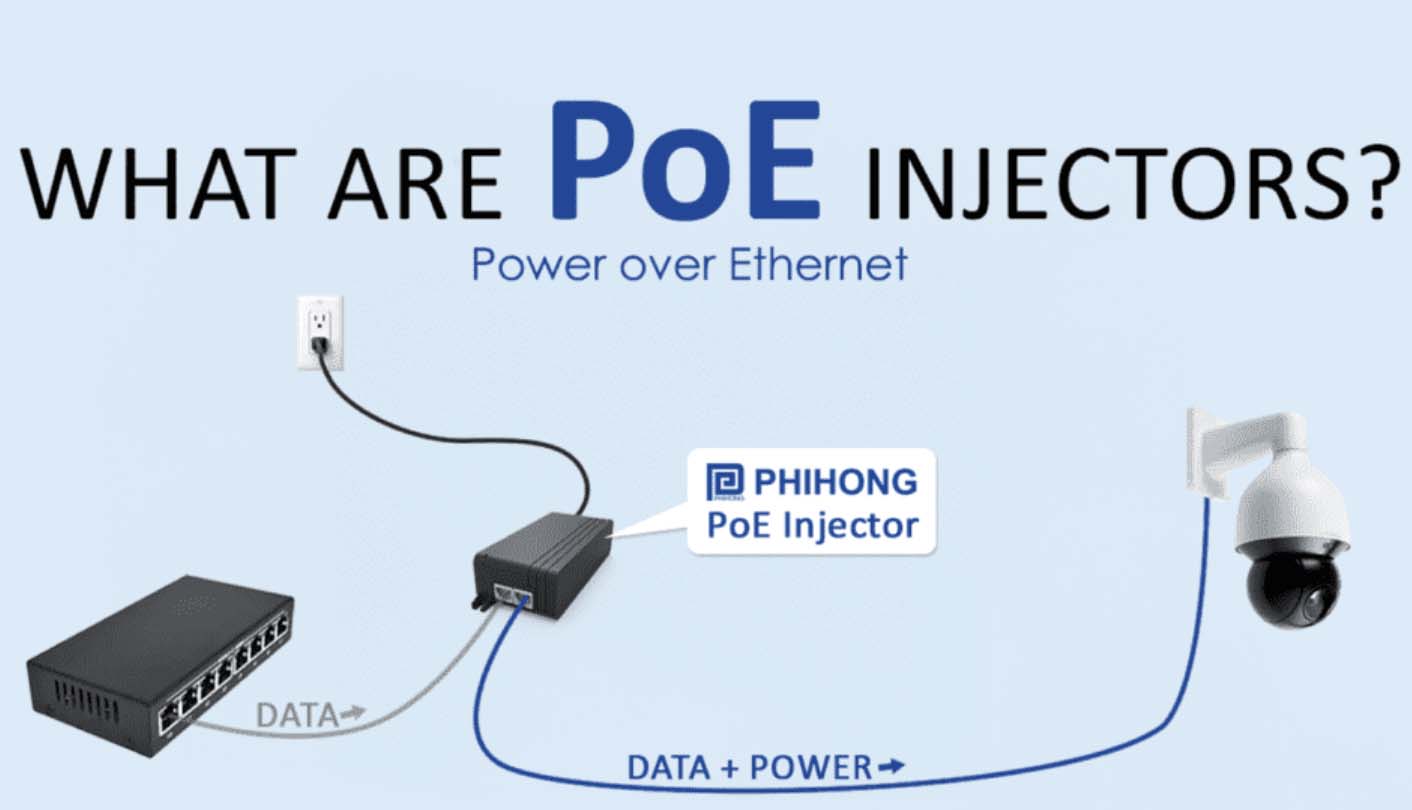
What Is PoE?
Power over Ethernet is a technology that allows DC power and Ethernet data to be transmitted simultaneously over standard twisted-pair Ethernet cables (Cat5e, Cat6, etc.). Instead of running separate power lines, a single cable connects the device to a PoE-capable network switch or injector.
In a PoE system, two roles are defined:
-
PSE (Power Sourcing Equipment)
The device that supplies power, such as a PoE switch or PoE injector. -
PD (Powered Device)
The device that receives power, such as an IP camera, VoIP phone, industrial display, or embedded controller.
From an installation standpoint, PoE reduces wiring complexity and allows devices to be placed wherever Ethernet connectivity exists.
PoE Standards Overview
PoE is governed by IEEE standards, which define voltage levels, power classes, and negotiation mechanisms.
IEEE 802.3af (PoE)
- Maximum power at PSE: 15.4 W
- Typical power available at PD: ~12.95 W
- Common for low-power devices such as basic sensors and VoIP phones
IEEE 802.3at (PoE+)
- Maximum power at PSE: 30 W
- Typical power available at PD: ~25.5 W
- Widely used for IP cameras, access points, and small embedded panels
IEEE 802.3bt (PoE++ / 4PPoE)
- Type 3: up to 60 W
- Type 4: up to 90 W
- Designed for high-power devices such as large displays, thin clients, and multi-function embedded systems
Understanding which standard your product targets is critical, as it directly affects power budget, component selection, and thermal design.
How PoE Power Delivery Works
PoE does not simply inject power blindly into an Ethernet cable. A controlled detection and classification process ensures compatibility and safety.
-
Detection
The PSE applies a low voltage to check for a valid PoE signature on the PD. -
Classification (optional)
The PD reports its power class, allowing the PSE to allocate appropriate power. -
Power On
Once validated, the PSE supplies full operating voltage (typically ~48 V DC). -
Monitoring
The PSE continuously monitors current draw and disconnects power if faults occur.
For embedded designers, this means PoE input circuitry must comply with detection and classification requirements defined by the standard.
Typical PoE System Architecture in Embedded Products
A PoE-enabled embedded device usually includes the following blocks:
- Ethernet PHY and magnetics
- PoE PD controller
- Isolation transformer
- DC/DC converter (48 V to system rails)
- System power management (3.3 V, 5 V, 12 V, etc.)
The PoE PD controller handles negotiation with the PSE and ensures compliance with IEEE standards. The downstream DC/DC stage converts the high-voltage PoE input into usable system power.
From a reliability standpoint, proper isolation and surge protection are essential, especially in industrial environments.
Advantages of PoE in Industrial and Embedded Applications
Simplified Installation
Only one cable is required for both power and data. This reduces installation time and eliminates the need for local power outlets.
Centralized Power Management
PoE switches allow centralized control, monitoring, and backup power via UPS systems. This is particularly useful in critical installations such as security or automation systems.
Improved Safety
PoE operates at relatively low DC voltages and includes built-in fault detection, making it safer than many traditional power distribution methods.
Flexible Device Placement
Devices can be installed in ceilings, walls, kiosks, or outdoor enclosures without worrying about nearby power sources.
Design Considerations for PoE Devices
Power Budgeting
Always design with margin. Account for cable losses, conversion efficiency, peak load conditions, and future feature expansion.
Thermal Management
Higher PoE classes mean higher power dissipation. Proper heat spreading, airflow, and component placement are critical.
EMC and Surge Protection
Industrial Ethernet environments can be electrically noisy. Robust transient protection and grounding strategies are required.
Cable Quality and Length
Standard Ethernet limits still apply. Poor cabling can lead to voltage drops or intermittent behavior under load.
Common PoE Applications
PoE is widely used across many embedded and industrial products, including:
- Industrial HMIs and control panels
- IP cameras and surveillance systems
- Access control and attendance terminals
- Smart building panels and room controllers
- Thin clients and edge computing nodes
- Digital signage and information kiosks
In many of these cases, PoE enables faster deployment and cleaner system design.
PoE vs Traditional Power Approaches
While PoE offers many benefits, it is not always the right solution. High-power systems, long cable runs beyond Ethernet limits, or environments without PoE infrastructure may still require traditional power supplies.
However, for low- to mid-power embedded devices with Ethernet connectivity, PoE often provides the best balance of simplicity, safety, and scalability.
Conclusion
Power over Ethernet is more than a convenience feature—it is a system-level design choice that can significantly affect cost, reliability, and deployment flexibility. For embedded and industrial products, PoE enables cleaner architectures, faster installation, and centralized power control.
When designed correctly, PoE-powered devices integrate seamlessly into modern networked environments, making them easier to deploy, maintain, and scale. As Ethernet continues to be the backbone of industrial communication, PoE will remain an important tool in the embedded engineer’s toolbox.