RK3568 Android SBC for Video Doorbell Applications
Video doorbells are becoming an important part of modern smart home and building access systems. A traditional doorbell only provides a simple notification when someone presses the button. A modern video doorbell does much more. It can show live video, support two-way audio, detect visitors, connect to a mobile app, record events, unlock doors, display notifications, and integrate with a smart home platform.
To build this type of product, developers need a hardware platform that can handle video input, audio processing, network communication, user interface rendering, storage, and long-term software updates. An RK3568 Android SBC is a practical choice for this application. It combines an ARM-based processor, Android operating system support, display output, camera interface, audio interface, network connectivity, and expansion I/O in one compact embedded platform.
For video doorbell products, RK3568 provides a good balance between performance, power consumption, multimedia capability, and development flexibility. Compared with a simple microcontroller solution, it can run a complete Android system and support a much richer user experience. Compared with a full industrial PC, it is smaller, more power-efficient, and easier to integrate into a compact doorbell or indoor monitor design.
What Is an RK3568 Android SBC?
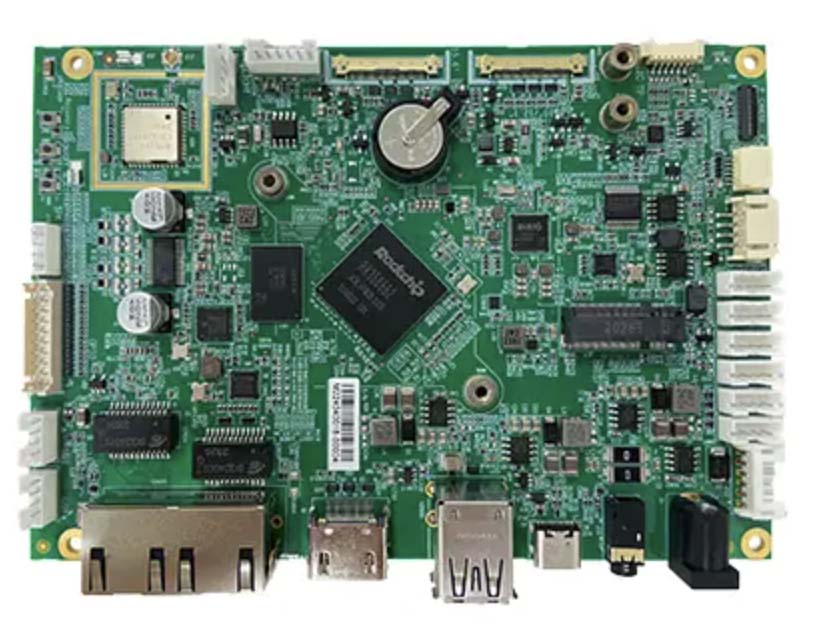
An RK3568 Android SBC is a single-board computer based on the Rockchip RK3568 SoC. The board usually integrates the RK3568 processor, DDR memory, eMMC storage, power management, display interfaces, USB, Ethernet, audio, UART, GPIO, I2C, SPI, camera interfaces, and wireless communication options depending on the board design.
RK3568 is widely used in embedded Android and Linux products. It is suitable for industrial HMI panels, smart terminals, IoT gateways, access control systems, medical devices, digital signage, and smart home products. For video doorbells, its multimedia and interface capabilities make it useful for both outdoor door units and indoor control panels.
In an Android-based product, the RK3568 SBC runs the Android operating system and a dedicated doorbell application. The application can display camera video, handle touch interaction, manage user settings, connect to cloud services, control audio calls, process notifications, and communicate with external access control hardware.
The SBC can be used as the main board inside an indoor video doorbell monitor, or it can be used in a more advanced outdoor unit that includes camera, microphone, speaker, network connection, and access control functions.
Why Use Android for a Video Doorbell?
Android is useful for video doorbell applications because it provides a mature software framework for user interfaces, multimedia, networking, and application updates. A video doorbell is not only a hardware device. It is also an interactive product that users operate every day. The interface must be clear, responsive, and easy to understand.
With Android, developers can build a modern UI with live video preview, call buttons, door unlock controls, event history, Wi-Fi settings, device pairing, language selection, and cloud account login. Android also supports multimedia functions such as camera preview, audio playback, microphone input, video decoding, image display, and notification sounds.
Another advantage is application-level development. Software teams can build the main doorbell application using standard Android development tools. This can reduce development time compared with building a complete custom graphical system from the ground up.
Android also supports OTA update strategies. A doorbell product may need firmware improvements, UI updates, security patches, cloud protocol changes, or customer-specific features after deployment. With a well-designed Android system, the main application and firmware can be updated more easily.
For products with a display, Android is especially attractive. It provides a familiar touch interaction model and a rich graphical environment, which are useful for indoor monitor panels and smart home control screens.
Typical Video Doorbell System Architecture
A video doorbell system can be designed in several ways. A basic system may include an outdoor camera doorbell and a mobile app. A more complete system may include an outdoor unit, an indoor touch monitor, cloud service, mobile app, and smart lock interface.
An RK3568 Android SBC can fit into this architecture in different roles.
For an indoor monitor, the SBC can drive a TFT LCD, process touch input, receive video streams from the outdoor camera, play ringtone audio, support two-way voice, display visitor history, and control door unlock commands.
For an outdoor smart doorbell, the SBC can connect to a camera sensor, microphone, speaker, button, LED, network module, and door lock relay. It can capture video, encode or transmit streams, process audio, detect button events, and communicate with an indoor panel or cloud server.
For a smart building access terminal, RK3568 can combine video doorbell, access control, QR code display, face capture, card reader interface, intercom, and local display functions.
A typical architecture may include:
- RK3568 Android SBC as the main processor
- Camera module for live video
- Microphone and speaker for two-way audio
- TFT LCD and capacitive touch panel for indoor display
- Ethernet or Wi-Fi for network connection
- GPIO for doorbell button and status LEDs
- Relay or access control interface for door unlock
- eMMC storage for logs and event records
- Android application for user interface and device logic
- Cloud or local server connection for remote access
Camera Integration
Camera integration is one of the most important parts of a video doorbell project. The camera must provide a clear image of visitors in different lighting conditions, including daytime, night, backlight, hallway lighting, and outdoor shadows.
An RK3568 SBC may support camera input through MIPI CSI or USB depending on the board design. MIPI CSI is often used for compact embedded camera modules because it provides a direct sensor connection and lower system integration volume. USB cameras are easier to prototype and may use standard UVC drivers, but they may be less compact in a final product.
For a video doorbell, camera selection should consider:
- Resolution
- Frame rate
- Low-light performance
- Wide dynamic range
- Lens viewing angle
- Infrared support
- Sensor size
- Image signal processing
- Mechanical placement
- Weather protection
A wide-angle lens is often used because the camera must capture a visitor standing close to the door. However, very wide lenses may introduce distortion. The software may need distortion correction or UI cropping depending on the final image requirement.
Low-light performance is also important. Many visitors arrive at night or in dim corridors. The product may need infrared LEDs, visible fill light, or a sensor with good low-light sensitivity. If IR night vision is used, the camera window and lens must be compatible with infrared light.
For apartment and building access systems, wide dynamic range is important because the visitor may stand in front of a bright background. Without WDR, the face may appear too dark or the background may be overexposed.
Display and Touch for Indoor Monitors
Many video doorbell systems include an indoor monitor. This monitor may be installed on a wall and used to view visitors, answer calls, unlock doors, check event history, and adjust settings. An RK3568 Android SBC is well suited for this type of display product.
The board can drive TFT LCDs through interfaces such as MIPI DSI, LVDS, HDMI, or eDP depending on the design. Common indoor monitor sizes include 5 inch, 7 inch, and 10.1 inch. A 7 inch display is a practical choice for most homes and apartments because it provides enough space for live video and control buttons while remaining compact.
A capacitive touch panel gives users a modern interface. The UI can include buttons for answer, hang up, unlock, mute, record, settings, and camera switching. Android makes it easier to design an attractive and responsive interface.
Display quality matters because users must quickly identify visitors. IPS TFT displays are often preferred because they provide wide viewing angles and better image stability. For wall-mounted indoor monitors, users may view the screen from different positions, so wide viewing angle is useful.
The display does not usually need outdoor-level brightness if it is installed indoors, but it should have enough brightness for hallways and bright rooms. Cover glass and anti-fingerprint coating can improve appearance and cleaning.
Two-Way Audio Design
Two-way audio is a core function of a video doorbell. The user should be able to hear the visitor clearly and speak back without delay or strong echo.
An RK3568 Android SBC can support audio input and output through onboard codec, I2S audio, USB audio, or external audio chips depending on the board design. The product may include a microphone, speaker, audio amplifier, and acoustic chamber.
Audio design must consider both hardware and software. The microphone should be placed where it can capture voice clearly while reducing wind noise, mechanical vibration, and speaker feedback. The speaker should be loud enough for the environment but should not create too much echo into the microphone.
Important audio features may include:
- Echo cancellation
- Noise reduction
- Automatic gain control
- Full-duplex communication
- Ringtone playback
- Voice prompt playback
- Microphone sensitivity tuning
- Speaker volume control
If the product uses Android, audio routing and permission management must be handled correctly. The doorbell application should manage microphone input, speaker output, call state, ringtone behavior, and audio focus.
For outdoor door units, the enclosure must also protect the microphone and speaker from water and dust while still allowing sound to pass through. This requires careful acoustic and mechanical design.
Network Connectivity
A video doorbell is a connected device. It may need to communicate with an indoor monitor, mobile phone, cloud server, local gateway, smart lock, or building management system.
RK3568 SBCs can support Ethernet and Wi-Fi depending on the board design. Ethernet is stable and suitable for building access systems, villas, and professional installations. Wi-Fi is convenient for consumer smart home products because it reduces wiring complexity.
The system may use different communication methods, such as:
- Local LAN video streaming
- Cloud-based video relay
- Push notifications
- SIP intercom
- RTSP video stream
- WebRTC communication
- MQTT status messages
- HTTP or HTTPS API
- Custom TCP or UDP protocol
For consumer video doorbells, cloud connectivity and mobile app support are often important. For building systems, local network and SIP-based intercom may be preferred. For privacy-focused systems, local-only operation may be a selling point.
Network reliability is critical. The doorbell should recover automatically after router restart, Wi-Fi signal loss, DHCP failure, or temporary cloud disconnection. Users should not need to manually reboot the product often.
Door Unlock and Access Control
A video doorbell often needs to work with door locks, gates, or access control systems. The RK3568 SBC can communicate with external lock control circuits through GPIO, relay output, UART, RS485, Wiegand interface, or a dedicated access control module.
In most professional designs, the SBC should not directly drive a lock without proper isolation and protection. Door lock circuits may involve higher voltage, inductive loads, surge, and security concerns. A relay module or dedicated access control board is usually used.
The software should include clear logic for unlock permission. For example, the device may allow unlocking only after a verified user action, remote app confirmation, authorized card scan, PIN entry, QR code validation, or administrator command.
Access control should also include event logging. The system may record who unlocked the door, when the command was issued, whether it was local or remote, and whether the operation succeeded.
For security, unlock commands should be authenticated and protected. A poorly designed network unlock interface could create serious risk.
Android UI for Video Doorbell Products
The user interface is one of the main reasons to use Android on RK3568. A video doorbell UI must be simple, fast, and reliable.
For an indoor monitor, the main screen may show time, date, network status, missed visitor notifications, and quick access buttons. When a visitor calls, the live camera video should appear quickly with clear buttons for answer, unlock, mute, record, and hang up.
For an outdoor unit with a display, the UI may show call status, QR code instructions, access messages, visitor prompts, and system feedback.
A good UI should avoid unnecessary complexity. Users may need to respond quickly when someone rings the doorbell. The answer and unlock buttons should be large, clear, and difficult to confuse.
Android allows the UI to support multiple languages, animations, icons, event lists, settings pages, and theme customization. However, the system should be locked down as a dedicated device. Users should not access unrelated Android settings or apps during normal use.
Common Android customizations include:
- Custom boot logo
- Auto-start doorbell application
- Full-screen kiosk mode
- Hidden navigation bar
- Disabled status bar
- Restricted system settings
- Watchdog monitoring
- OTA update support
- Factory test mode
Storage and Event Recording
Video doorbells often need event storage. The system may save visitor snapshots, short video clips, call records, unlock logs, alarm events, and system logs.
RK3568 SBCs usually use eMMC storage, which is more reliable than removable storage for production devices. However, video recording can consume storage quickly, so the software must manage data carefully.
The system should define:
- Whether recording is continuous or event-triggered
- How long video clips are stored
- Whether old files are automatically deleted
- Whether cloud upload is supported
- Whether local storage is encrypted
- How logs are rotated
- What happens when storage is full
For most doorbell products, event-triggered recording is more practical than continuous recording. The system can record when the button is pressed, motion is detected, a call starts, or an unlock event occurs.
Power-loss safety should also be tested. If power is lost while writing video, the file system should recover cleanly. Critical event records should not be easily corrupted.
Motion Detection and AI Features
Some video doorbells include motion detection, person detection, face capture, or package detection. RK3568 can support basic image processing and lightweight intelligent functions depending on the software and hardware configuration.
Simple motion detection can compare frames and trigger events when a change is detected. More advanced detection may require optimized algorithms or cloud processing. If the product needs real-time AI inference, engineers should evaluate model size, resolution, frame rate, CPU load, memory usage, and available acceleration.
Not every video doorbell needs heavy AI. For many products, reliable video call, clear image quality, event recording, and stable network connection are more important than advanced detection features.
If AI features are included, privacy should be considered. Face images, visitor logs, and video clips are sensitive data. Storage and transmission should be protected.
Power and Thermal Design
Video doorbells may be powered in different ways. Some use DC input. Some use PoE. Some consumer products use batteries, although an RK3568 Android SBC is usually more suitable for wired or powered installations because Android, display, camera, Wi-Fi, and audio all consume energy.
For indoor monitors, DC input or PoE is common. For outdoor units, power design must consider doorbell wiring, access control power, Ethernet power, or external adapters.
Thermal design is important because the system may run continuously. The camera, processor, Wi-Fi module, display backlight, audio amplifier, and power circuits all generate heat. If the device is sealed for dust and water protection, heat dissipation becomes more difficult.
Engineers should test the system inside the final enclosure with video streaming, audio call, network connection, display operation, and recording active. Open-board testing is not enough.
For outdoor units, sunlight can increase enclosure temperature. Materials, color, sealing, and installation position all affect thermal behavior.
Mechanical and Environmental Design
A video doorbell product must be mechanically reliable. Outdoor units may face rain, dust, sunlight, temperature changes, vibration, and possible impact. Indoor monitors must be slim, attractive, and easy to install.
For outdoor doorbells, the camera window must be clear and protected. It should avoid reflection, condensation, dust accumulation, and water droplets. If infrared LEDs are used, the cover material must support IR transmission and avoid internal reflection into the camera.
Microphone and speaker openings must allow sound while resisting water and dust. This may require acoustic membranes, waterproof mesh, or special enclosure structures.
The button, LED indicator, display, touch panel, and mounting bracket should be designed for long-term use. If the product is used in public or building access environments, vandal resistance may also be important.
For indoor monitors, appearance and thickness matter. The SBC should fit behind the display without making the product too bulky. Wall-mounting structure, cable entry, heat path, and antenna position should be considered early.
Security and Privacy
Security is critical in video doorbell products. The device may capture images of visitors, store video clips, control door locks, and connect to the internet. A security weakness can create serious privacy and safety problems.
The Android system should be hardened for production. Unused services should be disabled. Debug ports should be restricted. Default passwords should be removed. OTA packages should be verified. Communication should use encryption where appropriate.
User data should be protected. Video clips, snapshots, cloud tokens, Wi-Fi credentials, and access control logs should not be exposed. If remote unlock is supported, authentication must be strong.
The application should also manage permissions carefully. Camera, microphone, storage, network, and system permissions should be limited to what is required.
Security should be part of the design from the beginning, not added after development is complete.
Reliability and Long-Term Operation
A video doorbell must work every day. Users expect the device to respond when someone presses the button. If the system crashes, loses network connection, or fails to show video, the product quickly loses trust.
Reliability design should include automatic application startup, service restart, watchdog recovery, network reconnection, storage cleanup, and safe firmware update.
The product should be tested under real scenarios:
- Repeated doorbell button presses
- Long-term camera preview
- Two-way audio calls
- Wi-Fi disconnection and reconnection
- Router restart
- Cloud server interruption
- Power cycling
- Storage full condition
- OTA update failure
- High and low temperature operation
- Touch screen aging
- Speaker and microphone testing
A product that works for a short demo may still fail after long-term use. Long-duration testing is necessary before mass production.
Production Testing
For production, the RK3568 Android SBC and complete doorbell assembly should support factory testing. A test mode can verify display, touch, camera, microphone, speaker, button, LED, Ethernet, Wi-Fi, storage, relay output, and other interfaces.
Serial number programming and MAC address management should be included. Firmware version control is also important. Each shipped unit should be traceable to a specific hardware revision and software build.
Production testing should be fast, repeatable, and easy for factory workers to operate. Automated test tools can reduce human error and improve quality control.
Choosing an RK3568 Android SBC for Video Doorbells
When selecting an RK3568 Android SBC for a video doorbell project, engineers should consider both hardware and software support.
Important factors include:
- Android BSP stability
- Camera interface support
- Display interface support
- Touch panel compatibility
- Audio input and output
- Ethernet and Wi-Fi performance
- eMMC capacity
- RAM size
- GPIO and relay control options
- UART, RS485, or access control interfaces
- Power input design
- Thermal performance
- Mechanical size
- Long-term supply
- OTA update support
- Security customization
- Vendor technical support
- Production testing support
A board with good specifications is not enough if the Android BSP is unstable or camera drivers are incomplete. Video doorbell products rely heavily on multimedia, networking, and long-term software reliability. BSP quality and engineering support are therefore very important.
Conclusion
An RK3568 Android SBC is a strong platform for video doorbell applications. It provides the computing power, multimedia capability, display support, camera input, audio interface, network connectivity, and software flexibility needed for modern smart doorbell and access control products.
For indoor monitors, RK3568 can drive a TFT LCD, support capacitive touch, receive video streams, handle two-way audio, and run a polished Android interface. For outdoor units or smart access terminals, it can connect to cameras, microphones, speakers, buttons, locks, network modules, and cloud services.
A successful video doorbell product requires more than selecting a processor. Engineers must carefully design camera integration, audio quality, network reliability, display and touch interface, storage strategy, power supply, thermal behavior, mechanical protection, security, and production testing.
When the RK3568 SBC, Android software, camera module, display, audio system, enclosure, and cloud communication are designed as one complete system, the result can be a reliable and user-friendly video doorbell solution for smart homes, apartments, villas, and building access applications.