How to Choose the Best Portable LED Work Light for Your Warehouse
Proper lighting stands as one of the most critical yet often overlooked elements of warehouse safety and operational efficiency. Every year, inadequate illumination contributes to thousands of workplace accidents, from forklift collisions to costly inventory errors and worker injuries from unseen hazards. Poor lighting doesn't just threaten safety—it directly impacts your bottom line through reduced picking accuracy, slower processing times, and diminished employee morale. Traditional fixed overhead lighting often leaves dark corners, shadowed aisles, and blind spots exactly where workers need visibility most. The portable LED work light has emerged as the modern solution to these challenges, offering unprecedented flexibility to direct bright, energy-efficient illumination precisely where and when it's needed. Whether you're managing loading dock operations, conducting maintenance in high-bay areas, or responding to power outages, the right portable lighting can transform your workspace. This comprehensive guide will walk you through the essential features, practical considerations, and decision-making steps to select the best portable LED work light that meets your warehouse's unique demands and delivers lasting value.
Why Warehouse Lighting is a Critical Safety and Efficiency Factor
Every warehouse manager knows that visibility directly determines safety outcomes. Forklift operators navigating narrow aisles with inadequate lighting face exponentially higher collision risks, while workers in dimly lit zones are far more likely to trip over pallets, stumble on uneven surfaces, or miss critical warning signs. OSHA consistently cites poor illumination as a contributing factor in warehouse incidents, and the financial consequences extend well beyond workers' compensation claims. When your team can't see clearly, picking accuracy plummets—misread labels and overlooked items translate to shipping errors, customer complaints, and expensive returns. Inventory counts become guesswork in shadowed corners, and maintenance tasks take twice as long when technicians struggle to identify problems in poorly lit equipment bays. Worker fatigue accelerates under strain from eye stress, and morale suffers when employees feel their safety isn't prioritized. Traditional fixed overhead lighting creates a fundamental problem: warehouses are dynamic environments where work happens everywhere, not just under permanent fixtures. Loading docks need intense illumination during night shifts, high-rack maintenance requires focused light at elevation, and emergency situations demand immediate lighting solutions when power fails. Portable LED work lights solve this flexibility gap by delivering professional-grade illumination exactly where operations demand it, adapting instantly as your workflow shifts throughout the facility.
Key Features to Evaluate in a Portable LED Work Light
1. Brightness and Light Quality: Ensuring Wide Light Diffusion
Understanding lumens is your first step toward adequate warehouse illumination. While a typical desk lamp produces around 400-800 lumens, warehouse work lights should deliver a minimum of 3,000 lumens for basic tasks, with professional models reaching 10,000 lumens or more for large-area coverage. Higher lumen output means fewer shadows in those critical high-rack zones and loading areas where visibility prevents accidents. Equally important is color temperature, measured in Kelvin. Lights in the 5,000-6,500K range produce daylight-white illumination that renders colors accurately—essential when workers need to read labels, identify products, or spot safety markings without eye strain. Warmer temperatures around 3,000K create yellowish light that distorts colors and reduces visibility. Beam pattern makes the difference between a functional light and an exceptional one. Flood beams spread light across wide areas, perfect for illuminating entire aisles or work zones, while spot beams concentrate intensity for focused tasks. Dual-head work lights offer the best of both worlds, with independently adjustable heads that let you direct light in multiple directions simultaneously. This configuration eliminates the shadow zones that single-head lights create, providing comprehensive coverage whether you're working on equipment repairs or conducting inventory checks across multiple rack levels. Look for models with diffuser lenses that distribute light evenly rather than creating harsh hotspots with dark peripheries.
2. Durability and Build: Withstanding the Warehouse Environment
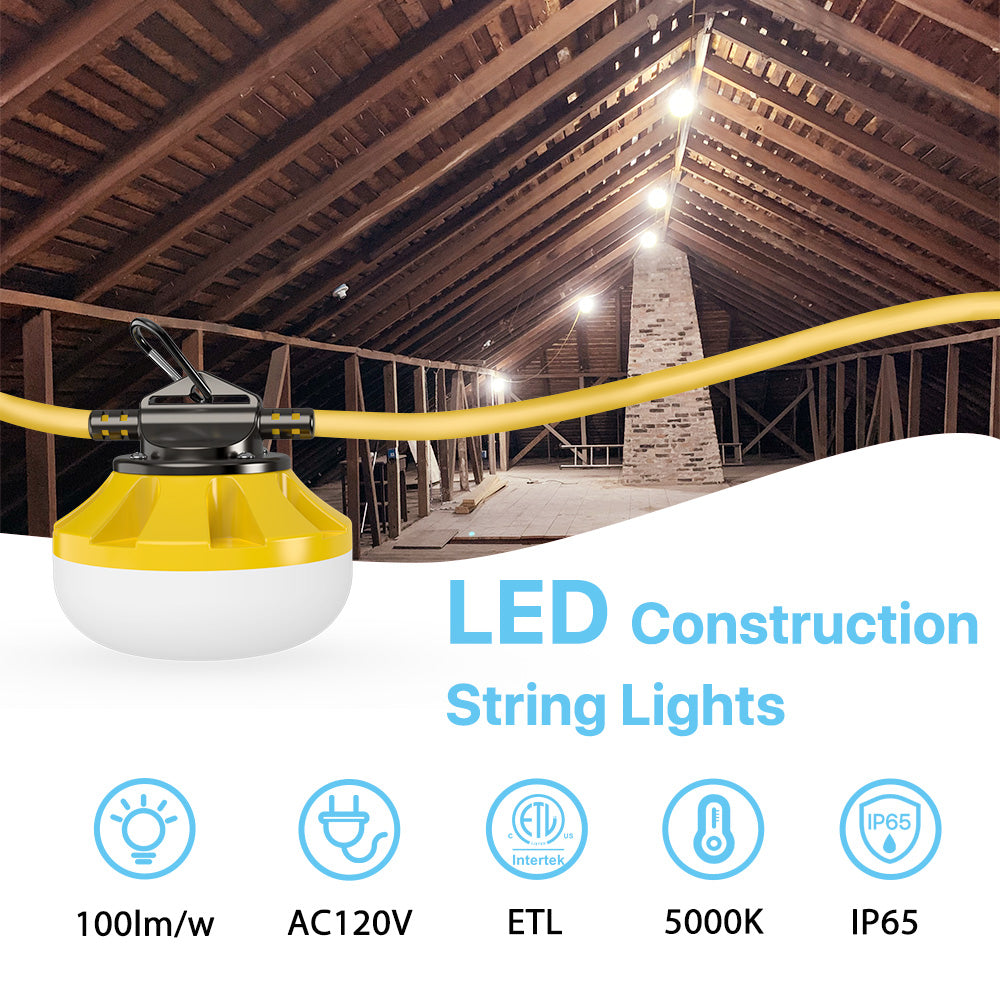
Warehouse environments demand lights built to survive, not just function. Impact resistance is non-negotiable when lights face potential collisions with forklifts, accidental drops from ladders, or the daily bumps of industrial operations. Quality work lights feature reinforced housings made from die-cast aluminum or military-grade polycarbonate that can withstand significant impacts without shattering or compromising internal components. Protective cages or guards around the light heads add another layer of defense against direct strikes. The IP rating system tells you exactly how well a light resists environmental challenges. An IP65 rating means complete dust protection and resistance to water jets from any direction—sufficient for most warehouse conditions including occasional splashes or dusty storage areas. For facilities with washdown procedures or extreme moisture, IP67 ratings provide submersion protection. Heat management directly affects longevity since LEDs degrade faster under high temperatures. Premium work lights incorporate aluminum heat sinks with optimized fin designs that dissipate heat efficiently, maintaining consistent brightness and extending LED lifespan to 50,000 hours or more. Check for lights with sealed electronics compartments that prevent dust infiltration into sensitive circuitry. Reinforced power cords with strain relief at connection points prevent the frustrating failures that plague cheaper models. The housing should feel substantial in hand, with tight seams and quality finishes that signal attention to manufacturing detail. These durability features transform a light from a disposable tool into a long-term asset that performs reliably shift after shift.
3. Power and Portability: Flexibility for Any Task
Your power source choice fundamentally shapes how and where you can deploy lighting. Corded models plugged into standard outlets deliver unlimited runtime, making them ideal for fixed workstations, loading dock areas, or extended maintenance projects where power access exists. They eliminate battery anxiety but tether you to electrical infrastructure. Battery-powered lights offer complete mobility, allowing workers to illuminate remote rack systems, outdoor yard areas, or locations far from outlets without dragging extension cords across pathways. Battery capacity measured in ampere-hours (Ah) determines runtime—a 5Ah battery might power a 3,000-lumen light for four hours, while 10Ah doubles that duration. Lithium-ion batteries charge faster and maintain voltage better than older nickel-based technologies. Swappable battery systems let you keep spare batteries charged and ready, ensuring uninterrupted operation by hot-swapping depleted packs in seconds. Hybrid models accepting both battery and AC power provide maximum versatility, functioning cordless when needed but switching to mains power for all-day tasks. Physical portability matters as much as power flexibility. Lights weighing under ten pounds with ergonomic handles allow easy repositioning without worker fatigue. Integrated hooks let you hang lights from rack uprights or overhead structures, while magnetic bases secure lights to metal surfaces for hands-free operation. Adjustable tripod mounts elevate lights to optimal heights for area illumination. Consider telescoping stands that extend from three to seven feet, positioning light above obstacles and maximizing coverage area.
4. Additional Features for Enhanced Utility
Multiple brightness settings transform a single light into a versatile tool for varying conditions. High mode delivers maximum lumens for demanding tasks, medium settings balance brightness with extended battery life for routine work, and low modes provide sufficient visibility while conserving power during breaks or overnight security checks. Stepless dimming gives even finer control, letting operators dial in precisely the illumination level each situation requires. Emergency power bank functionality adds unexpected value—USB ports that charge phones or tablets turn your work light into a backup power source during outages or in remote areas lacking charging infrastructure. Built-in hooks with 360-degree rotation and strong magnets rated for substantial holding force increase mounting flexibility, letting you secure lights at any angle to vertical or overhead surfaces. Some advanced models include motion sensors that activate lights automatically when workers approach, conserving battery in intermittently used areas. Remote controls allow brightness adjustment without physically accessing the unit, useful when lights are mounted at height. Carrying cases with foam inserts protect your investment during transport and storage while keeping accessories organized. Battery level indicators prevent unexpected shutdowns by showing remaining charge at a glance, and weatherproof construction extends utility to outdoor loading areas and unconditioned warehouse zones.
Your Step-by-Step Guide to Choosing the Right Light
Making the right portable LED work light decision requires a systematic approach that matches your warehouse's specific needs with the right features. Start by assessing your primary use case with precision. Walk through your facility and identify where lighting challenges occur most frequently—are you struggling with dimly lit loading docks during evening shifts, high-bay rack maintenance requiring elevated illumination, or emergency response situations when power fails? Document the specific tasks workers perform in these areas and the environmental conditions they face. Next, define your must-have features by prioritizing the elements that directly address your identified challenges. If your team works in wet conditions near loading bay doors, IP65 or higher water resistance becomes non-negotiable. For facilities with extensive areas far from power outlets, battery capacity and runtime take priority over corded convenience. Create a written checklist ranking features from essential to nice-to-have, ensuring brightness levels match your largest coverage areas. Setting a realistic budget means looking beyond sticker price to calculate total cost of ownership. A premium light costing twice as much but lasting five times longer with lower energy consumption delivers superior value compared to cheap units requiring frequent replacement. Factor in LED efficiency savings, reduced maintenance costs, and the tangible benefits of fewer accidents and improved productivity. Research and compare top models by reading verified user reviews from other warehouse operations, checking manufacturer specifications against your checklist, and consulting with safety managers who've implemented similar solutions. Industrial lighting specialists like Led Hyperlite offer comprehensive product lines designed specifically for demanding warehouse environments, with detailed specifications that help you match lumen output, IP ratings, and mounting options to your operational requirements. Finally, consider a pilot test before committing to multiple units. Purchase one or two lights representing different feature sets and deploy them in your most challenging areas for two weeks. Gather feedback from workers who use them daily about comfort, brightness adequacy, and durability under real conditions. This hands-on evaluation reveals practical strengths and limitations that specifications alone can't capture, ensuring your final selection performs exactly as your operation demands.
Top Portable LED Work Light Configurations for Warehouses
Understanding the most effective lighting configurations helps you deploy portable LED work lights strategically across your facility. Standalone high-output work lights with 5,000-10,000 lumens serve as your workhorse solution for general area illumination, ideal for temporarily lighting entire loading dock sections, aisle intersections, or staging areas during inventory counts. Their single powerful head provides broad flood coverage that eliminates shadows across wide zones. Dual-head work lights excel at focused task lighting where workers need illumination from multiple angles simultaneously. These configurations position two independently adjustable LED heads on a single stand or base, allowing technicians to direct light at equipment from both sides during repairs or illuminate vertical rack faces while also lighting the floor level—eliminating the shadow zones that compromise safety and slow work. For large-scale projects, emergency preparedness, or facilities managing multiple simultaneous operations, multi-light kits provide coordinated solutions. These typically include three to five portable units with matching specifications, carrying cases, and centralized charging stations. Deploy them across your warehouse during power outages to maintain operations, distribute them to multiple maintenance teams working simultaneously, or create comprehensive illumination for major reorganization projects. The key is matching configuration to function—single lights for mobile flexibility, dual-heads for complex tasks, and multi-unit systems for facility-wide coverage needs.
Making Your Strategic Lighting Investment
Selecting the right portable LED work light represents a strategic investment that pays dividends through enhanced safety, operational efficiency, and workforce confidence. The difference between adequate and exceptional warehouse lighting often determines whether your team operates at peak performance or struggles against preventable hazards and productivity drains. By focusing on the three fundamental pillars—sufficient brightness with wide, even light diffusion to eliminate dangerous shadows across your largest work areas, rugged construction with proper IP ratings and impact resistance to survive the demanding warehouse environment, and appropriate power solutions that match your mobility needs without compromising runtime—you position your facility for measurable improvements in accident reduction, picking accuracy, and worker satisfaction. Use the step-by-step evaluation framework provided in this guide to systematically assess your specific lighting challenges, prioritize features that address your operational realities, and make a confident selection backed by thorough research and real-world testing. The portable LED work lights you choose today will illuminate your warehouse operations reliably for years, proving their value every shift through safer working conditions, faster task completion, and the flexibility to adapt lighting precisely where your dynamic operations demand it most.
