Vacuum Lifters vs Manual Lifting: Why the Comparison Always Favors Ergonomic Equipment
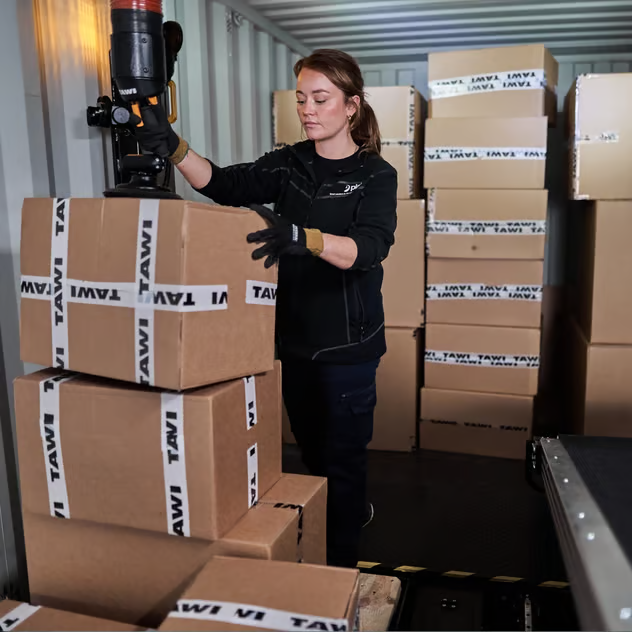
Any facility manager who has considered investing in vacuum lifting equipment has at some point weighed the cost against the status quo of manual lifting. On the surface, manual lifting seems free. Workers are already there, the work gets done, and no capital outlay is required. But this comparison ignores the true cost of manual lifting, and when the full picture is honest, the case for vacuum lifters is overwhelming.
The Real Cost of Manual Lifting Operations
Manual lifting is not free. It generates costs that appear in different budget lines and are therefore rarely totaled into a single honest assessment. Workers' compensation premiums reflect injury rates. Medical costs for musculoskeletal injuries are direct expenses. Overtime and temporary staffing costs cover for injured workers. Reduced productivity from a fatigued, understaffed, or injured team is a real cost even when it doesn't appear on a single line item.
When these costs are aggregated against the capital cost of vacuum lifting equipment, the comparison shifts dramatically. In many facilities, injury-related costs alone exceed the amortized cost of vacuum lifting investment within the first year of operation.
Efficiency: Where Vacuum Lifters Outperform Human Hands
The efficiency comparison between vacuum lifting and manual handling has been measured in real-world conditions. The results from Yusen Logistics, where vacuum lifters proved 20 percent more efficient than manual handling while requiring 30 percent less labor, represent one of the most compelling data points available in the industry.
This efficiency advantage comes from several sources. The mechanical grip is faster than manual gripping and repositioning for a secure hold. The vacuum release is instant, with no fumbling. Workers aren't spending energy fighting the weight of the load, so they move faster and with more consistency. And critically, they don't slow down across the shift due to fatigue in the way that manual handling workers inevitably do.
Safety: The Non-Negotiable Case
Manual lifting at scale is not safely sustainable. Occupational health research consistently shows that repetitive heavy lifting causes cumulative musculoskeletal damage that appears as injury rates across populations of workers. OSHA's manual handling guidelines exist precisely because the evidence for manual lifting harm is well-established.
Vacuum lifters eliminate the root cause of lifting injuries by removing the physical loading from the worker. They don't reduce injury risk. They eliminate the mechanism by which most lifting injuries occur. For a safety manager, that distinction is the difference between risk mitigation and risk elimination.
Workforce Flexibility: Beyond Physical Strength
Manual lifting operations create a workforce filtering effect. Workers who lack the physical strength for heavy lifting can't participate. This constrains the available labor pool, limits workforce flexibility, and creates situations where specific workers are essential rather than interchangeable. When those workers are absent, operations are disrupted.
Vacuum lifting removes the physical strength requirement from the equation. TAWI specifically notes that their solutions create a flexible workplace where employees can move between workstations without limitations in strength or size. For HR managers and operations planners, that flexibility has real operational value.
Worker Retention and Morale
Workers who spend their days doing physically demanding, injury-prone manual lifting are less satisfied and less retained than those with better working conditions. High turnover in lifting roles creates ongoing recruitment and training costs. A culture of physical hardship in manual lifting environments is also increasingly at odds with worker expectations in a competitive labor market.
Vacuum lifting equipment changes the nature of the work from something physically punishing to something that's manageable and sustainable throughout a full career. That change in working conditions improves retention, reduces training costs, and creates a more positive workplace culture.
The Transition From Manual to Automated: Vacuum Lifting as the First Step
TAWI positions their vacuum lifting solutions as the first step from a fully manual handling position onto the journey of automation. This framing is important for facilities that aspire to full automation eventually but aren't ready for the investment and complexity of fully automated systems.
Vacuum lifting provides the ergonomic and efficiency benefits of mechanized handling at a fraction of the cost and complexity of full automation. It can be implemented facility-wide quickly, delivers immediate measurable returns, and positions the facility for further automation investment when the business case supports it.
Conclusion
The comparison between vacuum lifters and manual lifting is not a close one when evaluated honestly. Manual lifting generates ongoing costs in injuries, compensation, reduced efficiency, workforce inflexibility, and high turnover that far exceed the capital investment in vacuum lifting equipment over any reasonable time horizon. TAWI's vacuum lifting solutions, built on nearly a century of Swedish engineering expertise and proven in facilities across every major industry, make the transition from manual to mechanized lifting straightforward and financially compelling. The question isn't whether the investment makes sense. It's why so many facilities wait so long to make it.
