What NJ Distribution Centers Need to Know About Warehouse Epoxy Flooring
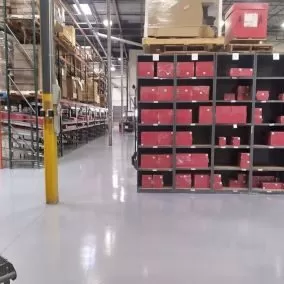
New Jersey sits at the center of one of the most active logistics corridors in North America. Facilities across the state, from North Jersey to South Jersey and the Philadelphia border, handle millions of square feet of warehouse space serving the entire northeastern US market. In that context, warehouse epoxy flooring isn't a luxury choice. It's a practical necessity for any facility that takes operational performance seriously.
Why Is the NJ Warehouse Market Different From Other Regions?
New Jersey warehouses face a combination of operational intensity and climate conditions that stress flooring systems in specific ways. The region experiences genuine four-season weather, with temperature cycling from below freezing in winter to humid heat in summer. That thermal range causes concrete slabs to expand and contract measurably, stressing surface coatings that aren't properly formulated for those conditions.
Beyond climate, the logistics density of the region means many NJ distribution facilities operate multiple shifts with minimal downtime. Floors don't get rest. They face continuous forklift traffic, pallet jack abrasion, and loading dock impact around the clock. Flooring systems specified for this environment need to be genuinely industrial-grade, not commercial-grade products stretched beyond their design parameters.
Which Areas of New Jersey Have Been Served With Epoxy Warehouse Flooring?
High Performance Systems has documented case studies across the full geographic range of New Jersey's warehouse corridor. North Jersey, Central New Jersey, and Southern New Jersey facilities have all received industrial warehouse flooring installations. The Philadelphia area, which shares much of its logistics infrastructure with South Jersey, has also been served. Hudson Valley, New York facilities round out the regional coverage.
That geographic breadth matters because warehouse flooring needs don't change dramatically by ZIP code, but the contractor's familiarity with regional code requirements, concrete slab construction practices, and climate-related challenges does. Local experience informs better installation decisions.
What Specific Challenges Do NJ Loading Docks Create?
Loading docks are among the most punished areas in any warehouse. They're the transition zone between interior and exterior environments, which means they're exposed to rain, snow melt, road salts tracked in from delivery vehicles, and the concentrated impact of forklifts maneuvering under load. Standard concrete in dock areas typically shows visible wear within two to three years of facility opening.
A properly specified epoxy system for dock areas addresses all those factors simultaneously. Chemical resistance handles the road salt and fluid contamination. Textured surface profiles address the moisture-related traction risk. High-build coating thickness handles the impact and abrasion loads. Treating dock areas with a higher specification than the general warehouse floor is standard practice for experienced industrial flooring contractors.
How Do Semi-Rigid Joint Fillers Protect NJ Warehouse Slabs?
New Jersey's temperature cycling makes joint treatment especially important. As slabs expand in summer heat and contract in winter cold, the joints between slab sections see repeated stress. Without proper filler, those joints become entry points for water and debris, and the edges chip under repeated forklift wheel impact.
Semi-rigid polyurea sealants are the correct specification for warehouse slab joints in this climate. They maintain edge support for forklift traffic while remaining flexible enough to accommodate the thermal movement that NJ weather creates. High Performance Systems includes joint filler treatment as part of their complete warehouse flooring approach, which is the right way to address the full scope of what a warehouse floor needs to perform reliably.
What Does a Complete Warehouse Flooring Engagement Look Like?
When a NJ distribution facility engages High Performance Systems for a warehouse flooring project, the process starts with a genuine assessment of the existing slab. Moisture testing, crack mapping, and contamination evaluation all inform the specification before any product decisions are made. That diagnostic rigor is what prevents surprises during installation and failures after it.
The warehouse epoxy flooring specification follows from what the assessment reveals. High-traffic dock areas may receive a different system than lower-stress storage zones. Restroom areas receive seamless epoxy appropriate for wet, hygienic environments. Joint filler treatment addresses transitions between slab sections. The result is a complete flooring solution rather than just a coat of paint on concrete.
What Should Facility Managers Ask Potential Contractors?
Honestly, the most revealing questions are the ones that separate contractors with genuine industrial experience from those who primarily do commercial or decorative work. Ask about moisture vapor testing protocols. Ask about surface preparation methods and why they choose mechanical grinding over chemical etching. Ask for case studies from similar warehouse environments in the same climate region.
A contractor who has been working in industrial warehouse environments for decades, like High Performance Systems since 1988, has answers to those questions that reflect real-world experience rather than marketing language. That experience base is the foundation of an installation that actually performs as specified.
Is There a Difference Between Warehouse and Distribution Center Flooring Needs?
The distinction is subtle but worth understanding. A pure warehouse used primarily for storage sees forklift traffic concentrated in receiving and shipping areas, with longer-dwell pallet storage in between. A distribution center adds sortation, picking, and packing operations that create more dispersed, higher-frequency foot traffic and equipment movement throughout the facility.
Distribution center floors often need more consistent anti-slip performance across a larger percentage of their total area. They also tend to accumulate more debris from packaging operations, making cleanability a higher priority. Epoxy systems for true distribution centers should account for those operational characteristics in their specification rather than treating them identically to straightforward storage facilities.
Conclusion
For NJ distribution centers operating in one of the most demanding logistics environments in the country, warehouse epoxy flooring represents the most reliable investment in operational performance and floor longevity. With certified contractors who have served North Jersey, Central Jersey, South Jersey, and the Philadelphia area since 1988, the expertise to specify and install the right system for each unique facility exists right in the region.
