Session 5: Assistive & Gaze
Visual Hearing Aids: Artificial Visual Speech Stimuli for Audiovisual Speech Perception in Noise
- poor audio or noisy environment - but speaker의 입모양으로 판단: Unity에서 Lip Sync softwawre with virtual human 가능
conditions
- 3 visualization : virtual face, virtual lips, oval shape
- 2 baseline : audio only, real face
Modulation techniques
- amplitude based (virtual human - speech waveform - primitive shape)
- viseme-based: SALSA LipSunc Suite (real-time lip-sync for virutal human)
design
: 3가지 숫자를 virtual human이 말한 다음 참가자는 이에 맞는 숫자를 keypad로 입력 이때, 맞으면 2dB 어렵게, 틀리면 2dB 쉽게 설정함
Results
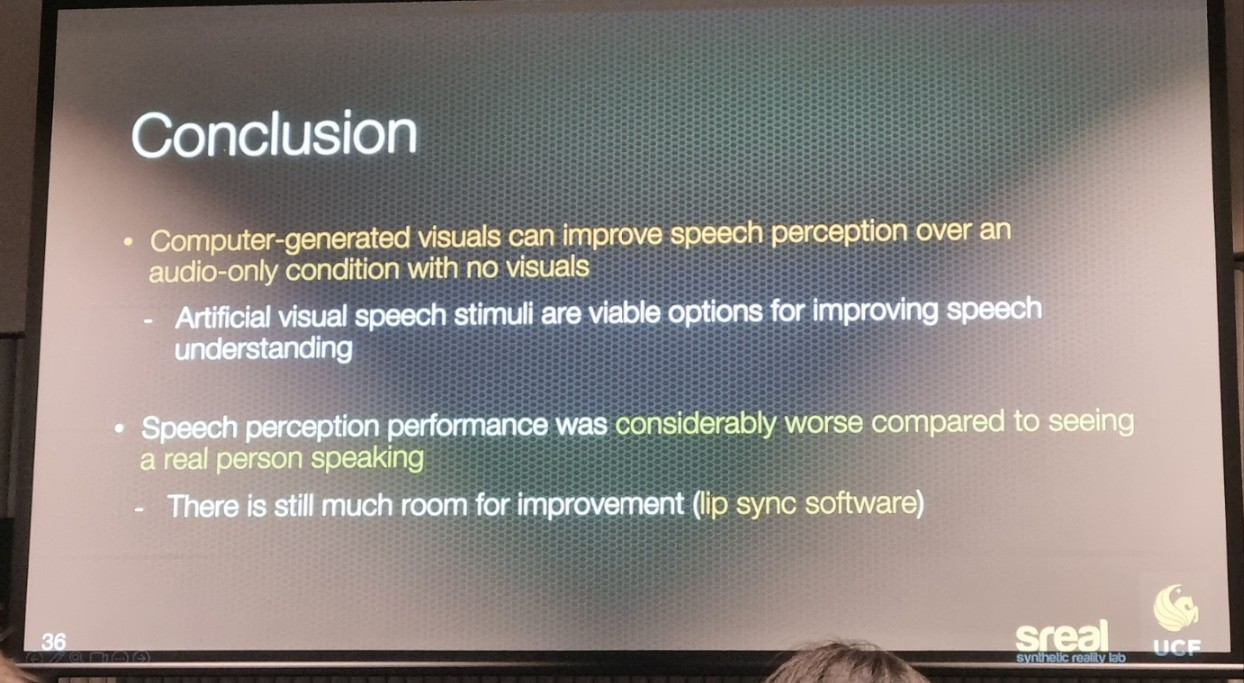
SRT (lower is better) = speech dB - noise dB : audio only에서 가장 높음
- oval, virtuallips, aplitude modulation이 audio-only보다 imporve됨
- Lip sync does not provide helpful moth cue(viseme-based는 performed poorer)
Music Therapy in Virtual Reality for Autistic Children with Severe Learning Disabilities
- Autistic learning disability: low functioning verbal communication
- Music Therapy: 음악으로 social interaction(communication) - mirroring (하나, 둘 셋,..), joint attention, expectation building 가능
- 악기 연주자, music therapist모두 HMD를 착용 - social communication
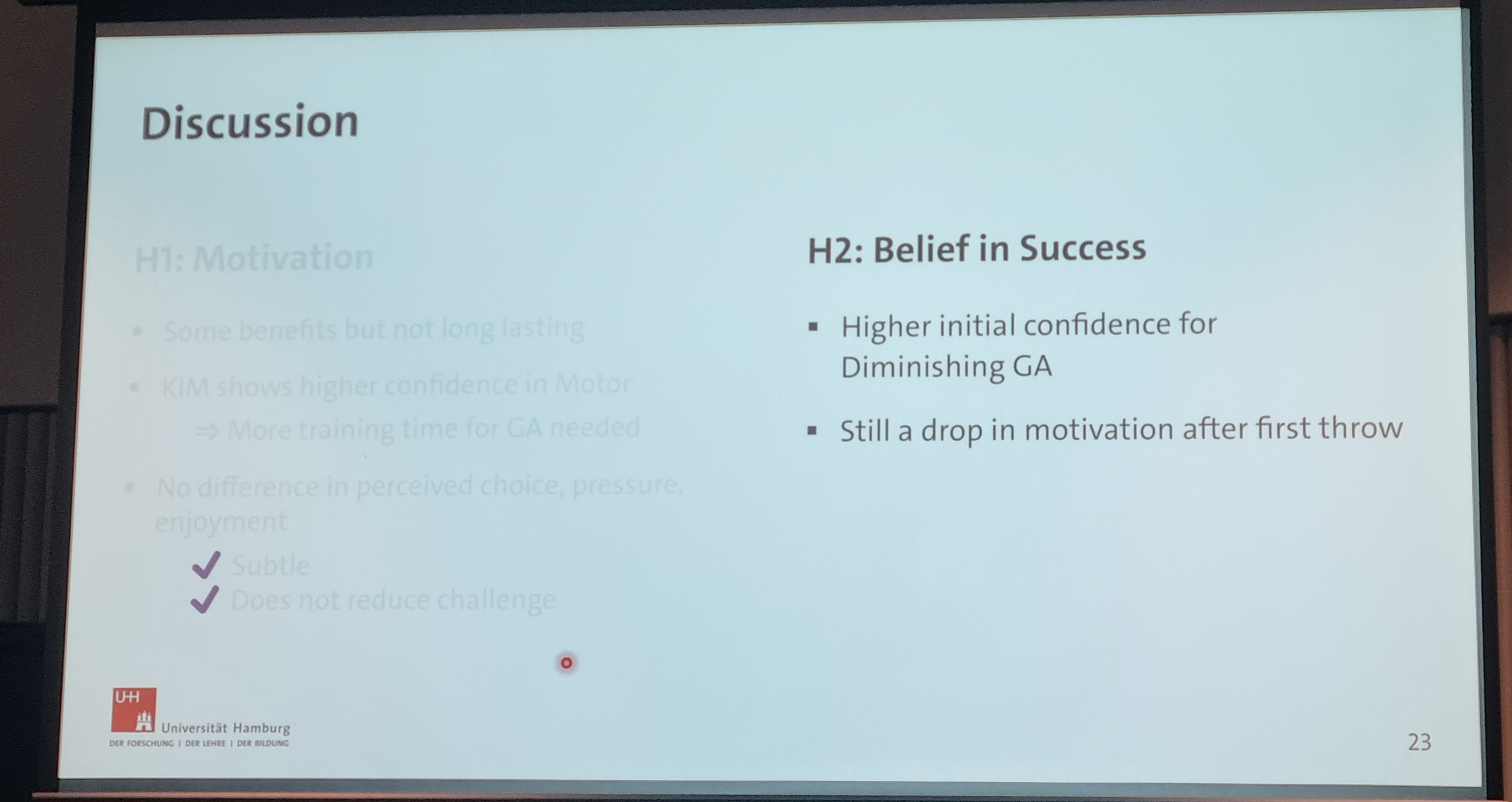
Gaze Assistance for Older Adults during Throwing Training in Virtual Reality and its Effects on Performance and Motivation
Pre-study
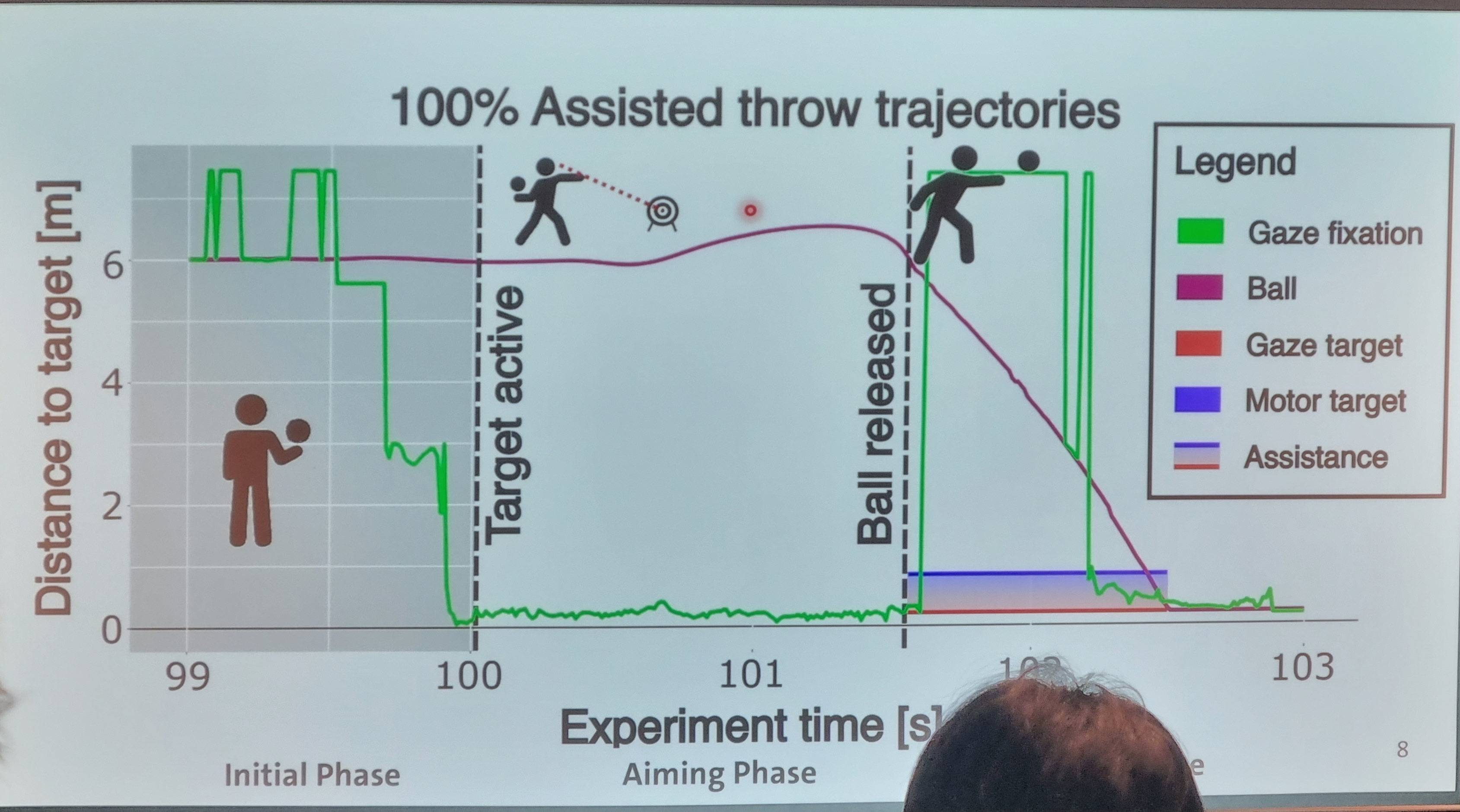
- target을 향해 눈뭉치를 던지는 상황에서 record eye movement - Gaze assistane influence
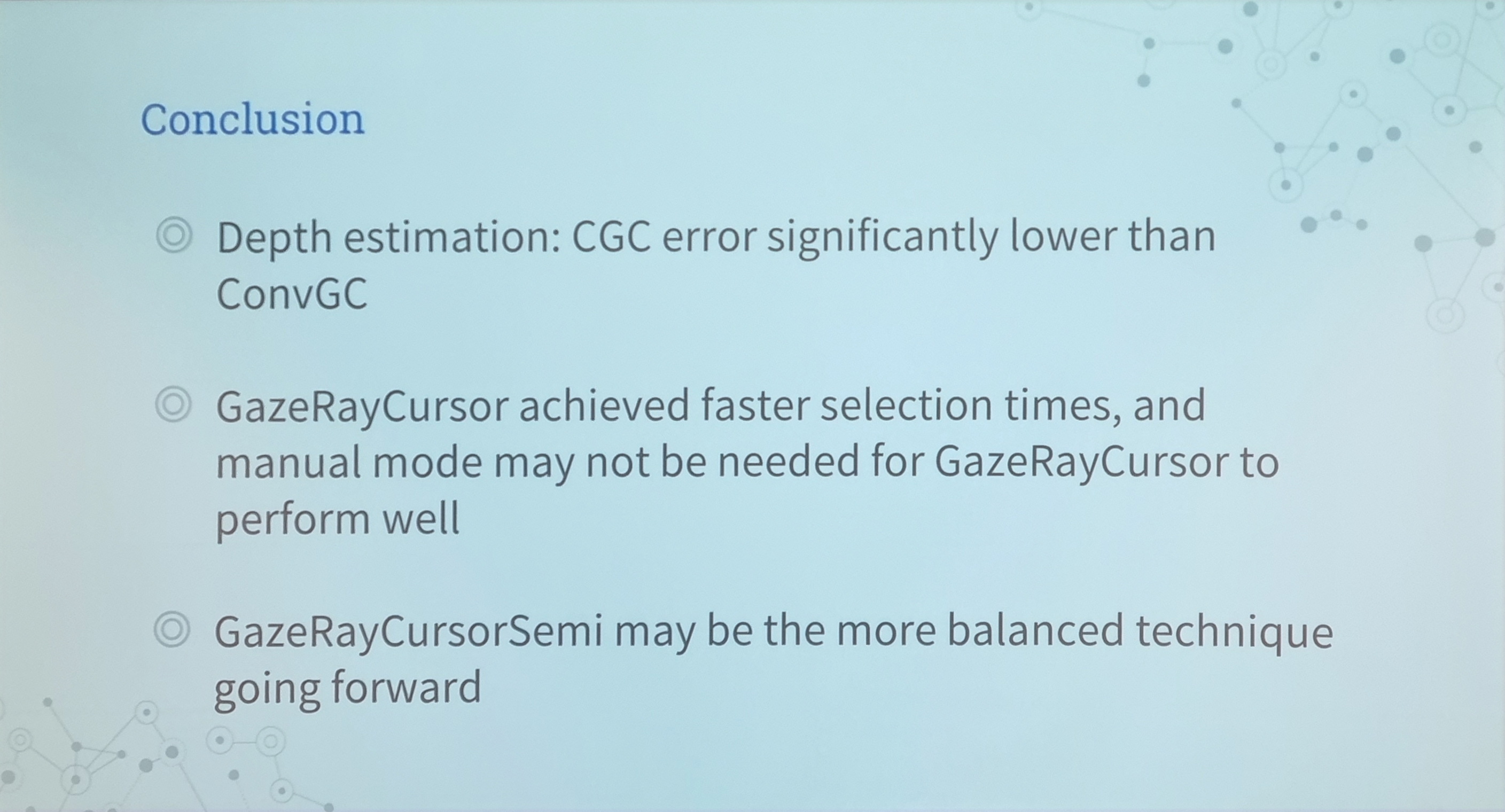
GazeRayCursor: Facilitating Virtual Reality Target Selection by Blending Gaze and Controller Raycasting
-
disambiguation in 3D Environments : manual depth adjustment, declustering area
-
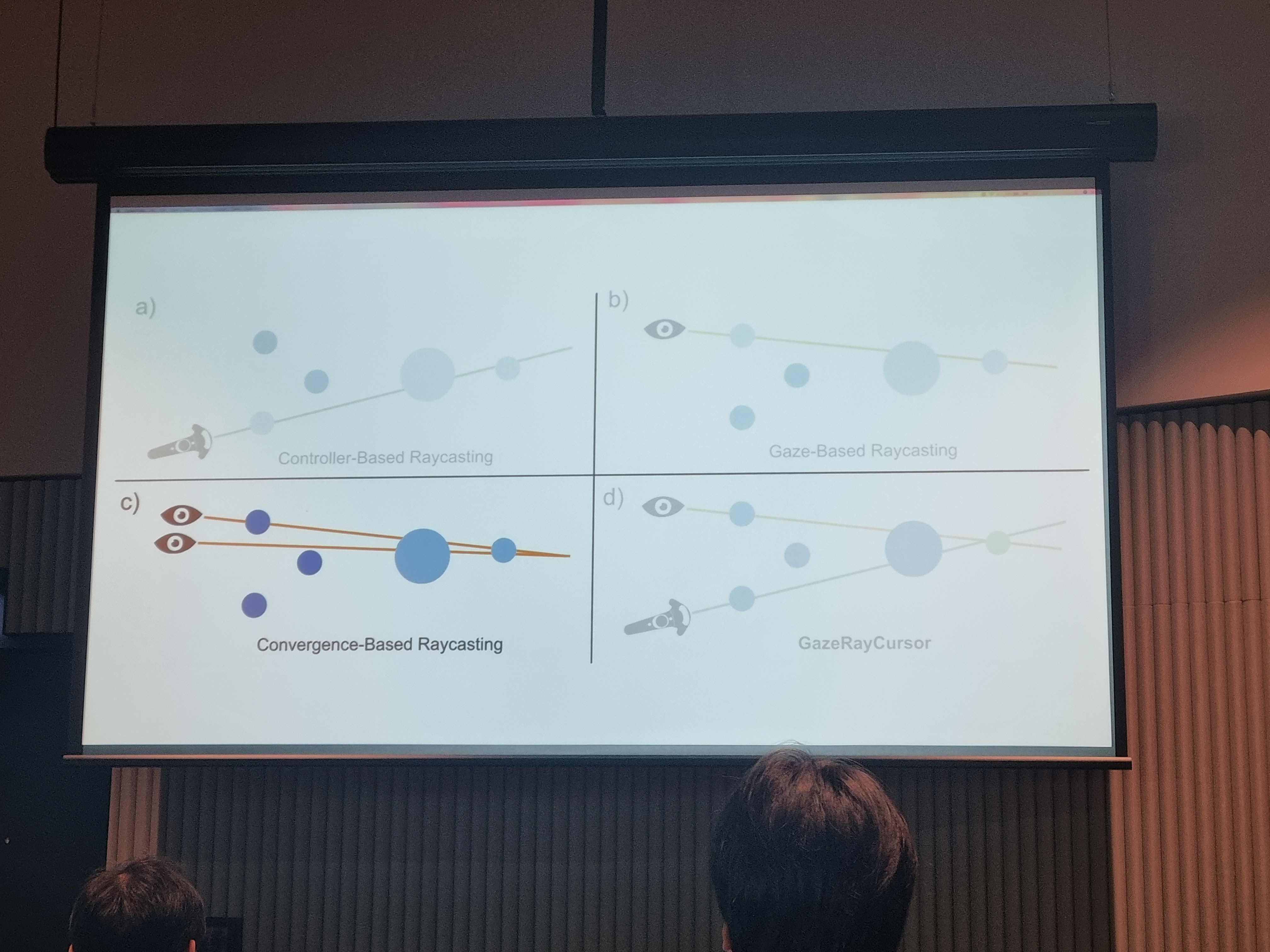
기존의 gaze-assisted selection : gaze를 preselection방법으로 사용
Design
- convergence-based raycasting
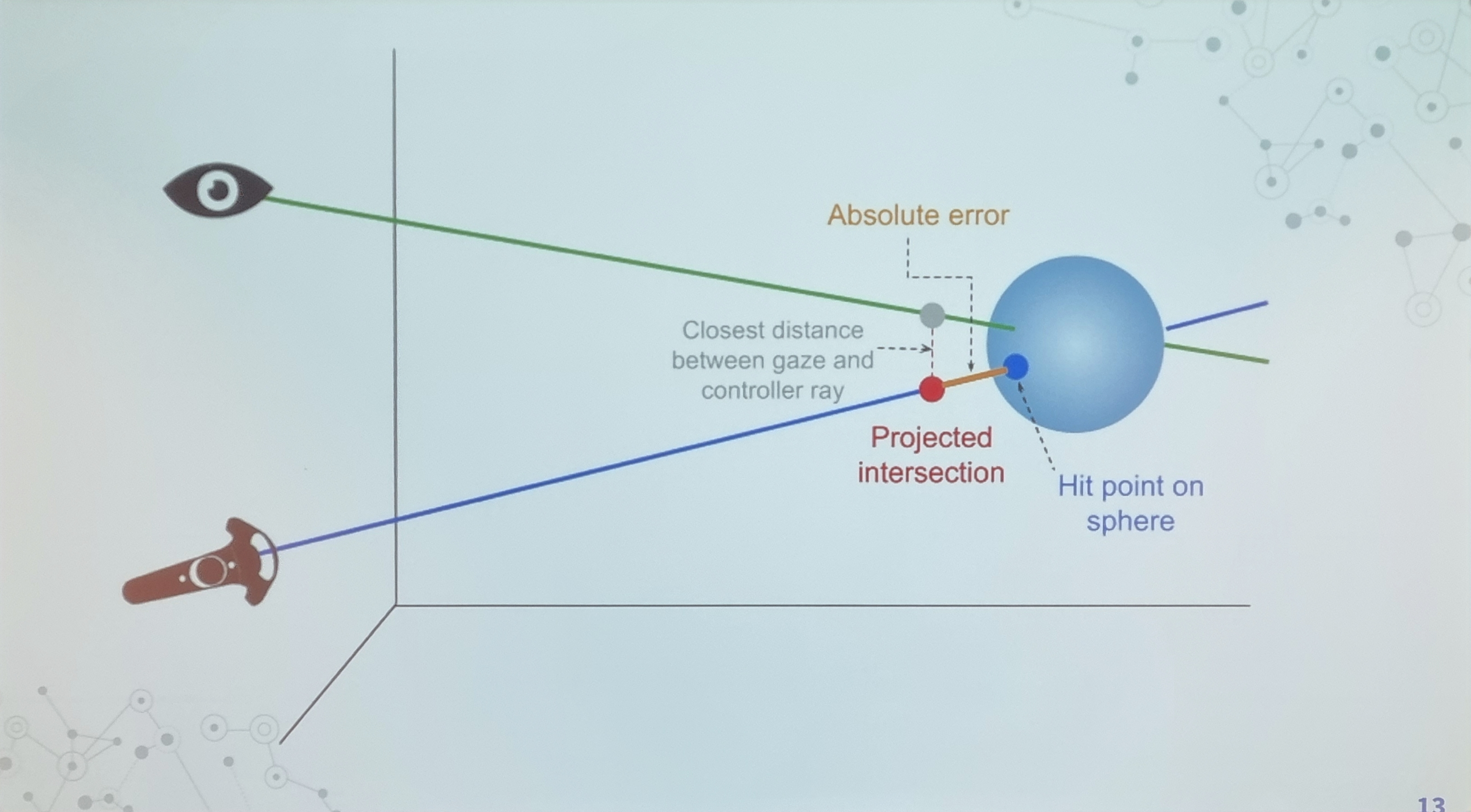
- gaze raycursor - gaze ray, controlller ray
Study1
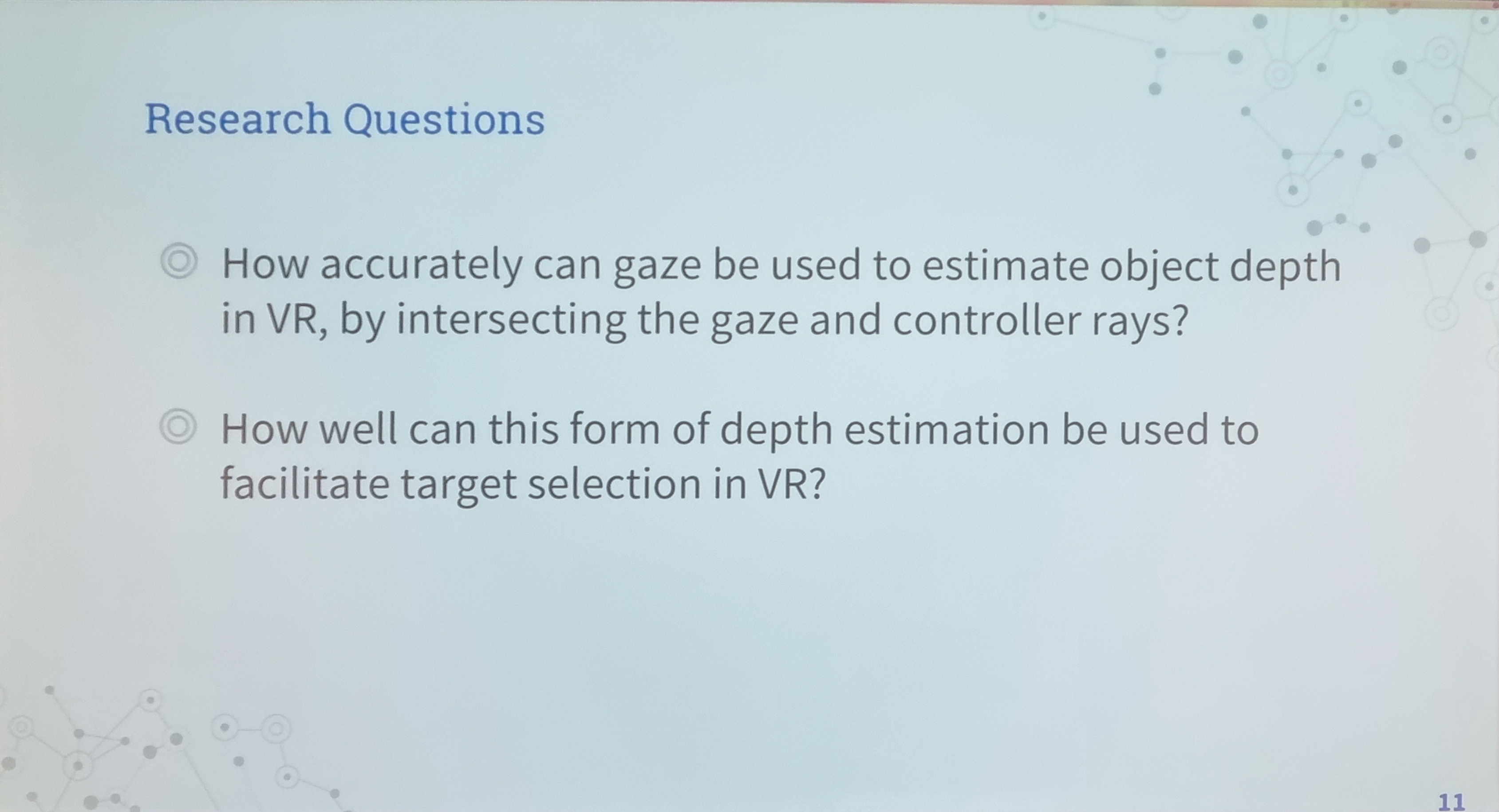
exploring combinaiton of gaze and controller ray
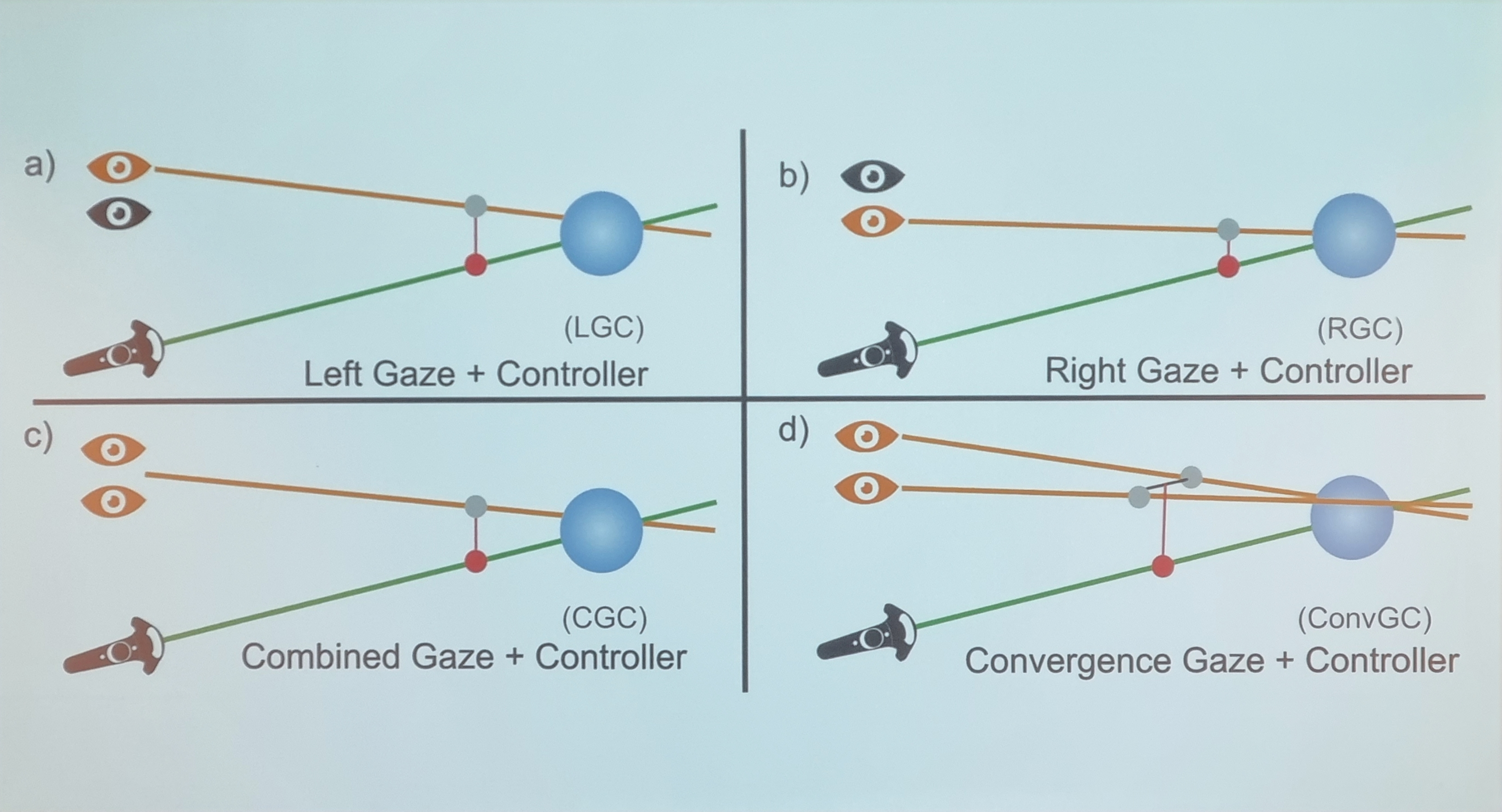
Results
CGC가 best performance
Study2
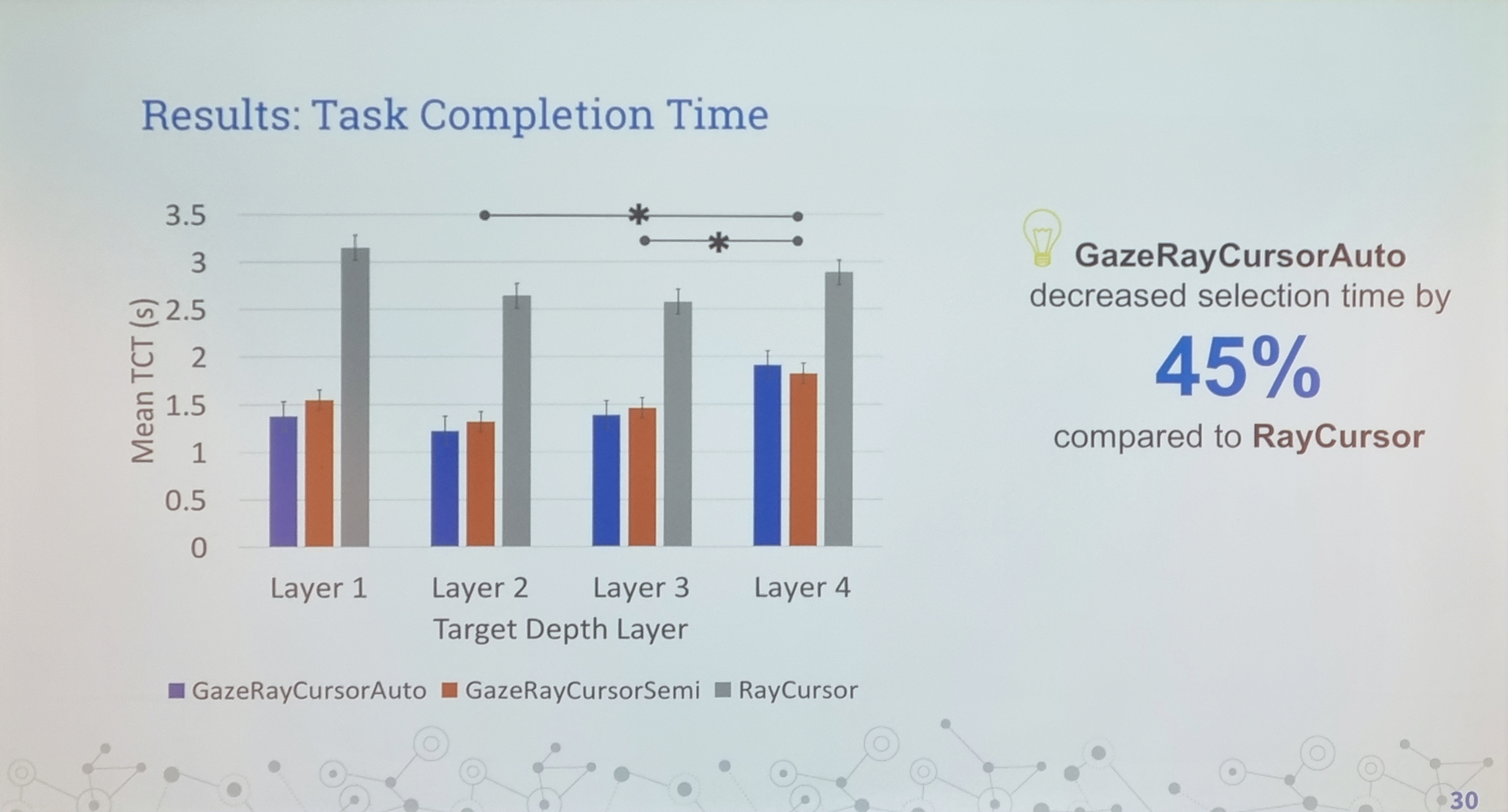
Design and evaluation of GazeRayCursor
cf. baseline: raycursor : controller touchpad로 depth 설정
Results
conclusion