Reverse Loop 방식
- head 노드에서 시작한다.
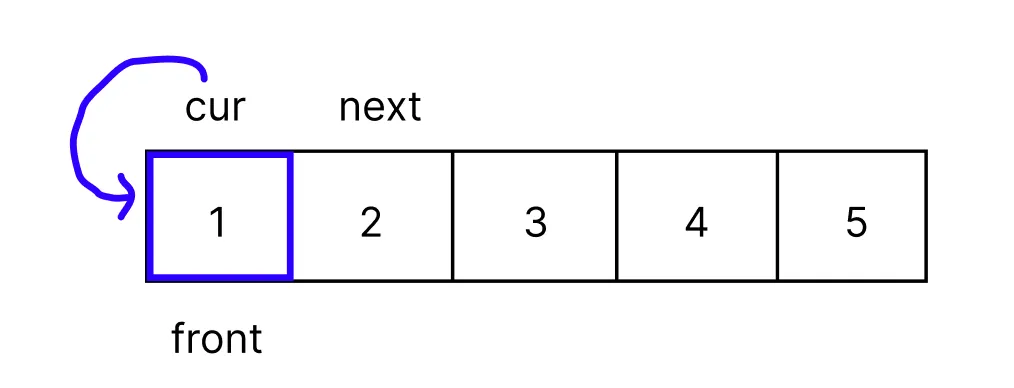
- current 노드를 다음 노드로 이동시킨다.
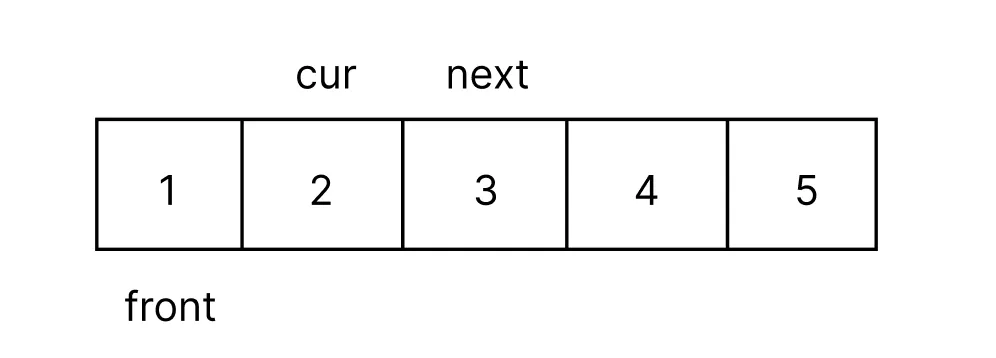
- current 노드(2)의 next가 front(1)를 가리키게 변경하고, current 노드를 이동시킨다.

- current 노드(3)의 next가 front(2)를 가리키게 변경하고, current 노드를 이동시킨다.

- current 노드(4)의 next가 front(3)를 가리키게 변경하고, current 노드를 이동시킨다.

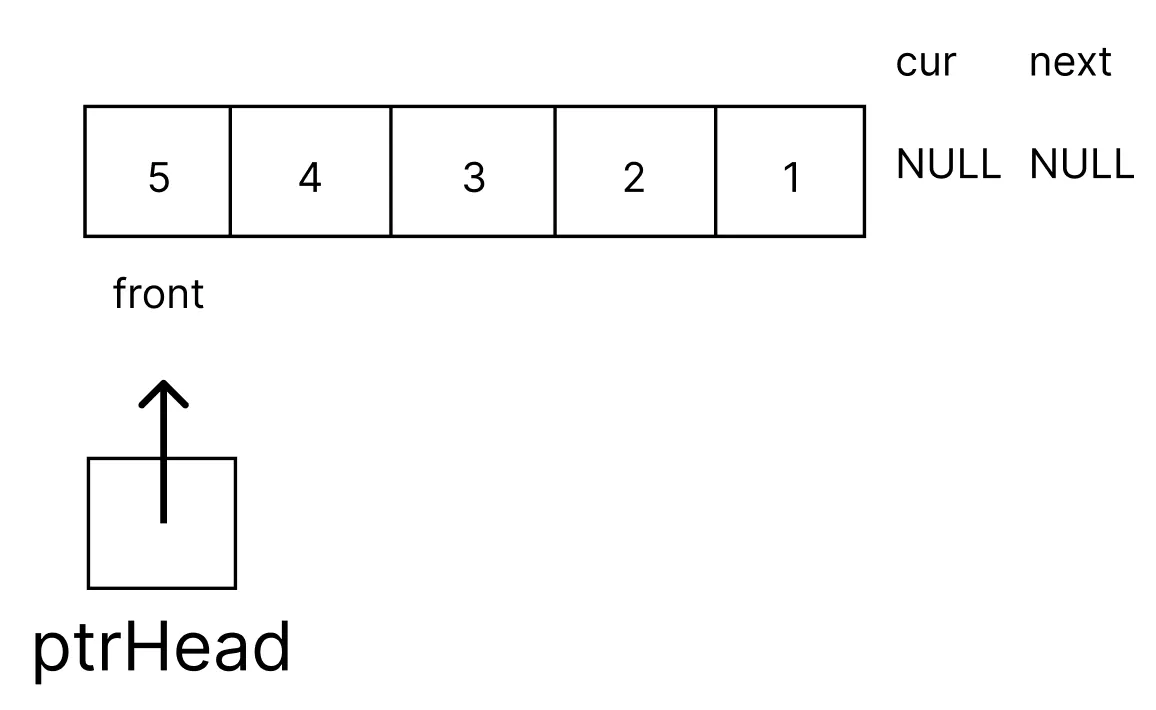
- current 노드(5)의 next가 front(4)를 가리키게 변경하고, current 노드를 이동시킨다.

- head 포인터가 5를 가리키게 설정한다.
구현 코드
void LoopReverse(ListNode **ptrHead)
{
	ListNode *front = NULL;
	ListNode *cur = *ptrHead;
	ListNode *next;

	while (cur != NULL)
	{
		next = cur->next;
		cur->next = front;
		front = cur;
		cur = next;
	}
	*ptrHead = front;
}
Reverse Recursive 방식
재귀를 사용하여 역순으로 만들면 리스트의 끝까지 간 뒤에 포인터를 바꿔주는 방식으로 메모리 이동이 필요없다.
순서대로 따라가보자.
-
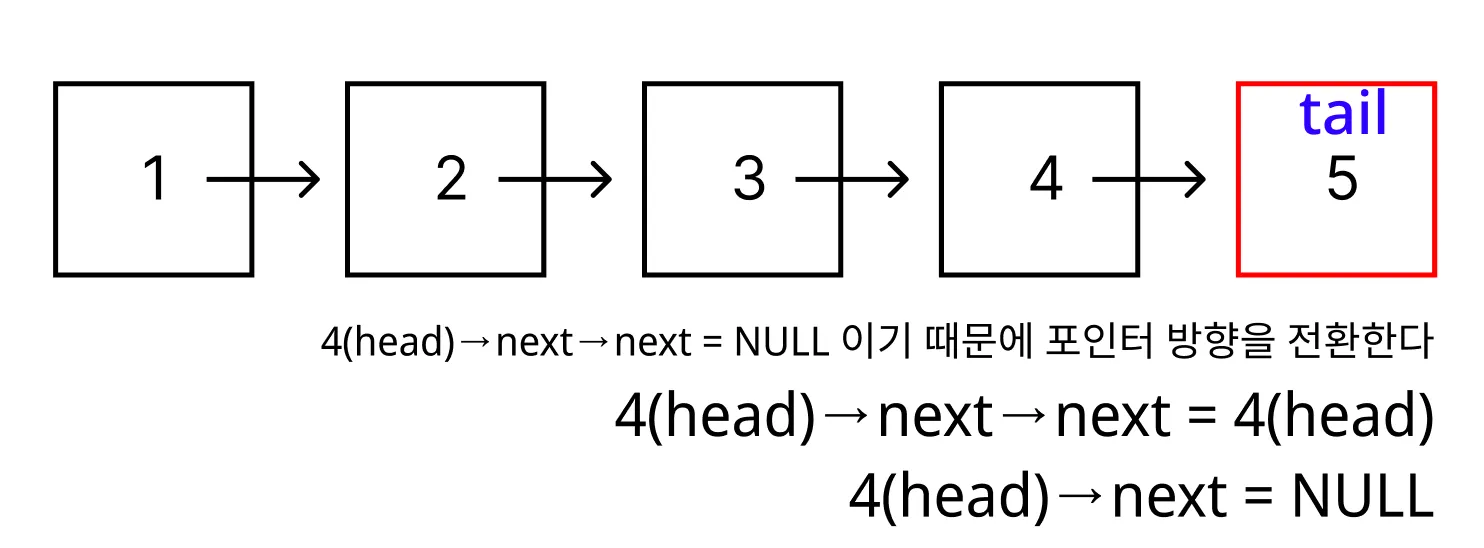
head→next→next가 NULL이 되었다. 현재 head는 4이다.
리스트의 끝에 도달했기 때문에 tail 노드의 주소를 저장해두고(마지막에 head 주소 반영해야 함) 리스트 방향 전환을 시작한다.
-
연산을 완료하여, 이전 head 3으로 돌아간다.
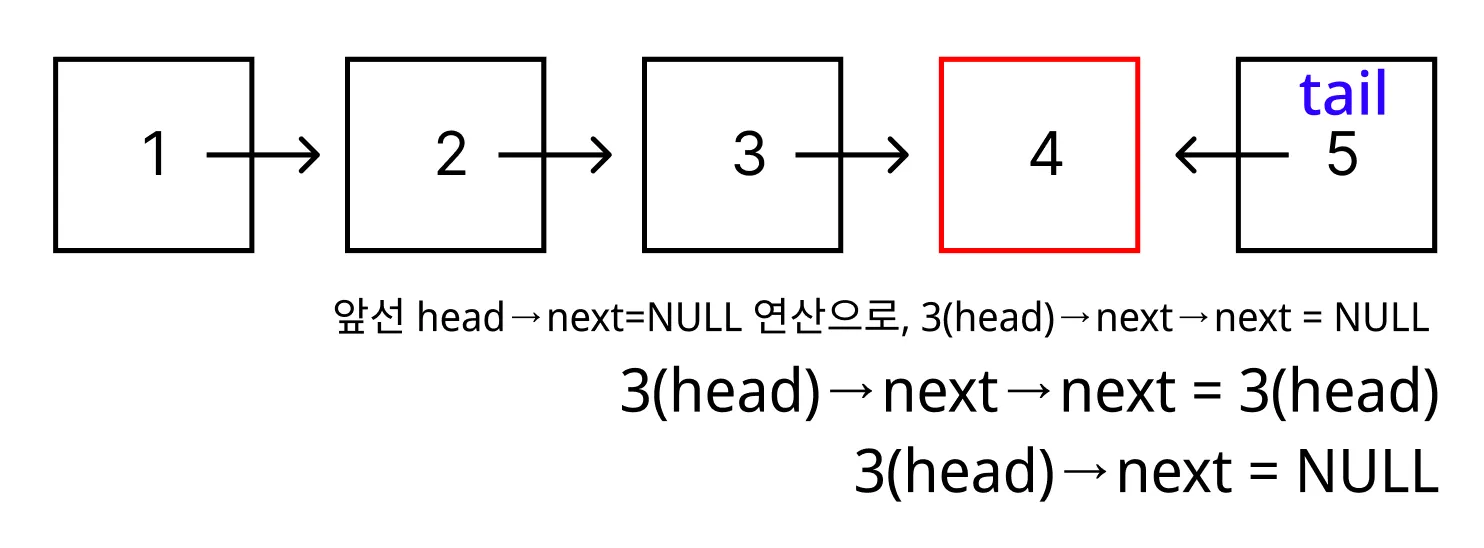
-
쭉 반복한다.
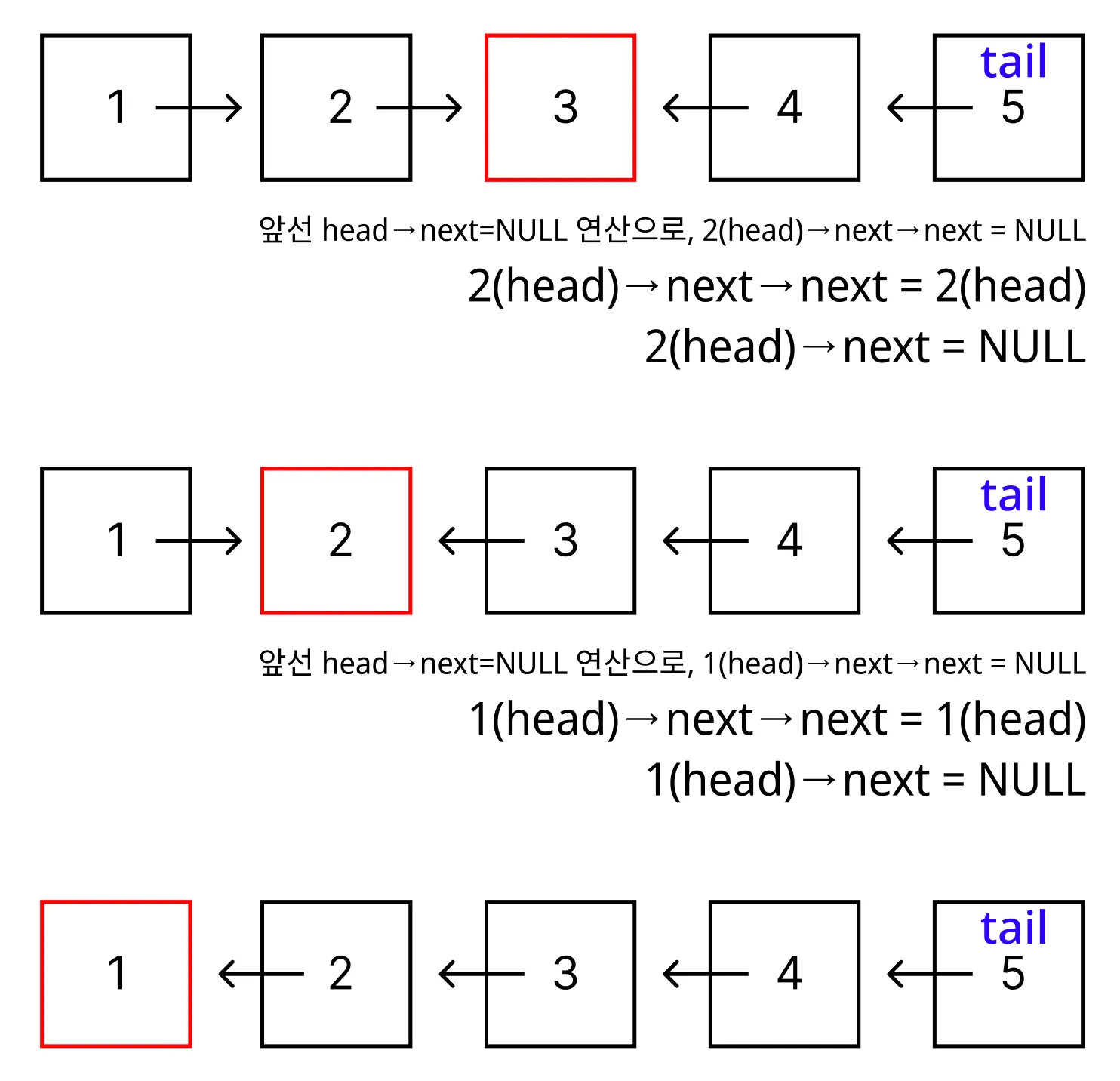
-
head를 저장해둔 리스트의 끝, tail로 재설정 해준다.
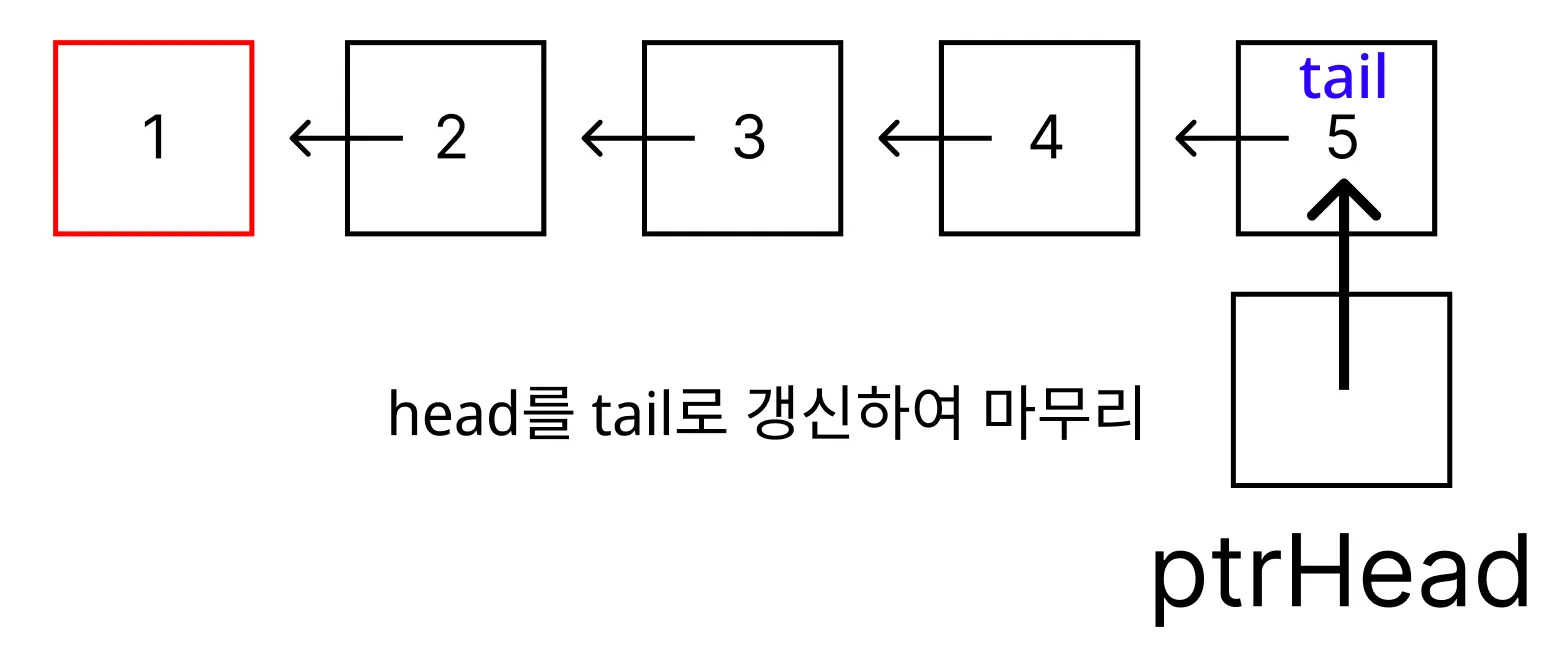
구현 코드
void RecursiveReverse(ListNode **ptrHead)
{
	ListNode *head = *ptrHead;

	// base case: 비어있거나 하나 남았다면
	if (head == NULL || head->next == NULL)
		return;

	// 재귀 호출, 나머지 리스트를 뒤집음
	ListNode *tail = head->next; // 끝 노드 저장
	RecursiveReverse(&tail);

	// 연결을 뒤집음
	head->next->next = head;
	head->next = NULL;

	// 역순 리스트의 새로운 head를 반영
	*ptrHead = tail;
}
어서오세요! ☺️ 후회 없는 내일을 위해 오늘을 열심히 살아가는 개발자입니다.