1. 메모리에서의 함수 구조
- 함수가 실행되면 메모리의 stack에 공간을 차지하며 실행
- 함수가 종료되면 생성되었던 스택이 해제됨
- 이때 리턴값이 함수를 호출한 쪽으로 전달됨
1-1. 리턴값이 값(value)
int func() {return 5;}

int main() {
	int a = func();
}
- 함수의 리턴값이 레지스터(EAX, RAX 등)에 저장
- 리턴값이 담긴 레지스터의 값이 호출한 함수로 전달
- 호출한 쪽에서 값을 자신의 변수에 복사
1-2. 리턴값이 포인터(pointer), 참조(&)
- 값과는 다르게 실제 데이터가 있는 메모리 주소(혹은 참조)가 반환됨
- 함수 종료 시 메모리 해제되므로 지역 변수의 주소/참조를 반환하면 안됨
1-3. 리턴값이 객체같이 클 경우
- 컴파일러가 호출자 쪽에서 임시 메모리를 준비
- 함수가 그 메모리를 리턴값으로 복사
2. 참조 리턴 함수
- 함수에서 참조 타입(T &)을 반환하면, 함수 호출 결과로 "값"이 아니라 원본 변수의 별명(참조)을 넘겨줌
- 반환 결과가 값이 아니라 변수 그 자체 (포인터와 비슷한 느낌)
- 즉, 함수가 반환한 참조를 통해 원본 변수에 직접 접근하거나 수정할 수 있음
- 함수의 지역변수를 반환할 경우 함수 종료시 사라지므로 안 됨
class A {
    int x;
public:
    A(int c) : x(c) {}
    int& access_x() { return x; }   // x의 참조(x 자체)를 리턴
    int get_x() { return x; }       // x의 값을 리턴
    void show_x() { std::cout << x << std::endl; }
};

int main() {
    A a(5);
    a.show_x();            // 5
    int& c = a.access_x(); // c는 x의 또다른 별명
    c = 4;                 // x의 값이 4로 변경됨
    a.show_x();            // 4
    int d = a.access_x();  // x의 값을 복사
    d = 3;                 // x에는 영향 없음
    a.show_x();            // 4
}-
int& c = a.access_x();
→ c는int&이므로 x와 완전히 동일한 메모리 공간을 가리킴
→ c의 값을 바꾸면 a의 x도 바뀜 -
int d = a.access_x();
→ d는int이므로 그냥 x의 값을 복사함
→ d를 바꿔도 x에 영향 없음
2-1. 참조 리턴 함수의 장점
- 대용량 데이터(구조체 등)를 복사하지 않고 효율적으로 반환
- 멤버 변수의 직접 수정이 필요할 때 유용
- 포인터와 달리 문법이 간결하고 안전
2-2. 주의사항
- 지역 변수의 참조를 리턴하면 안 됨
- 함수 종료 후에도 존재하는 메모리(멤버 변수, 동적할당 등)만 리턴
- 값을 리턴하는 함수의 반환값을 참조 받으면 에러
int &e = a.get_x(); // int& e = 4 에러2-3. 추가 활용법
- 참조 리턴의 경우 그냥 변수를 리턴한 것과 동일
  a.access_x() = 3;  // a.x = 3과 동일
a.access_x()++; // a.x++과 동일- 멤버 함수가 객체 자신의 참조(
*this)를 반환하면 연속 호출 가능
  class A {
	int x;

  public:
	A(int c) : x(c) {}
	A& decrease() {  // 참조 리턴 함수
		x--;
		return *this;  //  자신의 참조를 반환
	}
	void show_x() { std::cout << x << std::endl; }
  };

  int main() {
	A a(10);  // x = 10
	a.decrease().decrease();  // 연속 호출
	a.show_x();  // 8출력
}- 처음
a.decrease()의 결과a.x의 값이 감소하고 객체a가 반환됨 a가 반환되었으므로 연속으로decrease()실행가능
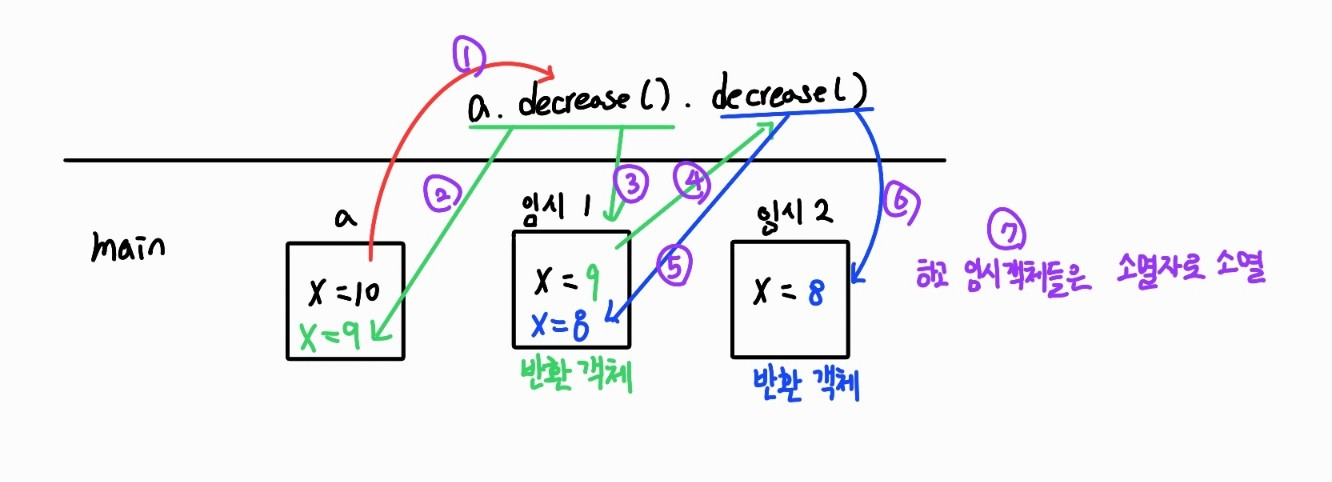
- 만약, 참조 리턴이 아닐 경우
  class A {
	int x;

  public:
	A(int c) : x(c) {}
	A decrease() {  // 참조 리턴 아닐 경우
		x--;
		return *this;  //  자신의 참조를 반환
	}
	void show_x() { std::cout << x << std::endl; }
    ~A() {std::cout << "소멸자" << std::endl;}
  };

  int main() {
	A a(10);  // x = 10
	a.decrease().decrease();  // 연속 호출이지만
	a.show_x();  // 9출력
}- 객체
a의 메모리 주소가decrease()로 들어가 함수 실행 - 처음
a.decrease()의 결과a.x의 값이 감소하는 것까지는 동일 - 그러나 반환값이 객체이므로
main에서 새로운 메모리(임시 객체)를 생성, 반환 객체를 복사 (x=9). 이 메모리는 기존a와는 개별적인 임시 객체임 - 그리고 이 임시 객체로 다시
decrease()실행 - 함수 실행 시 임시 객체의
x가 감소,a는 그냥 유지 - 다시 리턴값 받기 위해
main에서 임시 객체를 생성하고 반환 객체를 복사 a.decrease().decrease()가 끝나면 다시 임시 객체 2개는 소멸자 호출되며 소멸됨

반갑습니다