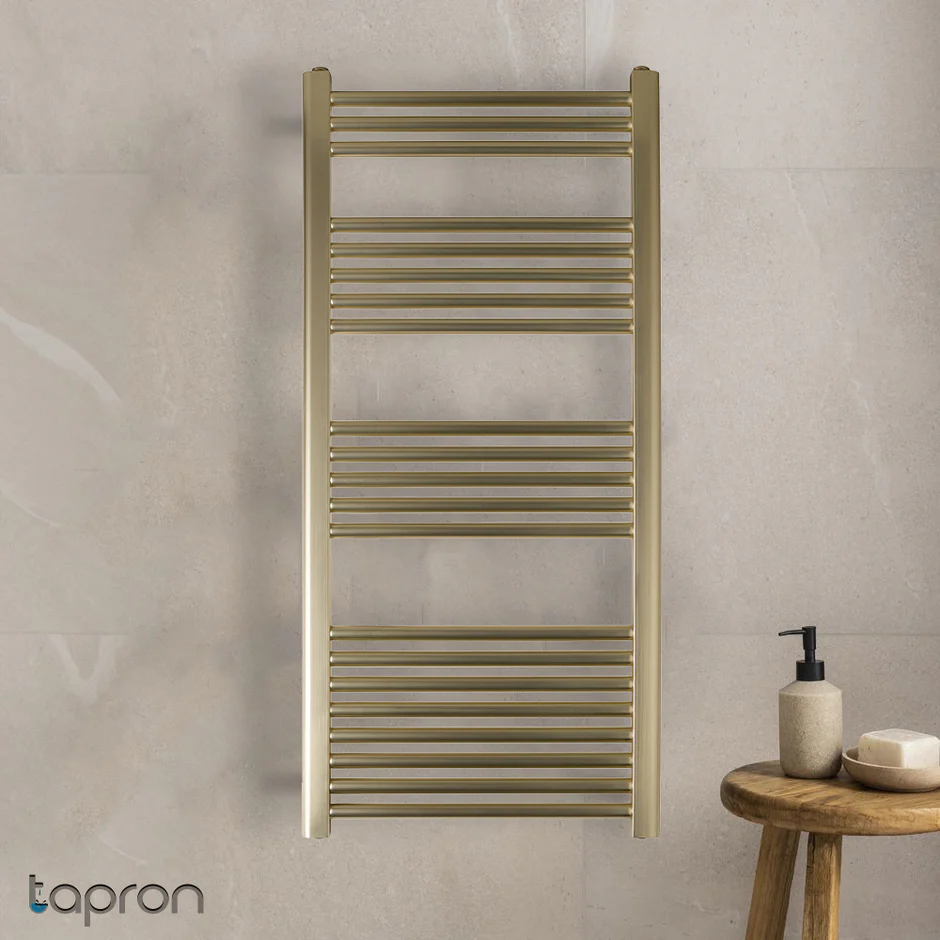
Towel rails have always played an important role in the bathroom, offering warmth, comfort and a practical way to dry towels. But as modern homes move towards smarter and more energy-efficient solutions, electric towel rails have quickly become a popular alternative to traditional, centrally heated towel rails.
If you’re planning a bathroom upgrade or simply want a more efficient heating option, understanding the differences between electric and traditional towel rails can help you make the right choice. Let’s break it down.
- How They Are Powered
Electric Towel Rails
Electric towel rails run independently from your home’s central heating system. They are powered by electricity and can be turned on or off whenever you need them. This makes them perfect for households wanting flexible heating options—especially useful in bathrooms that get chilly outside of heating hours.
Traditional (Central Heating) Towel Rails
Traditional towel rails are connected directly to your boiler or central heating system. They heat up only when the main heating is on, which can be limiting during warmer months or times when your central heating isn’t running.
- Control and Convenience
Electric Towel Rails:
✔ Can be used all year round
✔ Often come with thermostats, timers and adjustable settings
✔ Quick heat-up time
✔ Perfect for bathrooms that need warmth at irregular times
This level of independent control makes electric rails extremely convenient, particularly for busy households.
Traditional Towel Rails:
✔ Great during winter when central heating is always on
✔ Heat evenly with the rest of the home
✔ Depend on boiler schedule and cannot operate independently
They are reliable, but far less flexible.
- Installation Differences
Electric Rails:
Require only a standard electrical connection
No need to alter plumbing
Ideal for new, renovated or small bathrooms
Faster and often cheaper to install
Traditional Rails:
Must be plumbed into the heating system
Installation may require both plumbing and radiator valves
More complex and often more expensive to install
Electric towel rails are often the preferred choice for retrofits or small upgrades.
- Running Costs and Energy Efficiency
Electric Rails:
Electric towel rails can be very energy-efficient, especially when used with timers or low-wattage heaters. Because they warm only the bathroom, they help avoid wasteful whole-home heating.
Traditional Rails:
Traditional rails rely on your boiler’s efficiency. They may be cost-effective during winter when the heating is already running, but wasteful in warmer months when the entire system must be switched on just to warm a towel.
- Heat Output and Performance
Electric Towel Rails:
Provide consistent, controlled warmth
Great for small to medium bathrooms
Heat up quickly
Keep towels dry even when the heating system is off
Traditional Towel Rails:
Offer higher heat output when connected to powerful boilers
Ideal for larger bathrooms
Less consistent if your central heating cycles on and off
- Year-Round Use
This is one of the biggest advantages of electric towel rails. You can use them:
in summer
on mild days
during short heating cycles
early mornings
late nights
Traditional rails simply don’t offer this flexibility unless you switch on the full central heating.
Which One Should You Choose?
Choose an Electric Towel Rail if you want:
✔ Flexible heating
✔ Year-round use
✔ Lower installation costs
✔ Individual control via timers or thermostats
✔ An easy retrofit solution
Choose a Traditional Towel Rail if you want:
✔ Stronger heat output
✔ Full integration with your existing heating system
✔ A matching look with other radiators in the home
Conclusion
링크텍스트Electric towel rails and traditional towel rails both serve the same purpose—but they differ significantly in how they function and how they suit modern lifestyles. Electric towel rails offer independent heating, convenience and year-round comfort, making them an ideal choice for contemporary homes. Traditional towel rails remain effective for those who want a fully integrated heating solution.
Whichever you choose, upgrading your towel rail can dramatically improve your bathroom’s warmth, comfort and style—especially during colder months.
