2038 별 찍기
문제
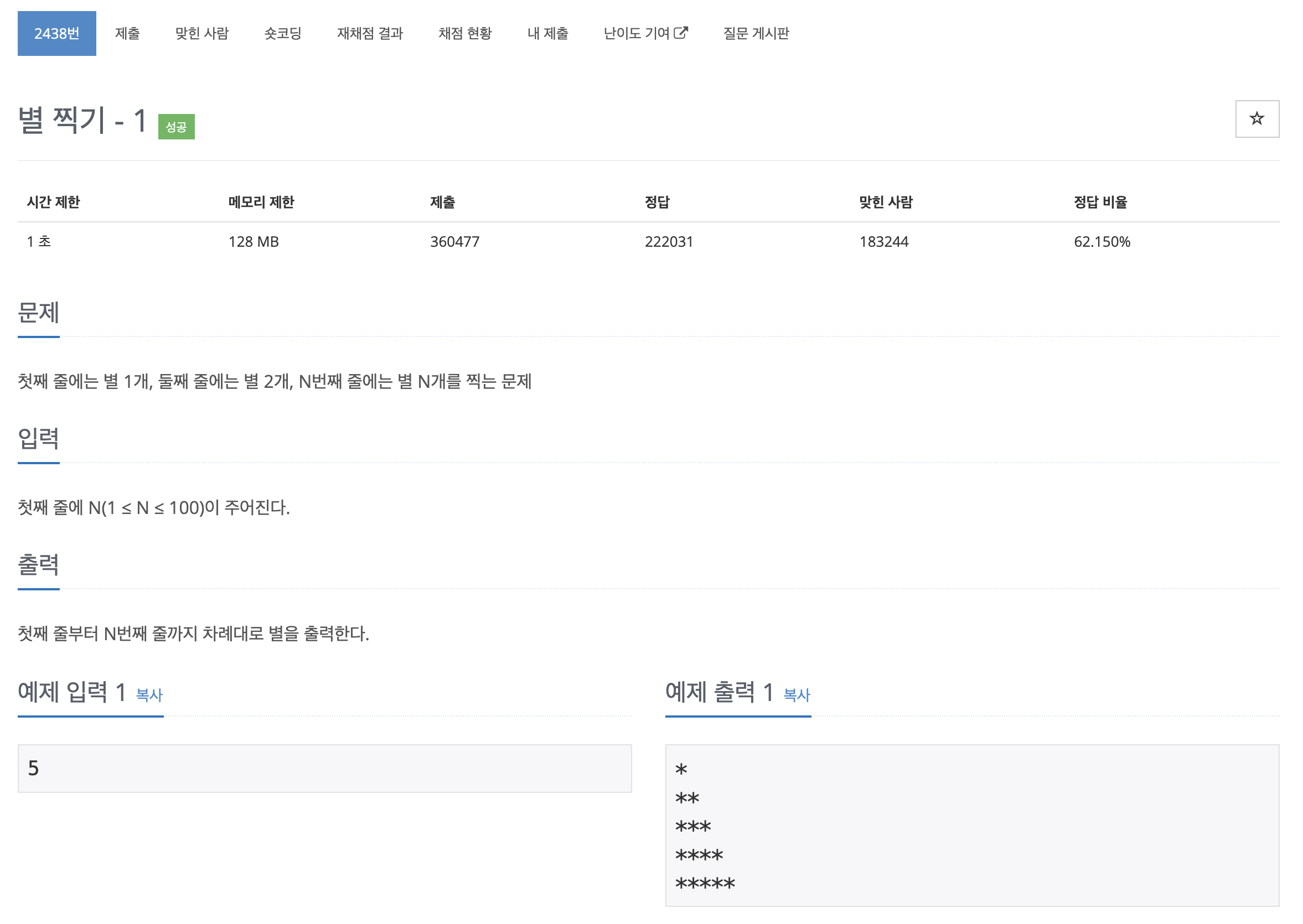
풀이
#include <iostream>

using namespace std;

int main(){
    int val;
    cin >> val;


    for (int i=1; i<=val; i++)
    {
        for (int j = 1; j<= i; j++)
        {
            if (j == i)
            {
                cout << "*" << endl;

            }
            else
            {
                cout << "*";
            }
        }
    }
}
iostream
C++에서 표준 입출력 스트림 라이브러리를 제공하는 헤더 파일입니다.
- std::cout: 화면에 텍스트를 출력합니다 (C의 printf와 비슷).
- std::cin: 사용자로부터 입력을 받습니다 (C의 scanf와 비슷).
- std::endl: 줄 바꿈을 처리합니다.
- std::cerr: 에러 메시지를 출력합니다.
- std::fstream: 파일 입출력을 처리합니다.
namespace
namespace에 변수와 함수를 정의할 수 있습니다. namespace에 정의된 함수를 사용할때 std::cout과 같이 (namespace 이름)::(함수)와 같은 꼴로 함수를 불러내어 사용합니다. 이러한 namespace를 통해 함수를 모듈화 시킬 수 있고 다름 변수명이 겹치는 상황에서 자유로워질 수 있습니다. 또한 using을 사용하여 함수명만으로 함수를 호출할 수 있습니다.
namespace란?
4153 직각삼각형
문제
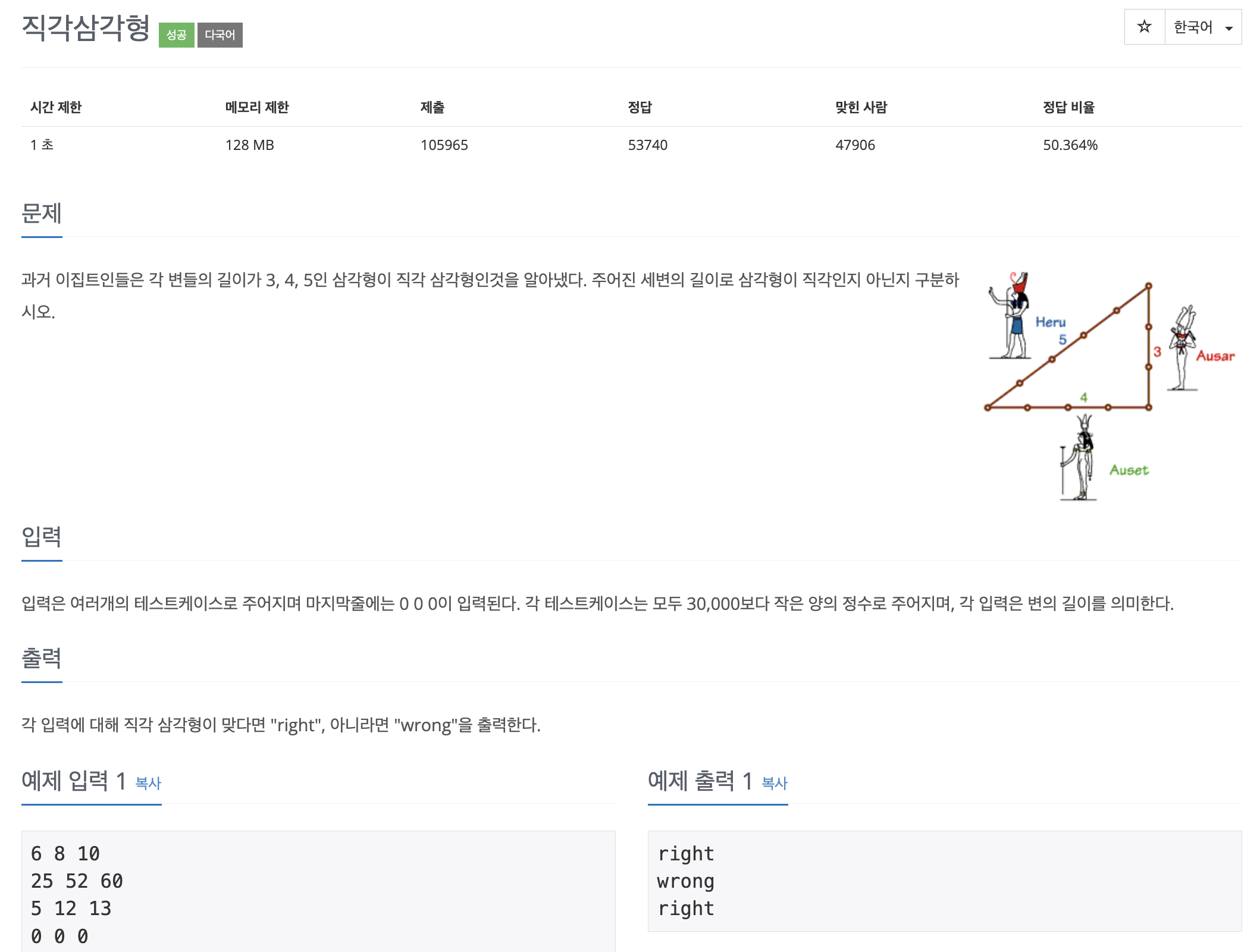
풀이
#include <iostream>
#include <vector>
#include <math.h>
#include <algorithm>

using namespace std;

int main(){

    vector<int> vec;


    while (1){
        int n[3] = {};
        cin >> n[0] >> n[1] >> n[2];

        cin.ignore();
        sort(n, n+3);
        if (n[0] == 0 && n[1] == 0 && n[2] ==0)
        {
            break;
        }
        vec.push_back(n[0]);
        vec.push_back(n[1]);
        vec.push_back(n[2]);
        //cout << "출력" << n[0] << n[1] << n[2] << endl;
    }
    for (int i = 0; i < vec.size(); i += 3)
    {
        if (pow(vec[i], 2) + pow(vec[i+1],2) == pow(vec[i+2],2))
        {
            cout << "right" << endl;

        }
        else
        {
            cout << "wrong" << endl;
        }
    }
    return 0;

}
sort()
#include <algorithm>sort 함수
- 인수 1 : 배열의 첫 주소
- 인수 2 : 배열의 마지막 주소
sort 알고리즘
30802 웰컴 키트
문제
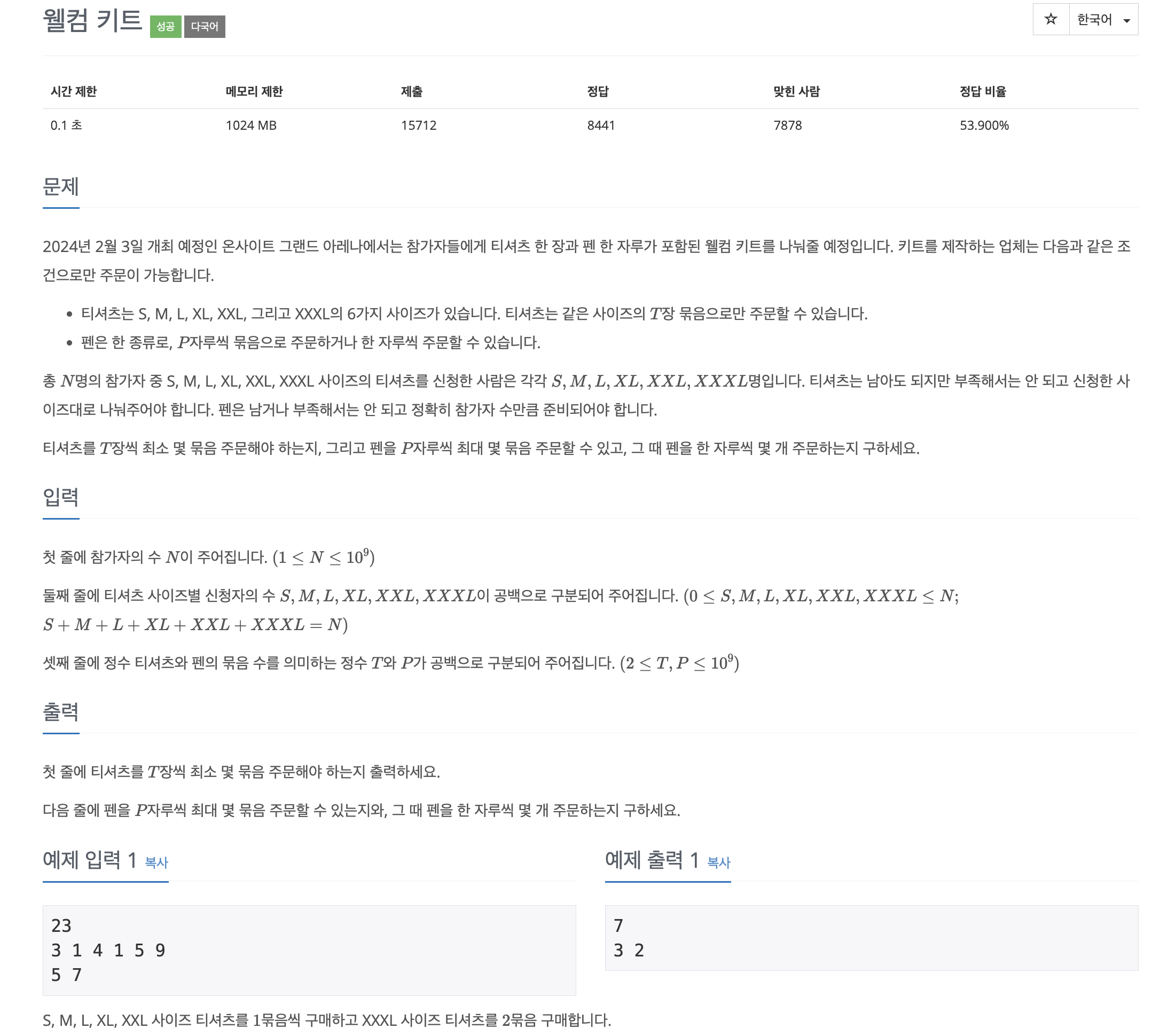
풀이
#include <iostream>
#include <vector>
#include <math.h>

using namespace std;

int main(){
    int n, a, b, c, d, e, f, alpha, beta;
    cin >> n;
    cin >> a >> b >> c >> d >> e >> f;
    cin >> alpha >> beta;
    int n_t = 0;
    int clothes_size[] = {a, b, c, d, e, f};
    for (int i = 0; i < 6; i++)
    {
        if (clothes_size[i] % alpha != 0)
        {
            n_t += 1;
        }
        n_t += clothes_size[i] / alpha;
    }
    cout << n_t << endl;
    cout << n/beta << " " << n%beta;


}
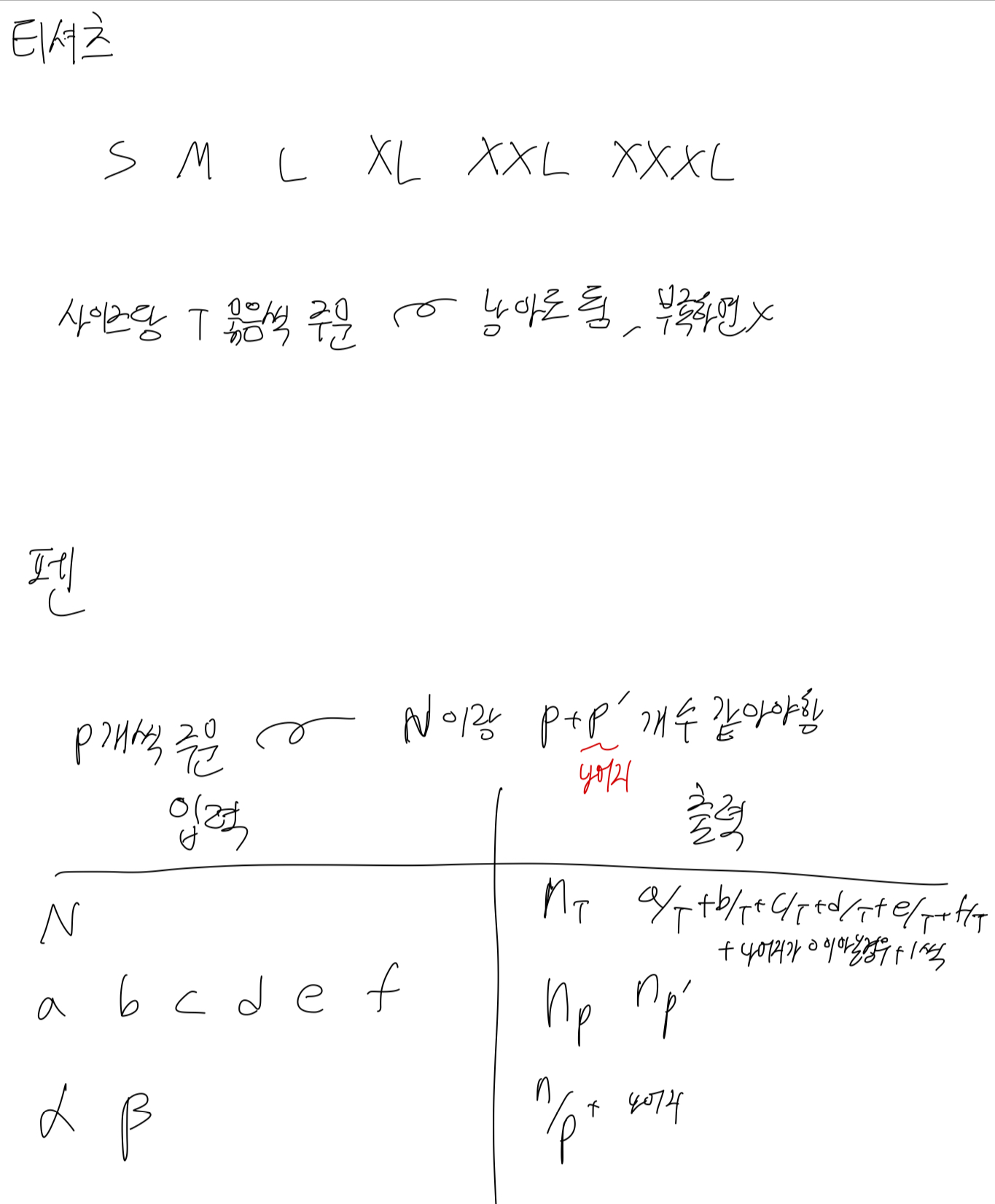
배열
배열 초기화 방법으로는 int a[] = {1,23,45,2};와 같은 식으로 넣어주는 값을 {}안에 직접 넣어주거나 int a[4];와 같이 크기만 정해주는 방법이 있습니다.
소수찾기
문제
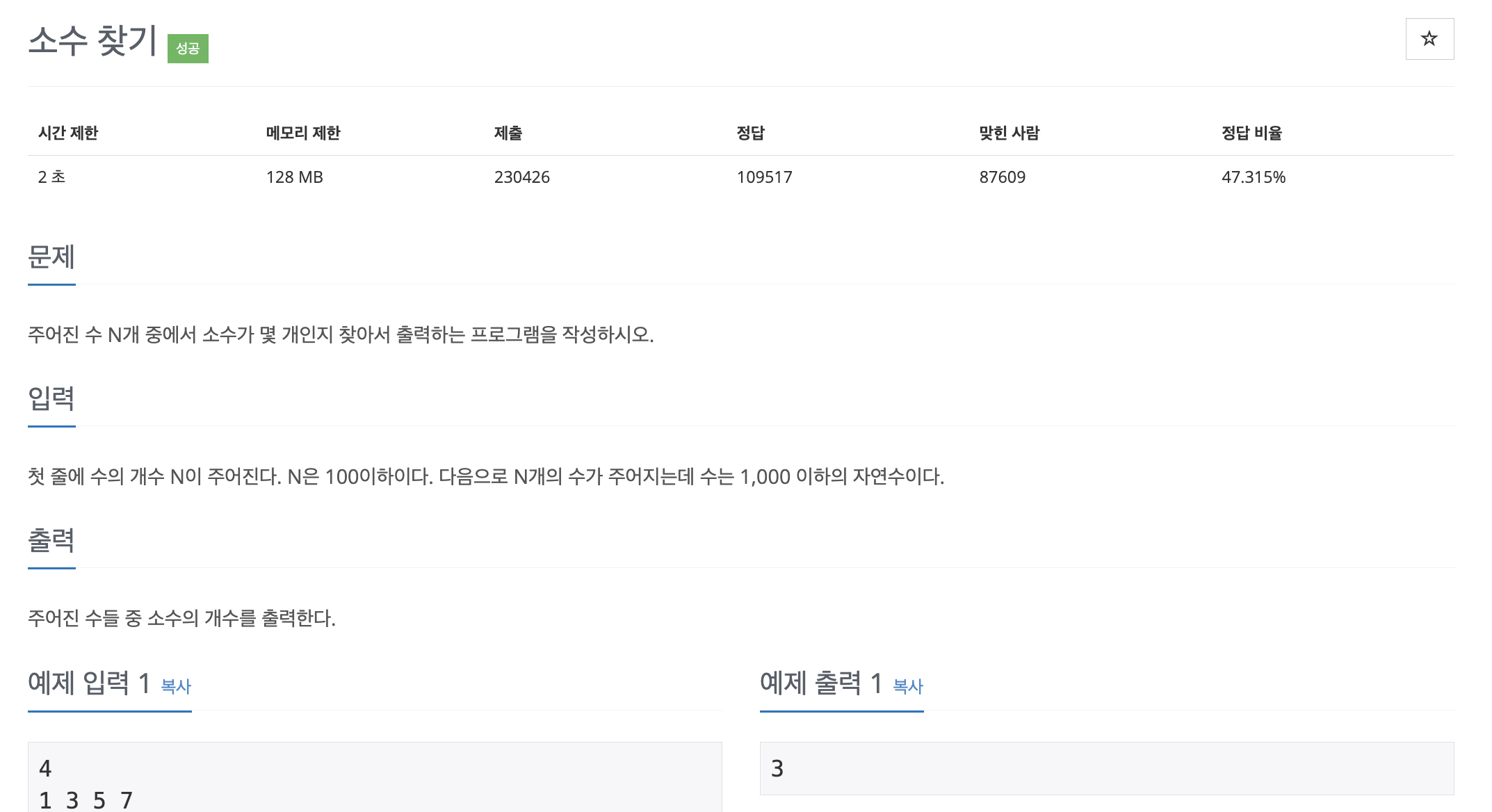
풀이
#include <iostream>
#include <vector>
#include <math.h>
#include <string>
#include <sstream>

using namespace std;

int main(){
    int num;
    string temp;

    cin >> num;
    cin.ignore();
    getline(cin, temp, '\n');

    vector<int> vals;
    string word;

    stringstream ss(temp);

    while (getline(ss, word, ' '))
    {
        int num;
        stringstream val(word);
        val >> num;
        vals.push_back(num);
    }
    int count=0;
    bool is_sosu = true;
    for (int i = 0; i < num; i++)
    {
        is_sosu = true;
        for (int j = 2; j < 1000; j++)
        {
            if (vals[i] == 1)
            {
                is_sosu = false;
                break;
            }
            if (j == vals[i])
            {
                continue;
            }
            if (vals[i]%j==0)
            {
                is_sosu = false;
                break;
            }
        }
        if (is_sosu)
        {
            count++;
        }
    }
    cout << count;


}
블랙잭
문제
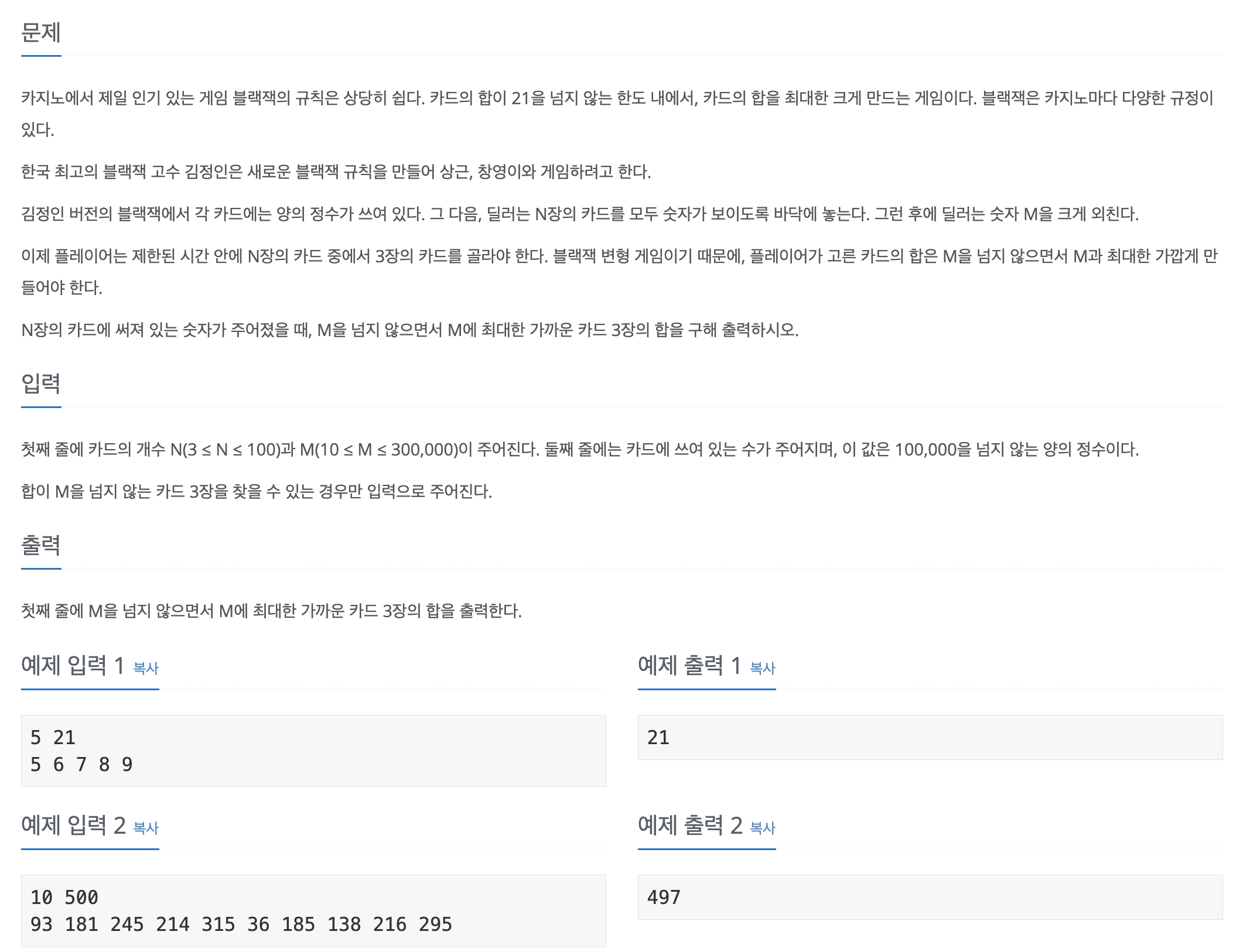
해결
#include <iostream>
#include <vector>


using namespace std;

int main()
{
    int card_num, card_sum;

    cin >> card_num >> card_sum;
    vector<int> numbers(0);
    while(1)
    {
        int num=0;
        cin >> num;
        numbers.emplace_back(num);
        card_num -= 1;
        if (card_num<=0)
        {
            break;
        }
    }

    int sum = 0;

    for (int i = 0; i<numbers.size()-2; i++ )
    {
        for (int j = i+1; j < numbers.size()-1; j++)
        {
            for (int k = j+1; k < numbers.size(); k++)
            {
                int first = numbers[i];
                int second = numbers[j];
                int third = numbers[k];
                int sum_temp = first + second + third;
                if (card_sum-sum_temp<0){continue;}
                if (sum <= sum_temp && sum_temp <= card_sum)
                {
                    sum = sum_temp;
                }
            }
        }
    }
    cout << sum;
}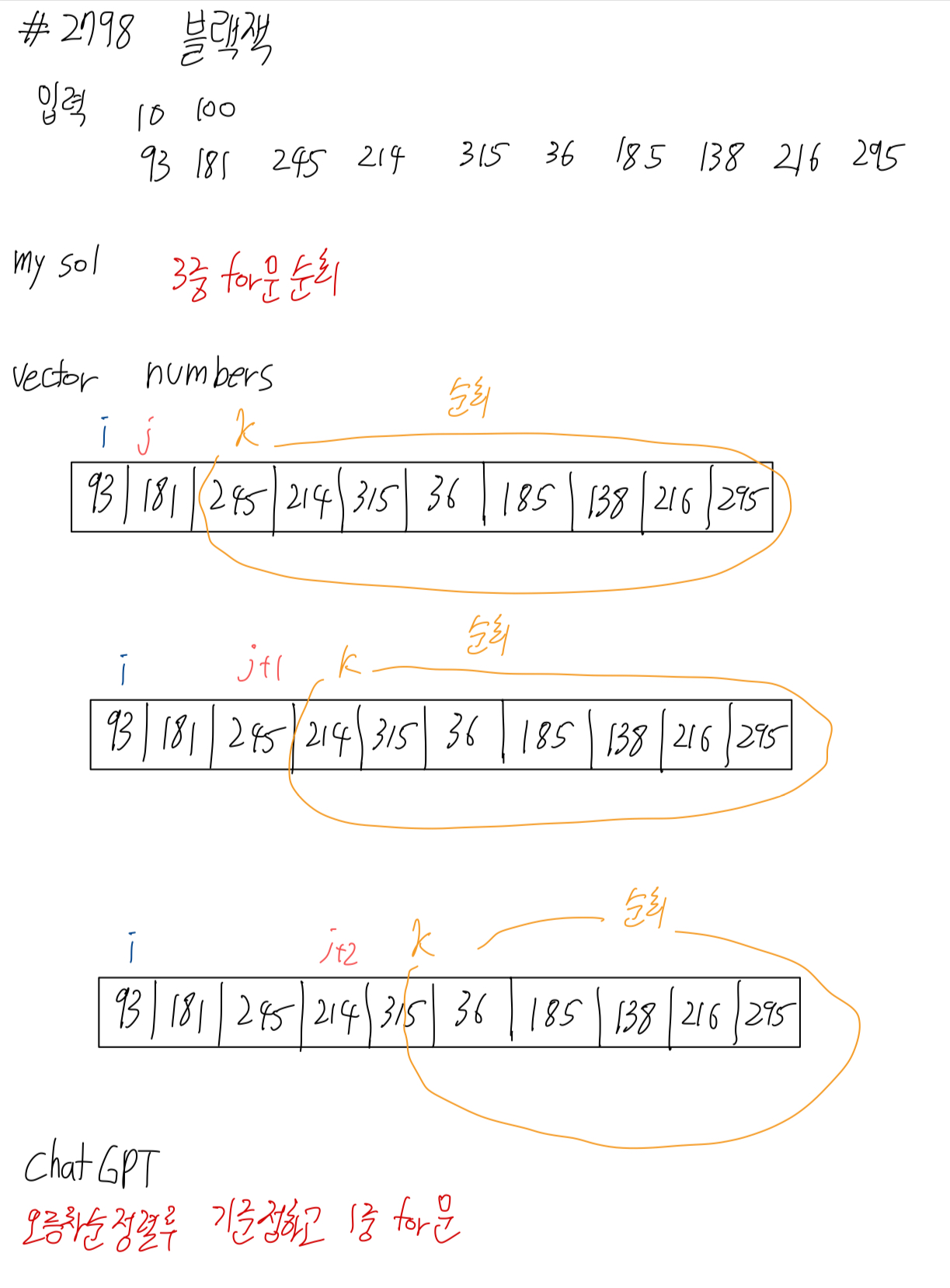
빈 벡터를 정의하고 두번재 줄의 card num을 emplace_back함수를 통해 벡터의 뒷부분에 추가해주었습니다. 이때 emplace_back함수는 push_back함수와 하는일은 똑같지만 복사연사자를 불러오지 않기 때문에 시간과 메모리면에서 우수합니다. 3중 for문을 통해 숫자사이의 세가지 합의 조합중 card_sum 숫자와 가장 가까우면서 넘지 않는 sum을 나타낼 수 있습니다..
Improved by chatgpt
대부분 sort함수를 통해 vector내의 카드숫자들을 작은순서대로 오름차순으로 정리한 것이 차이점이였습니다. 이를 통해 카드의 수가 많아질때 더 효율적으로 카드사이의 조합을 순회할 수 있습니다.

sort(cards.begin(), cards.end());
hi