전력망을 둘로 나누기
문제 링크 : 전력망을 둘로 나누기
문제 설명
n개의 송전탑이 전선을 통해 하나의 트리 형태로 연결되어 있습니다. 당신은 이 전선들 중 하나를 끊어서 현재의 전력망 네트워크를 2개로 분할하려고 합니다. 이때, 두 전력망이 갖게 되는 송전탑의 개수를 최대한 비슷하게 맞추고자 합니다.
송전탑의 개수 n, 그리고 전선 정보 wires가 매개변수로 주어집니다. 전선들 중 하나를 끊어서 송전탑 개수가 가능한 비슷하도록 두 전력망으로 나누었을 때, 두 전력망이 가지고 있는 송전탑 개수의 차이(절대값)를 return 하도록 solution 함수를 완성해주세요.
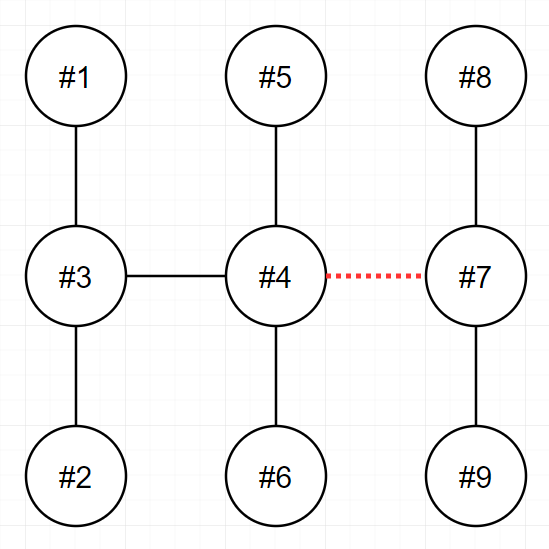
제한 사항
- n은 2 이상 100 이하인 자연수입니다.
- wires는 길이가 n-1인 정수형 2차원 배열입니다.
-> wires의 각 원소는 [v1, v2] 2개의 자연수로 이루어져 있으며, 이는 전력망의 v1번 송전탑과 v2번 송전탑이 전선으로 연결되어 있다는 것을 의미합니다.
-> 1 ≤ v1 < v2 ≤ n 입니다.
-> 전력망 네트워크가 하나의 트리 형태가 아닌 경우는 입력으로 주어지지 않습니다.
입출력 예
| n | wires | result |
|---|---|---|
| 9 | [[1,3],[2,3],[3,4],[4,5],[4,6],[4,7],[7,8],[7,9]] | 3 |
| 4 | [[1,2],[2,3],[3,4]] | 0 |
| 7 | [[1,2],[2,7],[3,7],[3,4],[4,5],[6,7]] | 1 |
풀이 방법
- 먼저 트리를 나타내는 인접 행렬을 만들고, 주어진 wires의 edge를 하나씩 끊어본 다음에 끊어진 지점 하나에서 dfs를 통해 몇 개의 송전탑이 연결되어 있는지 확인하고자 했다. 하나에 연결되어 있는 송전탑의 개수를 구하면 당연하게 다른 쪽은
(n - count)가 될 테니까 이를 이용하고자 했다.
-> wires의 최대 개수는 n-1이고, dfs를 통한 완전탐색은O(N)의 시간복잡도가 걸릴테니까 총 시간복잡도는O(N^2)으로 추정되고, 이는 n이 최대 100이므로 알맞은 알고리즘이라고 생각된다.
구현
#include <string>
#include <vector>

using namespace std;

int dfs(int temp, int n, vector<int>& visited, vector<vector<bool>>& graph){
    int count = 1;
    visited[temp] = true;

    for(int i = 1; i <= n; i++){
        if(graph[temp][i] && !visited[i]){
            count += dfs(i, n, visited, graph);
        }
    }

    return count;
}

int solution(int n, vector<vector<int>> wires) {
    int answer = n;

    vector<vector<bool>> graph(n + 1, vector<bool>(n + 1, false));
    for(vector<int> v : wires){
        graph[v[0]][v[1]] = true;
        graph[v[1]][v[0]] = true;
    }

    // edge 하나씩 끊어보면서 dfs로 개수 반환
    for(vector<int> v : wires){
        int x = v[0], y = v[1];
        graph[x][y] = false;
        graph[y][x] = false;
        vector<int> visited(n + 1, false);
        answer = min(answer, abs(n - 2 * dfs(x, n, visited, graph)));
        graph[x][y] = true;
        graph[y][x] = true;
    }

    return answer;
}
게임 개발자를 향해..