1. FileUtils
- 파일을 읽고, 쓰고 할 수 있는 코드
FileUtils.h
#pragma once

enum FileMode :uint8
{ // 읽기, 쓰기
	Write,
	Read
};

class FileUtils
{
public:
	FileUtils();
	~FileUtils();

	void Open(wstring filePath, FileMode mode);

////////// Write //////////
	template<typename T>
	void Write(const T& data)
	{
		DWORD numOfBytes = 0;
		assert(::WriteFile(_handle, &data, sizeof(T), (LPDWORD)&numOfBytes, nullptr));
	}

	// 템플릿특수화 - 예외적 상황가정(템플릿을 사용하겠지만, string이 들어갈 경우에는 이 템프릿을 사용하겠다)
	template<>
	void Write<string>(const string& data)
	{
		return Write(data);
	}

	void Write(void* data, uint32 dataSize);
	void Write(const string& data);
////////// Write //////////

////////// Read  //////////
	template<typename T>
	void Read(OUT T& data)
	{
		DWORD numOfBytes = 0;
		assert(::ReadFile(_handle, &data, sizeof(T), (LPDWORD)&numOfBytes, nullptr));
	}

	template<typename T>
	T Read()
	{
		T data;
		Read(data);
		return data;
	}

	void Read(void** data, uint32 dataSize);
	void Read(OUT string& data);
////////// Read  //////////


private:
	HANDLE _handle = INVALID_HANDLE_VALUE;
};
FileUtils.cpp
#include "pch.h"
#include "FileUtils.h"

FileUtils::FileUtils()
{
}

FileUtils::~FileUtils()
{
	if (_handle != INVALID_HANDLE_VALUE)
	{
		::CloseHandle(_handle);
		_handle = INVALID_HANDLE_VALUE;
	}
}

void FileUtils::Open(wstring filePath, FileMode mode)
{
	if (mode == FileMode::Write)
	{
		_handle = ::CreateFile(
			filePath.c_str(),
			GENERIC_WRITE,
			0,
			nullptr,
			CREATE_ALWAYS,
			FILE_ATTRIBUTE_NORMAL,
			nullptr
		);
	}
	else
	{
		_handle = ::CreateFile(
			filePath.c_str(),
			GENERIC_READ,
			FILE_SHARE_READ,
			nullptr,
			OPEN_EXISTING,
			FILE_ATTRIBUTE_NORMAL,
			nullptr
		);
	}

	assert(_handle != INVALID_HANDLE_VALUE);
}

void FileUtils::Write(void* data, uint32 dataSize)
{
	uint32 numOfBytes = 0;
	assert(::WriteFile(_handle, data, dataSize, reinterpret_cast<LPDWORD>(&numOfBytes), nullptr));
}

void FileUtils::Write(const string& data)
{
	uint32 size = (uint32)data.size();
	Write(size);

	if (data.size() == 0)
		return;

	Write((void*)data.data(), size);
}

void FileUtils::Read(void** data, uint32 dataSize)
{
	uint32 numOfBytes = 0;
	assert(::ReadFile(_handle, *data, dataSize, reinterpret_cast<LPDWORD>(&numOfBytes), nullptr));
}

void FileUtils::Read(OUT string& data)
{
	uint32 size = Read<uint32>();

	if (size == 0)
		return;

	char* temp = new char[size + 1];
	temp[size] = 0;
	Read((void**)&temp, size);
	data = temp;
	delete[] temp;
}
Converter
- FileUtils를 활용해서,
Bone과Mesh정보를 하나로 모아, 모델 정보를 저장하는 함수 만들기 - 각 구조체 내부 변수의 순서와 자료형은 잘 맞춰줘야함 (나중에 Read할때와 같아야함)
Converter.cpp
void Converter::WriteModelFile(wstring finalPath)
{
	auto path = filesystem::path(finalPath);

	// 폴더가 없으면 만든다.
	filesystem::create_directory(path.parent_path());

	shared_ptr<FileUtils> file = make_shared<FileUtils>();
	file->Open(finalPath, FileMode::Write);

	// Bone Data
	file->Write<uint32>(_bones.size());
	for (shared_ptr<asBone>& bone : _bones)
	{
		// 순서랑 자료형 잘 맞추기
		file->Write<int32>(bone->index);
		file->Write<string>(bone->name);
		file->Write<int32>(bone->parent);
		file->Write<Matrix>(bone->transform);
	}

	// Mesh Data
	file->Write<uint32>(_meshes.size());
	for (shared_ptr<asMesh>& meshData : _meshes)
	{
		file->Write<string>(meshData->name);
		file->Write<int32>(meshData->boneIndex);
		file->Write<string>(meshData->materialName);

		// Vertex Data
		file->Write<uint32>(meshData->vertices.size());
		file->Write(&meshData->vertices[0], sizeof(VertexType) * meshData->vertices.size());

		// Index Data
		file->Write<uint32>(meshData->indices.size());
		file->Write(&meshData->indices[0], sizeof(uint32) * meshData->indices.size());
	}
}
Model, ModelMesh
- 메모리를 가져와서 모델 띄우기
- 메모리를 가져오기 위해 엔진쪽에서 모델정보와 모델의
BoneMesh정보를 가지게 될Model과ModelMesh클래스 생성하기
ModelMesh.h
- struct로 만들주는 이유 : struct가 기본적으로 public이기 때문에
struct ModelBone
{
	wstring name;
	int32 index;
	int32 parentIndex;
	shared_ptr<ModelBone> parent; // Cache

	Matrix transform;
	vector<shared_ptr<ModelBone>> children; // Cache
};

struct ModelMesh
{
	void CreateBuffers();
	wstring name;

	// Mesh
	shared_ptr<Geometry<ModelVertexType>> geometry = make_shared<Geometry<ModelVertexType>>();
	shared_ptr<VertexBuffer> vertexBuffer;
	shared_ptr<IndexBuffer> indexBuffer;

	// Material
	wstring materialName = L"";
	shared_ptr<Material> material; // Cache

	// Bones
	int32 boneIndex;
	shared_ptr<ModelBone> bone; // Cache;
};
ModelMesh.cpp
void ModelMesh::CreateBuffers()
{
	vertexBuffer = make_shared<VertexBuffer>();
	vertexBuffer->Create(geometry->GetVertices());
	indexBuffer = make_shared<IndexBuffer>();
	indexBuffer->Create(geometry->GetIndices());
}
Model.h
#pragma once

struct ModelBone;
struct ModelMesh;


class Model : public enable_shared_from_this<Model>
{
public:
	Model();
	~Model();

public:
	// Custom -> Memory
	void ReadMaterial(wstring filename);
	void ReadModel(wstring filename);

	// 헬퍼 함수들 (개수, 전체(Material, Mesh, Bone), Index로 찾기, Name으로 찾기)
	uint32 							GetMaterialCount() { return static_cast<uint32>(_materials.size()); }
	vector<shared_ptr<Material>>& 	GetMaterials() { return _materials; }
	shared_ptr<Material> 			GetMaterialByIndex(uint32 index) { return _materials[index]; }
	shared_ptr<Material> 			GetMaterialByName(const wstring& name);

	uint32 							GetMeshCount() { return static_cast<uint32>(_meshes.size()); }
	vector<shared_ptr<ModelMesh>>& 	GetMeshes() { return _meshes; }
	shared_ptr<ModelMesh> 			GetMeshByIndex(uint32 index) { return _meshes[index]; }
	shared_ptr<ModelMesh> 			GetMeshByName(const wstring& name);

	uint32 							GetBoneCount() { return static_cast<uint32>(_bones.size()); }
	vector<shared_ptr<ModelBone>>& 	GetBones() { return _bones; }
	shared_ptr<ModelBone> 			GetBoneByIndex(uint32 index) { return (index < 0 || index >= _bones.size() ? nullptr : _bones[index]); }
	shared_ptr<ModelBone> 			GetBoneByName(const wstring& name);
	// 헬퍼 함수들


private:
	// 캐쉬정보 채워주기
	void BindCacheInfo();

private:
	wstring _modelPath = L"../Resources/Models/";
	wstring _texturePath = L"../Resources/Textures/";

private:
	shared_ptr<ModelBone> _root;
	vector<shared_ptr<Material>> _materials;
	vector<shared_ptr<ModelBone>> _bones;
	vector<shared_ptr<ModelMesh>> _meshes;
};
Model.cpp
#include "pch.h"
#include "Model.h"
#include "tinyxml2.h"
#include <filesystem>
#include "Utils.h"
#include "FileUtils.h"
#include "Material.h"
#include "ModelMesh.h"

Model::Model() { }
Model::~Model() { }
void Model::ReadMaterial(wstring filename)
{
	wstring fullPath = _texturePath + filename + L".xml";
	auto parentPath = filesystem::path(fullPath).parent_path();

	tinyxml2::XMLDocument* document = new tinyxml2::XMLDocument();
	tinyxml2::XMLError error = document->LoadFile(Utils::ToString(fullPath).c_str());
	assert(error == tinyxml2::XML_SUCCESS);

	tinyxml2::XMLElement* root = document->FirstChildElement();
	tinyxml2::XMLElement* materialNode = root->FirstChildElement();

	while (materialNode)
	{
		shared_ptr<Material> material = make_shared<Material>();

		tinyxml2::XMLElement* node = nullptr;

		node = materialNode->FirstChildElement();
		material->SetName(Utils::ToWString(node->GetText()));

		// Diffuse Texture
		node = node->NextSiblingElement();
		if (node->GetText())
		{
			wstring textureStr = Utils::ToWString(node->GetText());
			if (textureStr.length() > 0)
			{
				auto texture = RESOURCES->GetOrAddTexture(textureStr, (parentPath / textureStr).wstring());
				material->SetDiffuseMap(texture);
			}
		}

		// Specular Texture
		node = node->NextSiblingElement();
		if (node->GetText())
		{
			wstring textureStr = Utils::ToWString(node->GetText());
			if (textureStr.length() > 0)
			{
				auto texture = RESOURCES->GetOrAddTexture(textureStr, (parentPath / textureStr).wstring());
				material->SetSpecularMap(texture);
			}
		}

		// Normal Texture
		node = node->NextSiblingElement();
		if (node->GetText())
		{
			wstring textureStr = Utils::ToWString(node->GetText());
			if (textureStr.length() > 0)
			{
				auto texture = RESOURCES->GetOrAddTexture(textureStr, (parentPath / textureStr).wstring());
				material->SetNormalMap(texture);
			}
		}

		// Ambient
		{
			node = node->NextSiblingElement();

			Color color;
			color.x = node->FloatAttribute("R");
			color.y = node->FloatAttribute("G");
			color.z = node->FloatAttribute("B");
			color.w = node->FloatAttribute("A");
			material->GetMaterialDesc().ambient = color;
		}

		// Diffuse
		{
			node = node->NextSiblingElement();

			Color color;
			color.x = node->FloatAttribute("R");
			color.y = node->FloatAttribute("G");
			color.z = node->FloatAttribute("B");
			color.w = node->FloatAttribute("A");
			material->GetMaterialDesc().diffuse = color;
		}

		// Specular
		{
			node = node->NextSiblingElement();

			Color color;
			color.x = node->FloatAttribute("R");
			color.y = node->FloatAttribute("G");
			color.z = node->FloatAttribute("B");
			color.w = node->FloatAttribute("A");
			material->GetMaterialDesc().specular = color;
		}

		// Emissive
		{
			node = node->NextSiblingElement();

			Color color;
			color.x = node->FloatAttribute("R");
			color.y = node->FloatAttribute("G");
			color.z = node->FloatAttribute("B");
			color.w = node->FloatAttribute("A");
			material->GetMaterialDesc().emissive = color;
		}

		_materials.push_back(material);

		// Next Material
		materialNode = materialNode->NextSiblingElement();
	}

	BindCacheInfo();
}

void Model::ReadModel(wstring filename)
{
	wstring fullPath = _modelPath + filename + L".mesh";

	shared_ptr<FileUtils> file = make_shared<FileUtils>();
	file->Open(fullPath, FileMode::Read);

    // WriteModel해주었던 부분과 동일한 순서와 자료형으로 작성해줘야 꼬이지 않음
	// Bones
	{
		const uint32 count = file->Read<uint32>();

		for (uint32 i = 0; i < count; i++)
		{
			shared_ptr<ModelBone> bone = make_shared<ModelBone>();
			bone->index = file->Read<int32>();
			bone->name = Utils::ToWString(file->Read<string>());
			bone->parentIndex = file->Read<int32>();
			bone->transform = file->Read<Matrix>();

			_bones.push_back(bone);
		}
	}

	// Mesh
	{
		const uint32 count = file->Read<uint32>();

		for (uint32 i = 0; i < count; i++)
		{
			shared_ptr<ModelMesh> mesh = make_shared<ModelMesh>();

			mesh->name = Utils::ToWString(file->Read<string>());
			mesh->boneIndex = file->Read<int32>();

			// Material
			mesh->materialName = Utils::ToWString(file->Read<string>());

			//VertexData
			{
				const uint32 count = file->Read<uint32>();
				vector<ModelVertexType> vertices;
				vertices.resize(count);

				void* data = vertices.data();
				file->Read(&data, sizeof(ModelVertexType) * count);
				mesh->geometry->AddVertices(vertices);
			}

			//IndexData
			{
				const uint32 count = file->Read<uint32>();

				vector<uint32> indices;
				indices.resize(count);

				void* data = indices.data();
				file->Read(&data, sizeof(uint32) * count);
				mesh->geometry->AddIndices(indices);
			}

			mesh->CreateBuffers();

			_meshes.push_back(mesh);
		}
	}

	BindCacheInfo();
}

std::shared_ptr<Material> Model::GetMaterialByName(const wstring& name)
{
	for (auto& material : _materials)
	{
		if (material->GetName() == name)
			return material;
	}

	return nullptr;
}

std::shared_ptr<ModelMesh> Model::GetMeshByName(const wstring& name)
{
	for (auto& mesh : _meshes)
	{
		if (mesh->name == name)
			return mesh;
	}

	return nullptr;
}

std::shared_ptr<ModelBone> Model::GetBoneByName(const wstring& name)
{
	for (auto& bone : _bones)
	{
		if (bone->name == name)
			return bone;
	}

	return nullptr;
}


void Model::BindCacheInfo()
{
	// Mesh에 Material 캐싱
	for (const auto& mesh : _meshes)
	{
		// 이미 찾았으면 스킵
		if (mesh->material != nullptr)
			continue;

		mesh->material = GetMaterialByName(mesh->materialName);
	}

	// Mesh에 Bone 캐싱
	for (const auto& mesh : _meshes)
	{
		// 이미 찾았으면 스킵
		if (mesh->bone != nullptr)
			continue;

		mesh->bone = GetBoneByIndex(mesh->boneIndex);
	}

	// Bone 계층 정보 채우기
	if (_root == nullptr && _bones.size() > 0)
	{
		_root = _bones[0];

		for (const auto& bone : _bones)
		{
			if (bone->parentIndex >= 0)
			{
				bone->parent = _bones[bone->parentIndex];
				bone->parent->children.push_back(bone);
			}
			else
			{
				bone->parent = nullptr;
			}
		}
	}
}
ModelRenderer
- 모델을 Render하는 부분을 Component형식으로 만들어서 관리
ModelRenderer.h
#pragma once
#include "Component.h"

class Model;
class Shader;
class Material;


class ModelRenderer : public Component
{
	using Super = Component;

public:
	ModelRenderer(shared_ptr<Shader> shader);
	virtual ~ModelRenderer();

	virtual void Update() override;

	void SetModel(shared_ptr<Model> model);
	void SetPass(uint8 pass) { _pass = pass; }

private:
	shared_ptr<Shader>	_shader;
	uint8				_pass = 0;
	shared_ptr<Model>	_model;
};
ModelRenderer.cpp
#include "pch.h"
#include "ModelRenderer.h"
#include "Material.h"
#include "ModelMesh.h"
#include "Model.h"


ModelRenderer::ModelRenderer(shared_ptr<Shader> shader)
	:Super(ComponentType::ModelRenderer), _shader(shader)
{
}

ModelRenderer::~ModelRenderer()
{
}

void ModelRenderer::Update()
{
	if (_model == nullptr)
		return;

	auto world = GetTransform()->GetWorldMatrix();
	RENDER->PushTransformData(TransformDesc{ world });

	const auto& meshes = _model->GetMeshes();
	for (auto& mesh : meshes)
	{
		if (mesh->material)
			mesh->material->Update();

		uint32 stride = mesh->vertexBuffer->GetStride();
		uint32 offset = mesh->vertexBuffer->GetOffset();

		DC->IASetVertexBuffers(0, 1, mesh->vertexBuffer->GetComPtr().GetAddressOf(), &stride, &offset);
		DC->IASetIndexBuffer(mesh->indexBuffer->GetComPtr().Get(), DXGI_FORMAT_R32_UINT, 0);

		_shader->DrawIndexed(0, _pass, mesh->indexBuffer->GetCount(), 0, 0);
	}
}

void ModelRenderer::SetModel(shared_ptr<Model> model)
{
	_model = model;

	const auto& materials = _model->GetMaterials();
	for (auto& material : materials)
	{
		material->SetShader(_shader);
	}
}
쉐이더 수정 및 디버깅
15.Model.fx
- 이전
14.NormalMapping.fx와 크게 달라지지 않고, RasterizerState가 추가된 부분과 Color값을 단순하게만 수정
float4 PS(MeshOutput input) : SV_TARGET
{
    //ComputeNormalMapping(input.normal, input.tangent, input.uv);

    //float4 color = ComputeLight(input.normal, input.uv, input.worldPosition);
    float4 color = DiffuseMap.Sample(LinearSampler, input.uv);

    return color;
}
float4 PS_RED(MeshOutput input) : SV_TARGET
{
    return float4(1, 0, 0, 1);
}

technique11 T0
{
    PASS_VP(P0, VS, PS)
    PASS_RS_VP(P1, FillModeWireFrame, VS, PS_RED)
}
00.Global.fx
- technique에서 rs를 추가 하기 위해 매크로 생성
#define PASS_RS_VP(name, rs, vs, ps)                        \
pass name                                                   \
{                                                           \
    SetRasterizerState(rs);                                 \
    SetVertexShader(CompileShader(vs_5_0, vs()));           \
    SetPixelShader(CompileShader(ps_5_0, ps()));            \
}
StaticMeshDemo
- 기존 코드는
18.NormalMappingDemo와 동일 - Tower Model을 출력하기 위해
CreateTower()함수를 생성하기
void StaticMeshDemo::CreateTower()
{
	// CustomData -> Memory
	shared_ptr<Model> m1 = make_shared<Model>();
	m1->ReadModel(L"Tower/Tower");
	m1->ReadMaterial(L"Tower/Tower");

	_obj = make_shared<GameObject>();
	_obj->GetOrAddTransform()->SetPosition(Vec3(0, 0, 50));
	_obj->GetOrAddTransform()->SetScale(Vec3(1.f));
	_obj->GetOrAddTransform()->SetRotation(Vec3(3.14f / 2, 0, 0));
	_obj->AddComponent(make_shared<ModelRenderer>(_shader));
	{
		_obj->GetModelRenderer()->SetModel(m1);
		_obj->GetModelRenderer()->SetPass(1);
	}
}
결과
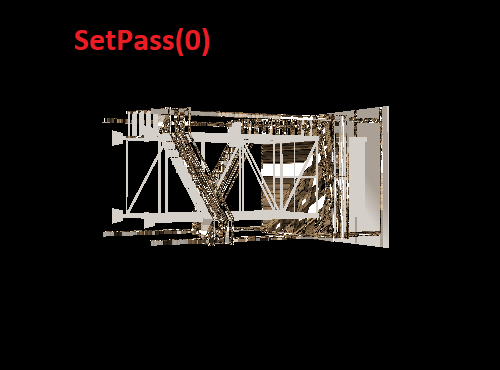
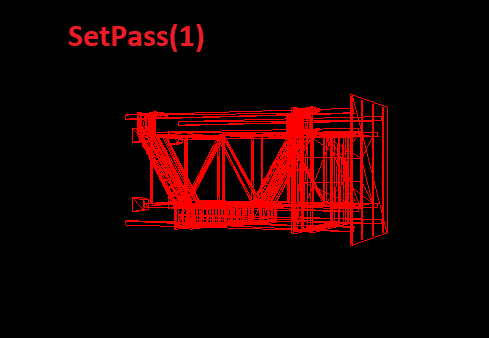
참고 강의
https://www.inflearn.com/courses/lecture?courseId=329791&type=LECTURE&unitId=161141

게임 클라이언트 프로그래머 준비중 (공부 및 기록용)