1. 문제 소개
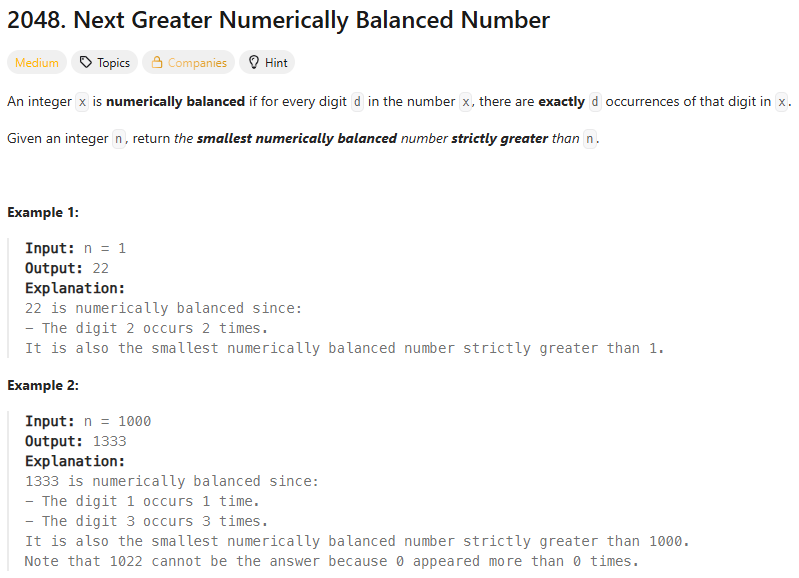
2048. Next Greater Numerically Balanced Number
2. 나의 풀이법
처음 생각은 dfs였다.
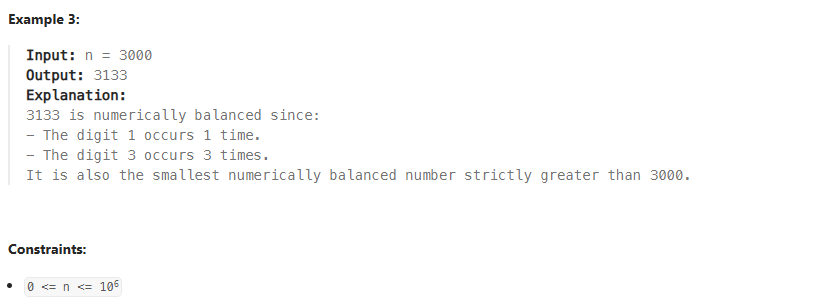
문제의 범위는 까지였고, 그에 맞춰서 상한을 정해두었다.
이후에는 list에 숫자의 사용횟수를 적어가며 계산했다.
class Solution:
    def nextBeautifulNumber(self, n: int) -> int:
        if n == 0:
            return 1
        elif n > 1224444:
            return

        l = len(str(n)) + 1
        used = [0] * 7
        cand = set()

        def is_balanced():
            for d in range(1, 7):
                if used[d] not in (0, d):
                    return False
            return True

        def dfs(path):
            if path and is_balanced():
                cand.add(int("".join(path)))
            if len(path) == l:
                return
            for d in range(1, 7):
                if used[d] < d:
                    used[d] += 1
                    path.append(str(d))
                    dfs(path)
                    path.pop()
                    used[d] -= 1

        dfs([])
        arr = sorted(cand)
        i = bisect_right(arr, n)
        return arr[i]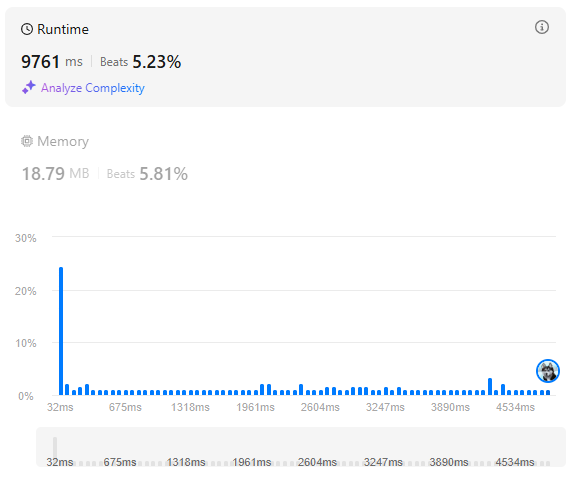
3. 다른 풀이법
class Solution:
    def nextBeautifulNumber(self, n: int) -> int:
        for i in range(n+1, 1224445):
            count = Counter(str(i))
            if all(count[d] == int(d) for d in count):
                return i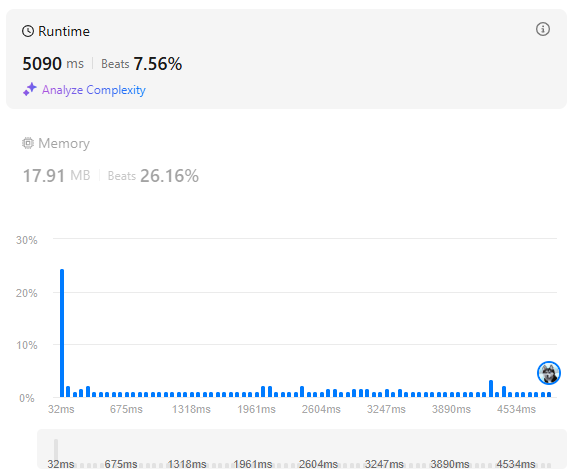
Editorial의 풀이는 굉장히 단순한 BruteForce였다.
시간복잡도는 이지만 확실한 풀이였다.
4. 결론
이렇게 적은 숫자의 경우에는 가능한 조합의 경우를 전부 박아넣어서 코드를 돌리기도 했다.
가능하다면 하드코딩이 제일인 것도 같다.
balance = [
    1,
    22,
    122,
    212,
    221,
    333,
    1333,
    3133,
    3313,
    3331,
    4444,
    14444,
    22333,
    23233,
    23323,
    23332,
    32233,
    32323,
    32332,
    33223,
    33232,
    33322,
    41444,
    44144,
    44414,
    44441,
    55555,
    122333,
    123233,
    123323,
    123332,
    132233,
    132323,
    132332,
    133223,
    133232,
    133322,
    155555,
    212333,
    213233,
    213323,
    213332,
    221333,
    223133,
    223313,
    223331,
    224444,
    231233,
    231323,
    231332,
    232133,
    232313,
    232331,
    233123,
    233132,
    233213,
    233231,
    233312,
    233321,
    242444,
    244244,
    244424,
    244442,
    312233,
    312323,
    312332,
    313223,
    313232,
    313322,
    321233,
    321323,
    321332,
    322133,
    322313,
    322331,
    323123,
    323132,
    323213,
    323231,
    323312,
    323321,
    331223,
    331232,
    331322,
    332123,
    332132,
    332213,
    332231,
    332312,
    332321,
    333122,
    333212,
    333221,
    422444,
    424244,
    424424,
    424442,
    442244,
    442424,
    442442,
    444224,
    444242,
    444422,
    515555,
    551555,
    555155,
    555515,
    555551,
    666666,
    1224444,
]


class Solution:
    def nextBeautifulNumber(self, n: int) -> int:
        return balance[bisect_right(balance, n)]
Junior AI Engineer