SWEA 1247번: 최적 경로 Java Solution
1. Problem Definition & Analysis
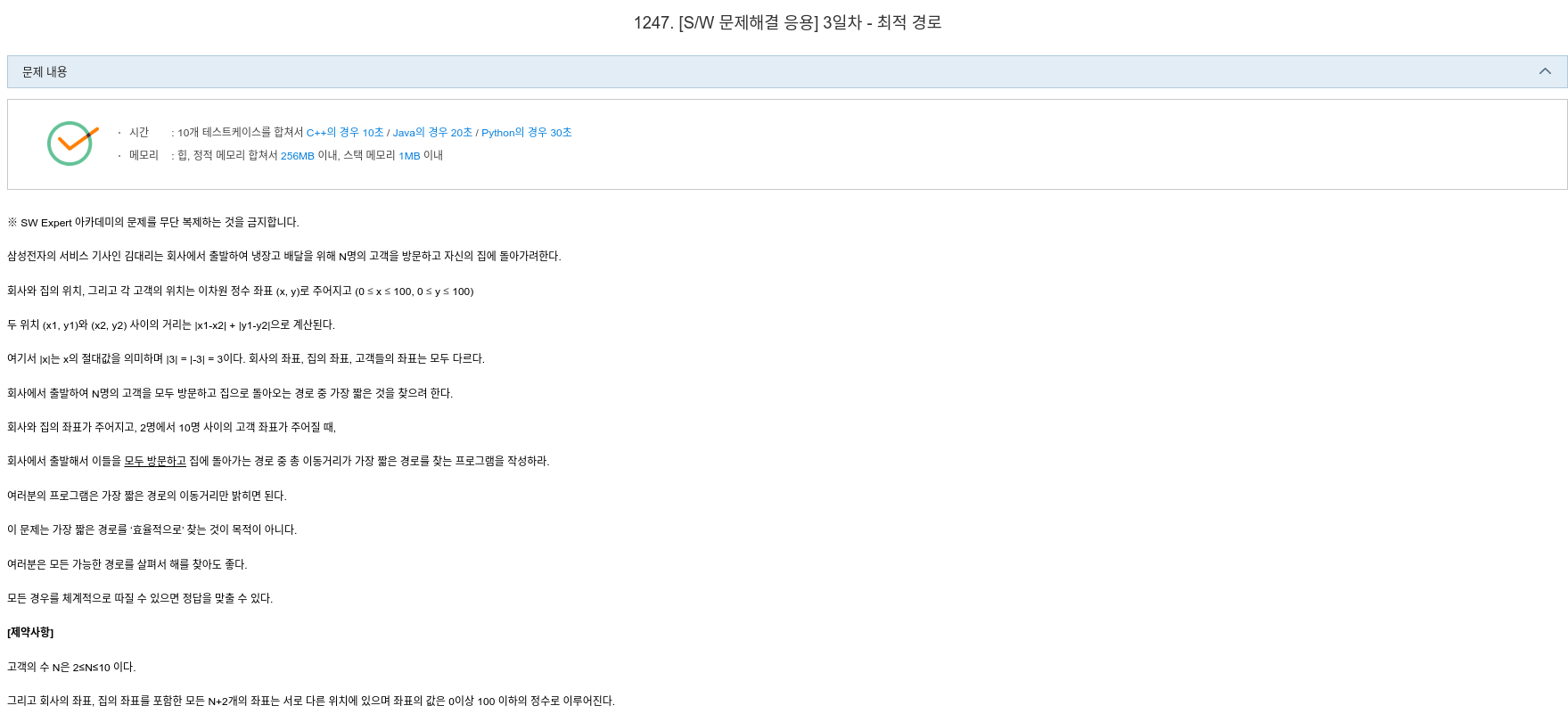
회사 - 특정 경로 - 집으로 연결되는 최소 비용을 갖는 경로의 비용을 찾는 문제이다. 문제 설명에도 나와 있듯이 효율이 중요한 문제는 아니다. 으로 제약 조건이 매우 널널하고 테스트 케이스도 10개밖에 없으므로 어떤 해결 방법이든 유효할 것으로 보인다.
나는 두 가지 풀이를 생각해 보았다.
- 순열 기반의 풀이법: 명의 고객의 방문 순서를 순열으로 미리 결정한 후 비용을 계산하는 방식이다. 예를 들어 고객이 명 있다면 , , , 등으로 방문 순서를 결정한다. 이 방식의 시간 복잡도는 이다.
- DP 기반의 풀이법: 이 문제를 외판원 순회 문제(TSP, Traveling Salesman Problem)의 일종이라고 생각하고 Bismasking DP를 사용해 해결하는 것이다. 외판원 순회 문제란 그래프상의 어떤 정점으로부터 다른 모든 정점을 방문한 후 출발 정점으로 되돌아올 때의 최소 비용을 구하는 문제이다. 이 방식의 시간 복잡도는 이다.
시간 복잡도를 비교해 보았을 때 2번 풀이가 효율적이라고 생각되어 2번 풀이를 따르기로 결정했다.
2. Solution
package P1247;

import java.io.*;
import java.util.*;

public class Solution {

    static BufferedReader br = new BufferedReader(new InputStreamReader(System.in));
    static StringTokenizer st;
    static StringBuilder sb = new StringBuilder();

    static class Coords {
        int x, y;

        public Coords(int x, int y) {
            this.x = x;
            this.y = y;
        }

        public int getDistance(Coords other) {
            return Math.abs(x - other.x) + Math.abs(y - other.y);
        }
    }

    static final int INF = Integer.MAX_VALUE;
    static final int COMPANY = 0;
    static final int HOME = 1;

    static int T, N;
    static Coords[] coords;
    static int[][] cache;

    public static void main(String[] args) throws IOException {
        T = Integer.parseInt(br.readLine());
        for (int i = 1; i <= T; i++)
            sb.append('#').append(i).append(' ').append(solve()).append('\n');
        System.out.println(sb);
    }

    public static int solve() throws IOException {
        N = Integer.parseInt(br.readLine());
        coords = new Coords[N + 2];
        st = new StringTokenizer(br.readLine());
        for (int i = 0; i <= N + 1; i++) {
            int x = Integer.parseInt(st.nextToken());
            int y = Integer.parseInt(st.nextToken());
            coords[i] = new Coords(x, y);
        }
        cache = new int[N + 2][1 << N + 2];
        for (int[] row : cache)
            Arrays.fill(row, INF);
        return DFS(COMPANY, 3);
    }

    public static int DFS(int prev, int mask) {
        if (mask == (1 << N + 2) - 1)
            return coords[prev].getDistance(coords[HOME]);
        else if (cache[prev][mask] != INF)
            return cache[prev][mask];

        for (int i = 2; i < N + 2; i++)
            if ((mask & (1 << i)) == 0)
                cache[prev][mask] = Math.min(cache[prev][mask], coords[prev].getDistance(coords[i]) + DFS(i, mask | (1 << i)));

        return cache[prev][mask];
    }
}
핵심 코드 블럭을 하나씩 살펴보겠다.
    static class Coords {
        int x, y;

        public Coords(int x, int y) {
            this.x = x;
            this.y = y;
        }

        public int getDistance(Coords other) {
            return Math.abs(x - other.x) + Math.abs(y - other.y);
        }
    }
우선 그래프의 정점에 해당하는 클래스는 위와 같이 정의했다.
    public static int solve() throws IOException {
        N = Integer.parseInt(br.readLine());
        coords = new Coords[N + 2];
        st = new StringTokenizer(br.readLine());
        for (int i = 0; i <= N + 1; i++) {
            int x = Integer.parseInt(st.nextToken());
            int y = Integer.parseInt(st.nextToken());
            coords[i] = new Coords(x, y);
        }
        cache = new int[N + 2][1 << N + 2];
        for (int[] row : cache)
            Arrays.fill(row, INF);
        return DFS(COMPANY, 3);
    }
전형적인 Bitmasking DP 알고리즘을 사용했으나 특이한 점이 있다. 회사와 집은 이미 방문 순서가 결정되어 있기 때문에 깊이 우선 탐색에서 고려될 필요가 없다. 회사 정점의 인덱스는 0, 집 정점의 인덱스는 1이다. 그래서 을 초기 마스크 값으로 설정했다.
    public static int DFS(int prev, int mask) {
        if (mask == (1 << N + 2) - 1)
            return coords[prev].getDistance(coords[HOME]);
        else if (cache[prev][mask] != INF)
            return cache[prev][mask];

        for (int i = 2; i < N + 2; i++)
            if ((mask & (1 << i)) == 0)
                cache[prev][mask] = Math.min(cache[prev][mask], coords[prev].getDistance(coords[i]) + DFS(i, mask | (1 << i)));

        return cache[prev][mask];
    }
DFS의 매개변수로는 prev(직전에 방문한 정점), mask(방문 여부를 나타내기 위한 비트 마스크)를 정의하였고, 모든 정점 방문 시 마지막으로 방문한 고객 정점과 집 정점 간의 거리를 계산해 반환하도록 구현했다.

안녕하세요