Sentiment Classification
Task
- IMDB 영화사이트에서 50000개의 영화평을 가지고 positive/negative인지 구분해보자.
- 데이터 불러오기를 제외한 딥러닝 트레이닝 과정을 직접 구현해보는 것이 목표 입니다.
Dataset
- IMDB datasets
Base code
- Dataset: train, val, test로 split
- Input data shape: (batch_size, max_sequence_length)
- Output data shape: (batch_size, 1)
- Architecture:
- RNN을 이용한 간단한 classification 모델 가이드
- Embedding - SimpleRNN - Dense (with Sigmoid)
- tf.keras.layers 사용
- Training
- model.fit 사용
- Evaluation
- model.evaluate 사용 for test dataset
Try some techniques
- Training-epochs 조절
- Change model architectures (Custom model)
- Use another cells (LSTM, GRU, etc.)
- Use dropout layers
- Embedding size 조절
- 또는 one-hot vector로 학습
- Number of words in the vocabulary 변화
- pad 옵션 변화
- Data augmentation (if possible)
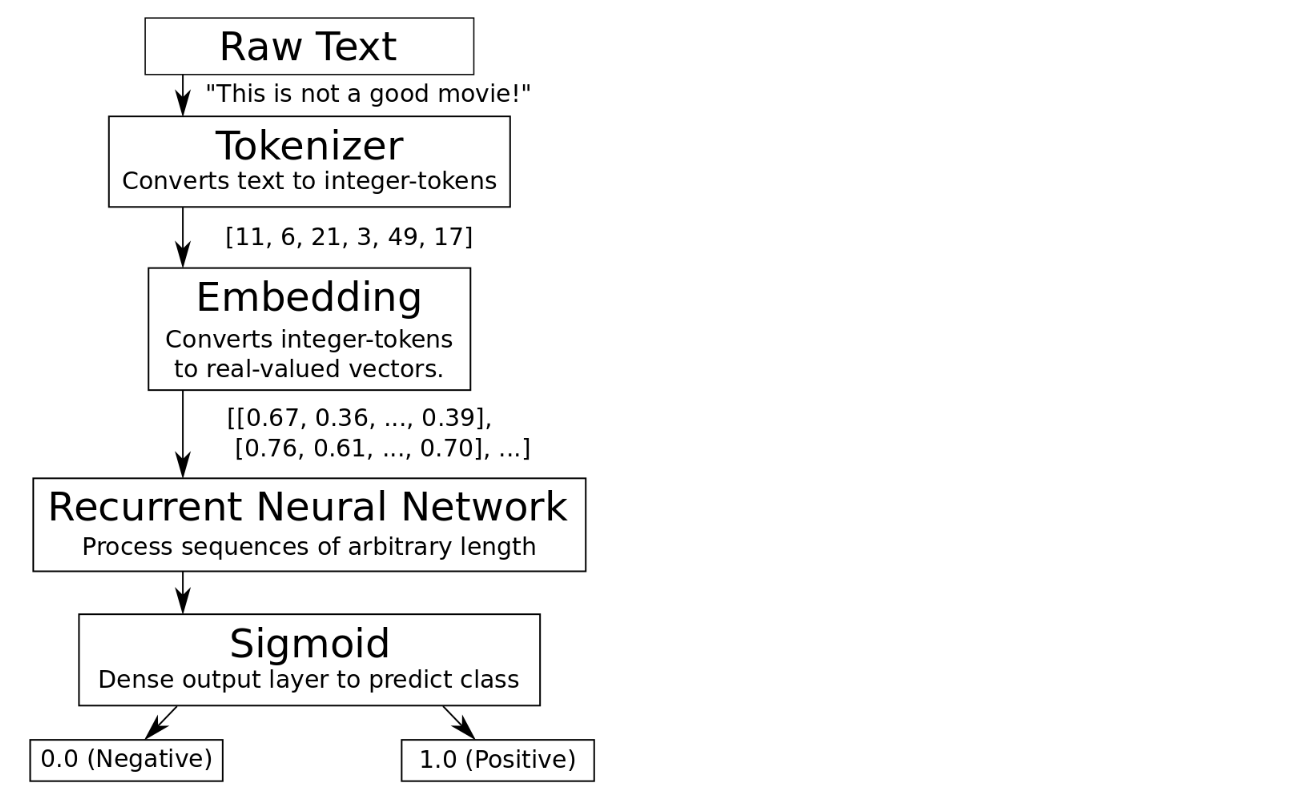
자연어처리에 관한 work flow
The flowchart of the algorithm is roughly:
Import modules
use_colab = True
assert use_colab in [True, False]
from google.colab import drive
drive.mount('/content/drive')# Drive already mounted at /content/drive; to attempt to forcibly remount, call drive.mount("/content/drive", force_remount=True).from __future__ import absolute_import
from __future__ import division
from __future__ import print_function
from __future__ import unicode_literals
import os
import time
import shutil
import tarfile
import numpy as np
import matplotlib.pyplot as plt
%matplotlib inline
from IPython.display import clear_output
import tensorflow as tf
from tensorflow.keras import layers
os.environ["CUDA_VISIBLE_DEVICES"]="0"Load Data
- IMDB에서 다운받은 총 50000개의 영화평을 사용한다.
tf.keras.datasets에 이미 잘 가공된 데이터 셋이 있으므로 쉽게 다운받아 사용할 수 있다.- 원래는 text 데이터이지만
tf.keras.datasets.imdb는 이미 Tokenizing이 되어있다.
# Load training and eval data from tf.keras
imdb = tf.keras.datasets.imdb

(train_data, train_labels), (test_data, test_labels) = imdb.load_data(num_words=10000)
train_labels = train_labels.astype(np.float64)
test_labels = test_labels.astype(np.float64)
Downloading data from https://storage.googleapis.com/tensorflow/tf-keras-datasets/imdb.npz
17464789/17464789 [==============================] - 0s 0us/stepprint("Train-set size: ", len(train_data))
print("Test-set size: ", len(test_data))#Train-set size: 25000
#Test-set size: 25000Data 출력
- 데이터셋을 바로 불러왔을때 출력되는 데이터를 확인해보자
print(train_data[0])[1, 14, 22, 16, 43, 530, 973, 1622, 1385, 65, 458, 4468, 66, 3941, 4, 173, 36, 256, 5, 25, 100, 43, 838, 112, 50, 670, 2, 9, 35, 480, 284, 5, 150, 4, 172, 112, 167, 2, 336, 385, 39, 4, 172, 4536, 1111, 17, 546, 38, 13, 447, 4, 192, 50, 16, 6, 147, 2025, 19, 14, 22, 4, 1920, 4613, 469, 4, 22, 71, 87, 12, 16, 43, 530, 38, 76, 15, 13, 1247, 4, 22, 17, 515, 17, 12, 16, 626, 18, 2, 5, 62, 386, 12, 8, 316, 8, 106, 5, 4, 2223, 5244, 16, 480, 66, 3785, 33, 4, 130, 12, 16, 38, 619, 5, 25, 124, 51, 36, 135, 48, 25, 1415, 33, 6, 22, 12, 215, 28, 77, 52, 5, 14, 407, 16, 82, 2, 8, 4, 107, 117, 5952, 15, 256, 4, 2, 7, 3766, 5, 723, 36, 71, 43, 530, 476, 26, 400, 317, 46, 7, 4, 2, 1029, 13, 104, 88, 4, 381, 15, 297, 98, 32, 2071, 56, 26, 141, 6, 194, 7486, 18, 4, 226, 22, 21, 134, 476, 26, 480, 5, 144, 30, 5535, 18, 51, 36, 28, 224, 92, 25, 104, 4, 226, 65, 16, 38, 1334, 88, 12, 16, 283, 5, 16, 4472, 113, 103, 32, 15, 16, 5345, 19, 178, 32]print("sequence length: {}".format(len(train_data[0])))sequence length: 218- Label정보를 확인해보자
- 0.0 for a negative sentiment 부정적인 리뷰
- 1.0 for a positive sentiment 긍정적인 리뷰
# negative sample
index = 1
print("text: {}\n".format(train_data[index]))
print("label: {}".format(train_labels[index]))text: [1, 194, 1153, 194, 8255, 78, 228, 5, 6, 1463, 4369, 5012, 134, 26, 4, 715, 8, 118, 1634, 14, 394, 20, 13, 119, 954, 189, 102, 5, 207, 110, 3103, 21, 14, 69, 188, 8, 30, 23, 7, 4, 249, 126, 93, 4, 114, 9, 2300, 1523, 5, 647, 4, 116, 9, 35, 8163, 4, 229, 9, 340, 1322, 4, 118, 9, 4, 130, 4901, 19, 4, 1002, 5, 89, 29, 952, 46, 37, 4, 455, 9, 45, 43, 38, 1543, 1905, 398, 4, 1649, 26, 6853, 5, 163, 11, 3215, 2, 4, 1153, 9, 194, 775, 7, 8255, 2, 349, 2637, 148, 605, 2, 8003, 15, 123, 125, 68, 2, 6853, 15, 349, 165, 4362, 98, 5, 4, 228, 9, 43, 2, 1157, 15, 299, 120, 5, 120, 174, 11, 220, 175, 136, 50, 9, 4373, 228, 8255, 5, 2, 656, 245, 2350, 5, 4, 9837, 131, 152, 491, 18, 2, 32, 7464, 1212, 14, 9, 6, 371, 78, 22, 625, 64, 1382, 9, 8, 168, 145, 23, 4, 1690, 15, 16, 4, 1355, 5, 28, 6, 52, 154, 462, 33, 89, 78, 285, 16, 145, 95]
label: 0.0# positive sample
index = 200
print("text: {}\n".format(train_data[index]))
print("label: {}".format(train_labels[index]))text: [1, 14, 9, 6, 227, 196, 241, 634, 891, 234, 21, 12, 69, 6, 6, 176, 7, 4, 804, 4658, 2999, 667, 11, 12, 11, 85, 715, 6, 176, 7, 1565, 8, 1108, 10, 10, 12, 16, 1844, 2, 33, 211, 21, 69, 49, 2009, 905, 388, 99, 2, 125, 34, 6, 2, 1274, 33, 4, 130, 7, 4, 22, 15, 16, 6424, 8, 650, 1069, 14, 22, 9, 44, 4609, 153, 154, 4, 318, 302, 1051, 23, 14, 22, 122, 6, 2093, 292, 10, 10, 723, 8721, 5, 2, 9728, 71, 1344, 1576, 156, 11, 68, 251, 5, 36, 92, 4363, 133, 199, 743, 976, 354, 4, 64, 439, 9, 3059, 17, 32, 4, 2, 26, 256, 34, 2, 5, 49, 7, 98, 40, 2345, 9844, 43, 92, 168, 147, 474, 40, 8, 67, 6, 796, 97, 7, 14, 20, 19, 32, 2188, 156, 24, 18, 6090, 1007, 21, 8, 331, 97, 4, 65, 168, 5, 481, 53, 3084]
label: 1.0Prepare dataset
Convert the integers back to words
- 실제 우리가 다루고 있는 데이터가 진짜 리뷰데이터인지 확인해보자
# A dictionary mapping words to an integer index
word_index = imdb.get_word_index()

# The first indices are reserved
word_index = {k:(v+3) for k,v in word_index.items()}
word_index["<PAD>"] = 0
word_index["<START>"] = 1
word_index["<UNK>"] = 2  # unknown
word_index["<UNUSED>"] = 3

reverse_word_index = dict([(value, key) for (key, value) in word_index.items()])

def decode_review(text):
  return ' '.join([reverse_word_index.get(i, '?') for i in text])
Text data 출력
print(train_data[0])[1, 14, 22, 16, 43, 530, 973, 1622, 1385, 65, 458, 4468, 66, 3941, 4, 173, 36, 256, 5, 25, 100, 43, 838, 112, 50, 670, 2, 9, 35, 480, 284, 5, 150, 4, 172, 112, 167, 2, 336, 385, 39, 4, 172, 4536, 1111, 17, 546, 38, 13, 447, 4, 192, 50, 16, 6, 147, 2025, 19, 14, 22, 4, 1920, 4613, 469, 4, 22, 71, 87, 12, 16, 43, 530, 38, 76, 15, 13, 1247, 4, 22, 17, 515, 17, 12, 16, 626, 18, 2, 5, 62, 386, 12, 8, 316, 8, 106, 5, 4, 2223, 5244, 16, 480, 66, 3785, 33, 4, 130, 12, 16, 38, 619, 5, 25, 124, 51, 36, 135, 48, 25, 1415, 33, 6, 22, 12, 215, 28, 77, 52, 5, 14, 407, 16, 82, 2, 8, 4, 107, 117, 5952, 15, 256, 4, 2, 7, 3766, 5, 723, 36, 71, 43, 530, 476, 26, 400, 317, 46, 7, 4, 2, 1029, 13, 104, 88, 4, 381, 15, 297, 98, 32, 2071, 56, 26, 141, 6, 194, 7486, 18, 4, 226, 22, 21, 134, 476, 26, 480, 5, 144, 30, 5535, 18, 51, 36, 28, 224, 92, 25, 104, 4, 226, 65, 16, 38, 1334, 88, 12, 16, 283, 5, 16, 4472, 113, 103, 32, 15, 16, 5345, 19, 178, 32]decode_review(train_data[0])<START> this film was just brilliant casting location scenery story direction everyone's really suited the part they played and you could just imagine being there robert <UNK> is an amazing actor and now the same being director <UNK> father came from the same scottish island as myself so i loved the fact there was a real connection with this film the witty remarks throughout the film were great it was just brilliant so much that i bought the film as soon as it was released for <UNK> and would recommend it to everyone to watch and the fly fishing was amazing really cried at the end it was so sad and you know what they say if you cry at a film it must have been good and this definitely was also <UNK> to the two little boy's that played the <UNK> of norman and paul they were just brilliant children are often left out of the <UNK> list i think because the stars that play them all grown up are such a big profile for the whole film but these children are amazing and should be praised for whaPadding and truncating data using pad sequences
- 전부 길이가 다른 리뷰들의 길이를 통일해주자
from tensorflow.keras.preprocessing.sequence import pad_sequencesnum_seq_length = np.array([len(tokens) for tokens in list(train_data) + list(test_data)])
train_seq_length = np.array([len(tokens) for tokens in train_data], dtype=np.int32)
test_seq_length = np.array([len(tokens) for tokens in test_data], dtype=np.int32)max_seq_length = 256- Max length보다 작은 리뷰의 퍼센트
print(np.sum(num_seq_length < max_seq_length) / len(num_seq_length))# 0.8052max_seq_length을 256으로 설정하면 전체 데이터 셋의 70%를 커버할 수 있다.- 30% 정도의 데이터가 256 단어가 넘는 문장으로 이루어져 있다.
- 보통 미리 정한 max_seq_length를 넘어가는 문장의 데이터는 truncate 한다.
# padding 옵션은 두 가지가 있다.
pad = 'pre'
# pad = 'post'
train_data_pad = pad_sequences(train_data,
maxlen=max_seq_length,
padding=pad,
value=word_index["<PAD>"])
test_data_pad = pad_sequences(test_data,
maxlen=max_seq_length,
padding=pad,
value=word_index["<PAD>"])print(train_data_pad.shape)
print(test_data_pad.shape)# (25000, 330)
# (25000, 330)Padding data 출력
index = 0
print("text: {}\n".format(decode_review(train_data[index])))
print("token: {}\n".format(train_data[index]))
print("pad: {}".format(train_data_pad[index]))text: <START> this film was just brilliant casting location scenery story direction everyone's really suited the part they played and you could just imagine being there robert <UNK> is an amazing actor and now the same being director <UNK> father came from the same scottish island as myself so i loved the fact there was a real connection with this film the witty remarks throughout the film were great it was just brilliant so much that i bought the film as soon as it was released for <UNK> and would recommend it to everyone to watch and the fly fishing was amazing really cried at the end it was so sad and you know what they say if you cry at a film it must have been good and this definitely was also <UNK> to the two little boy's that played the <UNK> of norman and paul they were just brilliant children are often left out of the <UNK> list i think because the stars that play them all grown up are such a big profile for the whole film but these children are amazing and should be praised for what they have done don't you think the whole story was so lovely because it was true and was someone's life after all that was shared with us all
token: [1, 14, 22, 16, 43, 530, 973, 1622, 1385, 65, 458, 4468, 66, 3941, 4, 173, 36, 256, 5, 25, 100, 43, 838, 112, 50, 670, 2, 9, 35, 480, 284, 5, 150, 4, 172, 112, 167, 2, 336, 385, 39, 4, 172, 4536, 1111, 17, 546, 38, 13, 447, 4, 192, 50, 16, 6, 147, 2025, 19, 14, 22, 4, 1920, 4613, 469, 4, 22, 71, 87, 12, 16, 43, 530, 38, 76, 15, 13, 1247, 4, 22, 17, 515, 17, 12, 16, 626, 18, 2, 5, 62, 386, 12, 8, 316, 8, 106, 5, 4, 2223, 5244, 16, 480, 66, 3785, 33, 4, 130, 12, 16, 38, 619, 5, 25, 124, 51, 36, 135, 48, 25, 1415, 33, 6, 22, 12, 215, 28, 77, 52, 5, 14, 407, 16, 82, 2, 8, 4, 107, 117, 5952, 15, 256, 4, 2, 7, 3766, 5, 723, 36, 71, 43, 530, 476, 26, 400, 317, 46, 7, 4, 2, 1029, 13, 104, 88, 4, 381, 15, 297, 98, 32, 2071, 56, 26, 141, 6, 194, 7486, 18, 4, 226, 22, 21, 134, 476, 26, 480, 5, 144, 30, 5535, 18, 51, 36, 28, 224, 92, 25, 104, 4, 226, 65, 16, 38, 1334, 88, 12, 16, 283, 5, 16, 4472, 113, 103, 32, 15, 16, 5345, 19, 178, 32]
pad: [ 0 0 0 0 0 0 0 0 0 0 0 0 0 0
0 0 0 0 0 0 0 0 0 0 0 0 0 0
0 0 0 0 0 0 0 0 0 0 0 0 0 0
0 0 0 0 0 0 0 0 0 0 0 0 0 0
0 0 0 0 0 0 0 0 0 0 0 0 0 0
0 0 0 0 0 0 0 0 0 0 0 0 0 0
0 0 0 0 0 0 0 0 0 0 0 0 0 0
0 0 0 0 0 0 0 0 0 0 0 0 0 0
1 14 22 16 43 530 973 1622 1385 65 458 4468 66 3941
4 173 36 256 5 25 100 43 838 112 50 670 2 9
35 480 284 5 150 4 172 112 167 2 336 385 39 4
172 4536 1111 17 546 38 13 447 4 192 50 16 6 147
2025 19 14 22 4 1920 4613 469 4 22 71 87 12 16
43 530 38 76 15 13 1247 4 22 17 515 17 12 16
626 18 2 5 62 386 12 8 316 8 106 5 4 2223
5244 16 480 66 3785 33 4 130 12 16 38 619 5 25
124 51 36 135 48 25 1415 33 6 22 12 215 28 77
52 5 14 407 16 82 2 8 4 107 117 5952 15 256
4 2 7 3766 5 723 36 71 43 530 476 26 400 317
46 7 4 2 1029 13 104 88 4 381 15 297 98 32
2071 56 26 141 6 194 7486 18 4 226 22 21 134 476
26 480 5 144 30 5535 18 51 36 28 224 92 25 104
4 226 65 16 38 1334 88 12 16 283 5 16 4472 113
103 32 15 16 5345 19 178 32]
#### Create a validation set
```python
num_val_data = #TODO
val_data_pad = train_data_pad[:num_val_data]
train_data_pad_partial = train_data_pad[num_val_data:]
val_labels = train_labels[:num_val_data]
train_labels_partial = train_labels[num_val_data:]Create a validation set
num_val_data = 5000
val_data_pad = train_data_pad[:num_val_data]
train_data_pad_partial = train_data_pad[num_val_data:]

val_labels = train_labels[:num_val_data]
train_labels_partial = train_labels[num_val_data:]
Dataset 구성
batch_size = 1024

# for train
train_dataset = tf.data.Dataset.from_tensor_slices((train_data_pad_partial, train_labels_partial))
train_dataset = train_dataset.shuffle(10000).repeat().batch(batch_size=batch_size)
print(train_dataset)

# for test
test_dataset = tf.data.Dataset.from_tensor_slices((test_data_pad, test_labels))
test_dataset = test_dataset.batch(batch_size=batch_size)
print(test_dataset)

# for valid
valid_dataset = tf.data.Dataset.from_tensor_slices((val_data_pad, val_labels))
valid_dataset = valid_dataset.batch(batch_size=batch_size)
print(valid_dataset)
#<BatchDataset shapes: ((None, 330), (None,)), types: (tf.int32, tf.float64)>
#<BatchDataset shapes: ((None, 330), (None,)), types: (tf.int32, tf.float64)>
#<BatchDataset shapes: ((None, 330), (None,)), types: (tf.int32, tf.float64)>Setup hyper-parameters
# Set the hyperparameter set
max_epochs = #TODO
embedding_size = #TODO
vocab_size = #TODO

# the save point
if use_colab:
    checkpoint_dir ='./drive/My Drive/train_ckpt/sentimental/exp1'
    if not os.path.isdir(checkpoint_dir):
        os.makedirs(checkpoint_dir)
else:
    checkpoint_dir = 'sentimental/exp1'
Build the model
Embedding layer
- embedding-layer는 전체 vocabulary의 갯수(num_words)로 이루어진 index가 embedding_size의 dense vector 로 변환되는 과정이다.
# TODO
model = tf.keras.Sequential()
model.add(layers.Embedding(vocab_size, embedding_size)) # 10000, 256

# model.add 를 통해 자유롭게 모델을 만들어보세요.
# TODO
model.add(layers.Bidirectional(layers.GRU(32, return_sequences=True)))
model.add(layers.Bidirectional(layers.GRU(32)))
model.add(layers.Dense(16, activation='relu'))
model.add(layers.Dense(8, activation='relu'))
# TODO
model.add(layers.Dense(1, activation='sigmoid'))model.summary()Model: "sequential"
_________________________________________________________________
Layer (type) Output Shape Param #
=================================================================
embedding (Embedding) (None, None, 256) 2560000
_________________________________________________________________
bidirectional (Bidirectional (None, None, 64) 55680
_________________________________________________________________
bidirectional_1 (Bidirection (None, 64) 18816
_________________________________________________________________
dense (Dense) (None, 16) 1040
_________________________________________________________________
dense_1 (Dense) (None, 8) 136
_________________________________________________________________
dense_2 (Dense) (None, 1) 9
=================================================================
Total params: 2,635,681
Trainable params: 2,635,681
Non-trainable params: 0
_________________________________________________________________Compile the model
optimizer = tf.keras.optimizers.Adam(#TODO)
model.compile(optimizer=optimizer,
              loss=#TODO,
              metrics=['accuracy'])
Train the model
cp_callback = tf.keras.callbacks.ModelCheckpoint(checkpoint_dir,
                                                 save_weights_only=True,
                                                 monitor='val_loss',
                                                 mode='auto',
                                                 save_best_only=True,
                                                 verbose=1)
history = model.fit(#,
epochs=#,
validation_data=#,
steps_per_epoch=#,
validation_steps=#,
callbacks=[#,#]
)Epoch 1/10
19/19 [==============================] - 126s 6s/step - loss: 0.6891 - accuracy: 0.5939 - val_loss: 0.6774 - val_accuracy: 0.6765
Epoch 00001: val_loss improved from inf to 0.67736, saving model to ./drive/My Drive/train_ckpt/sentimental/exp1
Epoch 2/10
19/19 [==============================] - 105s 6s/step - loss: 0.6089 - accuracy: 0.7507 - val_loss: 0.5100 - val_accuracy: 0.7571
Epoch 00002: val_loss improved from 0.67736 to 0.50999, saving model to ./drive/My Drive/train_ckpt/sentimental/exp1
Epoch 3/10
19/19 [==============================] - 106s 6s/step - loss: 0.3875 - accuracy: 0.8328 - val_loss: 0.4383 - val_accuracy: 0.7944
Epoch 00003: val_loss improved from 0.50999 to 0.43826, saving model to ./drive/My Drive/train_ckpt/sentimental/exp1
Epoch 4/10
19/19 [==============================] - 106s 6s/step - loss: 0.2686 - accuracy: 0.8956 - val_loss: 0.4098 - val_accuracy: 0.8296
Epoch 00004: val_loss improved from 0.43826 to 0.40978, saving model to ./drive/My Drive/train_ckpt/sentimental/exp1
Epoch 5/10
19/19 [==============================] - 106s 6s/step - loss: 0.1885 - accuracy: 0.9321 - val_loss: 0.4133 - val_accuracy: 0.8362
Epoch 00005: val_loss did not improve from 0.40978
Epoch 6/10
19/19 [==============================] - 106s 6s/step - loss: 0.1261 - accuracy: 0.9597 - val_loss: 0.4417 - val_accuracy: 0.8501
Epoch 00006: val_loss did not improve from 0.40978
Epoch 7/10
19/19 [==============================] - 105s 6s/step - loss: 0.0815 - accuracy: 0.9772 - val_loss: 0.5225 - val_accuracy: 0.8362
Epoch 00007: val_loss did not improve from 0.40978
Epoch 8/10
19/19 [==============================] - 105s 6s/step - loss: 0.0783 - accuracy: 0.9752 - val_loss: 0.5447 - val_accuracy: 0.8418
Epoch 00008: val_loss did not improve from 0.40978
Epoch 9/10
19/19 [==============================] - 105s 6s/step - loss: 0.0530 - accuracy: 0.9861 - val_loss: 0.5841 - val_accuracy: 0.8416
Epoch 00009: val_loss did not improve from 0.40978
Epoch 10/10
19/19 [==============================] - 106s 6s/step - loss: 0.0340 - accuracy: 0.9928 - val_loss: 0.6312 - val_accuracy: 0.8406
Epoch 00010: val_loss did not improve from 0.40978모델 테스트
- 테스트 데이터셋을 이용해 모델을 테스트해봅시다.
model.load_weights(checkpoint_dir)# <tensorflow.python.training.tracking.util.CheckpointLoadStatus at 0x7f9ad5c70a50>results = model.evaluate(test_dataset)
# loss
print("loss value: {:.3f}".format(results[0]))
# accuracy
print("accuracy value: {:.3f}".format(results[1]))25/25 [==============================] - 14s 553ms/step - loss: 0.4232 - accuracy: 0.8255
loss value: 0.423
accuracy value: 0.825
AI, Information and Communication, Electronics, Computer Science, Bio, Algorithms