Cache Architecture
Temporal Locality : Locality in Time
Spatial Locality : Locality in space
3C misses
Compulsory miss
처음 들어올 때 miss
Capacity miss
cache 사이즈가 적어서..
Conflict miss
hashing conflict
Direct Mapped Cache
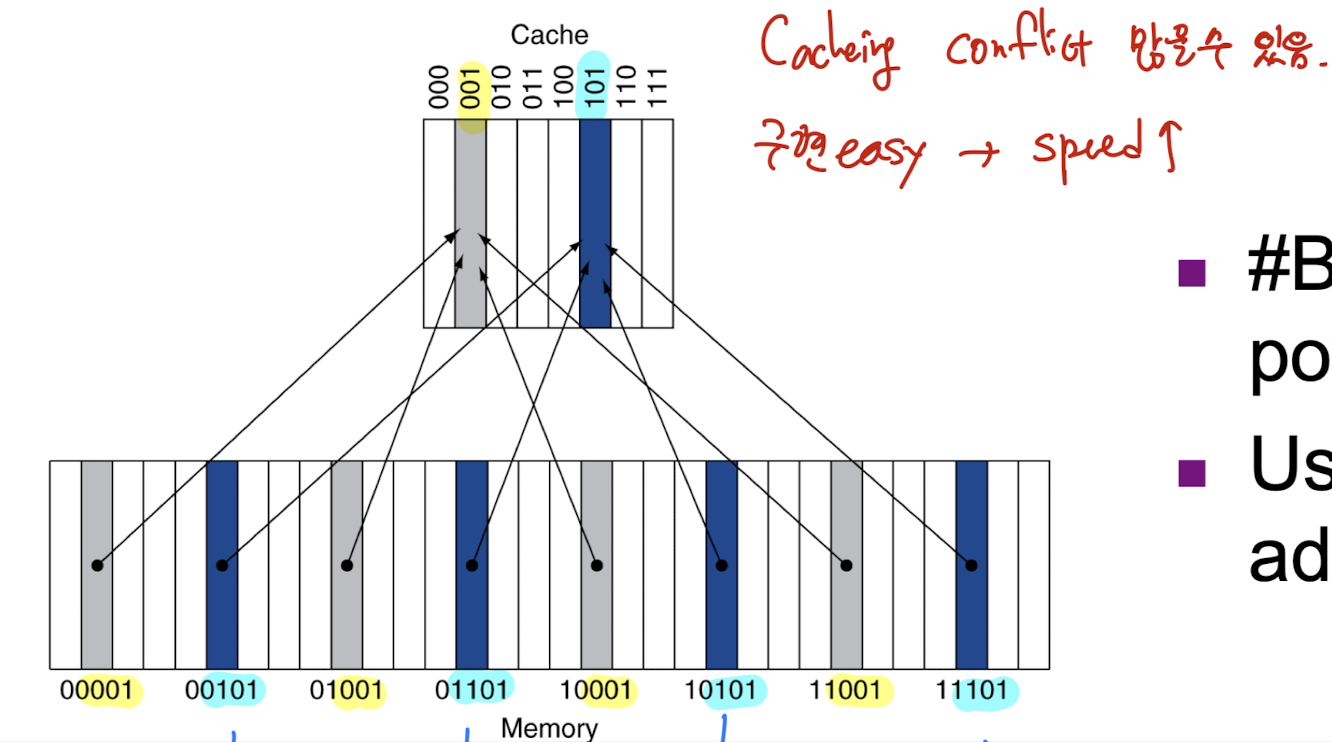
- Cache의 특정한 위치에만 들어갈 수 있음
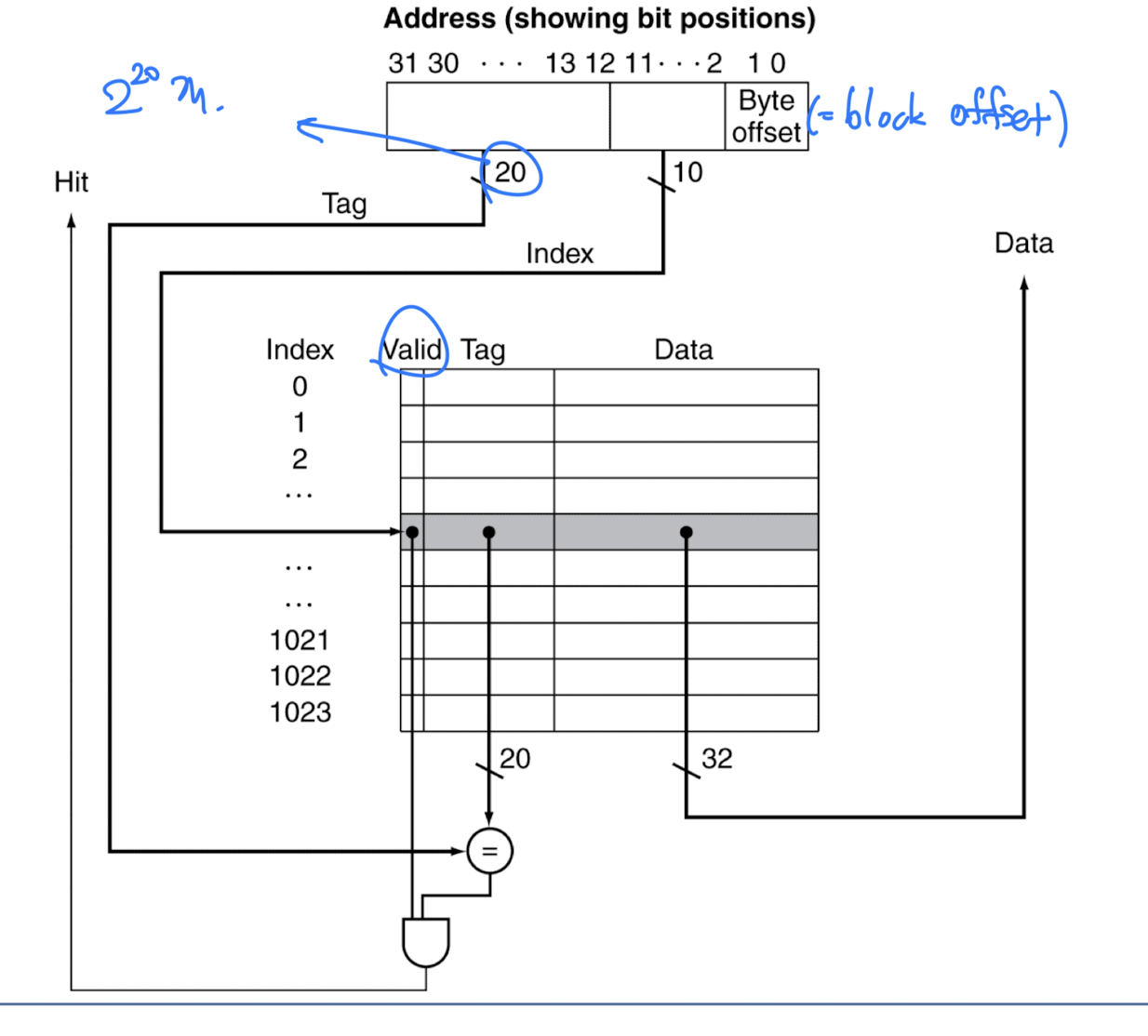
- 주소를 기준으로 cache에 저장
- (block address) % (cache 내 block 수)
- Valid bit, Tag bit
Replacement Policy
그런거 없음. 자동으로 ..
Associative Caches
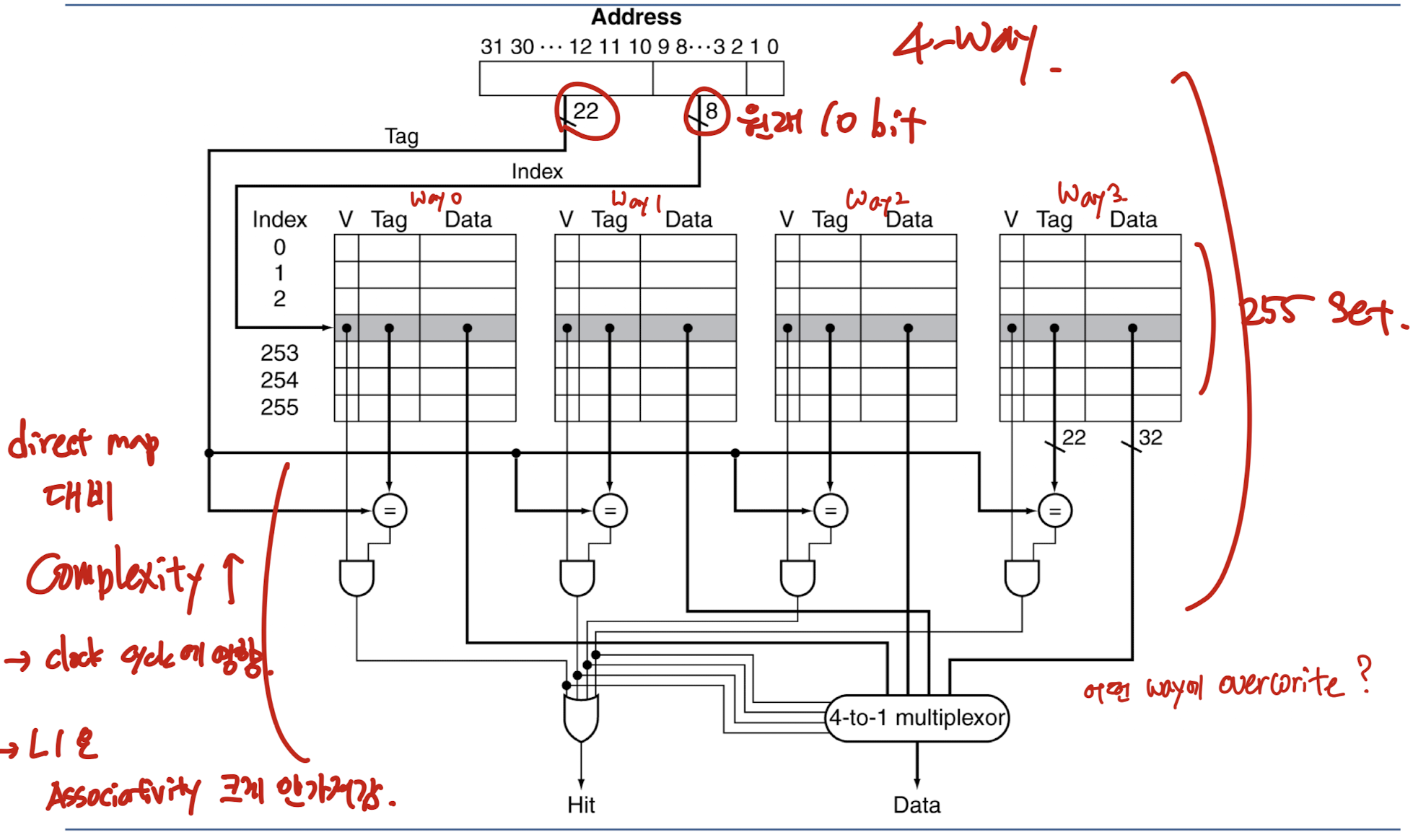
- 2 ^ index bit * way 수 = cache에 들어가는 block 수
Fully Associative
cache의 아무대나 위치할 수 있음
- entry마다 comparator -> expensive
- 찾는데 시간 오래걸림
n-way set associative
각 set마다 n개의 entry
- Block Number(page address)가 which set에 들어가야 하는지를 결정 (Block number) modulo (# sets in cache)
- associativity 늘어나면
-> miss rate 감소
-> complexity, cost, access time 증가
Replacement Policy
LRU, Random..
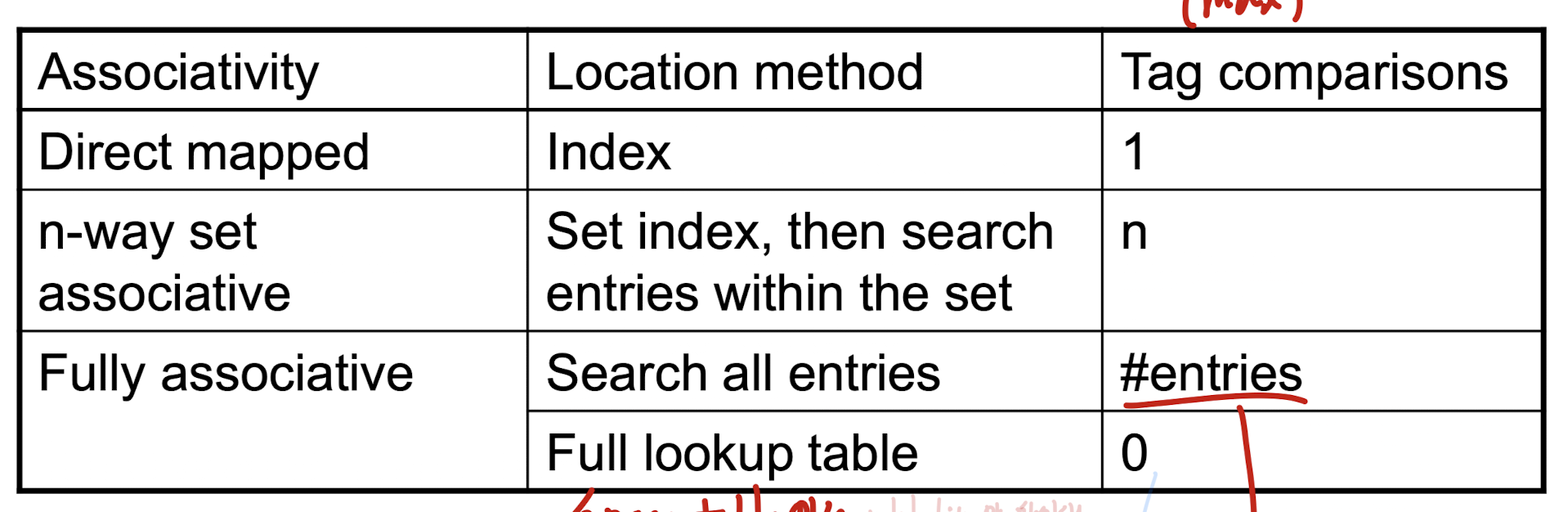
Direct Mapped vs Associative Cache
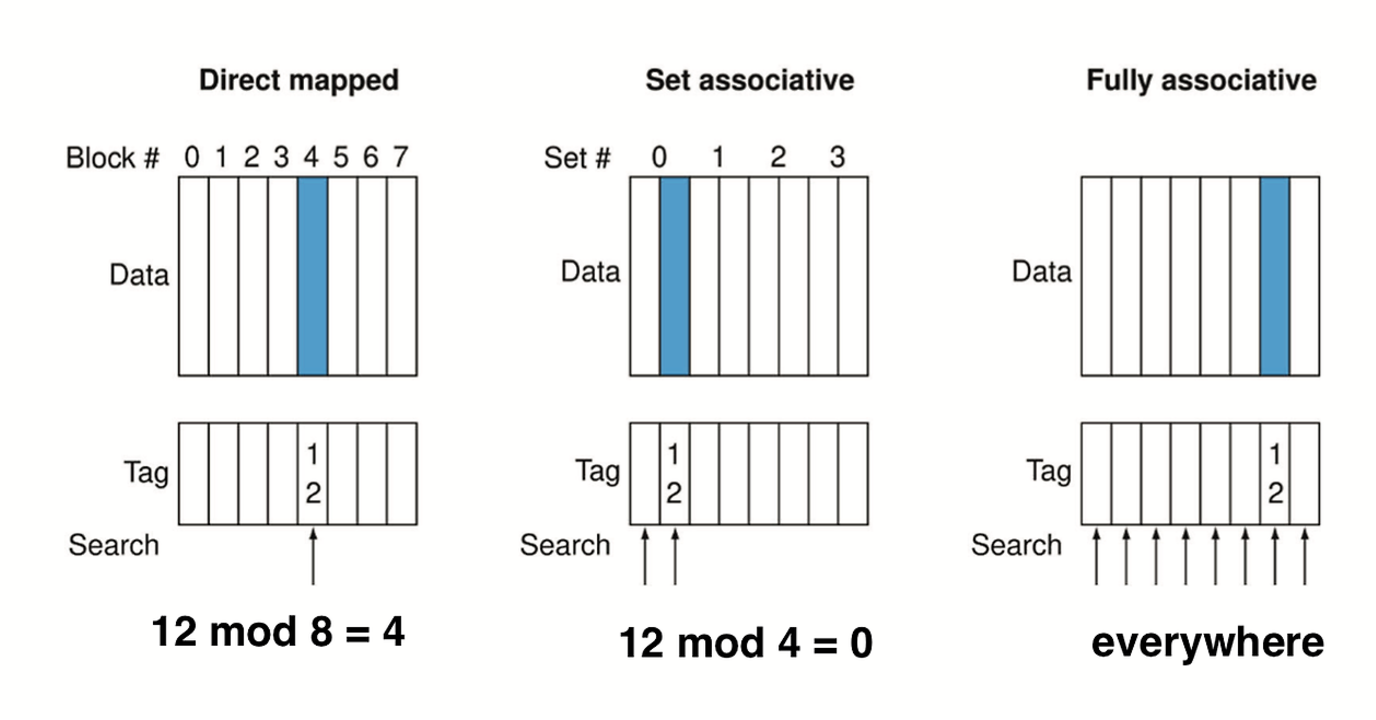
- direct mapped: 한번에 찾을 수 있음
- n-way set associative : set까지는 한번에 찾을 수 있음. 그 안에서 # of blocks in set만큼 비교
- Fully associative : 그냥 싹다 비교
Multi-level Cache
example
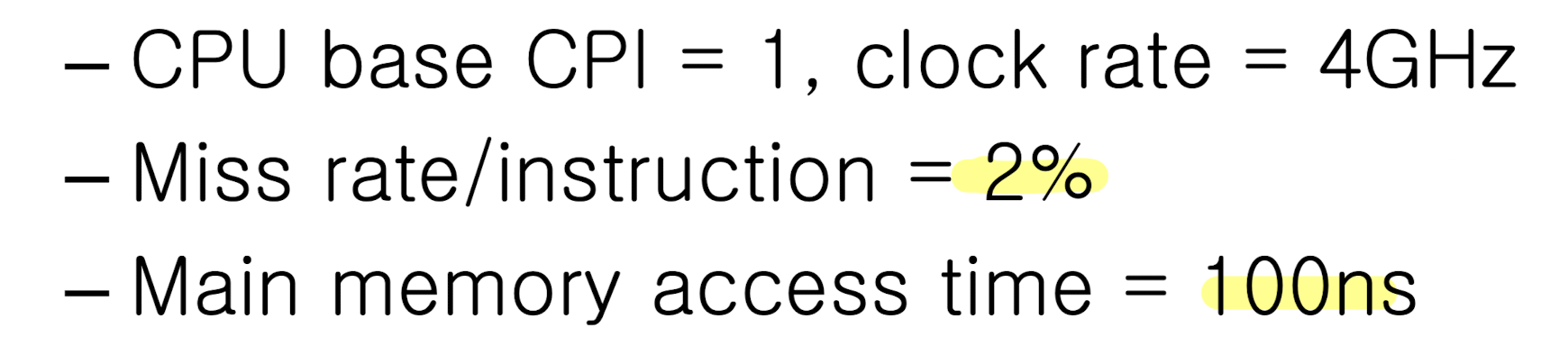
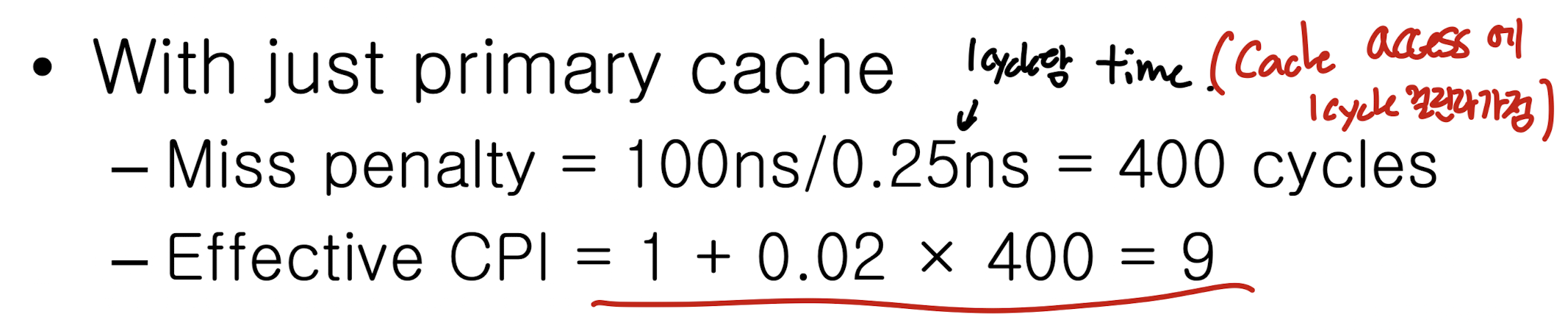
single cache만 있는 경우
cycle 단위로 miss penalty 잘 구해서 miss rate랑 잘 곱해주면 됨
- 0.25ns : 1사이클에 걸리는 시간
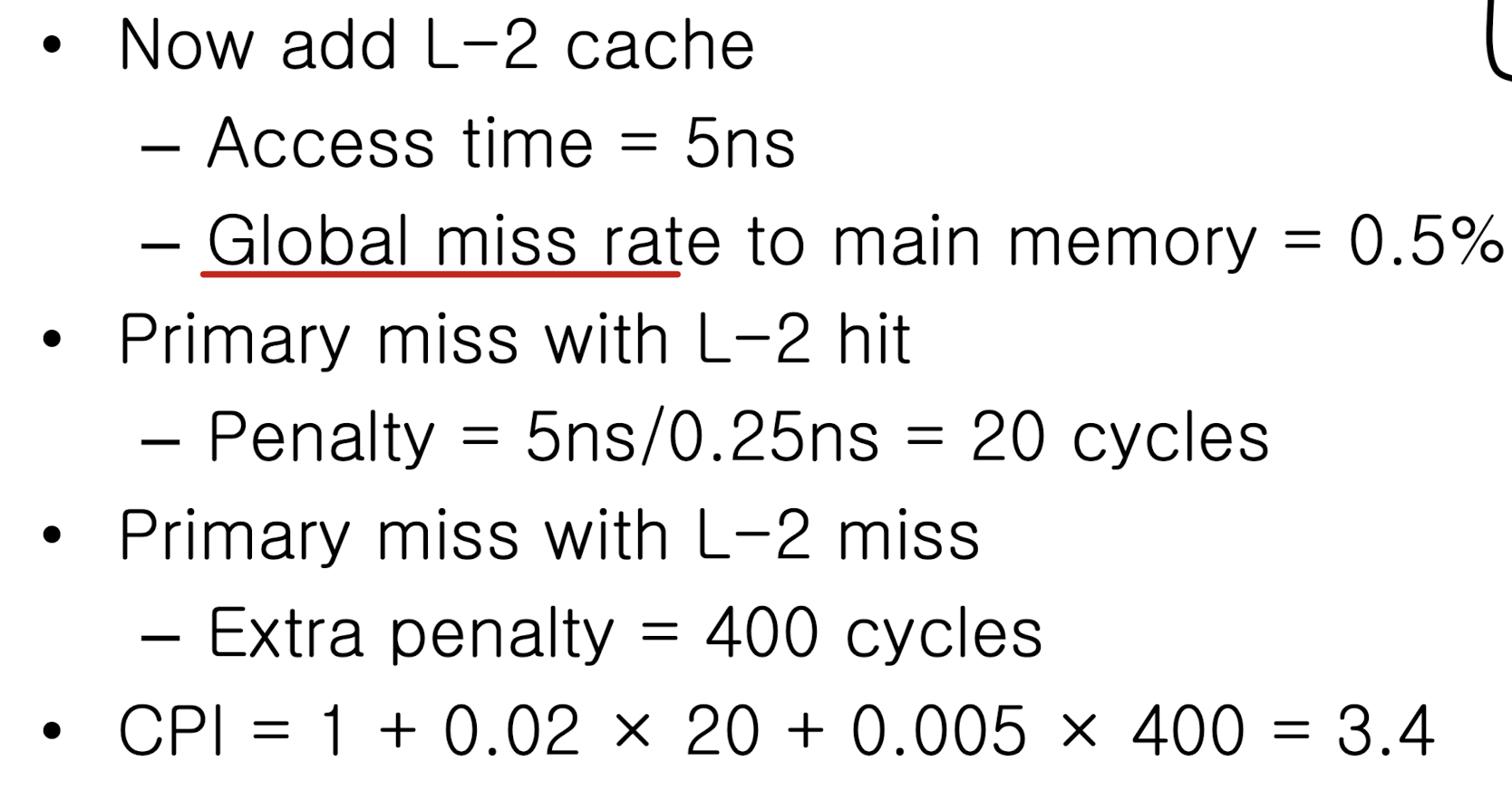
L-2 Cache 추가
L1에서 miss penalty -> L2 access time으로 대체
global miss rate 구하고, 원래 miss penalty와 곱해준다
Cache hit
Write-Through
cache도 update하고 memory도 update
- write 때마다 stall이 생기니, 성능이 느려진다!
->write buffer쓰면, 꽉 찼을 때만 update하니까 ㄱㅊ - consistency 보장
Write-Back
cache에만 update
- 수정된 block을 추적하다가(dirty bit), replace될 때 memory update
- cache <-> memory inconsistency 발생 가능
Cache Miss
No Allocate
don't fetch the block (Write around) and 메인메모리만 update
-> bios코드같은건 한번만 쓰고 뭐 더 쓰지 않으니까
Allocate
fetch the block
- cache에 가져와서 쓰기
Cache Performance example
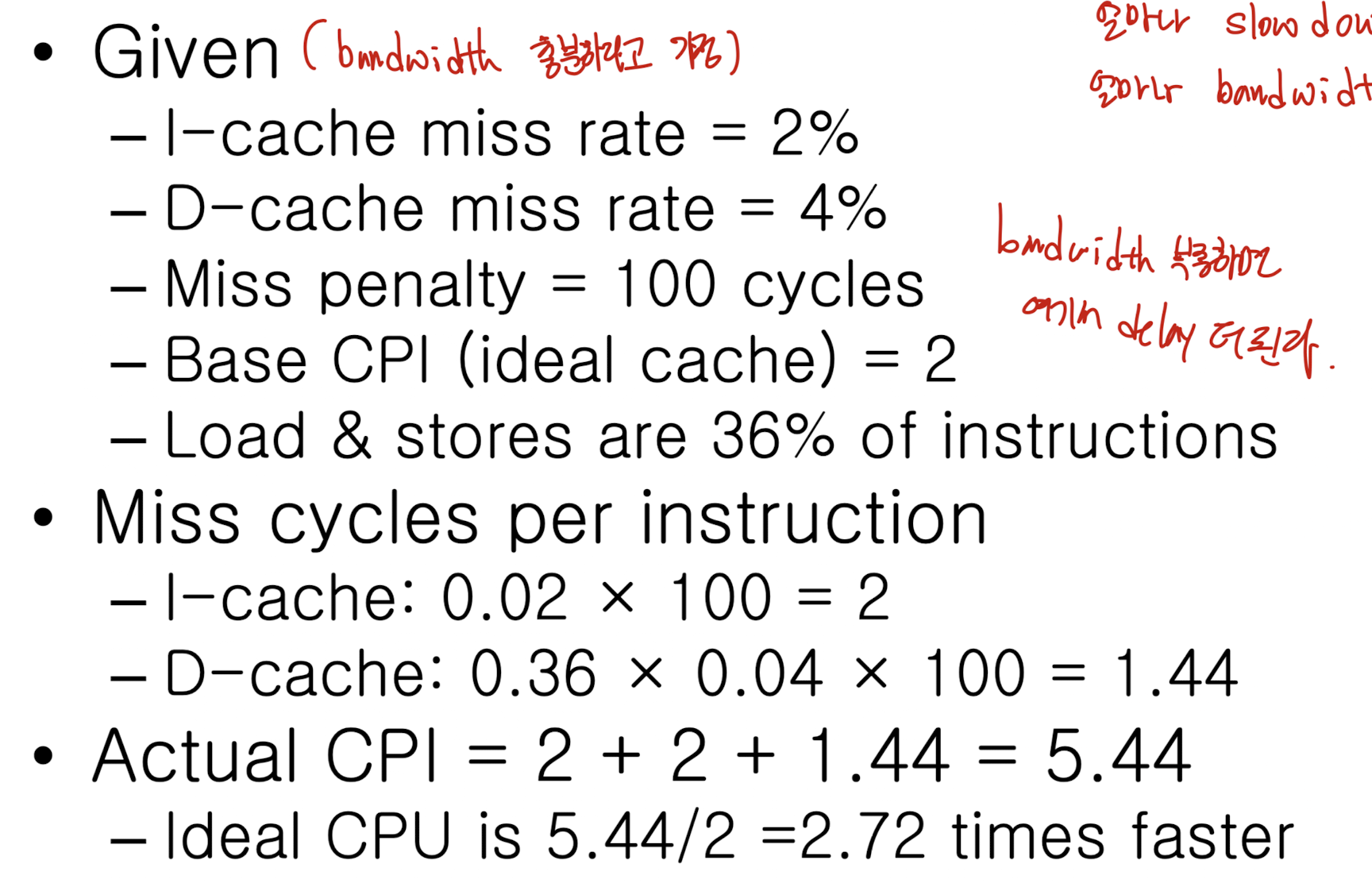
- Instruction Cache : 모든 cycle에 access
- Data Cache : Load / Store cycle에 access
- miss rate * miss penalty 곱해서 Miss cycle 알아낼 수 있음
- base CPI + miss cycle해서 전체 CPI 구할 수 있음
Cache design trade-offs
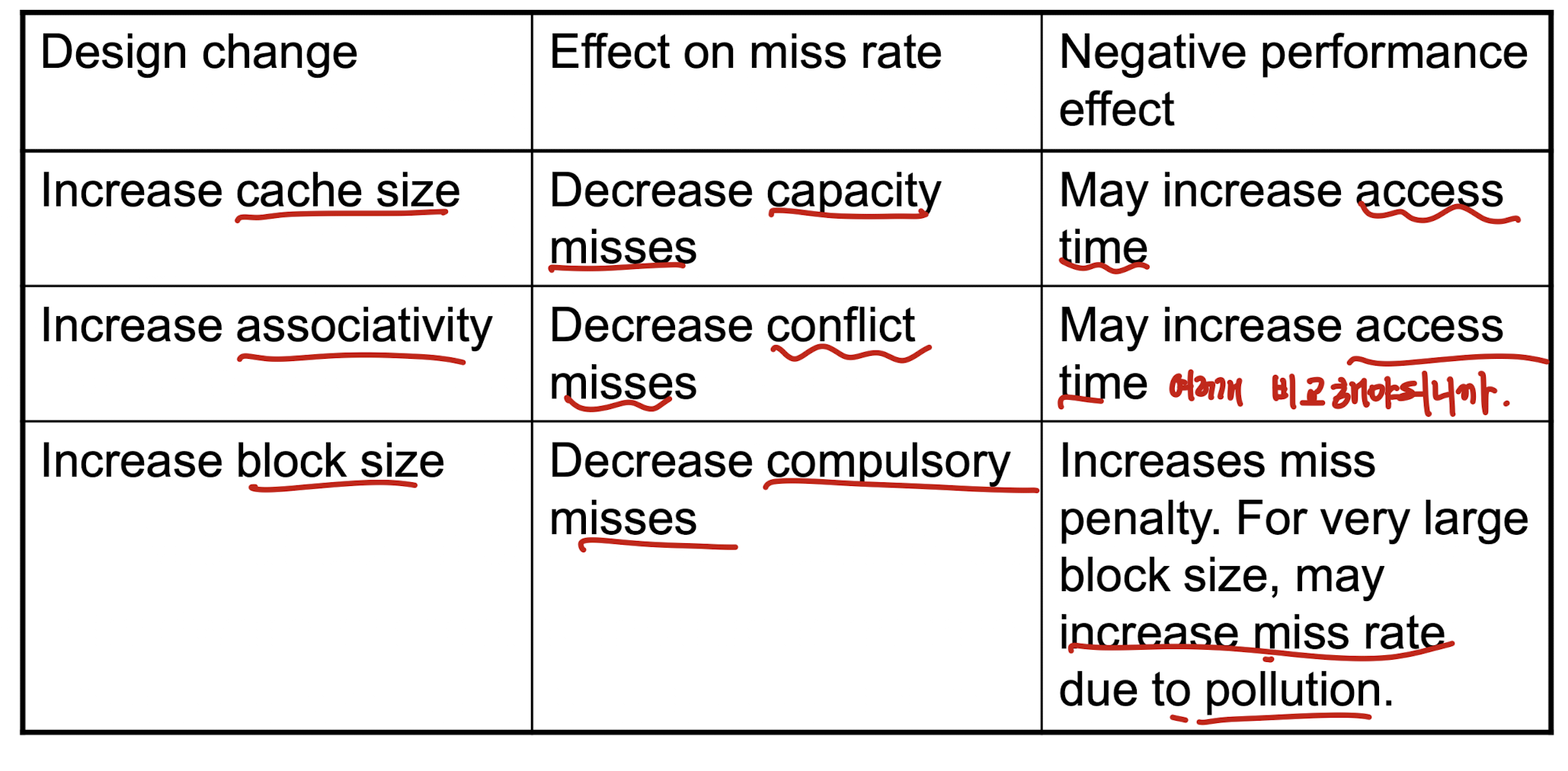
Cache size가 커지면
장점 : capacity miss 감소
단점 : access time 증가
associativity가 커지면
장점 : conflict miss (hash conflict) 감소
단점 : access time 증가(여러번 비교해야함)
block size가 커지면
장점 : compulsory miss 감소
단점 : miss penalty 증가 (pollution에 의한 Miss rate도 증가할 수 있음)
miss penalty 줄이기
- requested word first
- non-blocking miss processing
- hardware prefetch
Main Memory
DDR
- Double Data rate
- rising,falling edge 모두에서 data transfer
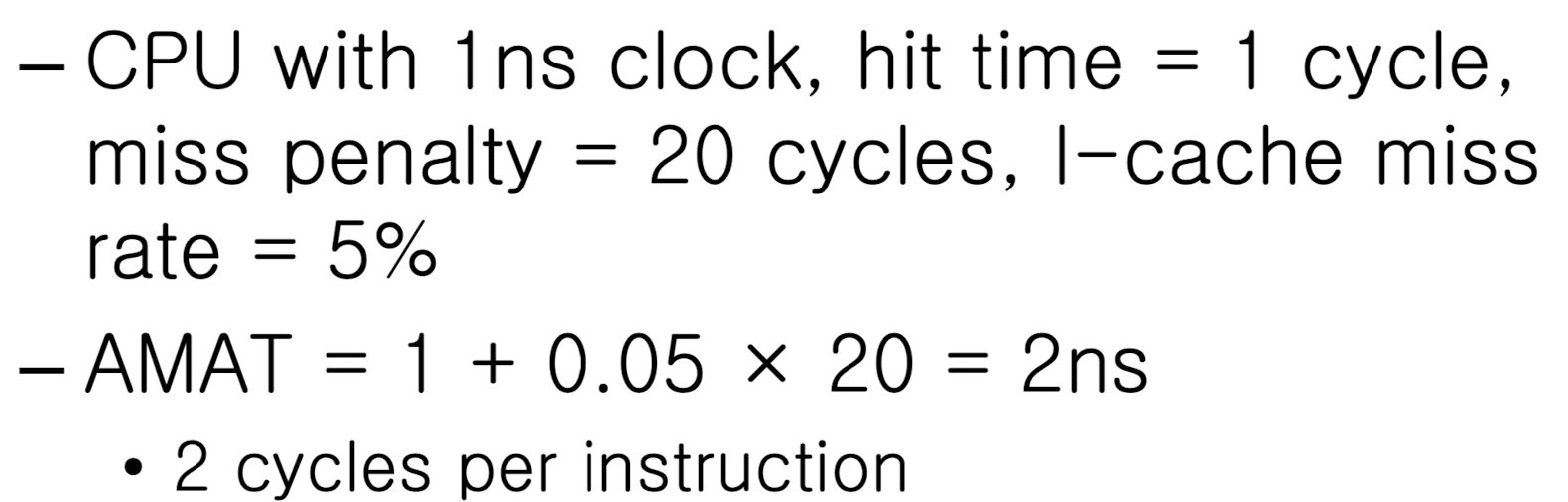
AMAT (Average Memory Access Time)
- hit time + miss rate * miss penalty
Memory Bandwidth example
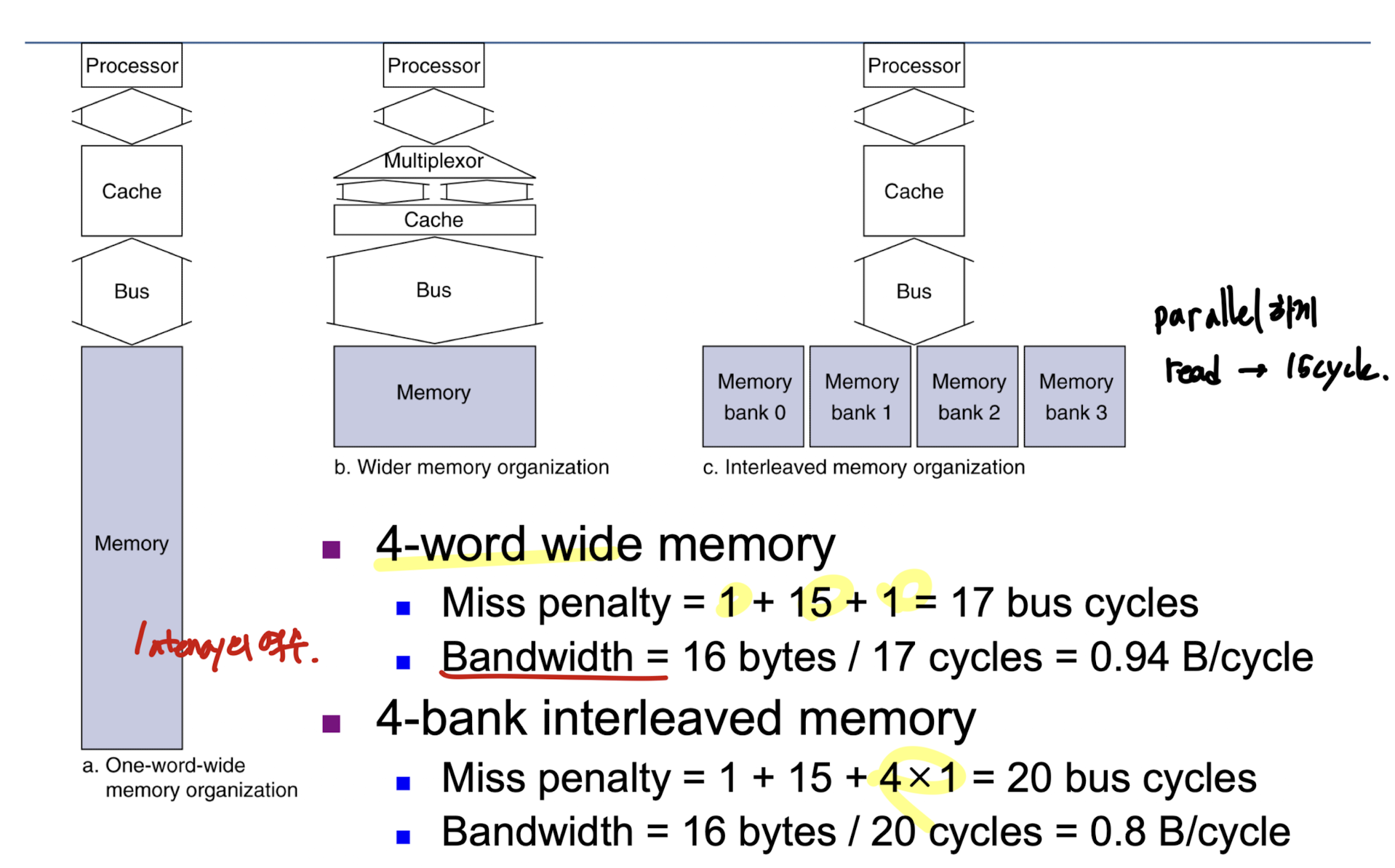
문제 :
- 1 bus cycle for addres transfer
- 15 bus cycle per DRAM access
- 1 bus cycle per data transfer
4-word block, 1-word wide DRAM
- Miss penalty : 1 + 4 * 15 + 4 * 1 = 65 bus cycles
-> 4번에 걸쳐서 access and transfer - Bandwidth : (16 bytes) / (65 cycle) = 0.25B / cycle
4-word block, 4-word wide DRAM
- Miss penalty : 1 + 15 + 1 = 17 bus cycles
-> block 단위로 한번에 access - Bandwidth : (16 bytes) / (17 cycle) = 0.94B / cycle
4-word block, 4-bank interleaved DRAM
- Miss penalty : 1 + 15 + 4 * 1 = 20 bus cycles
-> access를 parallel하게 할 수 있음 - Bandwidth : (16 bytes) / (20 cycles) = 0.8B / cycle
Virtual Memory
main memory 공유하는데, protection하기 위해
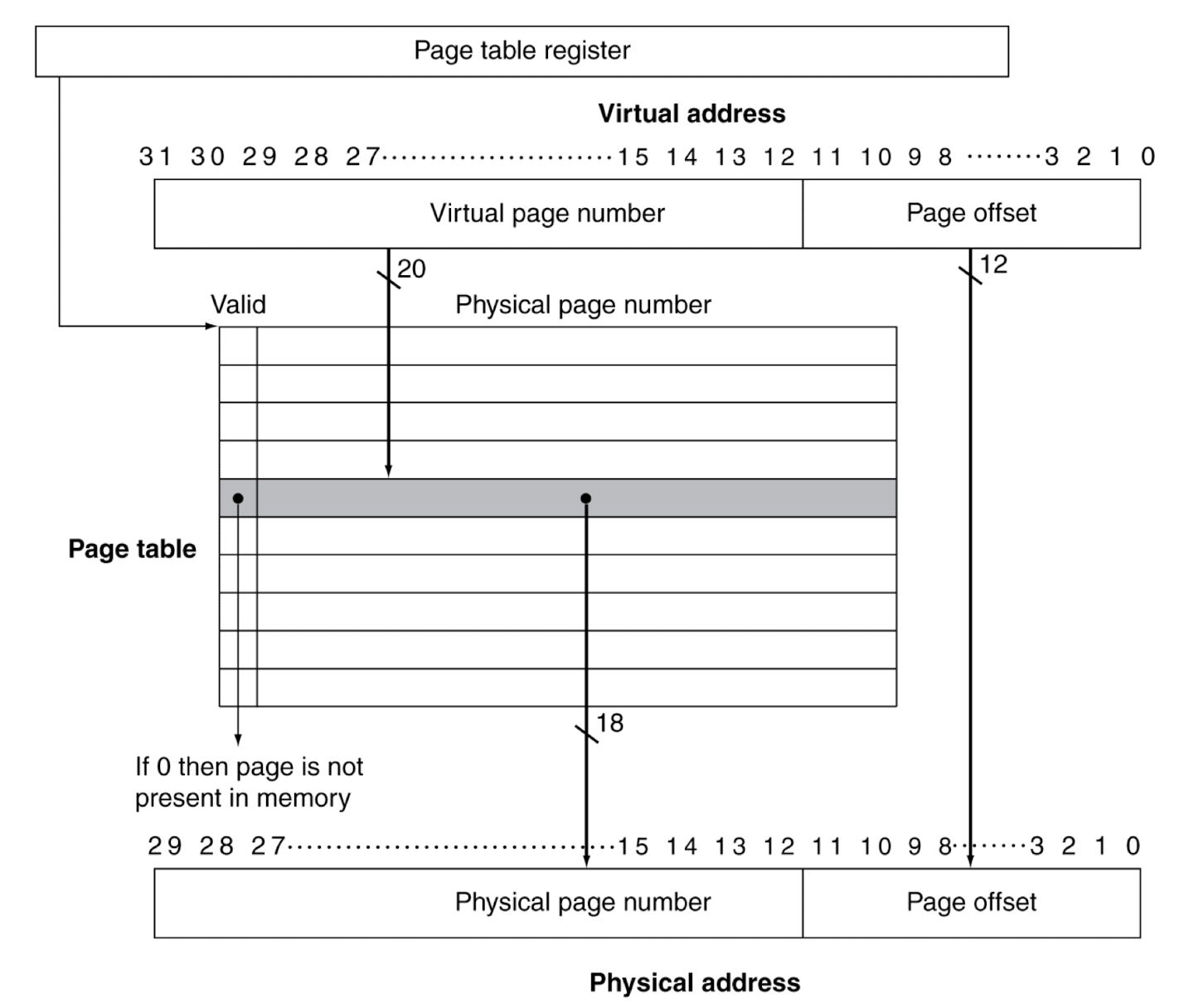
Page Table (Address Translation)
- page 크기는 동일하므로 offset 비트 동일
- 실제 메모리 용량에 따라 PFN 비트 수도 결정
- (Valid bit = 1) == 현재 이 페이지가 메모리에 있다.
- (Valid bit = 0) -> Page Fault!
page fault penalty
- 크다.
- LRU 등 사용(reference bit보고 제일 예전에 쓴 애 결정)
- write back 사용
TLB (Translation Lookaside Buffer)
Page Table의 문제점
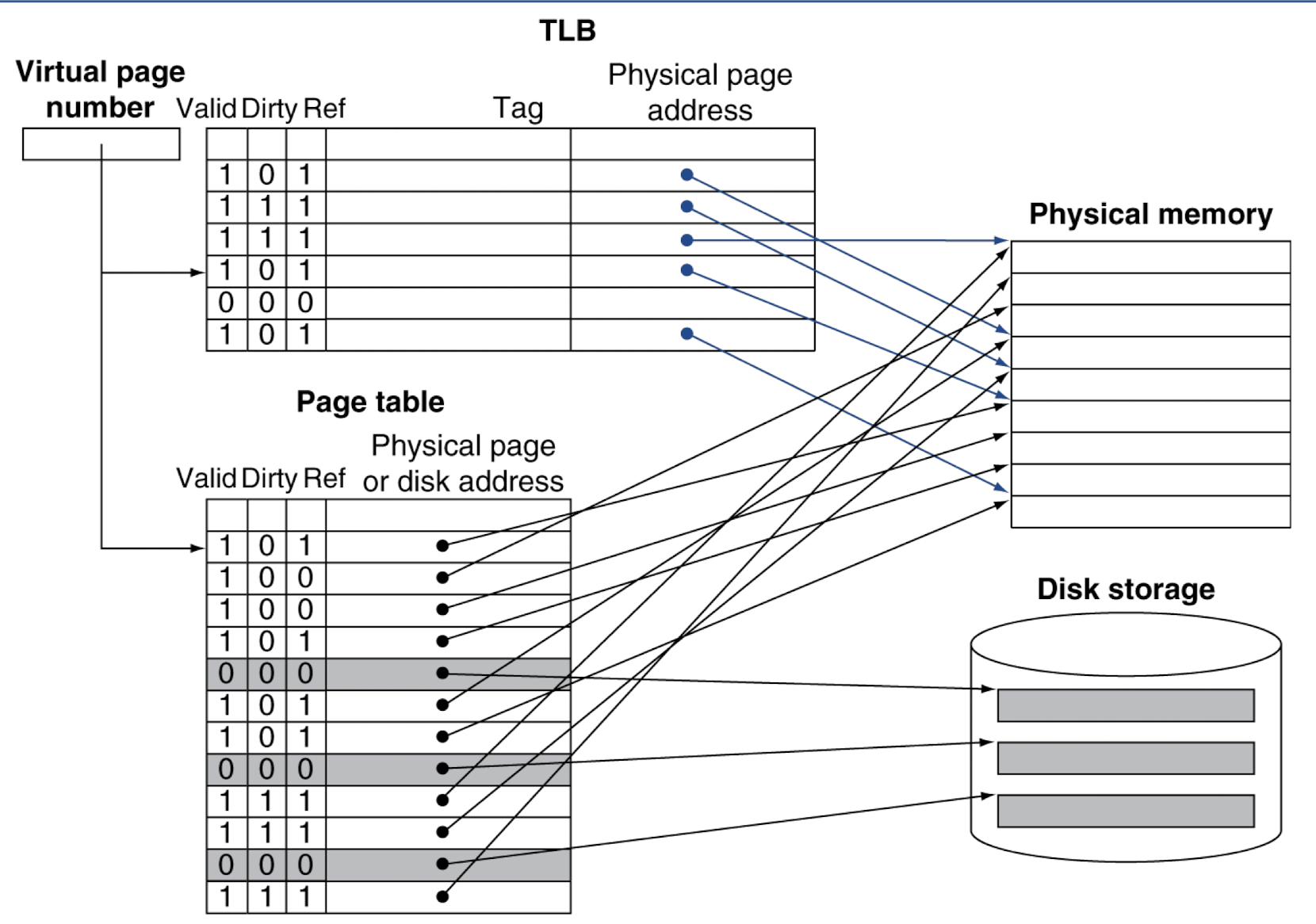
- cache를 access하려면 page table이 있는 main memory를 access해야 하는 문제!
-> page table을 caching하면 어떨까?
TLB miss
1. page는 memory에 있는데, TLB에 없는 경우
memory에서 TLB로 PTE 가져오기 + 한번 더
- HW / SW 두 방식으로 처리 가능
2. page가 Disk에 있는 경우
OS가 page를 memory로 가져오고 Page Table update
instruction 재실행
- page 메모리로 가져오기
- replace할 page 찾기 - memory <-> disk (dirty)
- page memory로 가져오고, page table 내용 update
- faulting instruction 재실행
TLB와 Cache
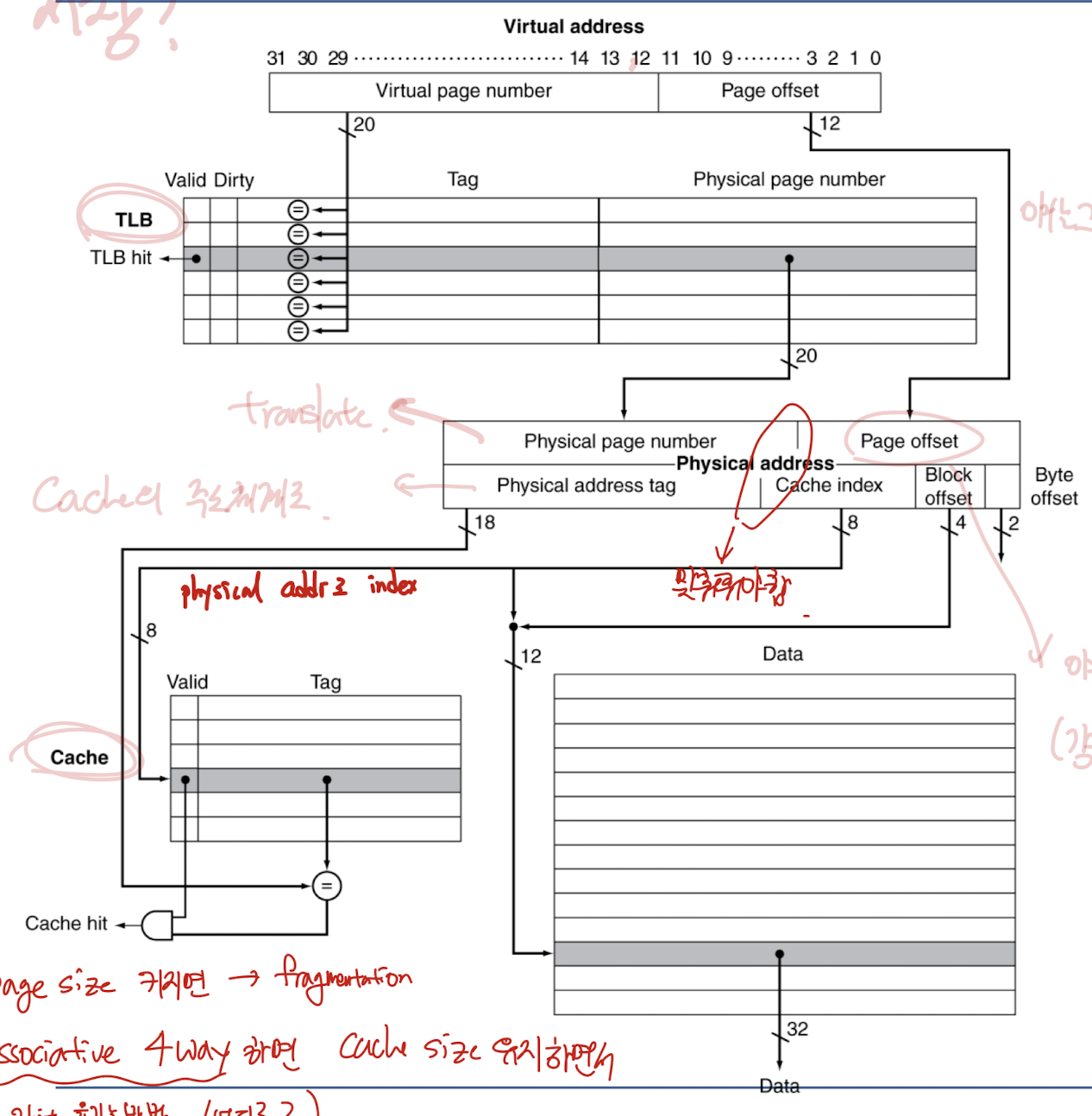
- TLB를 통해 VA -> PA로
- PA를 다시 Cache의 주소체계로 (Tag + index)
- block offset : cache 1 block당 몇 word인지
- cache index : 한 way당 block의 수 (여기서는 cache 내의 block의 총 갯수)
- tag : 나머지
- 만약, page offset과 cache index의 boundary 같게 하면 -> cache index는 address translation 기다릴 필요 없이 먼저 access 가능!
Conclusion