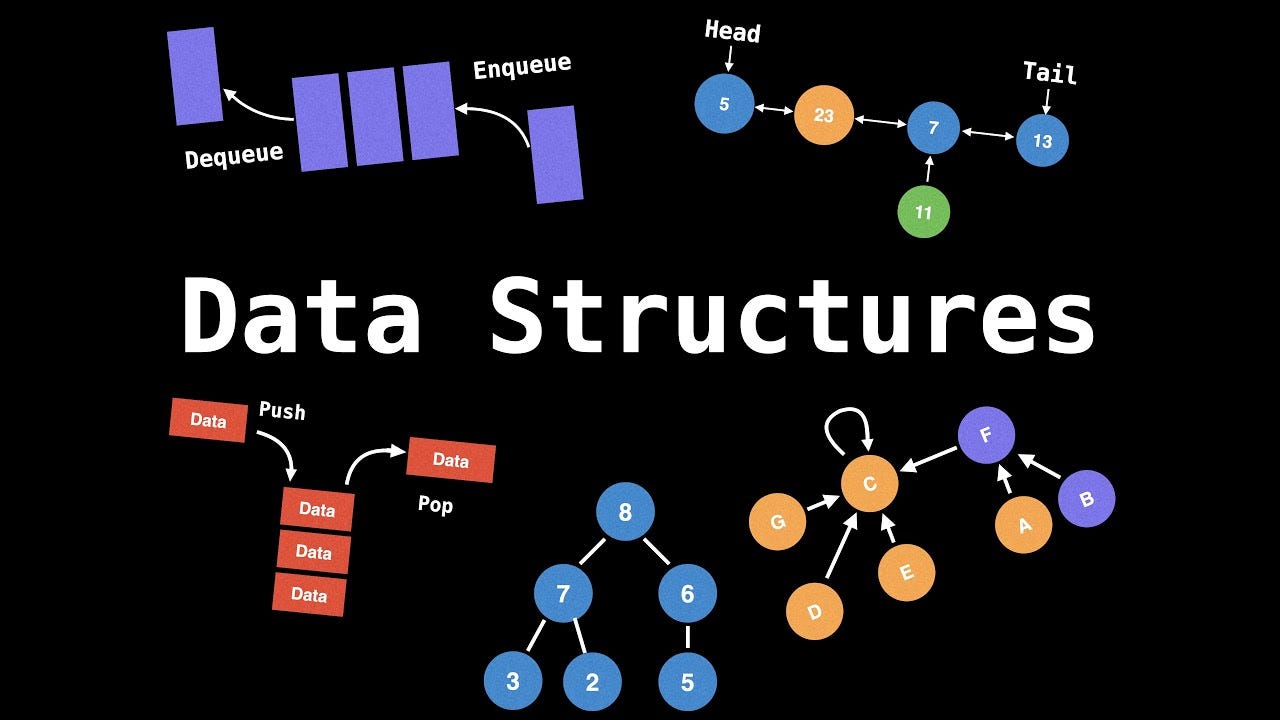
-
스택 (Stack)
스택이란? 항목들이 쌓여 있는 구조로 LIFO(Last-In, First-Out) 원칙을 따른다.
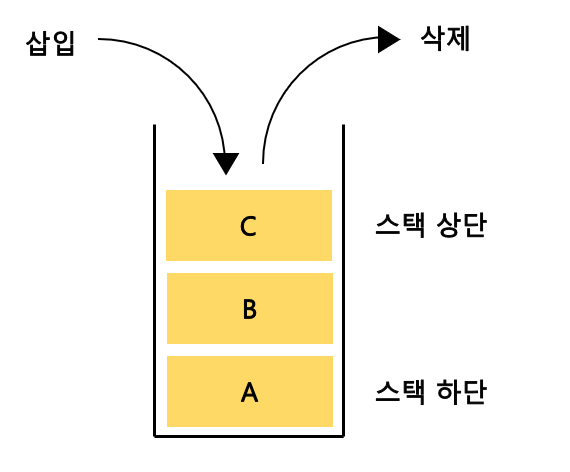
주요 기능에는 push, pop이 있고 이 기능을 수행하기 위해서는 여러가지 요소가 필요하다.
push: 데이터를 삽입한다.pop: 데이터를 삭제한다.peek: 스택의 요소를 리턴한다.top: 스택의 맨 위에 있는 자료를 가리키는 변수(비어있을 때 top = -1)MAX: 스택의 최대 크기isEmpty: 스택이 비어있는지 검사한다.isFull: 스택이 꽉 차있는지 검사한다.
스택을 직접 구현 할때는 아래의 그림을 보고 구현하시면 됩니다.
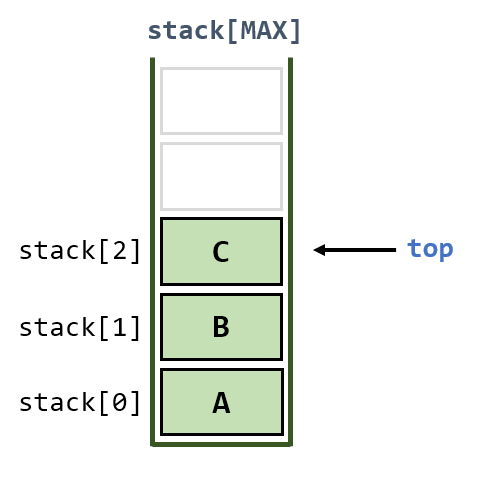
배열 기반 스택 구현 - C
#include <stdio.h> #include <stdbool.h> #include <stdlib.h> #define MAX 100 // 스택의 최대 크기 int stack[MAX]; // 스택 배열 int top = -1; // top 인덱스 초기값 // 스택이 비었는지 확인 bool isEmpty() { return top == -1; } // 스택이 가득 찼는지 확인 bool isFull() { return top == MAX - 1; } // 요소를 스택에 삽입 void push(int data) { if (isFull()) { printf("Stack Overflow! 더 이상 삽입할 수 없습니다.\n"); return; } stack[++top] = data; printf("Pushed: %d\n", data); } // 스택에서 요소 제거 int pop() { if (isEmpty()) { printf("Stack Underflow! 제거할 요소가 없습니다.\n"); return -1; } return stack[top--]; } // 스택의 최상단 요소를 반환 (제거 X) int peek() { if (isEmpty()) { printf("Stack is empty! 조회할 요소가 없습니다.\n"); return -1; } return stack[top]; } // 직접 구현하기 int main() { } -
큐 (Queue)
-
일반 큐
일반 큐란? 선형 자료구조로 FIFO(First-In-First-Out) 원칙을 따른다.
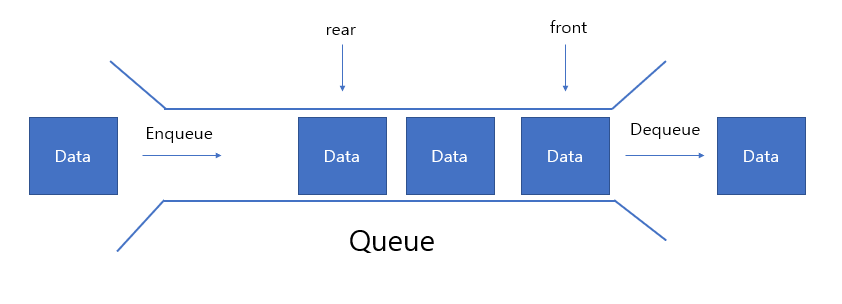
큐는 상황에 따라 선형 외에도 원 형태로 된 큐도 존재합니다.
큐의 주요 기능은 스택과 마찬가지로 Enqueue(push()), Dequeue(pop())가 있고 이 기능들을 수행하기 위해서는 여러가지 요소가 필요하다.
Enqueue: 데이터를 삽입한다.Dequeue: 데이터를 삭제한다.rear: 가장 뒤에 있는 데이터의 indexisEmpty: 큐가 비어 있는지 검사한다.isFull: 큐가 꽉 차있는지 검사한다.
일반 큐 구현 - C
#include <stdio.h> #include <stdlib.h> #define SIZE 5 typedef struct { int items[SIZE]; int rear; // 요소 개수 및 다음 삽입 위치 } Queue; // 큐 초기화 void initQueue(Queue *q) { q->rear = 0; } // 큐가 비었는지 확인 int isEmpty(Queue *q) { return q->rear == 0; } // 큐가 가득 찼는지 확인 int isFull(Queue *q) { return q->rear == SIZE; } // Enqueue: 큐에 요소 삽입 void enqueue(Queue *q, int value) { if (isFull(q)) { printf("Queue is Full!\n"); return; } q->items[q->rear++] = value; printf("Enqueued: %d\n", value); } // Dequeue: 요소 제거 (앞으로 이동) int dequeue(Queue *q) { if (isEmpty(q)) { printf("Queue is Empty!\n"); return -1; } int value = q->items[0]; // 맨 앞 요소 추출 // 모든 요소를 한 칸씩 앞으로 당김 for (int i = 1; i < q->rear; i++) { q->items[i - 1] = q->items[i]; } q->rear--; // rear 한 칸 감소 printf("Dequeued: %d\n", value); return value; } // 큐 상태 출력 void display(Queue *q) { if (isEmpty(q)) { printf("Queue is Empty!\n"); return; } printf("Queue: "); for (int i = 0; i < q->rear; i++) { printf("%d ", q->items[i]); } printf("\n"); } // 직접 구현 int main() { } -
원형 큐
원형 큐란? 일반 큐의 단점을 보완한 원형 자료구조다.
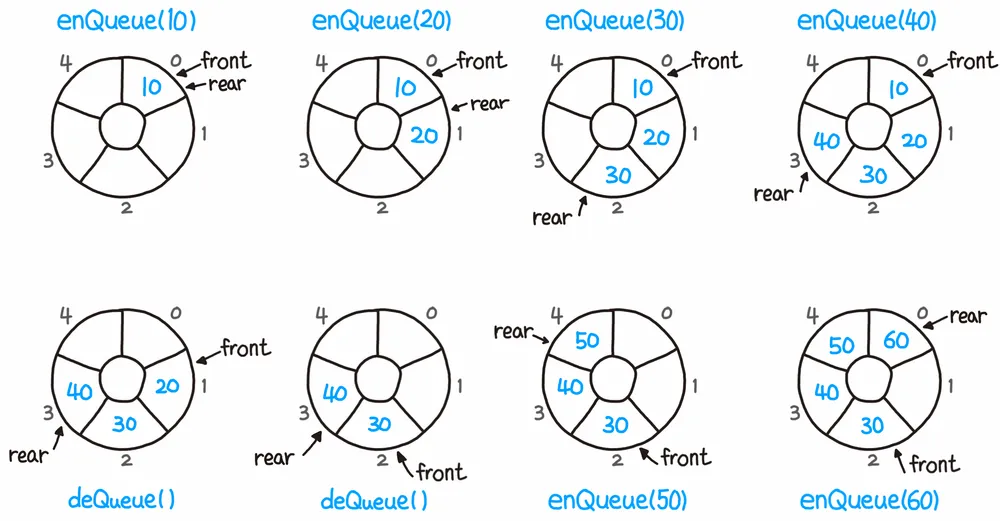
일반 큐 즉, 선형 큐의 단점은 데이터를 삭제할 때마다 데이터를 한칸씩 당겨 front 없이도 가능하지만 이러면 불필요한 움직이 있어 효울적이지 못합니다.
그래서 이 문제를 해결하기 위해 이 원형 큐가 나왔습니다.
이렇게 되면 데이터를 움직이지 않아도 순환하는 특징을 이용해 데이터를 효율적이게 삭제할 수 있습니다.Enqueue: 데이터를 삽입한다.Dequeue: 데이터를 삭제한다.front: 가장 앞에 있는 데이터의 indexrear: 가장 뒤에 있는 데이터의 indexisEmpty: 큐가 비어 있는지 검사한다.isFull: 큐가 꽉 차있는지 검사한다.
원형 큐 구현 - C
#include <stdio.h> #include <stdlib.h> #define SIZE 5 // 사용할 실제 데이터 수는 4개 (하나는 빈칸으로 둬야 구분 가능) typedef struct { int items[SIZE]; int front; int rear; } CircularQueue; // 초기화 void initQueue(CircularQueue *q) { q->front = 0; q->rear = 0; } // 큐가 비었는지 확인 int isEmpty(CircularQueue *q) { return q->front == q->rear; } // 큐가 가득 찼는지 확인 int isFull(CircularQueue *q) { return (q->rear + 1) % SIZE == q->front; } // 삽입 (enqueue) void enqueue(CircularQueue *q, int value) { if (isFull(q)) { printf("Queue is Full!\n"); return; } q->items[q->rear] = value; q->rear = (q->rear + 1) % SIZE; printf("Enqueued: %d\n", value); } // 제거 (dequeue) int dequeue(CircularQueue *q) { if (isEmpty(q)) { printf("Queue is Empty!\n"); return -1; } int value = q->items[q->front]; q->front = (q->front + 1) % SIZE; printf("Dequeued: %d\n", value); return value; } // 상태 출력 void display(CircularQueue *q) { if (isEmpty(q)) { printf("Queue is Empty!\n"); return; } printf("Queue: "); int i = q->front; while (i != q->rear) { printf("%d ", q->items[i]); i = (i + 1) % SIZE; } printf("\n"); } // 직접 구현 int main() { } -
덱 (Deque)
덱이란? 일반 큐, 원형 큐의 확장된 자료 구조다.
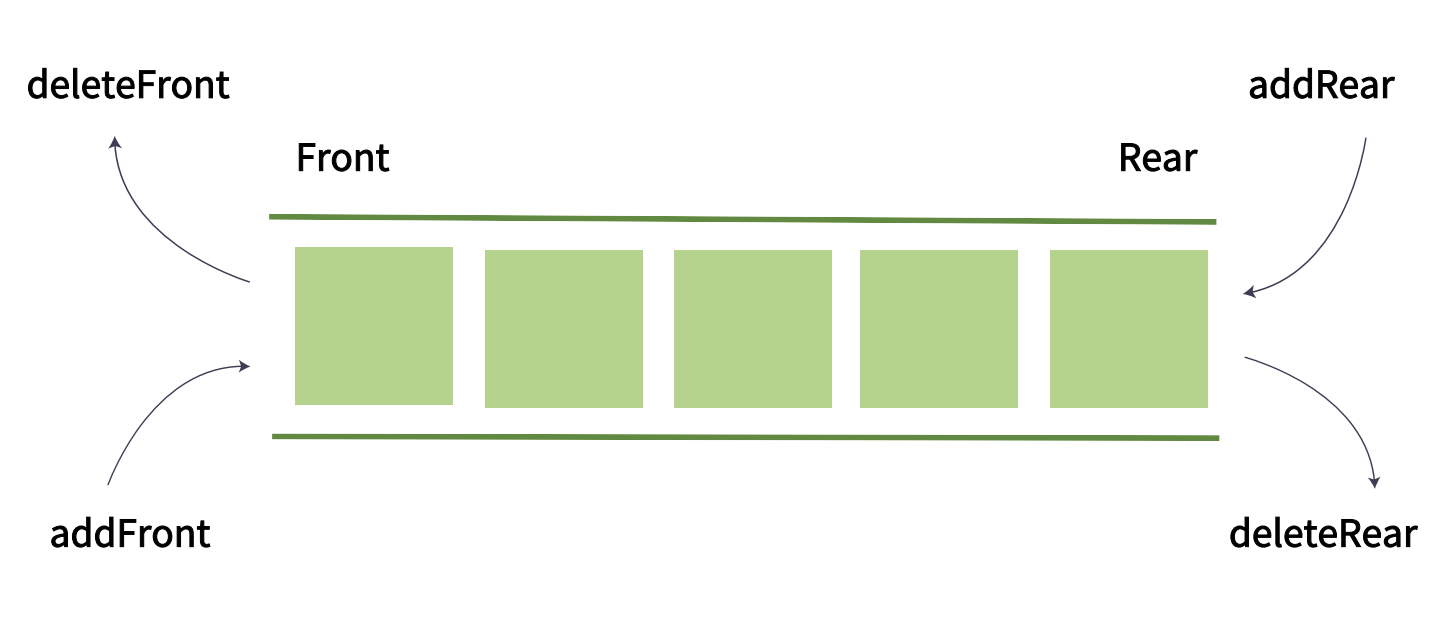
이전에 봤던 큐는 fornt에서만 데이터를 삽입 삭제 할 수 있었는데 덱(deque)에서는 뒤에서 삽입, 삭제가 가능하다.
Deque: 비어 있는 새로운 덱을 생성isEmpty: 덱이 비어있으면 True를 아니면 False 반환addFront: 덱의 맨 앞에 추가deleteFront: 맨 앞의 항목을 꺼내서 반환getFront: 맨 앞의 항목을 꺼내지 않고 반환addRear: 덱의 맨 뒤에 추가deleteRear: 맨 뒤의 항목을 꺼내서 반환getRear: 맨 뒤의 항목을 꺼내지 않고 반환isFull: 덱이 가득 차 있으면 True를 아니면 False 반환size: 덱의 모든 항목들의 개수 반환clear: 덱을 공백상태로 만듬
덱 구현 - C
#include <stdio.h>
#include <stdlib.h>
#include <stdbool.h>
#define SIZE 5  // 덱의 최대 크기 +1 (공간 하나는 비워둬야 full/empty 구분 가능)

typedef struct {
    int items[SIZE];
    int front;  // 실제 front는 (front + 1) % SIZE
    int rear;   // 실제 rear는 rear % SIZE
} Deque;

// 덱 초기화
void initDeque(Deque *dq) {
    dq->front = 0;
    dq->rear = 0;
}

// 덱이 비었는지
bool isEmpty(Deque *dq) {
    return dq->front == dq->rear;
}

// 덱이 가득 찼는지
bool isFull(Deque *dq) {
    return (dq->rear + 1) % SIZE == dq->front;
}

// 덱의 크기
int size(Deque *dq) {
    return (dq->rear - dq->front + SIZE) % SIZE;
}

// 덱 비우기
void clear(Deque *dq) {
    dq->front = dq->rear = 0;
}

// 앞에 삽입
void addFront(Deque *dq, int value) {
    if (isFull(dq)) {
        printf("Deque is Full!\n");
        return;
    }
    dq->front = (dq->front - 1 + SIZE) % SIZE;
    dq->items[dq->front] = value;
    printf("addFront: %d\n", value);
}

// 뒤에 삽입
void addRear(Deque *dq, int value) {
    if (isFull(dq)) {
        printf("Deque is Full!\n");
        return;
    }
    dq->items[dq->rear] = value;
    dq->rear = (dq->rear + 1) % SIZE;
    printf("addRear: %d\n", value);
}

// 앞에서 삭제
int deleteFront(Deque *dq) {
    if (isEmpty(dq)) {
        printf("Deque is Empty!\n");
        return -1;
    }
    int value = dq->items[dq->front];
    dq->front = (dq->front + 1) % SIZE;
    printf("deleteFront: %d\n", value);
    return value;
}

// 뒤에서 삭제
int deleteRear(Deque *dq) {
    if (isEmpty(dq)) {
        printf("Deque is Empty!\n");
        return -1;
    }
    dq->rear = (dq->rear - 1 + SIZE) % SIZE;
    int value = dq->items[dq->rear];
    printf("deleteRear: %d\n", value);
    return value;
}

// 앞 항목 반환 (삭제 X)
int getFront(Deque *dq) {
    if (isEmpty(dq)) {
        printf("Deque is Empty!\n");
        return -1;
    }
    return dq->items[dq->front];
}

// 뒤 항목 반환 (삭제 X)
int getRear(Deque *dq) {
    if (isEmpty(dq)) {
        printf("Deque is Empty!\n");
        return -1;
    }
    return dq->items[(dq->rear - 1 + SIZE) % SIZE];
}

// 덱 출력
void display(Deque *dq) {
    if (isEmpty(dq)) {
        printf("Deque is Empty!\n");
        return;
    }

    printf("Deque: ");
    int i = dq->front;
    while (i != dq->rear) {
        printf("%d ", dq->items[i]);
        i = (i + 1) % SIZE;
    }
    printf("\n");
}

// 직접 구현
int main() {

}
-

SoC:) SoC:)