〰️ 내용
[1] Backpropagation and NN
How does backpropagation work?
Let's look at Computational Graphs & easy implementation
(1) Computational Graphs
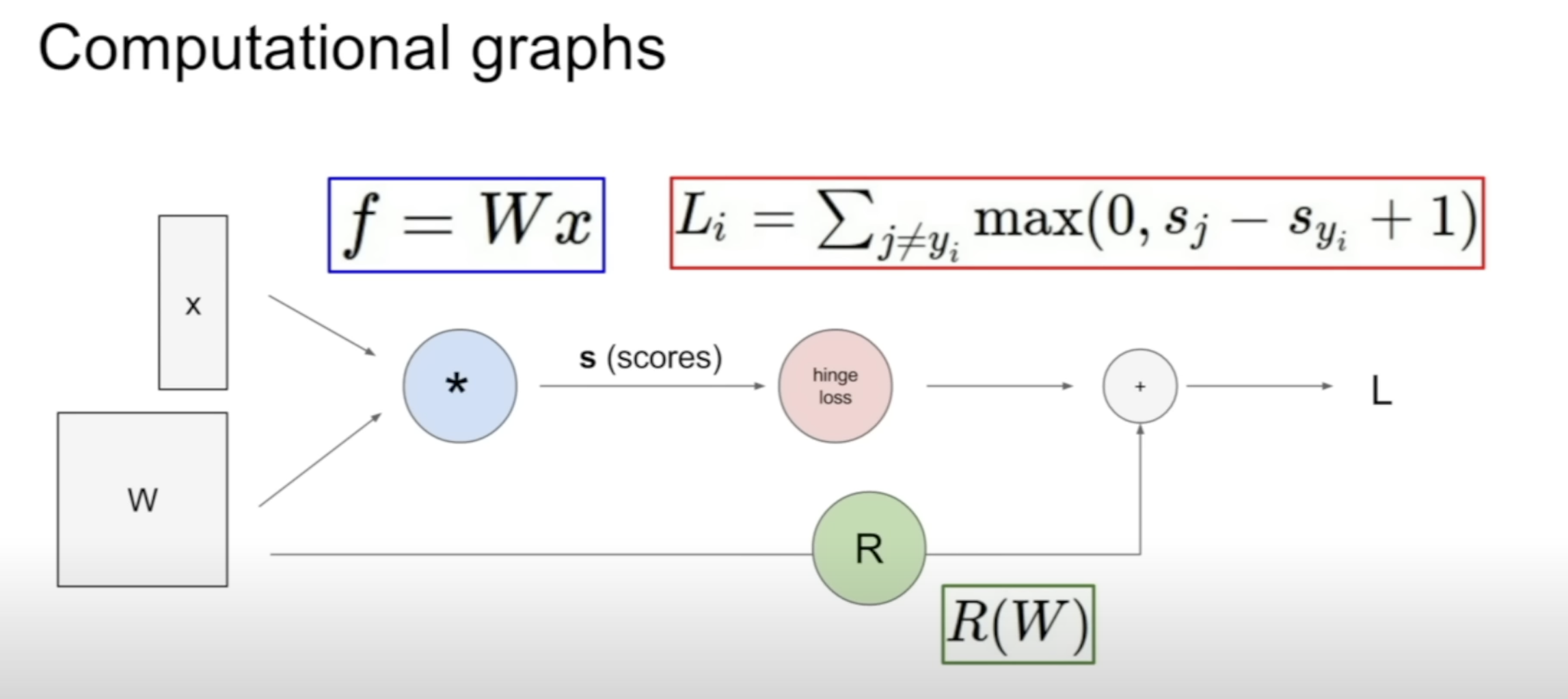
Calculating the Loss using hinge loss & regularization term
Let's simplify it and try calculating with an easy example below
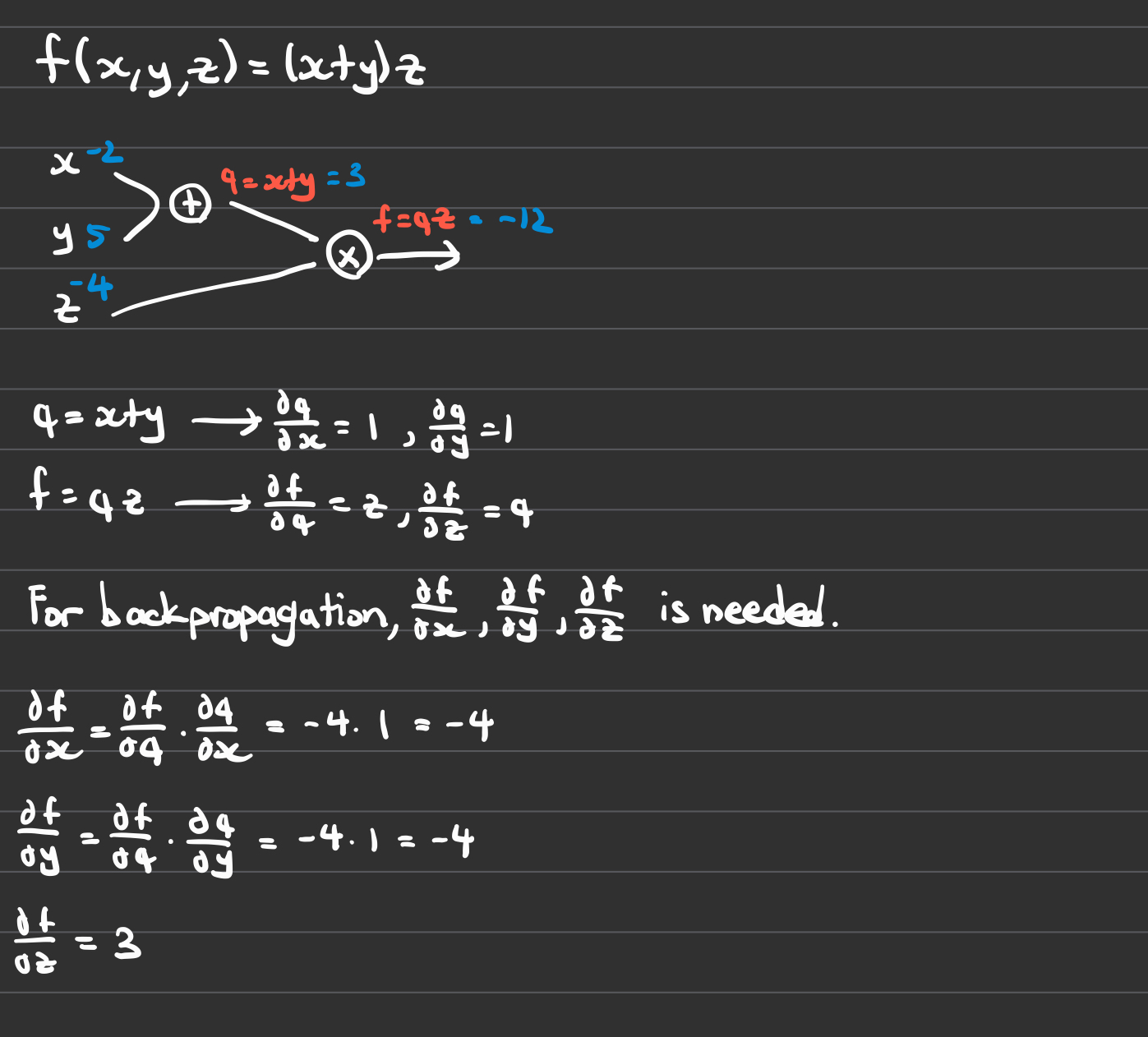
First we compute the gradients.
Next, we update the x, y, and z using Gradient Descent and chain rule.
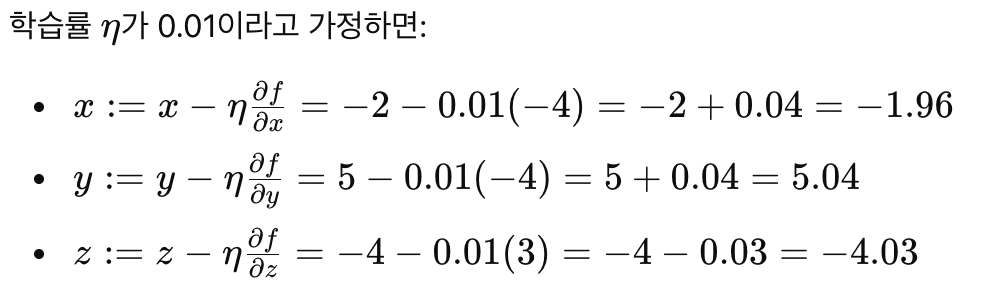
x_new = x - (step_size) X df/dx
y_new = x - (step_size) X df/dy
z_new = x - (step_size) X df/dz
Below is how the changes would be after one iteration with step_size of 0.01
(2) Vectorized Example
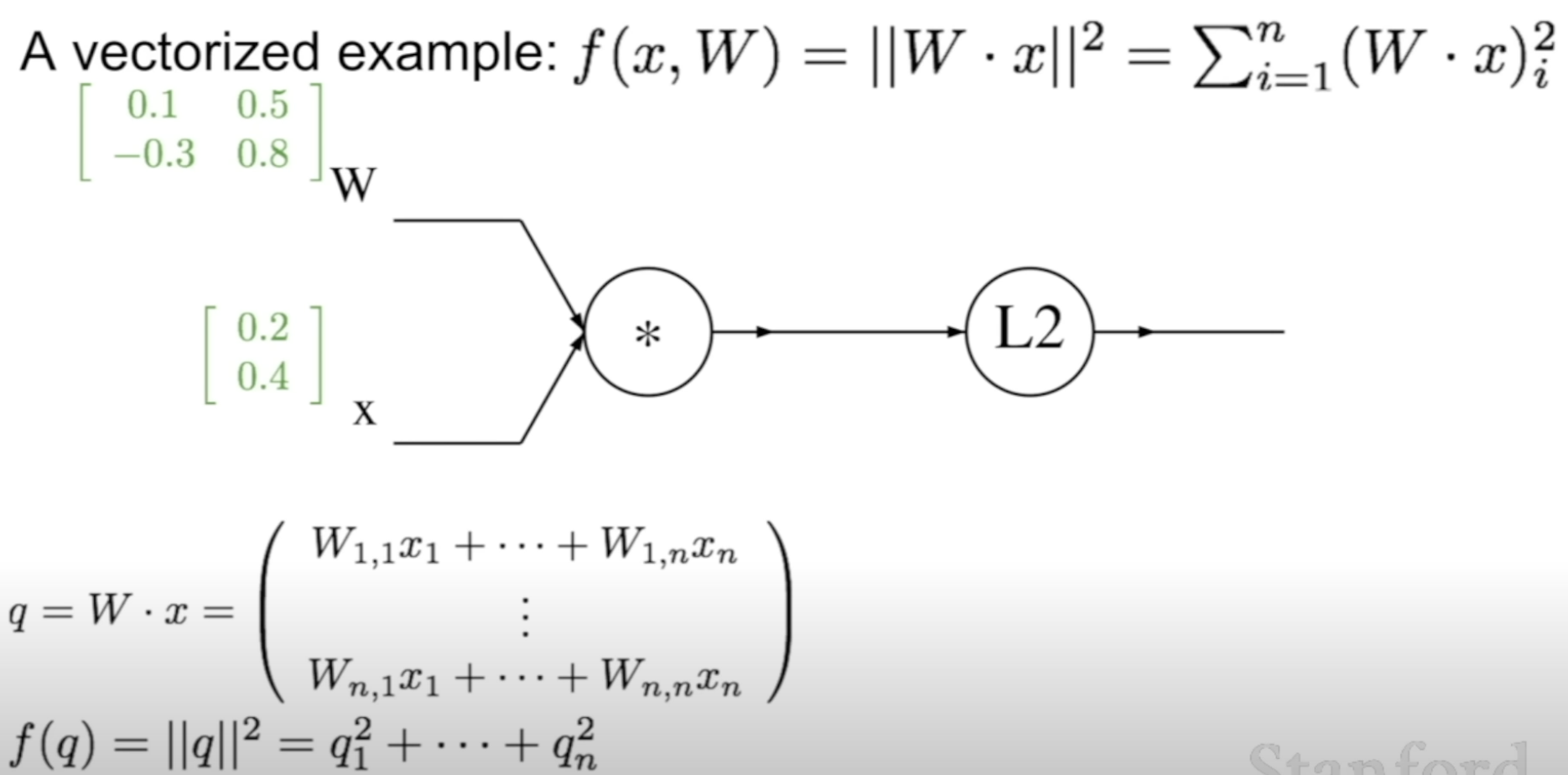
Let's look at this example
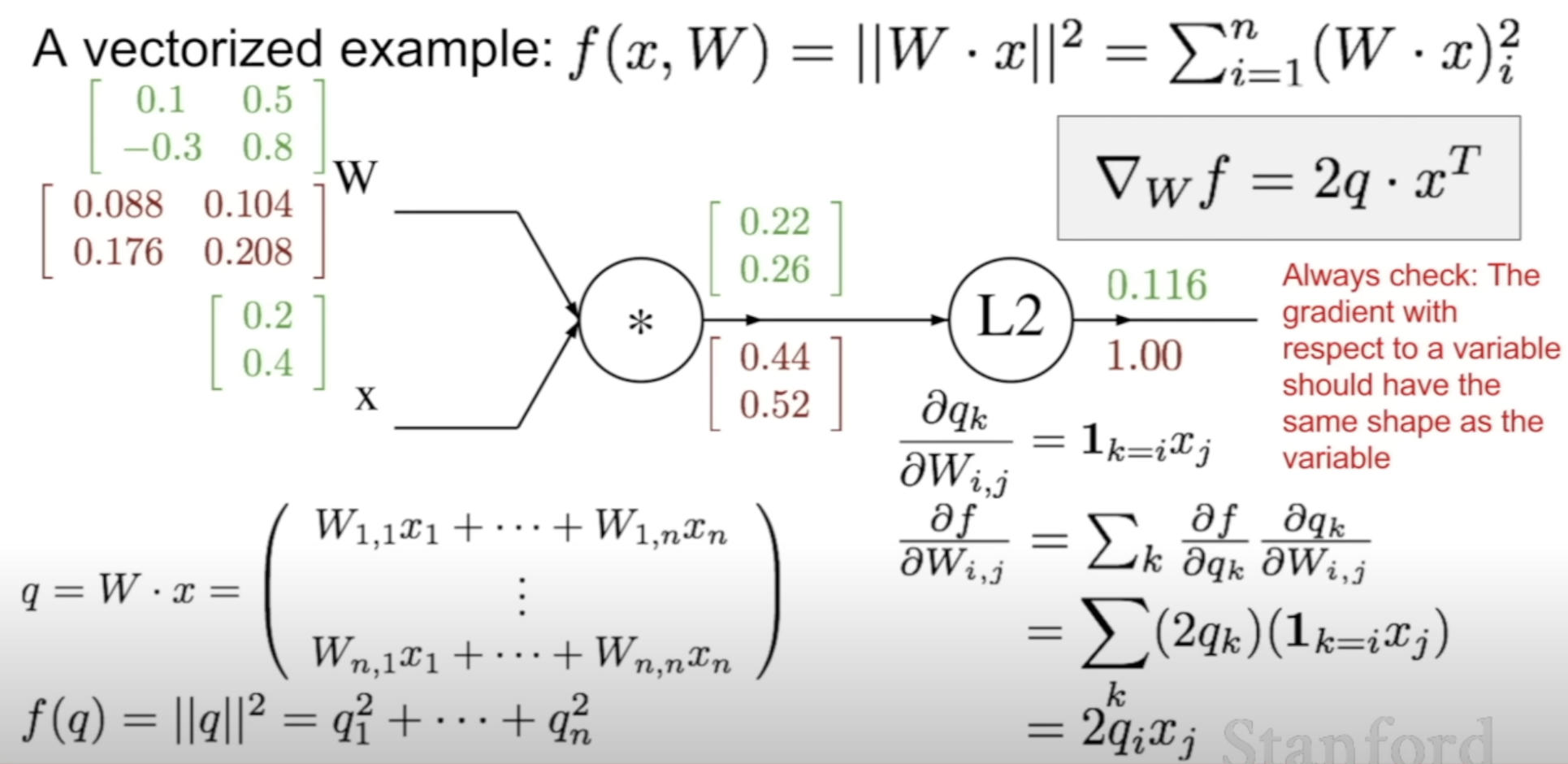
This is how W would be updated
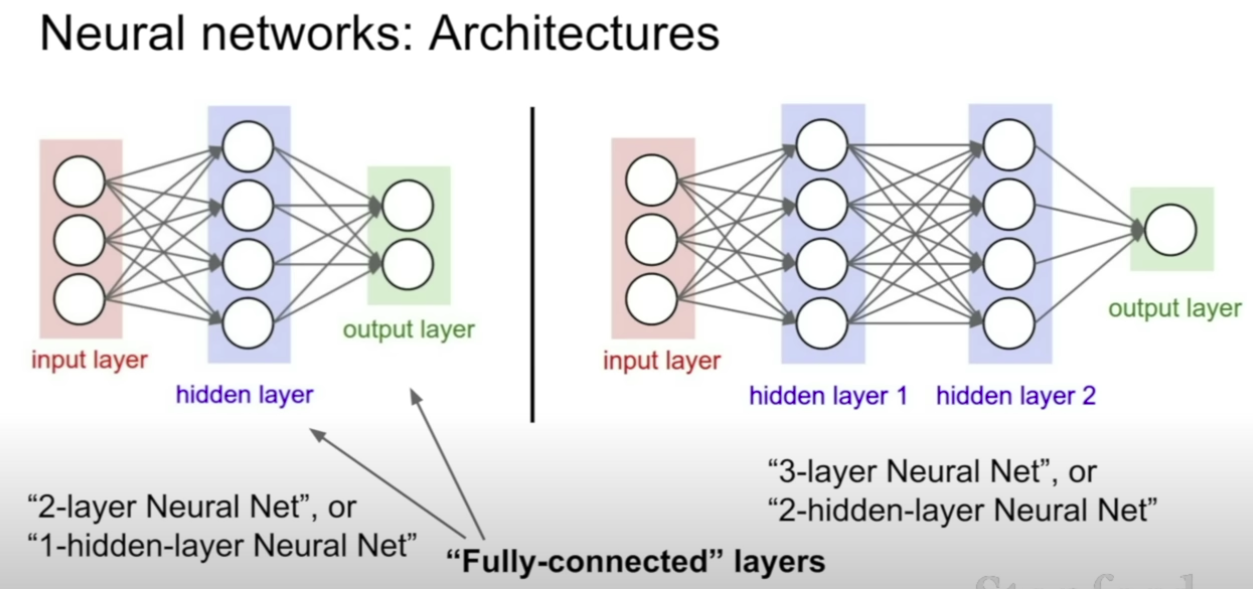
(2) Expanding to Neural Networks
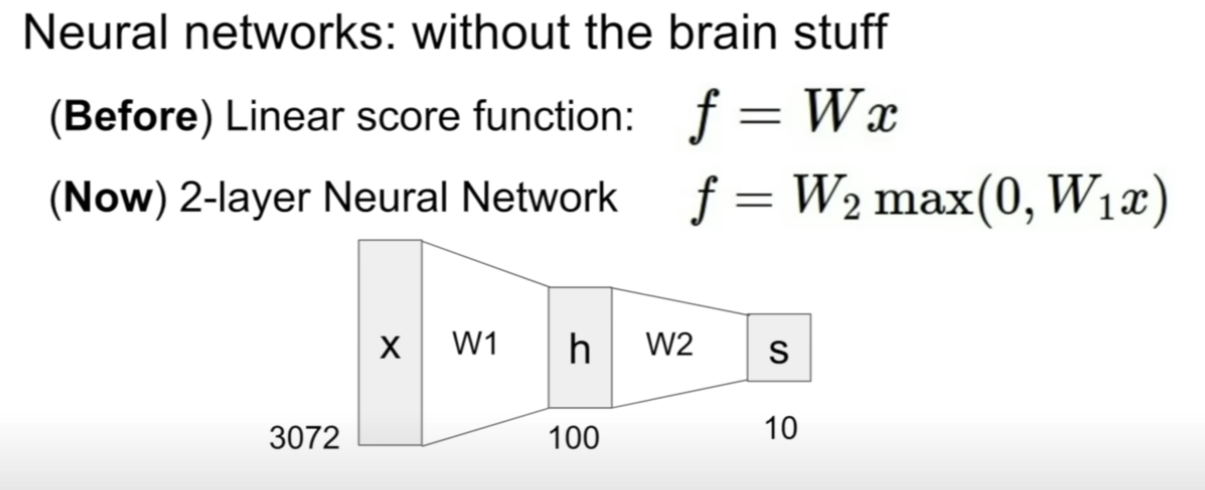
Up to now, we've discussed a Linear score function.
Let's stack one layer on it.
The 2-layer Neural Network works like this : Linear -> ReLU -> Linear -> score
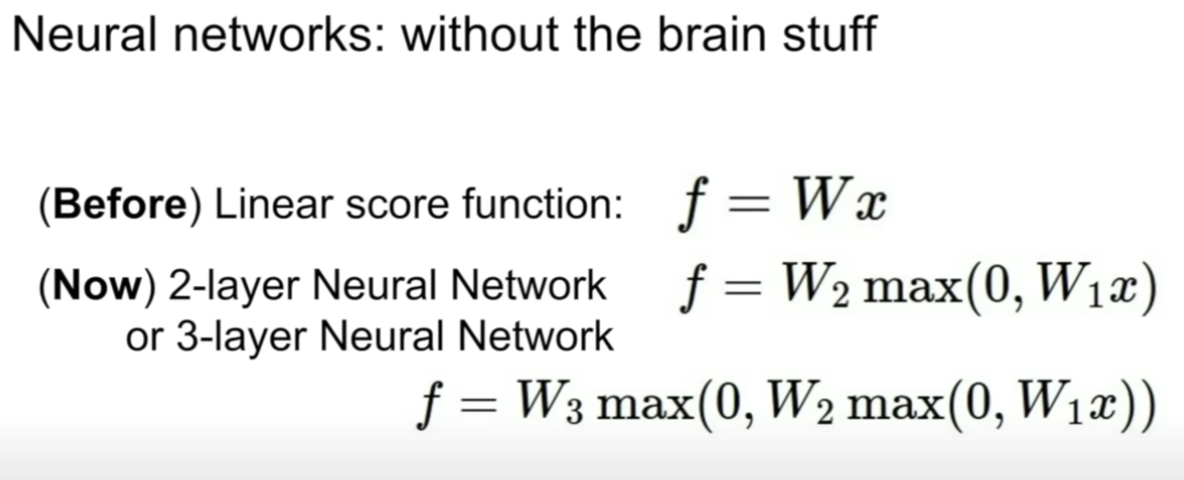
Just add another layer and it becomes 3 layer Neural Network
[2] Let's calculate NN, the simplest one!
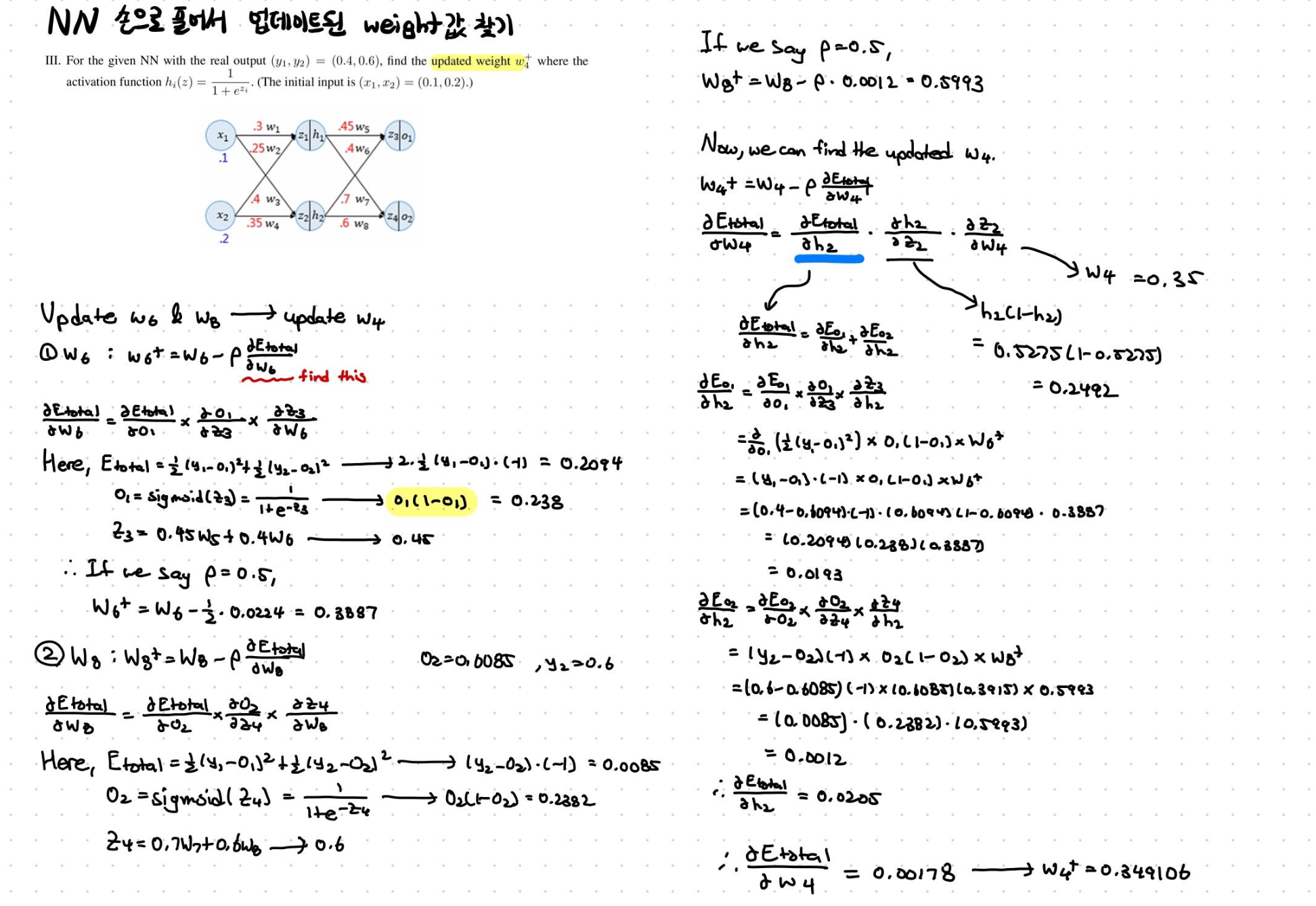
Very simple FFNN
Input layer : x1 & x2
Hidden layer : z1 & z2
Output layer : z3 & z4
Ex) Image Classification of only two features used
〰️ 질문
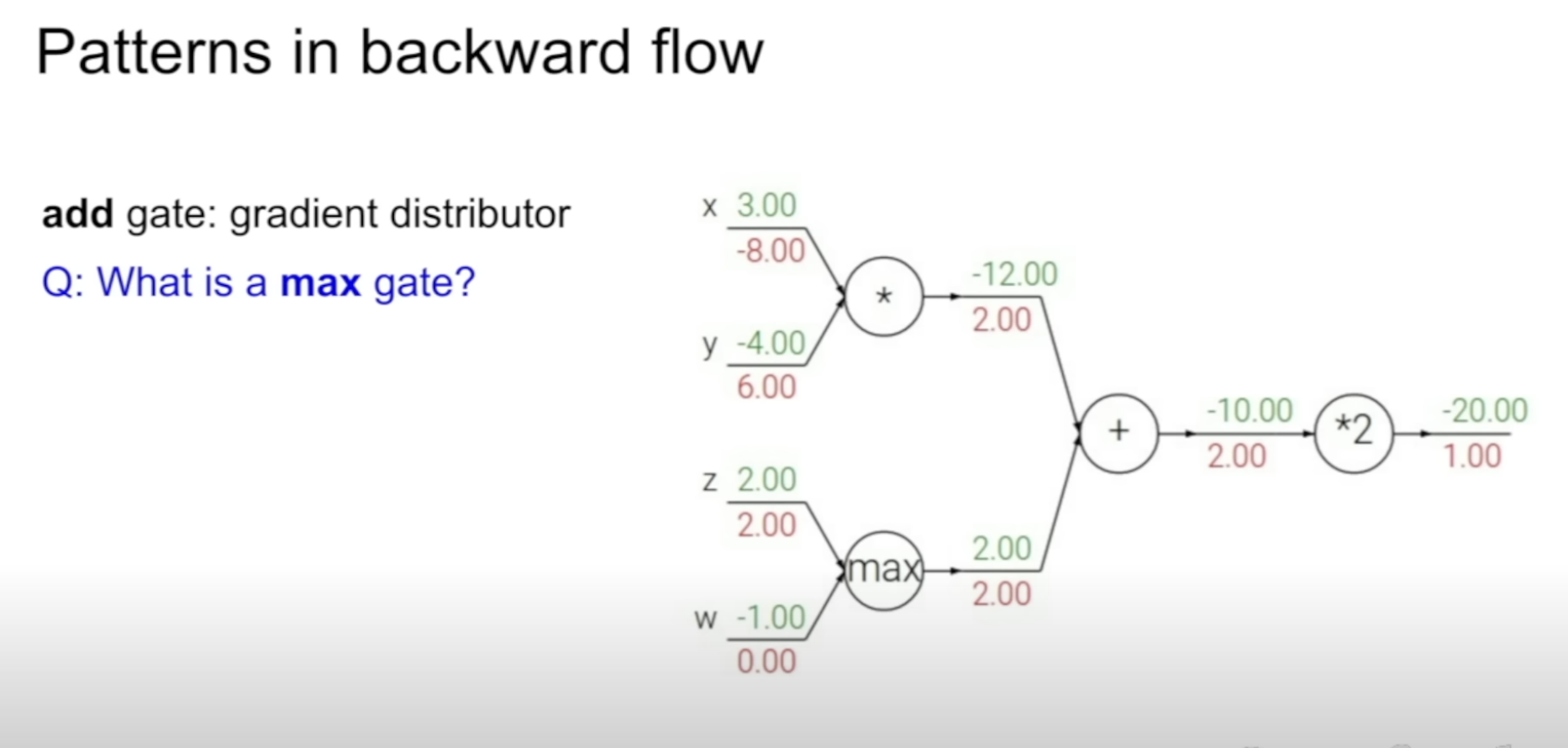
add gate : gradient distributor
max gate : gradient router
mul gate : gradient switcher