
#INTRO
/ / / 비가 추적추적 / / /

오히려 좋아.
#코드카타 (09:00 ~ 11:00)
#데이터와 친해지는 SQL (세션 2회차) (14:00 ~ 15:00)
- 2회차 리뷰 中
- COUNT 함수 사용 시 (*), (1) 는 NULL값을 포함한 모든 행의 갯수 조회
- SELECT COUNT(DISTINCT 칼럼명) > 칼럼 내 중복된 값을 제외한 행의 갯수 조회
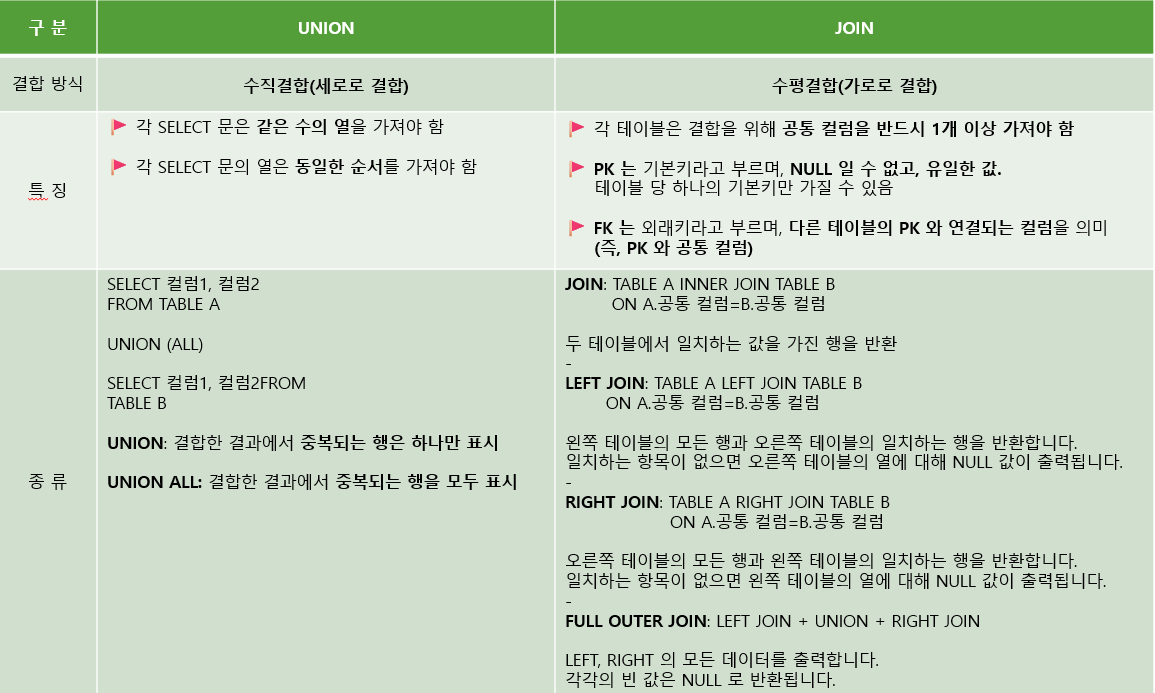
- UNION 함수: 여러 개의 SELECT 문의 결과를 하나의 테이블로 연결해 조회하고 싶을 때 사용
예로, 1월달 데이터와 2월달 데이터가 다른 테이블에 있을 때.

# union/union all 기본구조
select name,
       goods_nm,
       pay_date    --- #컬럼 순서가 같고, 그 형식이 같아야 함
from 테이블명1

union (all) #수직결합 명시

select
       name,
       goods_nm,
       pay_date
from 테이블명 2
- UNION , UNION ALL
- 공통점: 두 쿼리문을 하나로 수직결합
- 차이점: UNION 은 중복된 행을 하나로 표기 (중복 제거 후 표기),
-------- UNION ALL은 모두 표기 (중복 제거없이 표기) - 주의점: 열의 갯수와 순서가 모든 쿼리에서 동일해야 하며, 데이터의 형식이 일치해야 함.
-
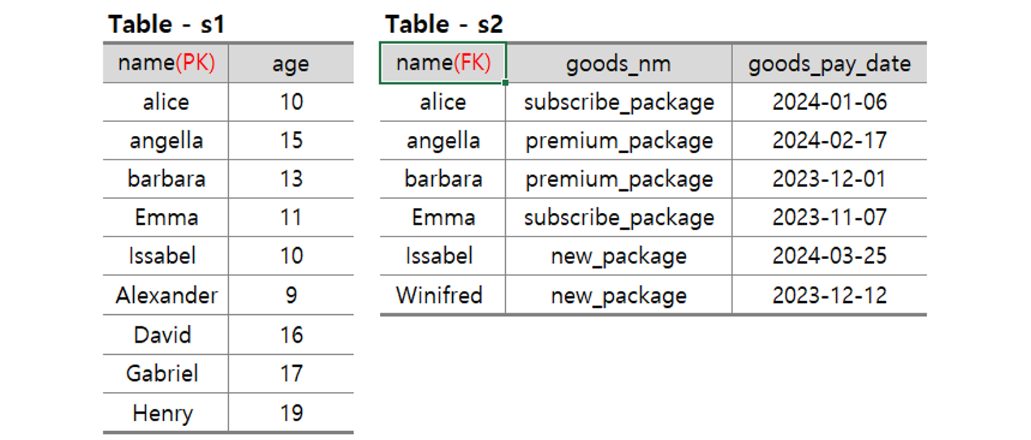
JOIN: 여러 개의 SELECT 문의 결과를 단일 결과 세트로 연결, 두 개의 테이블을 결합하는 역할.
-
두 개의 데이터 셋을 조인하는 방법.
- 공통 컬럼 찾기: 두 테이블에서 공통으로 존재하는 컬럼
- 공통 컬럼 관계 찾기: PK 와 FK 찾기
공통 컬럼 기준, 어떤 테이블이 기준이 되고, 어떤 테이블이 종속되어있는지 파악해야 함.
테이블의 구조는 1:1, 1:N, N:1, N:N 와 같은 관계로 표현 가능- PK : 기본키, NULL일 수 없고, 유일한 값을 가짐.
-모든 데이터를 식별하는 기준이 되는 컬럼 - FK : 외래키, 다른 테이블의 PK와 연결되어 테이블 간 관계를 나타내주는 컬럼
-기준이 되는 컬럼(PK)를 확인하기 위한 연결컬럼(FK)
- PK : 기본키, NULL일 수 없고, 유일한 값을 가짐.
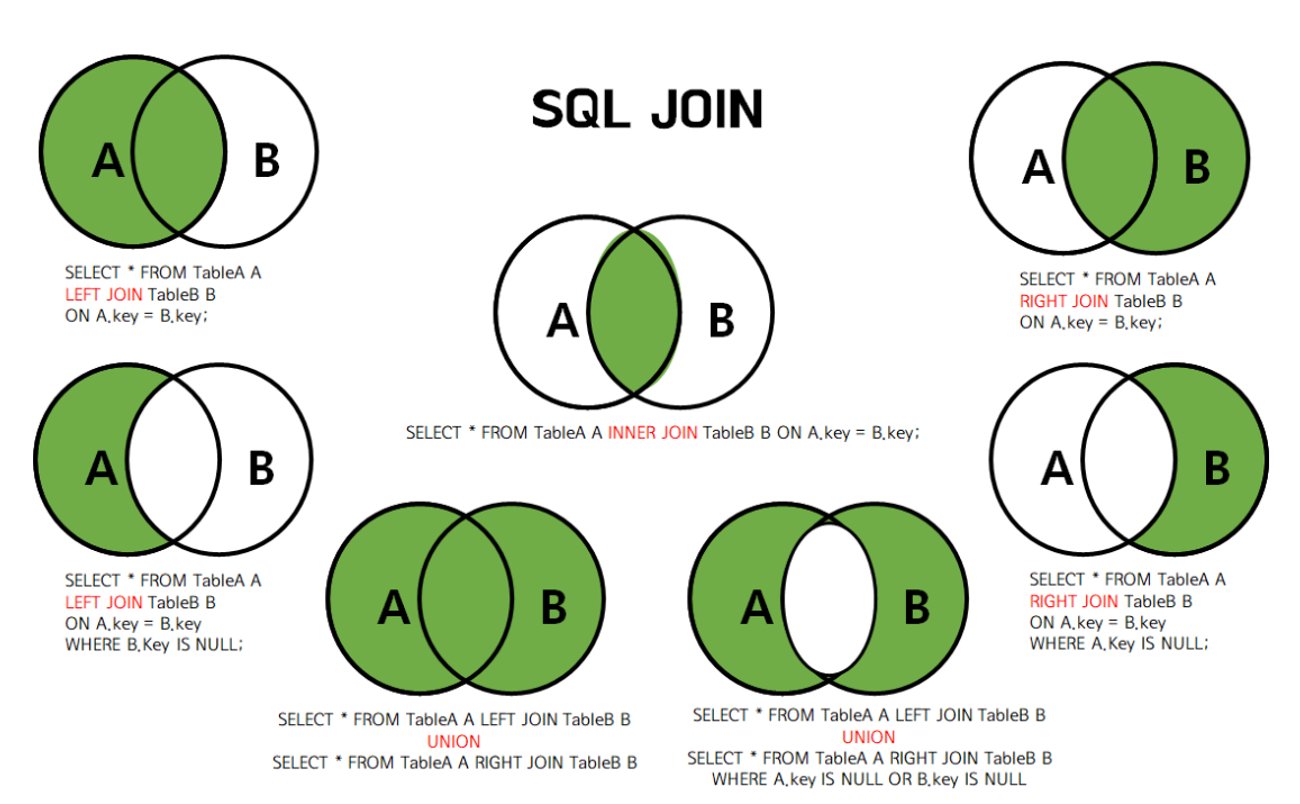
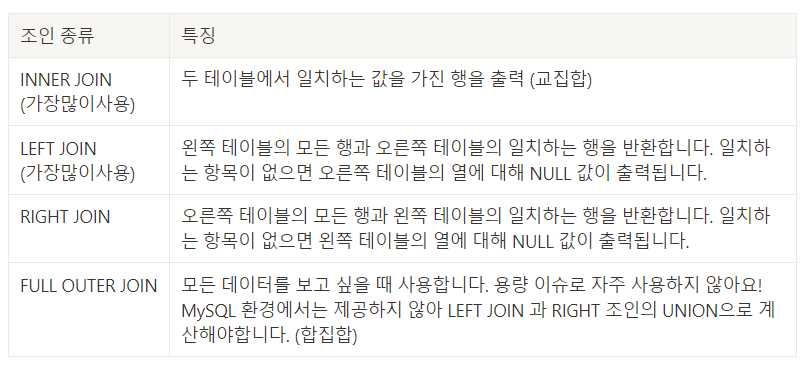
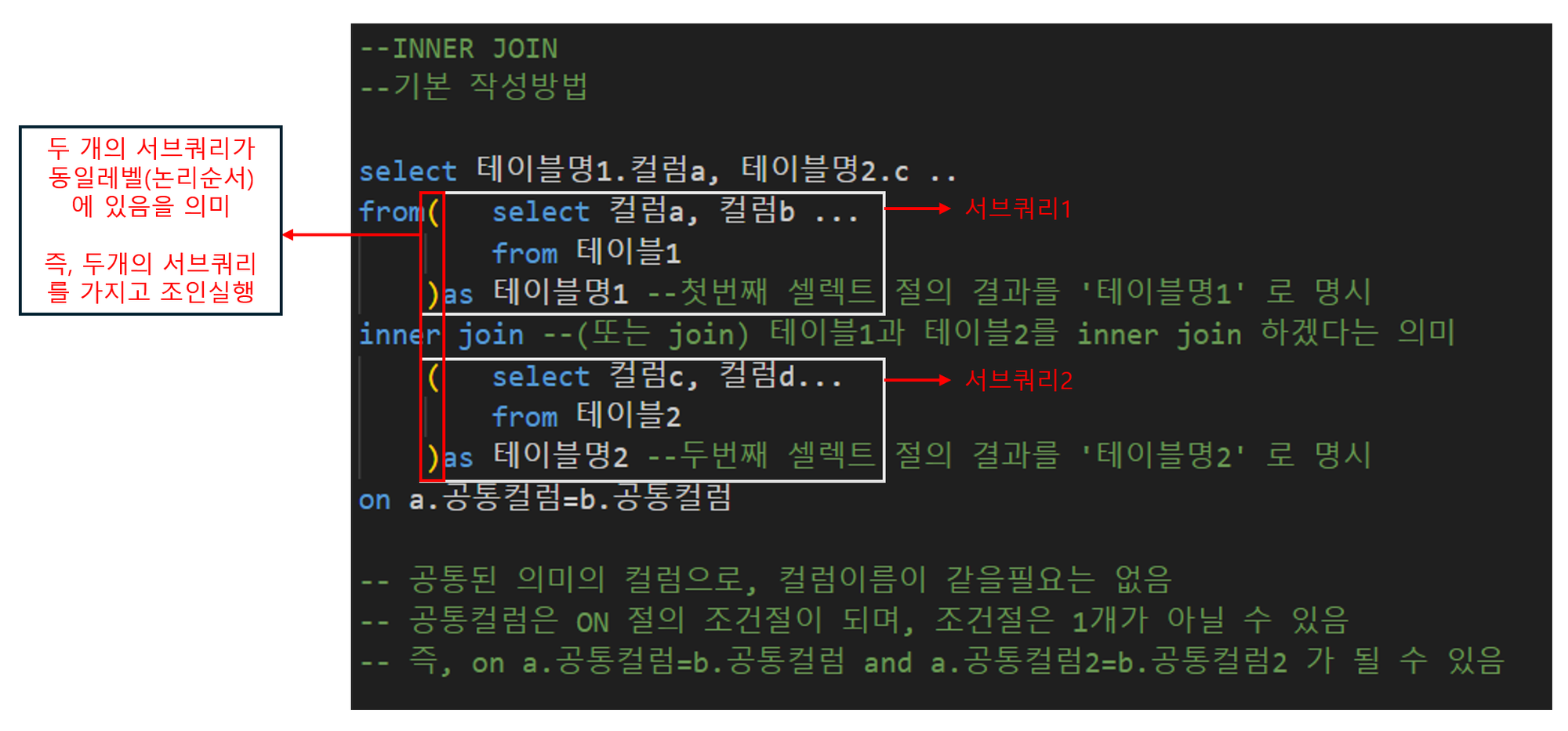
- 적절한 조인 방식 찾기
- UNION과 JOIN의 활용
- 테이블들의 열을 맞춰 UNION 을 하고, 결합된 데이터들을 가지고 공통컬럼 기반 JOIN 가능.
- 공통컬럼 기준으로 JOIN을 하고, 결합된 데이터들을 가지고 열을 맞추는 UNION 가능.
- UNION과 JOIN 비교 표
#세션 문제풀이 (15:00 ~ 18:00)
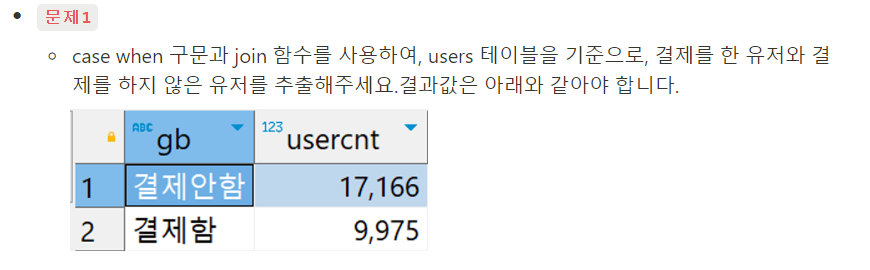
✔️ 문제 #1: CASE WHEN 구문과 JOIN 함수 사용하여 데이터 값 추출
✔️ 작성 쿼리
select a.gb,
       count(*) as usercnt
from
		(
		select case when p.game_account_id is null then '결제안함'
        		    else '결제함' end as gb
		from users u left join payment p
  		   on u.game_account_id = p.game_account_id
		group by u.game_account_id
		) a
group by a.gb
order by 2 desc
;
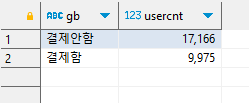
✔️ 실행 결과
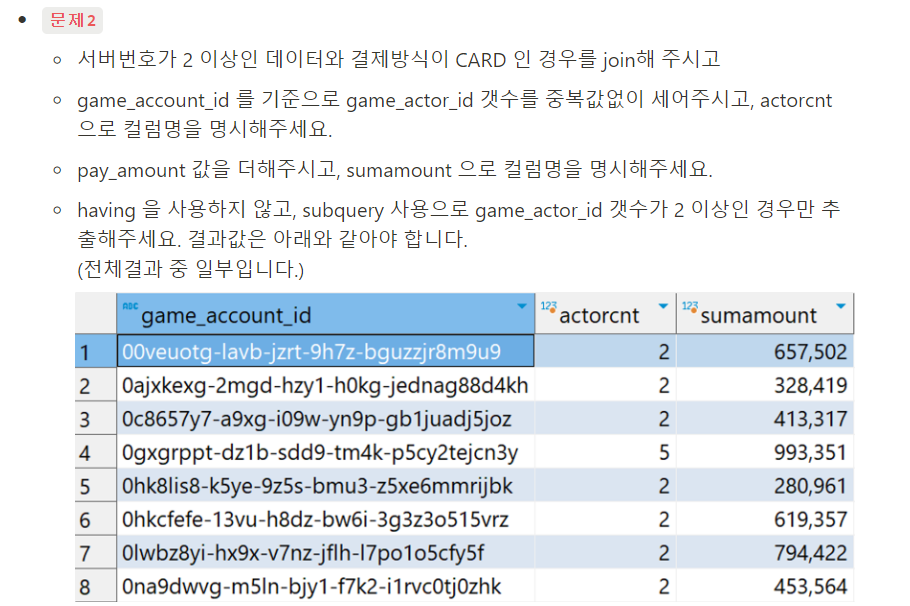
✔️ 문제 #2: 조건부 테이블 JOIN 후 기준에 따른 데이터 추출
✔️ 작성 쿼리
select *
from
		(
		select u.game_account_id,
			   count(distinct u.game_actor_id) as actorcnt,
			   sum(distinct p.pay_amount) as sumamount
		from users u inner join payment p
		     on u.game_account_id = p.game_account_id
		where u.serverno > 1 and p.pay_type = 'CARD'
		group by u.game_account_id
		) a
where a.actorcnt >= 2
;
# 매출에 해당하는 pay_amount의 중복값을 제거하는 함수를
사용하는 것을 피하기 위해 작성한 다른 쿼리
select *
from
(
select u.game_account_id,
count(u.game_actor_id) actorcnt,
a.sumamount
from users u inner join
(
select game_account_id,
sum(pay_amount) sumamount
from payment
where pay_type='CARD'
group by game_account_id
) a
on u.game_account_id = a.game_account_id
where u.serverno >= 2
group by u.game_account_id
) b
where b.actorcnt >= 2
order by b.game_account_id
;✔️ 실행 결과
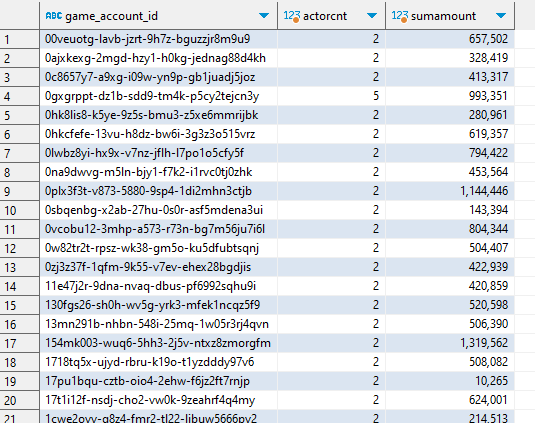
✔️ 문제 #3: 조건부 테이블 JOIN 후 기준에 따른 데이터 추출
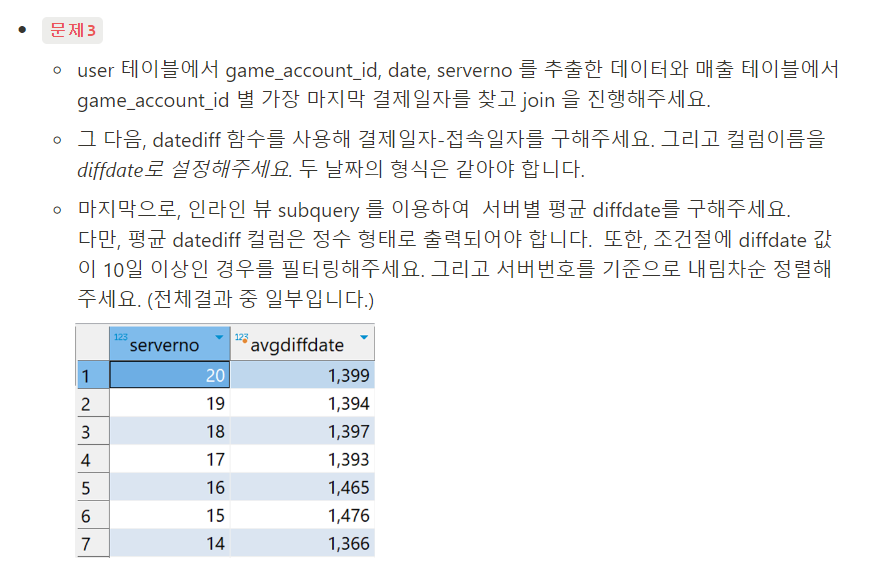
✔️ 작성 쿼리
select c.serverno,
       round(avg(c.diffdate)) avgdiffdate
from
	(
	select a.serverno,
	       datediff(b.recentpay, a.`date`) diffdate
	from
			(
			select game_account_id,
			       `date`,
			       serverno
			from users u
			) a join
			(
			select game_account_id,
			       date_format(max(approved_at),'%Y-%m-%d') recentpay
			from payment p
			group by game_account_id
			) b
			on a.game_account_id = b.game_account_id
	) c
where diffdate >= 10
group by c.serverno
order by c.serverno desc
;
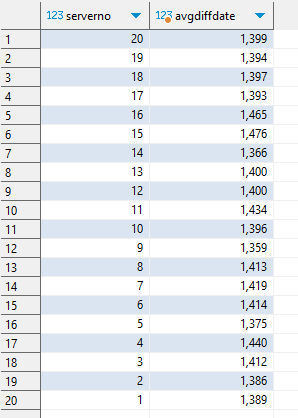
✔️ 실행 결과
#데이터 리터러시 강의 (11:00 ~ 13:00 / 19:00 ~ 20:00)
#OUTRO
오늘의 한 줄.
코드카타 하고, 강의도 다 듣고, SQL 세션 과제까지 끝까지 풀어낸 나, 칭찬해.

커피 좋아하는 데이터 꿈나무