1. Linear Model
1.1 Making a Decision
to make a decision
- weighted coordinates are combined to form a 'credit score'
- the resulting score is then compared to a threshold value
E.g., Credit Approval
- for input , attributes of a customer
- approve credit if
- deny credit if
데이터의 각 속성을 선형 결합하여 데이터를 어떻게 나눌 것인지(결정경계) 결정하는 최적의 가중치를 찾는 것이 학습의 목적이다.
1.2 Perceptron
위에서 언급된 의사결정 수식을 더 간결하게 표현한 가설 집합 를 Perceptron이라 부른다.
- (bias): 기존의 임계값을 수식 안으로 포함시킨 값
- : 입력값이 0보다 크면 +1, 작으면 -1 반환
- 이진 분류를 수행하는 계단 함수 역할
1.3 Two-dimensional Case
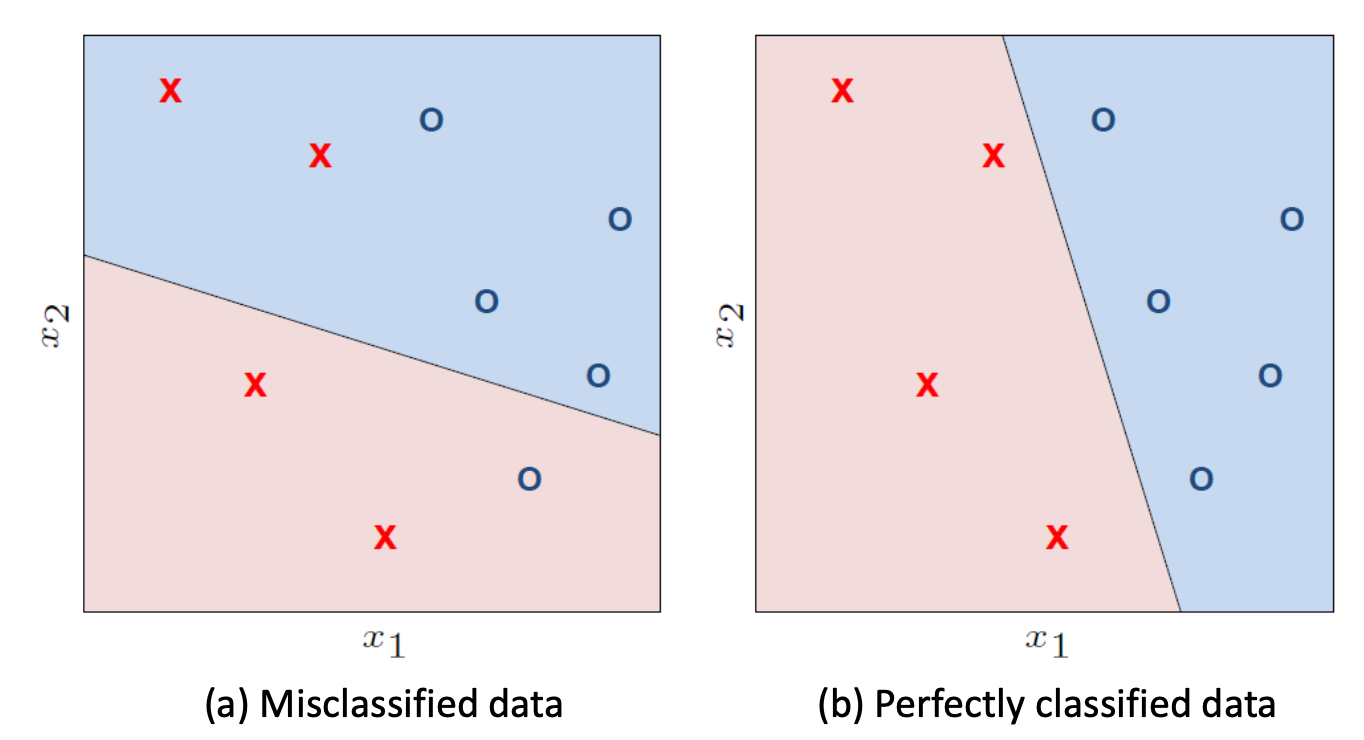
Plane
- the plane is split by a line into two regions
- +1 decision region(blue) and -1 decision regin(red)
Decision Boundary
- different values for parameters
- corresppond to different lines
Vector Form
- for simplification, treat bias as weight
- introduce an artificial coordinate
- with this convention,
- this yields the perceptron in vector form
단일 퍼셉트론으로 데이터가 직선으로 완벽히 나눠질 수 있다는 Linearly Separable 가정을 전제로 한다.
2. The Framework of Learning
2.1 Roles of the Learning Algorithm
Search
- by looking for weights and bias that perform well on data set
가설 집합 은 학습 알고리즘이 탐색할 수 있는 모든 가능한 후보 모델들의 모임이다.
Produce the final hypothesis
- is defined by the optimal choice of weights and bias
실제 환경의 target function 는 접근할 수 없다. 따라서 학습 알고리즘이 이라는 후보 중 데이터셋을 참고하여 가장 성능이 좋은 최종 가설 를 하나 선택한다.
2.2 Three Important Problems in Linear Models
1. Classification
2. Regression
3. Probability Esitmation
- a.k.a logistic regression
- come with different but related algorithms
분류는 sign을 쓰고, 회귀는 제곱 오차를 최소화한다. 로지스틱 회귀는 확률을 가장 잘 설명하는 가중치를 찾기 위해 또 다른 최적화 알고리즘을 사용한다.
2.3 Generalization and Complexity
Set of lines
- often a good first choice
VC dimension
- 학습 모델이 가질 수 있는 용량, 표현할 수 있는 복잡도를 나타내는 척도
선형 모델은 상대적으로 낮은 VC 차원을 가진다.
From to
- generalize well from to
- : 가지고 있는 학습 데이터 내에서 발생하는 오류
- : 학습에 사용되지 않는 새로운 데이터에서 발생하는 오류, 모델의 실제 성능
선형 모델처럼 VC 차원이 낮으면 학습 데이터에서 얻은 성능과 실제 데이터에서의 성능의 차이가 크지 않다. 데이터 분석을 처음 시작할 때 복잡한 모델을 바로 쓰면 일반화에 실패할 확률이 높기에 선형 모델을 종종 사용한다.
3. Perceptron Learning Algorithm
3.1 Objective and Fundamental Assumption
Objective
- determine the optimal based on the data to produce
Assumption
- the data set is linearly separable
- there is a vector that makes achieve the correct decision on all training examples
3.2 How PLA Works
- an iterative algorithm
- guaranteed to converge for linealy separable data
1. Initialize
- 학습 데이터셋
- 초기 가중치 벡터 로 학습 시작
- 퍼셉트론은 형태의 가설 구현
2. Pick a Misclassified Point
- 매 반복마다 데이터셋에서 샘플 포인트 하나씩 확인
- 인 오분류 지점 하나 선택
PLA는 한 번에 하나의 데이터를 확인하며 가중치를 수정하는 반복적 알고리즘이다.
3. Updata Rule
- 선택된 오분류 데이터를 바탕으로 가중치 벡터 업데이트
- 실제 값 이 이면 벡터를 더하고, 이면 벡터를 빼는 방식으로 조정
4. Geometric Effect
- 결정 경계를 오분류된 을 올바르게 분류할 수 있는 방향으로 이동
- 가중치 벡터에 을 더함으로써 경계의 각도를 틀어 데이터가 올바른 영역에 속하도록 함
5. Convergence
- Termination Condition
- 데이터셋 내 더 이상 오분류된 예시가 없을 때까지 반복
- Convergence Guarantee
- 데이터셋이 선형 분리 가능하다면, PLA는 유한한 횟수 내 반드시 수렴하여 모든 데이터를 완벽히 분류하는 최적의 를 찾는다.
4. Non-linearly Separable Data
4.1 Linear Model for Binary Classification
- uses a hypothesis set of linear classifiers
- each has the from
- : weight column vector
- : input dimension
- : corresponds to bias
- (bias)를 계산식에 포함시키기 위해 넣은 상수
: 입력 벡터 와 가중치 벡터 의 선형 결합을 의미하며 signal이라 부른다. 수학적으로는 와 같이 계산된다.
: 괄호 안의 값이 양수이면 +1, 음수이면 -1을 출력한다. 출력을 통해 최종적으로 데이터를 두 개의 카테고리 중 하나로 분류한다.
- we use and interchangeably to refer to the hypothesis
- PLA finds an optimal for linearly seperable data
4.2 Non-linearly separable
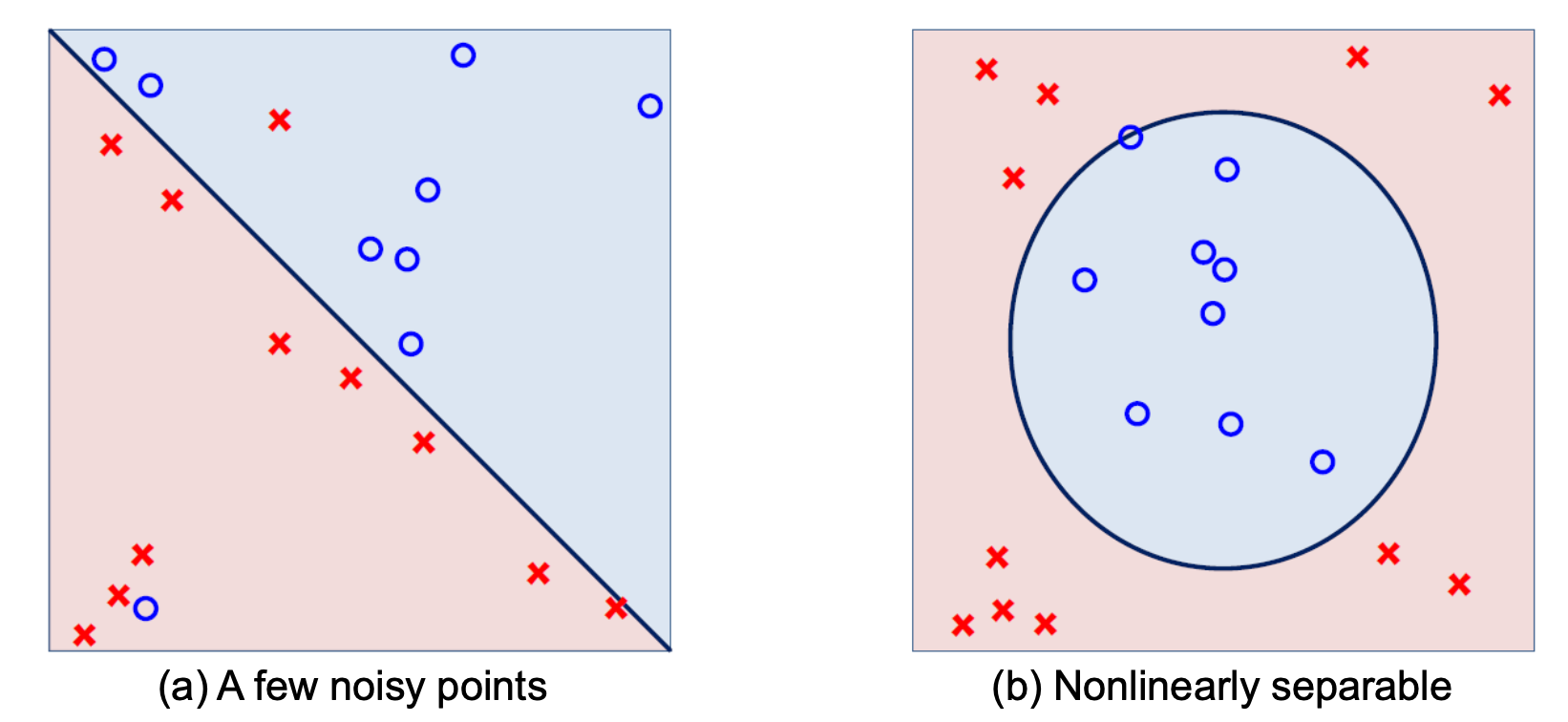
a: a few noisy points
- it seems appropriate to stick with a line
- but to somehow tolerate noise
- and output a hypothesis with a small
데이터가 조금 지저분해도 직선 모델의 단순함을 믿고 완벽(0)보다는 최선(small )의 결과물을 찾는다.
b: a circle rather than a line
- the linear model does ot seem to be correct
- may need a technique called nonlinear trnasformation
4.3 Hardness of Minimizing
- the situation in (a): encountered very often in practice
- a linear classifier seems appropriate
- but data may not be linearly separable due to outliers/noise
- to find a hypothesis with the minimum
- need to solve combinatorial optimization
- equation: difficult to solve
- in general, NP-hard (there is no known efficient algorithm for it)
- due to the discrete nature of both and
approximately minimize
5. The Pocket Algorithm
5.1 Approximately Minimizing
완벽한 최소값 대신 최대한 근사적으로 을 최소화하는 전략을 취하며 이를 위해 PLA를 수정한 Pocket Algorithm을 도입한다.
- extend PLA through a simple modification
- pocket algorithm with ratchet
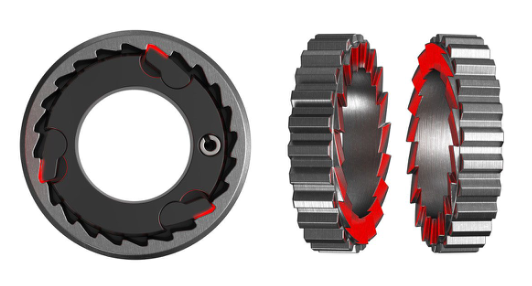
마치 한쪽 방향으로만 회전하는 라쳇 렌치처럼 알고리즘은 지금까지 발견한 가장 좋은 가중치를 유지하며 더 나쁜 결과로 퇴보하지 않도록 설계되었다.
5.2 Algorithm
- the pocket algorithm keeps 'in its pocket' the best encountered up to iteration in PLA
- at the end, the best will be reported as the final hypothesis
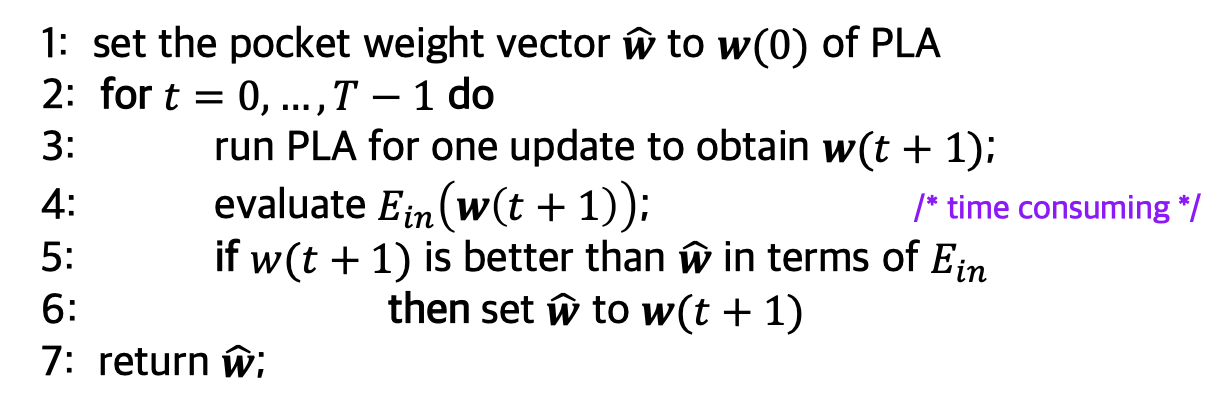
- line4: evaluate all examples to get
- much slower than PLA
PLA는 선형 분리 불가능한 데이터에서 이 계속 요동치지만 Pocket Algorithm은 지금까지 중 최고를 보관하므로 반복 횟수가 늘어남에 따라 과 이 안정적으로 감소한다.
6. Handwritten Digit Recognition
- data: sampled digits from the US Postal Service zip code DB
- each image has 16 pixels
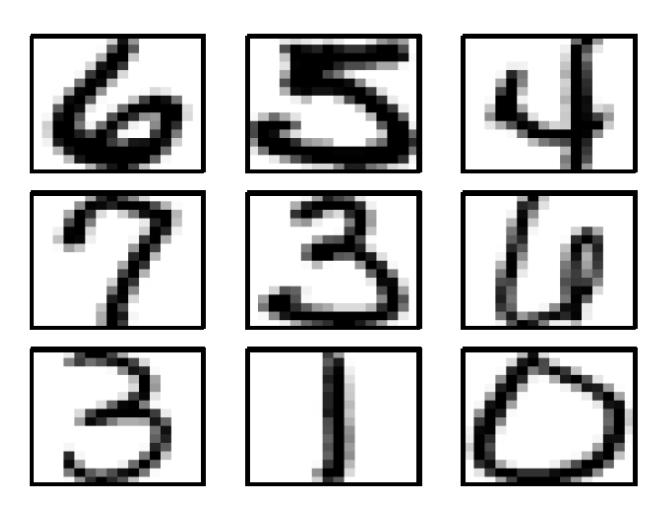
- goal: recognize each digit
- non-trivial task (even human is about 2.5%)
- common confusion: digits {4, 9} and {2, 7}
6.1 Solution Components
1. Decomposition
- from multiclass to binary classification
- a commonly used approach for multiclass setup
2. Feature Extraction
- a human approach to determining the digit of an image
- look at the shape (or other properties) of black pixels
- rather than carrying all the info in 256 pixels, summarize the info contained in the image into a few features
- again a very common/essntial approach in machine learning
E.g., focus on digit {1, 5}
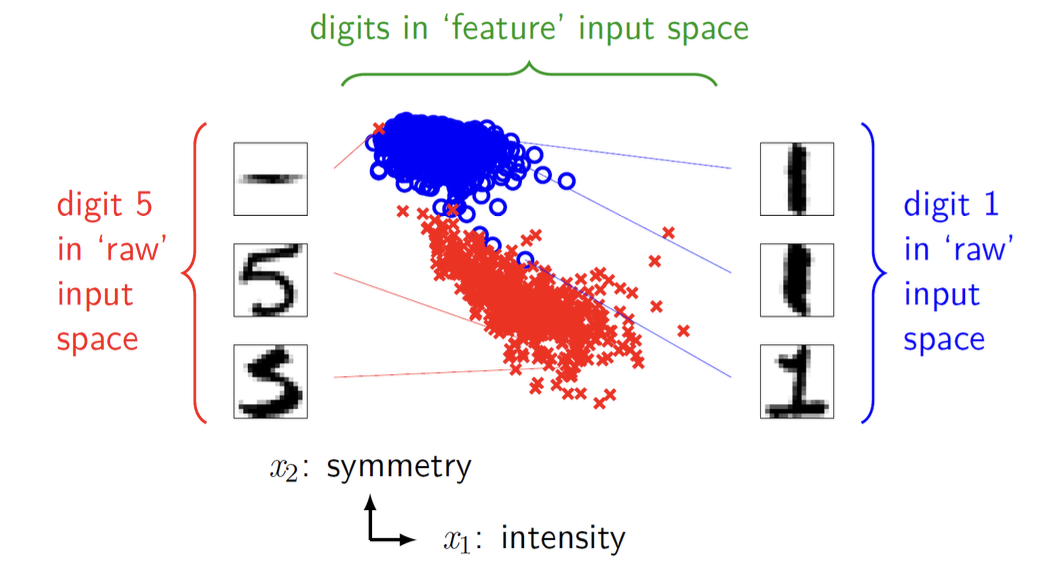
- a scatter plot for these intensity and symmetry features
- observation
- digit 5 usually occupies more black pixels than digit 1
- digit 1 is symmetric while digit 5 is not
6.2 Performance Evaluation
Feature space에서 PLA와 Pocket 알고리즘을 적용하여 성능을 비교하였다.
Error vs. Iteration
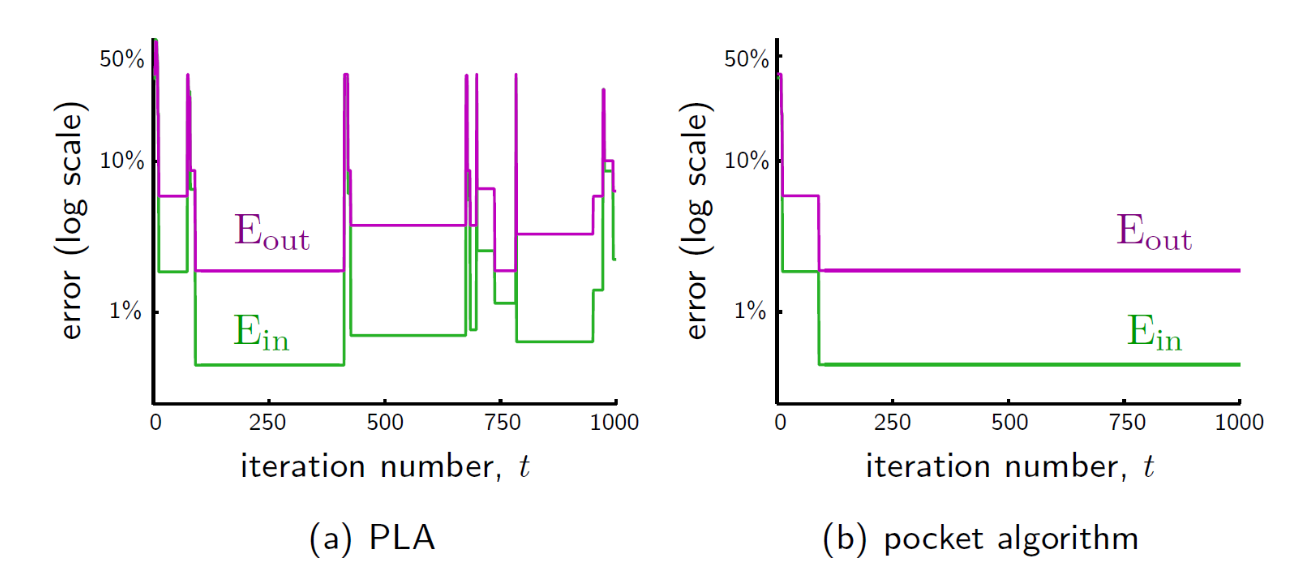
- PLA
- 반복 횟수가 늘어남에 따라 오류율 크게 요동침
- 1,000번 반복 후 = 2.24% = 6.37%
- Pocket Algorithm
- 가장 좋은 결과를 보존하는 특성 덕분에 오류율 안정적으로 낮게 유지
- 1,000번 반복 후 = 0.45%, = 1.89%로 PLA보다 월등한 성능
Learned Hypothesis
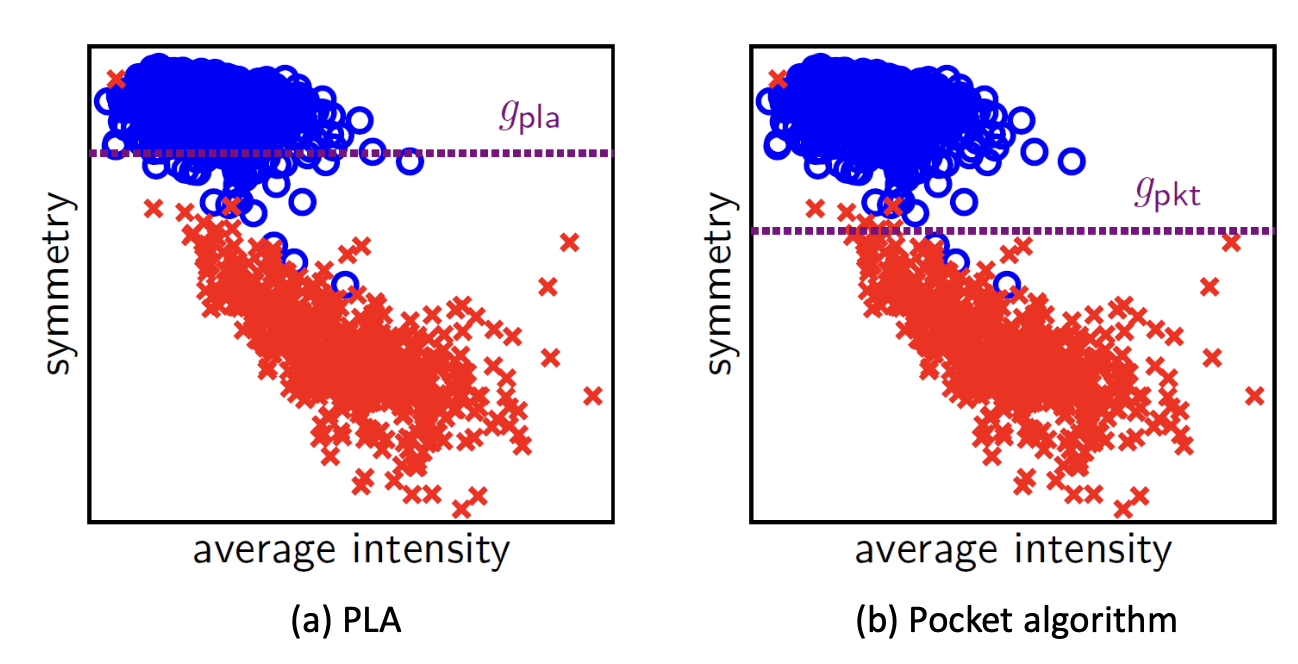
Pocket 알고리즘을 통해 얻은 결정 경계 가 PLA보다 데이터 군집을 훨씬 더 정확하게 가로지르며 분리해 내는 것을 확일할 수 있다.
MNIST Dataset
더 방대한 MNIST 데이터셋(70k digits)에 대해 다양한 모델의 오류율을 비교한 결과이다.
- Linear Model: 7.6%
- Gaussian SVM: 1.4%
- CNN: 0.23%
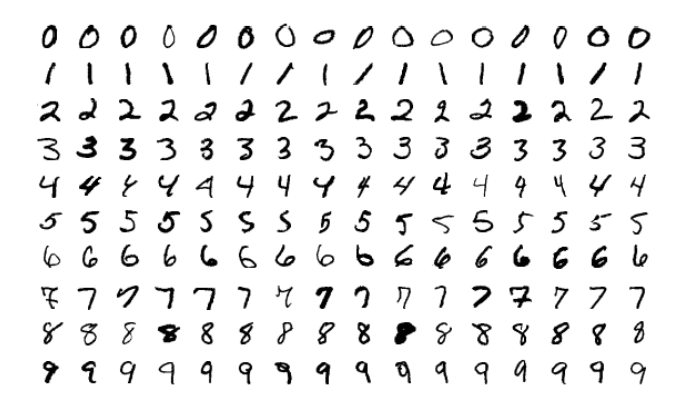
이 데이터셋은 제프리 힌튼에 의해 머신러닝의 초파리라고 불릴 만큼 연구의 기본 모델로 활용된다.