Swapping
Swap frames between physical memory and disk
Load data from swap back into memory on-demand
- If a process access a page that has been swapped out, page fault occurs
- A page-fault occurs and the instruction pauses
- 접근하려는 게 DRAM에 없으면 오류
- The OS can swap the frame back in, insert it into the page table, and restart the instruction
옮겨서 저장 = swap write
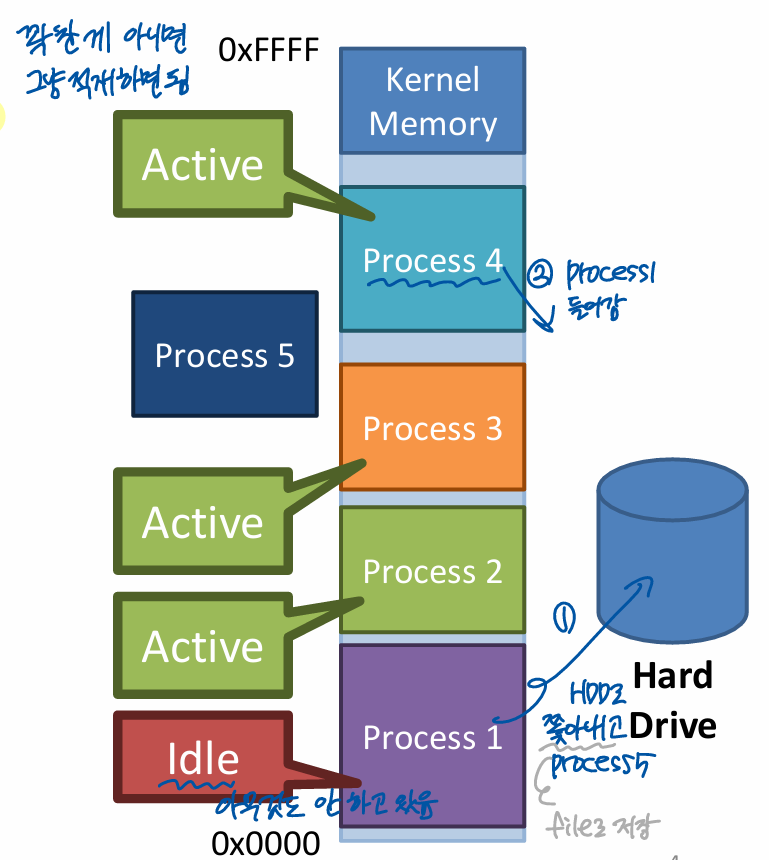
Naive E.g.
- Suppose memory is full
- The user opens a new program
- Swap out idle pages to disk
- If the idle pages are accessed, page them back in
Implementing Swap
- Data strctures are needed to track the mapping between pages in memory and pages on disk
- Meta-data about memory pages must be kept
- When should pages be evicted?
- Which page should be evicted?
- OS's page fault handler must be modified
- 기존에는 없는 page에 대해서만 처리했으나, swap을 위해 수정
x86 Page Table Entry

- P - Present bit - is in physical memory?
- 1 means the page is in physical memory
- 0 means the page is valid, but swapped to disk
- Attempts to access an invalid page or a page isn't present trigger a page fault
Present bit = 0 or invalid page이면 page fault 발생
둘 다 page fault이지만 present=0이면 memory로 다시 읽어오고, invalid이면 즉시 종료
Handling Page Fault
If the PTE is invalid, the OS still kills the process
If the PTE is valid, but present = 0
- OS swaps the page back into memory
- OS updates the PTE
- TLB도 update
- OS instructs the CPU to retry the instruction
When should the OS evict pages?
On-demand approach
- If a page needs to be created and no free pages exist,
swap a page to disk
Proactive approach
- Most OSes try to maintain a small pool of free pages
- High watermark = threshold(e.g. 8 ~ 90)
- Once memory utilization crosses the high watermark, a background process starts swapping out pages
What pages should be evicted?
Page Replacement Policy
- The optimal eviction stragy
- Evict the page that will be accessed furthest in the future
- Unfortunately, impossible to implement (we don't know about the future)
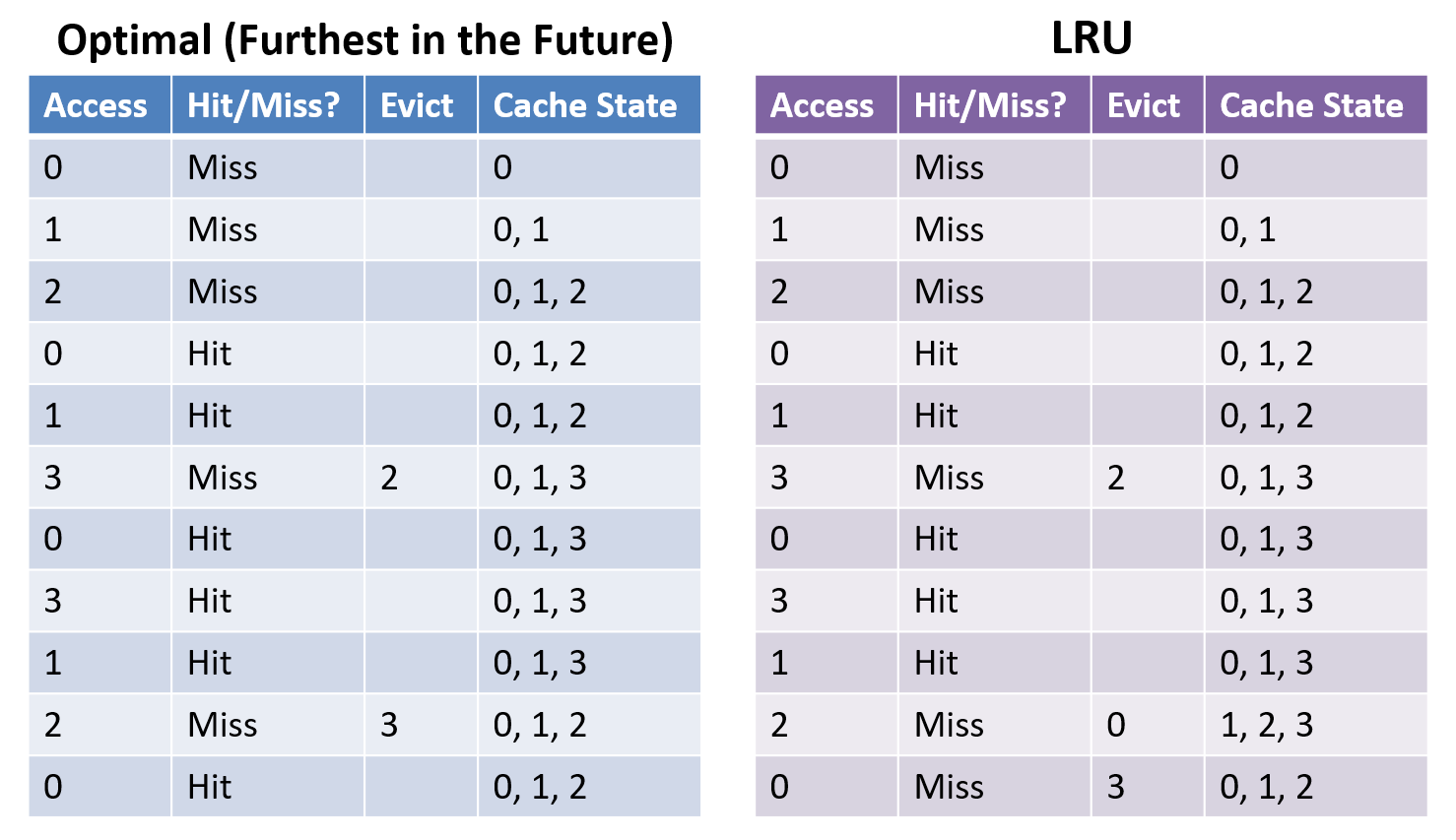
LRU가 optimal의 2배를 넘지 않는 것이 수학적으로 증명됨
cold miss 빼면 1.5배 차이
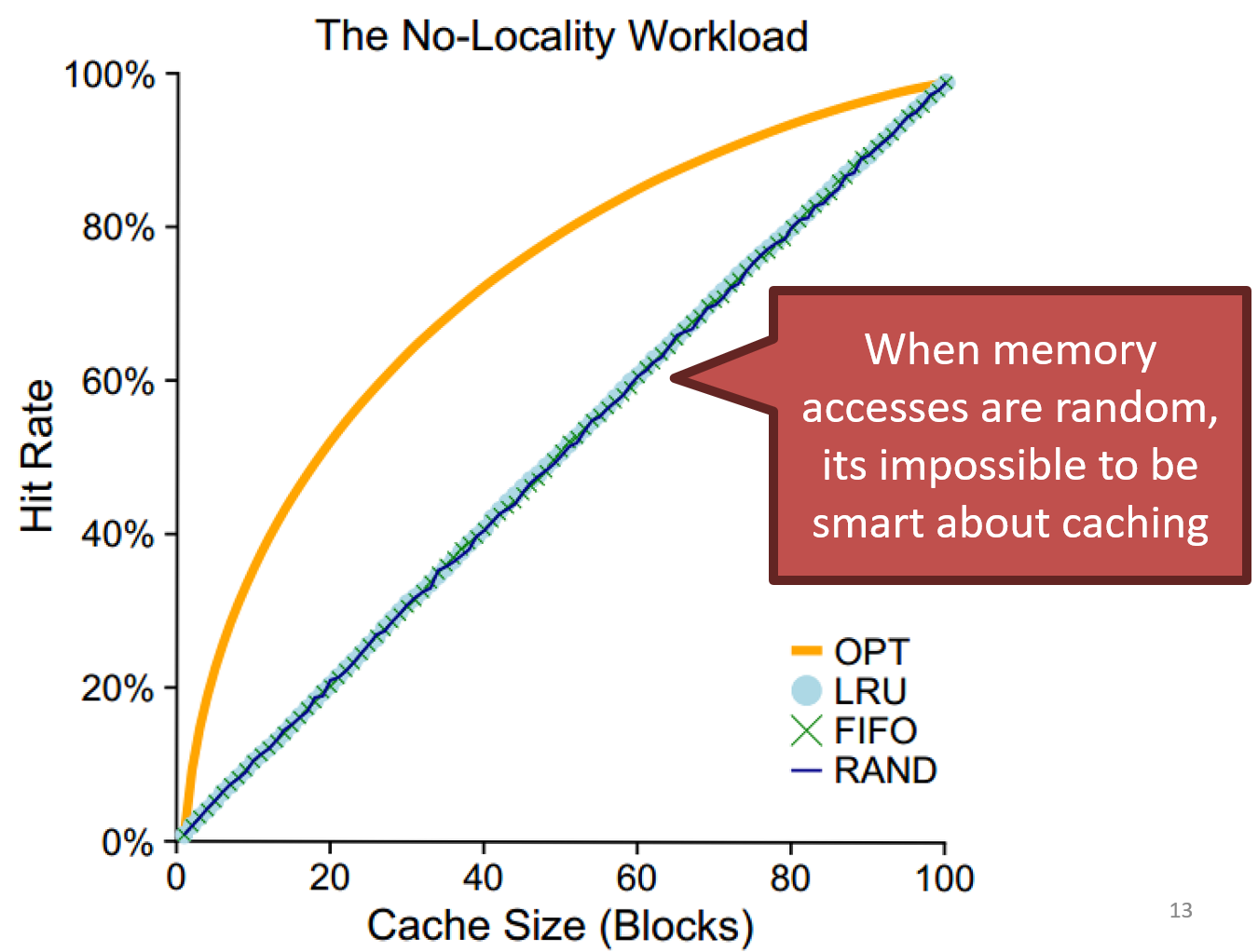
All memory accesses are to 100% random pages
- random => no locality
- only cache size dependent
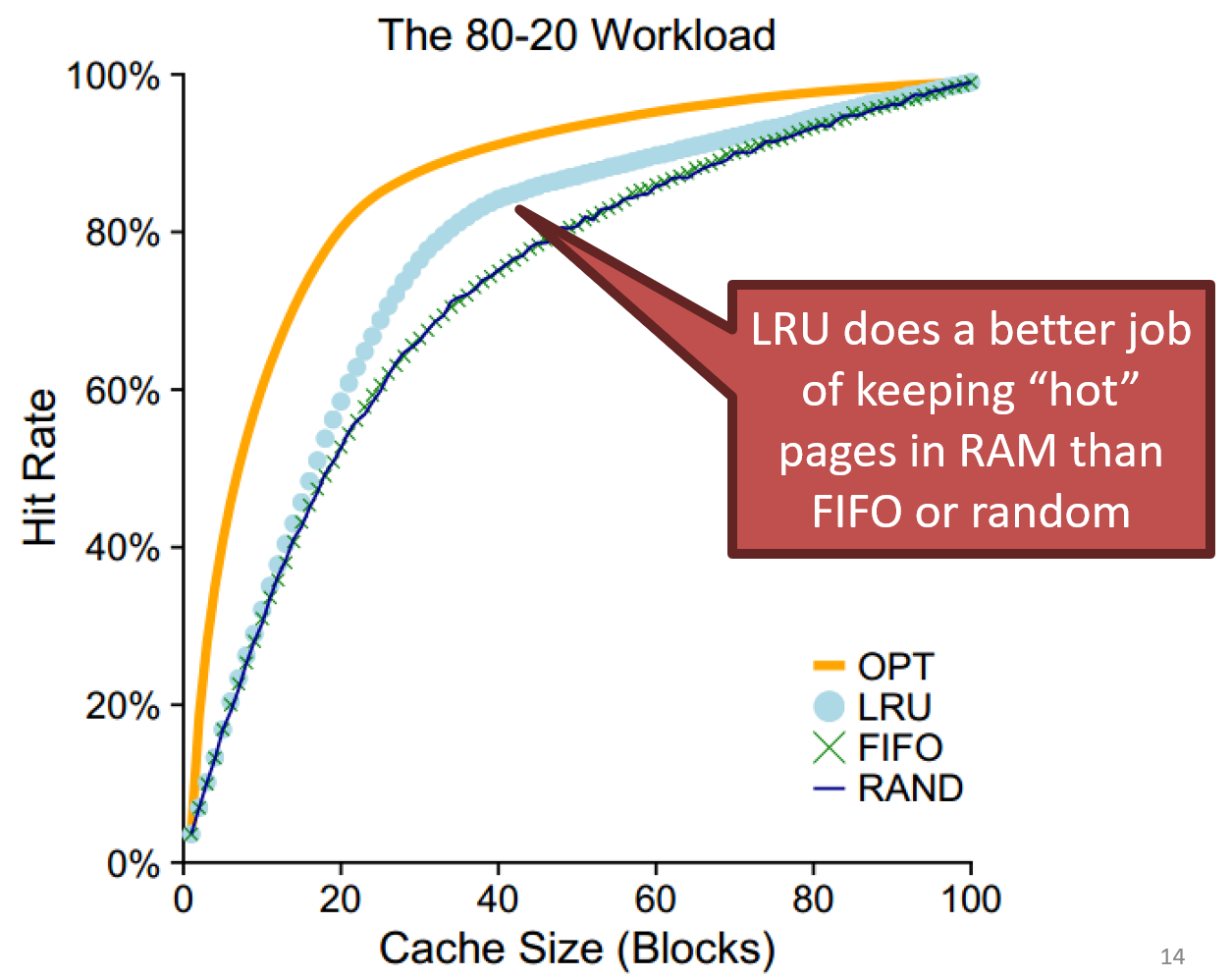
80% memory accesses are for 20% of pages
- LRU가 optimal에 가까움
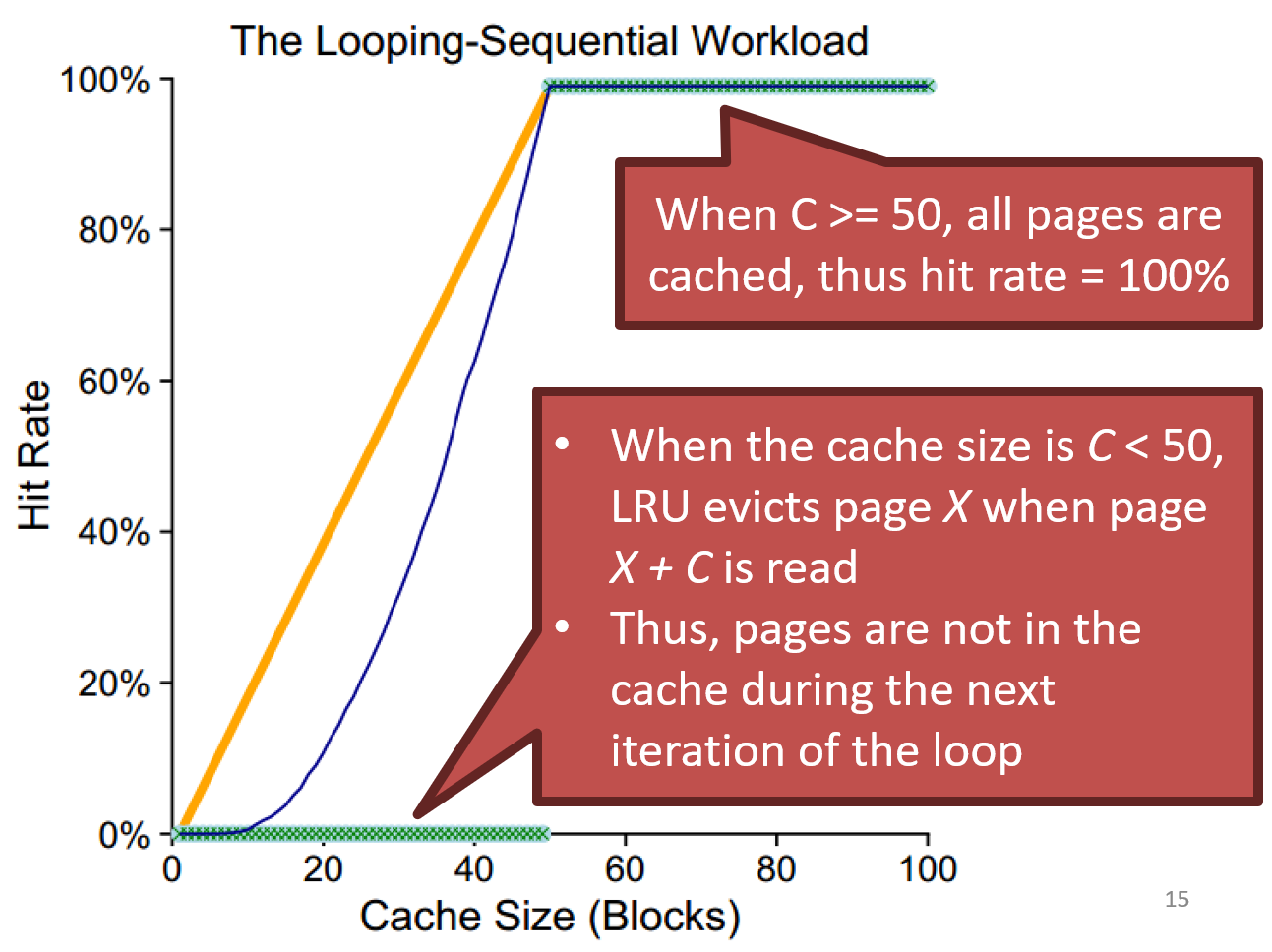
Sequential access in 50 pages, then loops
Implementing historical algorithms
- Record each access to the page table
- Additional overhead to page table lookups
- Approximate LRU with help from the hardware

- A - accessed bit - has been read recently?
- D - dirty bit - has been written recently?
- MMU sets the accessed bit when it reads a PTE
- MMU sets the dirty bit when it writes to the page
- OS may clear these flags as it wishes
Approximating LRU
On eviction, LRU needs to scan all PTEs to determine which have not been used
The Clock Algorithm
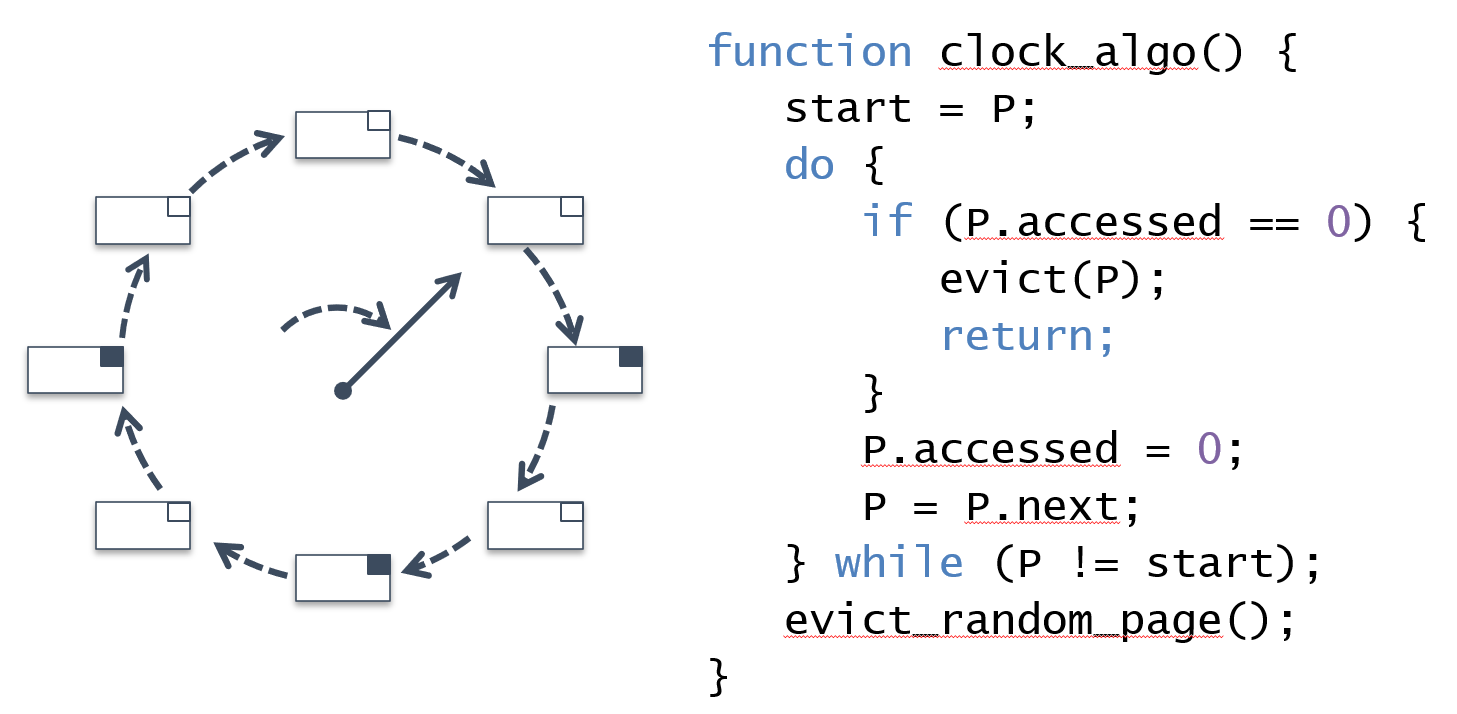
- If the access bit is 0, evict
- else set the access bit to 0 and pass
한 바퀴 돌면서 os가 accessed bit 0으로 만드는데, 이때 1이 되어있는 건 MMU(hw)가 access로 판단한 것으로 쫓아낼 수 없음
Incorporating the Dirty Bit
- Evict the non-dirty pages first
- When modified pages(Dirty bit is 1) are evicted, Dirty pages must always be written to disk
dirty bit가 다르다는 건 변동사항이 존재한다는 것, disk에 기록해야 함
RAM as cache
- RAM can be viewed as a high-speed cache for your large-but-slow spinning disk storage
- Ideally, you want the most important things to be resident in the cache (RAM)
RAM은 느리지만 HDD에 비하면 high-speed-cache

갓생호소인