1. LCA Basic
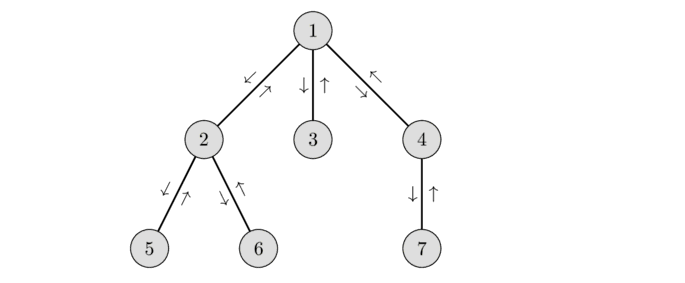
위와 같은 그림이 있다. 그림의 트리는 전재조건이 있다.
1) 자식노드의 번호는 부모노드의 번호보다 작다.
2) 같은 깊이에서 왼쪽 노드의 번호가 더 작다.
이 경우 두 노드의 가장 가까운 노드를 찾는 것은 쉽다.
1) 전위 순회를 한다.
2) 전위 순회 시 경로를 기록한다. 이미 거쳐간 노드도 다시 거쳐진다면 기록한다.
3) 기록한 경로에서 두 노드의 범주를 잡고, 범주 내 가장 작은 수의 번호를 가진 노드가 정답이 된다.
6번 노드와 4번 노드의 LCA
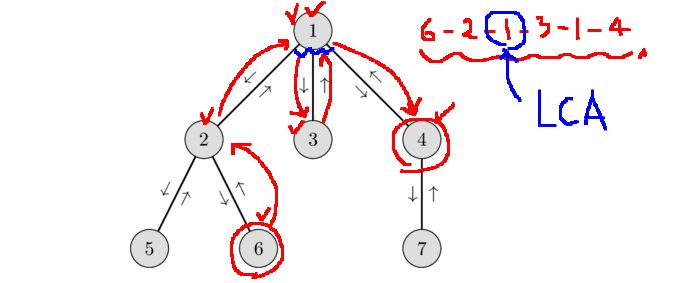
=> 1 - 2 - 5 - 2 - 6 - 2 - "1" - 3 - 1 - 4 - 7 - 4 - 1
2번 노드와 6번 노드의 LCA
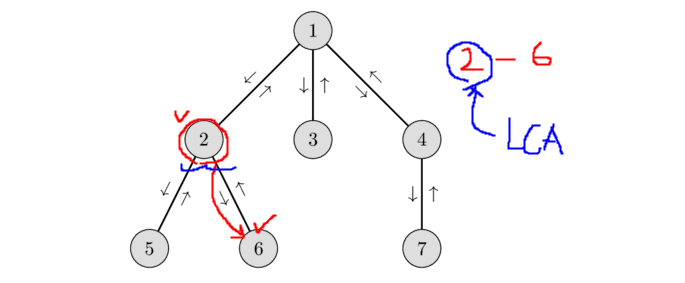
=> 1 - 2 - 5 - "2" - 6 - 2 - 1 - 3 - 1 - 4 - 7 - 4 - 1
코드는 다음과 같다.
#include <bits/stdc++.h>
using namespace std;

int n;  // 노드 갯수

void dfs(int root, vector<int>& route, vector<vector<int>>& graph) {
    // 루트 먼저 방문 체크
    route.push_back(root);
    //cout << root << " ";

    // 탐색
    for (int i = 0; i < graph[root].size(); i++) {
        int nextNode = graph[root][i];
        dfs(nextNode, route, graph);
        route.push_back(root);  // 다시 루트로 돌아옴
        //cout << root << " ";
    }
}

int main() {
    cin >> n;
    cin.ignore();

    vector<vector<int>> graph(n + 1);

    for (int i = 1; i <= n; i++) {
        int nowNode;
        //cin >> nowNode;
        //cin.ignore();

        string line;
        stringstream ss;

        getline(cin, line);
        ss.str(line);

        ss >> nowNode;

        string child;
        while (ss >> child) {
            graph[nowNode].push_back(stoi(child));
        }
    }

    // 전위 순휘 경로 생성
    vector<int> route;
    dfs(1, route, graph);


    int numOfQuery;
    cin >> numOfQuery;
    vector<int> answers;

    for (int i = 0; i < numOfQuery; i++) {
        int a, b;
        cin >> a >> b;

        int start;
        int end;
        int startIdx;
        bool flag = false;
        for (int j = 0; j < route.size(); j++) {
            if (route[j] != a && route[j] != b)
                continue;

            startIdx = j;
            if (route[j] == a) {
                start = a;
                end = b;
            }
            else {
                start = b;
                end = a;
            }

            flag = true;
            break;
        }
        if (!flag) {
            answers.push_back(-1);  // 잘못된 노드 입력
            continue;
        }

        int minNum = n;
        for (int j = startIdx; j < route.size(); j++) {
            if (minNum > route[j])
                minNum = route[j];

            if (route[j] == end)
                break;
        }

        answers.push_back(minNum);

    }

    // 전체 정답
    for (int i = 0; i < answers.size(); i++) {
        cout << answers[i] << '\n';
    }
}
(입력)
7 // 노드 수
1 2 3 4 // 1번 노드는 2,3,4번 노드를 자식으로 둠
2 5 6
3
4 7
5
6
7
2 // 쿼리 수
2 6 // 2번 노드와 6번 노드의 LCA는?
6 4 // 6번 노드와 4번 노드의 LCA는?
(출력)
1
2
2. LCA (전제 조건이 없을 때)
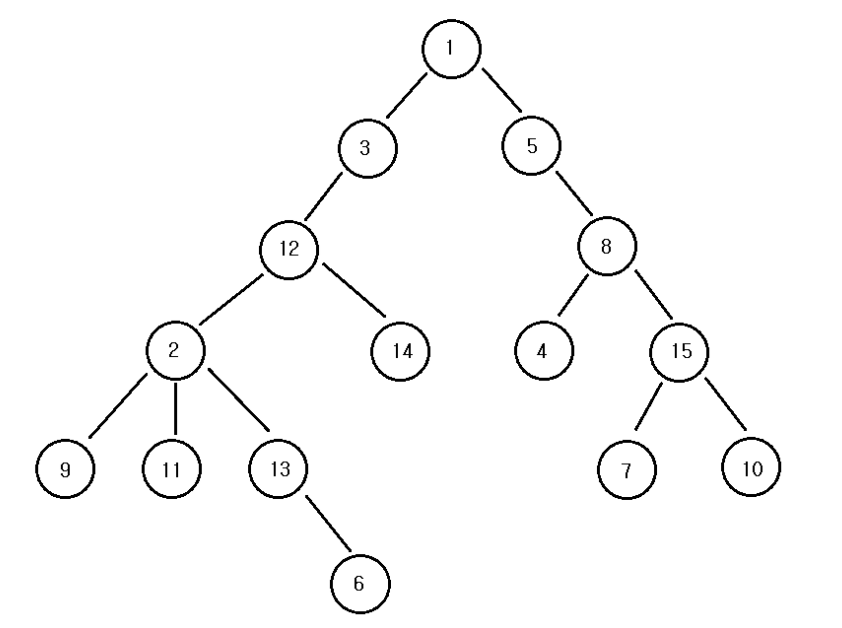
하지만 위 그림과 같이 전제조건이 보장되지 않는다면 어떨까?
전제 조건
1) 자식노드의 번호는 부모노드의 번호보다 작다.
2) 같은 깊이에서 왼쪽 노드의 번호가 더 작다.
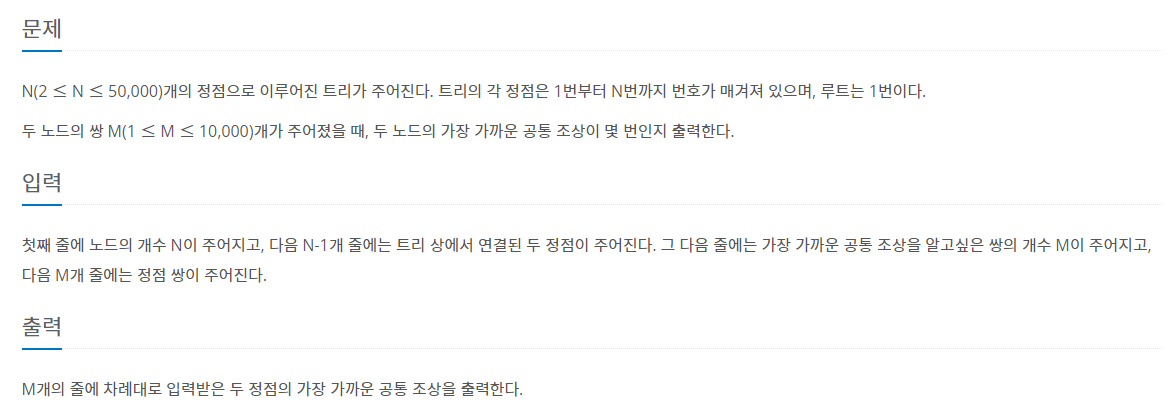
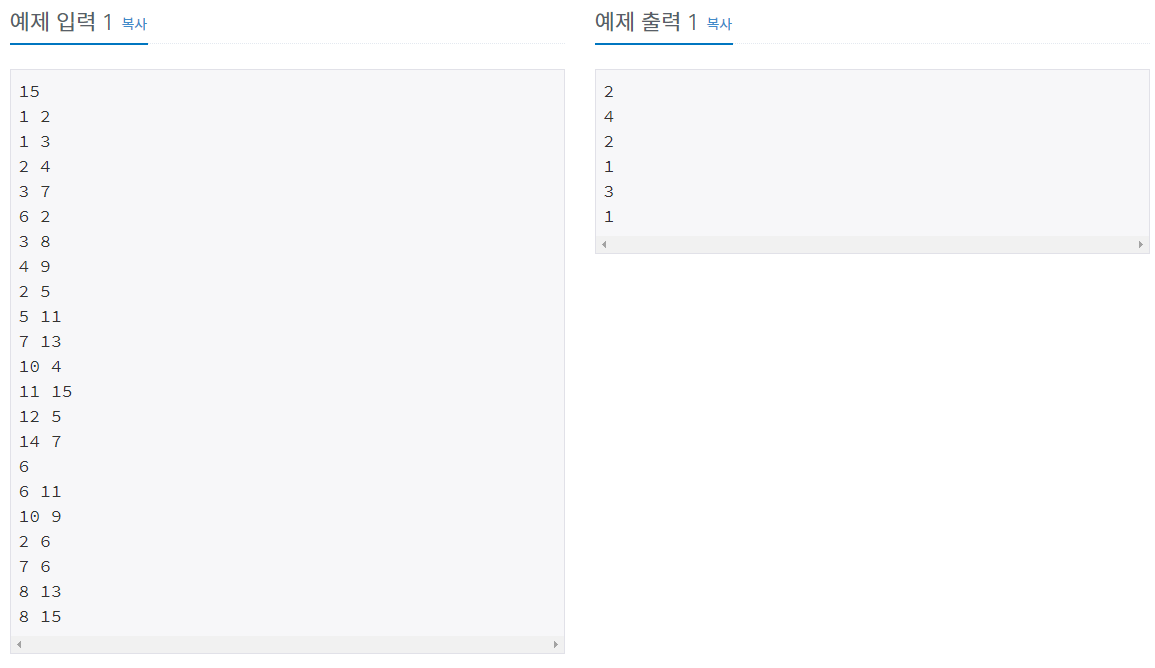
기존의 로직대로 2번 노드와 14번 노드의 LCA를 찾으면 LCA가 2번 노드가 된다. 정답은 12번 노드임에도 불구하고 말이다.
따라서 이를 해결하기 위해 노드 번호가 아닌 트리의 깊이로 최소 노드, 즉 LCA를 선정해야한다.
1) 노드 번호를 인덱스 삼아, 해당 노드가 몇번째 레벨에 속하는지 알 수 있는 배열을 하나 만들어야 한다.
2) 만들어진 경로를 탐색하는 과정에서 낮은 노드의 번호가 먼저 발견된다 보장할 수 없다.
#include <bits/stdc++.h>
using namespace std;

void dfs(int root, vector<int> &route, vector<vector<int>> &graph){
    // 루트 먼저 방문 체크
    route.push_back(root);

    // 탐색
    for(int i=0; i<graph[root].size(); i++){
        int nextNode = graph[root][i];
        dfs(nextNode, route, graph);
        route.push_back(root);  // 다시 루트로 돌아옴
    }
}

int main(){
    int n;
    cin >> n;

    // graph 자료구조
    vector<vector<int>> graph(n+1);

    // 트리 레벨 info를 위한 자료구조
    vector<int> depthInfo(n+1, 0);  // 처음은 모두 0번 레벨로 초기화
    // 루트는 1번
    depthInfo[1] = 1;   // 루트는 1번 레벨

    /*
    반례 케이스
    3
    2 3
    1 2
    1
    2 3
    => 1번노드 연결정보가 먼저 입력되지 않는 경우도 있다. 이 경우를 처리해야한다.
    */
    vector<pair<int, int>> edges;
    for(int i=1; i<=n-1; i++){
        int nodeA, nodeB;
        cin >> nodeA >> nodeB;
        edges.push_back({nodeA, nodeB});
    }

    bool checkFlag = false;
    while(!checkFlag){
        for(int i=0; i<n-1; i++){
            int nodeA = edges[i].first;
            int nodeB = edges[i].second;

            if(depthInfo[nodeA] == 0 && depthInfo[nodeB] == 0){
                checkFlag = true;
                continue;   // 아직 알 수 없는 정보는 skip.
            }
            if(depthInfo[nodeA] != 0 && depthInfo[nodeB] != 0)
                continue;

            if(depthInfo[nodeA] > depthInfo[nodeB]){     // 이미 트리에 달려진 노드 아래에 새로운 노드가 붙는다.
                depthInfo[nodeB] = depthInfo[nodeA]+1;
                graph[nodeA].push_back(nodeB);
            }
            else {
                depthInfo[nodeA] = depthInfo[nodeB]+1;
                graph[nodeB].push_back(nodeA);
            }
        }
        if(checkFlag){
            checkFlag = false;
            continue;
        }
        else
            break;  // 완성
    }


    vector<int> route;
    dfs(1, route, graph);
    // 순회 체크
    //for(int i=0; i<route.size(); i++){
    //    cout << route[i] << " ";
    //}
    //cout << '\n';


    int numOfQuery;
    cin >> numOfQuery;
    vector<int> answers;

    for(int i=0; i<numOfQuery; i++){
        int a, b;
        cin >> a >> b;

        for(int j=0; j<route.size(); j++){  // 루트 탐색
            bool flag = false;
            if(route[j] == a){
                flag = true;
                // 구간 잡기
                int minNode = a;
                int minDepth = depthInfo[a];
                for(int k=j; k<route.size(); k++){
                    int tempNode = route[k];
                    if(minDepth > depthInfo[tempNode]){
                        minNode = tempNode;
                        minDepth = depthInfo[tempNode];
                    }

                    if(tempNode == b)
                        break;
                }
                answers.push_back(minNode);
            }
            else if(route[j] == b){
                flag = true;
                // 구간 잡기
                int minNode = b;
                int minDepth = depthInfo[b];
                for(int k=j; k<route.size(); k++){
                    int tempNode = route[k];
                    if(minDepth > depthInfo[tempNode]){
                        minNode = tempNode;
                        minDepth = depthInfo[tempNode];
                    }

                    if(tempNode == a)
                        break;
                }
                answers.push_back(minNode);
            }
            if(flag)
                break;
        }
    }

    // 전체 정답
    for(int i=0; i<answers.size(); i++){
        cout << answers[i] << '\n';
    }
}
번외) 부모의 레벨을 이용한 방법
1) 두 노드의 레벨이 다르다면, 아래 쪽에 위치한 노드를 더 상위 레벨로 한칸 올린다. => 반복
2) 레벨이 같아진다면 일단 같은 노드인지 확인한다. 만약 다르다면 각각 한 레벨씩 더 올리고 다시 비교 확인한다. => 반복
        int a, b;	// <= 두 노드의 LCA를 찾자!
        cin >> a >> b;

        // (1) 먼저 같은 레벨로 맞춘다.
        while(depthInfo[a] != depthInfo[b]){
            if(depthInfo[a] < depthInfo[b])
                b = parent[b];
            else
                a = parent[a];
        }
        // (2) 레벨이 같아졌으면 서로 한칸씩 위로 이동하며 공통 부모를 찾는다.
        while(true){
            if(a == b){ // 같은 부모!
                answers.push_back(a);
                break;
            }
            else{
                // 한칸 씩 올리기
                a = parent[a];
                b = parent[b];
            }
        }