2026/02/10 ~ 2026/02/24
2026/02/10
10828
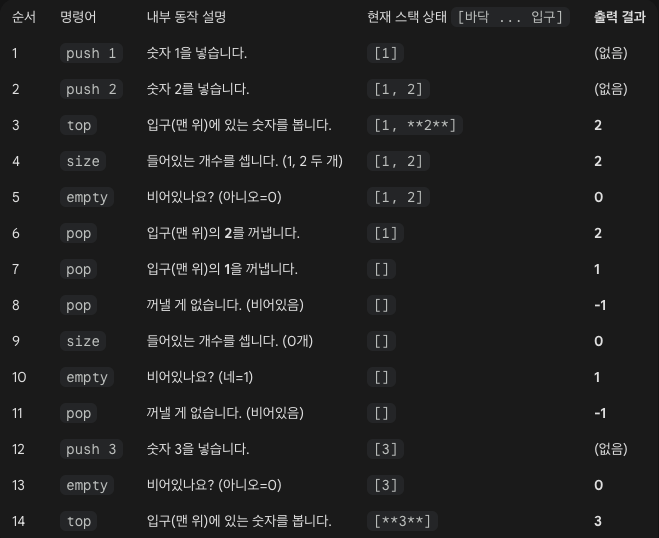
import sys
input = sys.stdin.readline

n = int(input())

stack = []

for _ in range(n):
    # 명령어를 공백 기준으로 나눔 ("push 1" -> ["push", "1"])
    command = input().split()

    if command[0] == 'push':
        stack.append(command[1])

    elif command[0] == 'pop':
        if len(stack) == 0:
            print(-1)
        else:
            print(stack.pop())

    elif command[0] == 'size':
        print(len(stack))

    elif command[0] == 'empty':
        if len(stack) == 0:
            print(1)
        else:
            print(0)

    elif command[0] == 'top':
        if len(stack) == 0:
            print(-1)
        else:
            print(stack[-1])
2026/02/11
9012
-
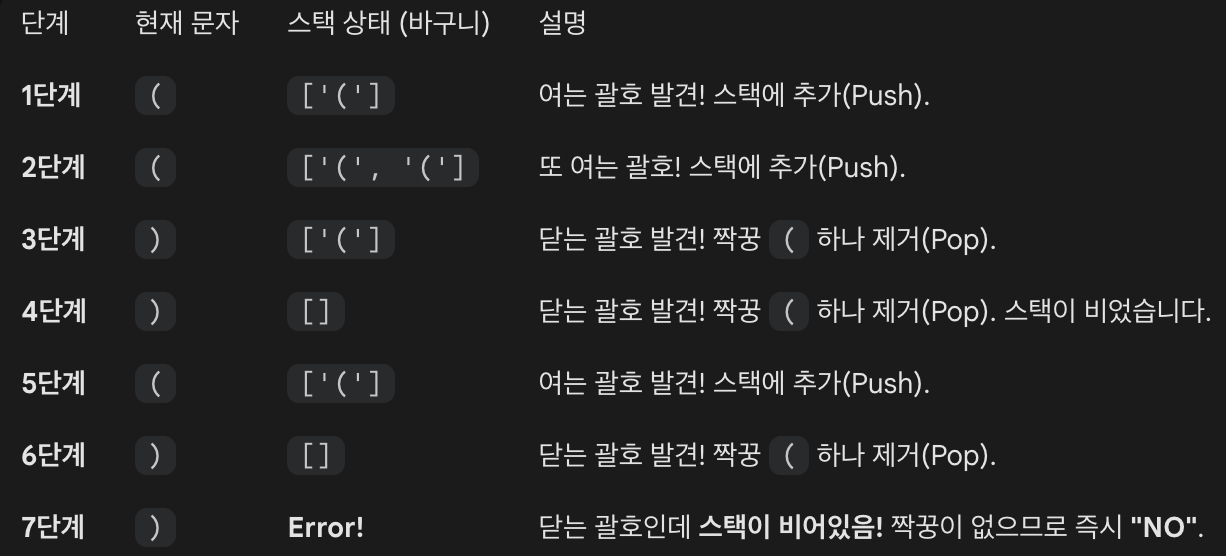
최종 개수: 열린 괄호 (와 닫힌 괄호 )의 총 개수가 같아야 한다.
-
순서(중요): 문자열을 왼쪽부터 읽어나갈 때, 어떤 지점에서도 닫힌 괄호가 열린 괄호보다 많아져서는 안 된다.
-
stack
- "나중에 들어온 것이 먼저 나가는" 구조
- 괄호 문제에서는 (를 넣고(Push), )를 만나면 대응하는 (를 빼는(Pop) 작업을 반복
import sys

def check_vps(s):
    stack = []
    for char in s:
        if char == '(':
            stack.append(char)
        elif char == ')':
            if not stack:  # 꺼낼 '('가 없다면 실패
                return "NO"
            stack.pop()

    # 모든 검사가 끝났는데 스택에 '('가 남아있으면 실패
    return "YES" if not stack else "NO"

# 입력
n = int(sys.stdin.readline())
for _ in range(n):
    print(check_vps(sys.stdin.readline().strip()))
count
import sys

def check_vps_simple(s):
    count = 0
    for char in s:
        if char == '(':
            count += 1
        else:
            count -= 1

        if count < 0:  # 0보다 작아졌다는 건 '('보다 ')'가 먼저 나왔다는 뜻
            return "NO"

    return "YES" if count == 0 else "NO"

# 실행 로직은 동일
2026/02/12
10773
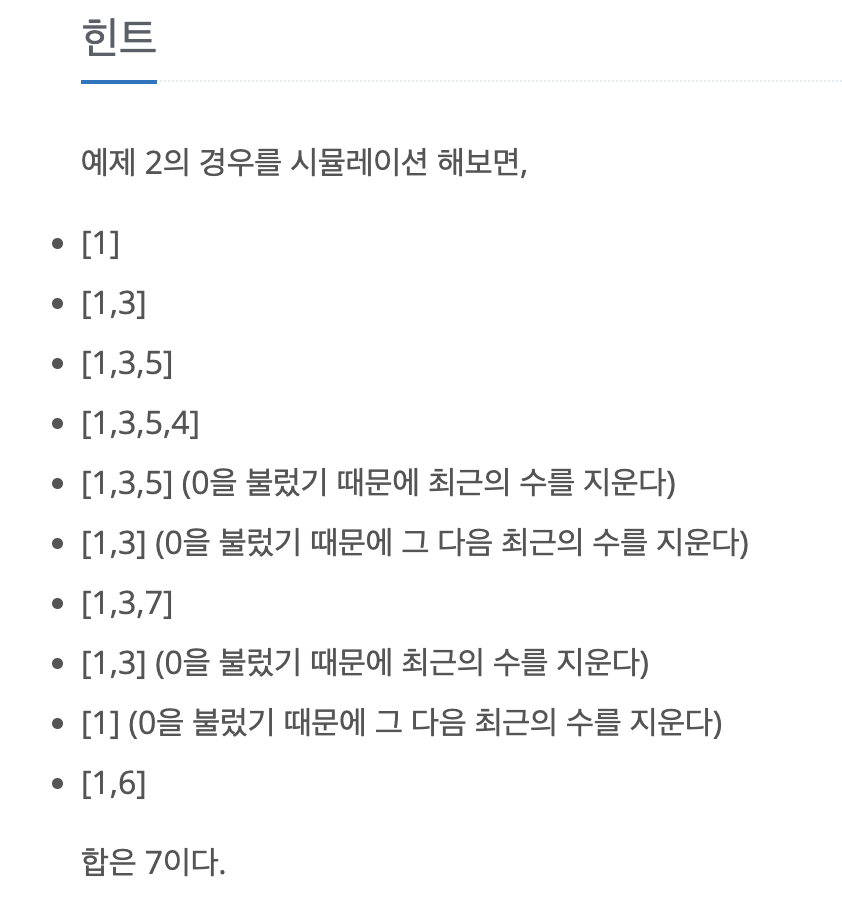
import sys
input = sys.stdin.readline


def stack_number(A):
    if A != 0:
        li.append(A)
    else:
        li.pop()

li=[]
N = int(input())

for _ in range(N):
    A = int(input())
    stack_number(A)

print(sum(li))
2026/02/13
10845
import sys
from collections import deque

input = sys.stdin.readline
N = int(input())
que = deque()

for _ in range(N):
    command = input().split()

    if command[0] == 'push':
        que.append(command[1])

    elif command[0] == 'pop':
        print(que.popleft() if que else -1)

    elif command[0] == 'size':
        print(len(que))

    elif command[0] == 'empty':
        print(1 if not que else 0)

    elif command[0] == 'front':
        print(que[0] if que else -1)

    elif command[0] == 'back':
        print(que[-1] if que else -1)
2026/02/14
2164
deque를 활용
from collections import deque

N = int(input())
que = deque(range(1, N + 1))

# 카드가 한 장 남을 때까지 반복
while len(que) > 1:
    que.popleft()       # 맨 위 카드를 버림
    if que:             # 카드가 남아있다면
        top = que.popleft() # 그다음 카드를 꺼내서
        que.append(top)     # 맨 뒤에 추가 (que.rotate(-1)도 가능)

print(que[0])
2026/02/15
11866
- collections.deque의 pop() 함수는 인덱스를 인자로 받지 않음
- deque.pop(3) = 빨간줄 그어짐
- list의 pop(i)는 가능하지만 deque는 중간 인덱스를 빼는 기능은 없음
from collections import deque

def solve_que():
    N, K = map(int, input().split())
    # 1부터 N까지의 숫자를 큐에 담습니다.
    que = deque(range(1, N + 1))
    result = []

    while que:
        # K-1번 동안 맨 앞의 원소를 뒤로 보냅니다.
        for _ in range(K - 1):
            que.append(que.popleft())

        # K번째 원소는 완전히 제거하고 결과 리스트에 추가합니다.
        result.append(que.popleft())

    # 출력 형식 맞추기: <3, 6, 2, 7, 5, 1, 4>
    print(f"<{', '.join(map(str, result))}>")

solve_que()
2026/02/16
1427
N = int(input())

S = int("".join(sorted(str(N),reverse=True)))

print(S)
2026/02/17
10816
시간초과
import sys
input = sys.stdin.readline

N = int(input())
A = list(map(int,input().split()))

M = int(input())
B = list(map(int,input().split()))

li=[]

for i in range(M):
    if B[i] in A:
        C=A.count(B[i])
        li.append(C)
    else:
        li.append(0)

print(*li)
Counter 메소드 사용
import sys
from collections import Counter
input = sys.stdin.readline

N = int(input())
A = list(map(int,input().split()))

M = int(input())
B = list(map(int,input().split()))

count_A=Counter(A)
li = []

for i in B:
    li.append(count_A[i])

print(*li)
2026/02/18
1764
- 시간초과
- listen_people의 크기를 N, see_people의 크기를 M
- for i in listen_people: 루프는 N번 반복
- 루프 내부의 if i in see_people
- 리스트에서 특정 원소를 찾는 동작으로
- 리스트의 처음부터 끝까지 훑어야 하므로 평균 O(M)의 시간
- 결과적으로 전체 시간 복잡도는 O(N X M)
- listen_people의 크기를 N, see_people의 크기를 M
import sys
input = sys.stdin.readline

N, M = map(int,input().split())
listen_people = []
see_people = []

listen_see_people = []

for _ in range(N):
    L = str(input())
    listen_people.append(L)

for _ in range(M):
    S = str(input())
    see_people.append(S)

for i in listen_people:
    if i in see_people:
        listen_see_people.append(i)

listen_see_people.sort()
print(len(listen_see_people))
for w in listen_see_people:
    print(w)
set 활용
- set은 내부적으로 해시 테이블을 사용하여 특정 원소가 있는지 확인하는 데 O(1)의 시간만 소요
- sys.stdin.read()
- 입력값 전체를 하나의 거대한 문자열로 통째로 읽어옴
import sys

input = sys.stdin.read
data = input().split()

N = int(data[0])
M = int(data[1])

listen_people = set(data[2:2+N])
see_people = set(data[2+N:])

# 교집합 연산 (&) 사용
result = sorted(list(listen_people & see_people))

print(len(result))
for name in result:
    print(name)
2026/02/19
10870
- N = 0 대처 불가
N = int(input())
A = [0,1,]

for i in range(N-1):
    B = A[i] + A[i+1]
    A.append(B)

print(A[-1])
N = int(input())
A = [0,1,]
if N == 0:
print(0)
else:
for i in range(N-1):
B = A[i] + A[i+1]
A.append(B)
print(A[-1])2026/02/20
7568
N = int(input())
li = []

for i in range(N):
    A,B = map(int,input().split())
    li.append((A,B))

ans = []

for i in range(N):
    rank = 1
    for j in range(N):
        # 1. 나(i)와 상대방(j)을 비교
        # 2. 상대방의 몸무게와 키가 모두 나보다 큰지 확인
        if li[i][0] < li[j][0] and li[i][1] < li[j][1]:
            rank += 1  # 나보다 덩치 큰 사람을 만날 때마다 등수 +1

    ans.append(rank)

print(*(ans))
2026/02/21
1018
체스판 다시 그리기(부루트포스)
- (현재행 + 현재열) % 2 == 0인 칸들은 모두 같은 색
import sys
input = sys.stdin.readline

N , M = map(int,input().split())
chess_board = []

for _ in range(N):
    C = str(input().strip()) # 줄바꿈 제거
    if len(C) == M:
        chess_board.append(C)

min_paint = 64

for i in range(N - 7):
    for j in range(M - 7):
        draw_w = 0 # 'W'로 시작하는 패턴일 때 틀린 개수
        draw_b = 0 # 'B'로 시작하는 패턴일 때 틀린 개수

        for a in range(i, i + 8):
            for b in range(j, j + 8):
                if (a + b) % 2 == 0:
                    if chess_board[a][b] != 'W':
                        draw_w += 1
                    if chess_board[a][b] != 'B':
                        draw_b += 1
                else:
                    if chess_board[a][b] != 'B':
                        draw_w += 1
                    if chess_board[a][b] != 'W':
                        draw_b += 1
        min_paint = min(min_paint, draw_w, draw_b)

print(min_paint)
2026/02/22
1676
- N!에서 0의 개수를 구하기
단순 계산
import math

def solution_fac(n):
    fac = math.factorial(n)	# n=10

    # 문자열 뒤집기
    str_fac = str(fac)[::-1] # 3628800

    # 뒤에서부터 0의 개수 세기
    count = 0
    for char in str_fac:
        if char == '0':
            count += 1
        else:
            break
    return count

try:
    line = sys.stdin.read().strip()
    if line:
        n = int(line)
        print(solution_fac(n))
except EOFError:
    pass
수학적 접근
def solution_math(n):	# n = 10	|	# n = 25
    count = 0

    while n >= 5:
        count += n // 5		# 10 // 5 = 2	|	25 // 5 = 5
        n //= 5				# 2 // 5 = 0	|	5 // 5 = 1
    return count

# 테스트
print(solution_math(10))  # 출력: 2 | 	# 출력: 6
2026/02/23
1259
while True:
    N = int(input())
    if N == 0:
        break
    if str(N) == str(N)[::-1]:
        print("yes")
    else:
        print("no")
2026/02/24
18110
런타임 에러
- 원인1. N=0일경우를 생각 안함
- 원인2. math.ceil는 무조건 올림을 진행하는데 문제는 반올림이었음
import math
import sys
input = sys.stdin.readline

N = int(input())
li = []
A = math.ceil(N*0.3)//2


for _ in range(N):
    M = int(input())
    li.append(M)

li.sort()
B = sum((li[A:N-A]))
C = N-(A*2)

print(math.ceil(B/C))
반올림 수정
- math.ceil은 1.1을 2로 만듬
- 파이썬 내장 round()는 round(2.5)를 2로 만들기 때문에, int(x + 0.5) 공식을 사용
- 즉, int()는 반올림 기능을 지원하지 않지만 0.5를 더함으로써 반올림 효과를 낸 것
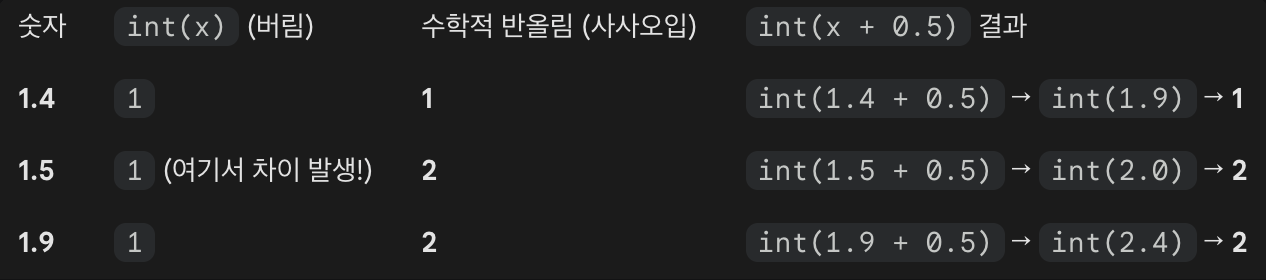
- 즉, int()는 반올림 기능을 지원하지 않지만 0.5를 더함으로써 반올림 효과를 낸 것
import sys
input = sys.stdin.readline

def my_round(num):
    return int(num + 0.5)


N = int(input())

if N == 0:
    print(0)
else:
    li = []
    for _ in range(N):
        li.append(int(input()))

    li.sort()

    A = my_round(N * 0.15)

    if A > 0:
        target_li = li[A : N-A]
    else:
        target_li = li

    if not target_li:
        print(0)
    else:
        B = sum(target_li)
        C = len(target_li)
        print(my_round(B / C))
안녕하세요.