ITPM - 11. Project Risk Management
Importance of Project Risk Management
- General Definition of a project risk : an uncertainty that can have a negative or positive effect on meeting project objectives
- Managing negative risks involves a number of possible actions that project managers can take to avoid, lessen, change, or accept the potential effects of risks on their projects.
- Positive Risk : investing in opportunities
- 프로젝트 선택 및 범위 결정, 현실적인 스케줄 및 비용 추정 설계에 긍정적인 영향을 미친다.
Risk and Personal Utility
- Risk-averse(risk hater)
- Risk-seeking(risk prefer)
- Risk-neutral(don't care)
- Risk Utility : amount of satisfaction or pleasure received from a potential payoff(reward)
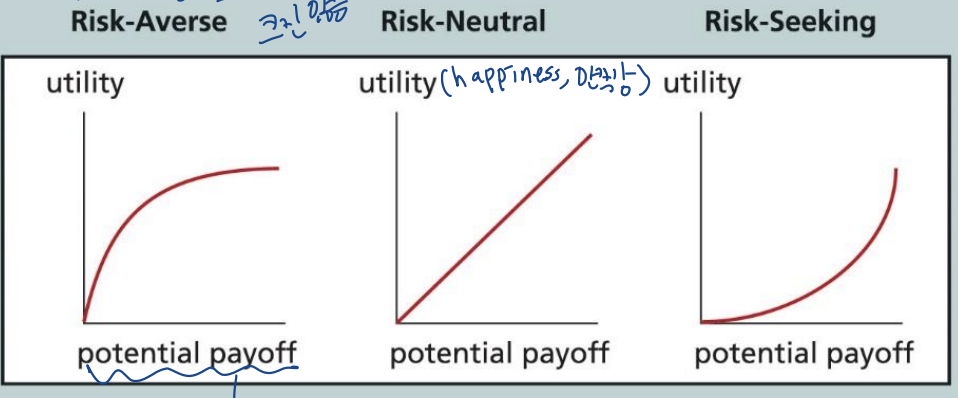
- (Realized) Crisis Management VS (Potential) Risk Management
- Resolving a crisis has much greater visibility, often accompanied by rewards from the top management (가시성이 크고, 보상 및 칭찬 받기 쉬움)- 반대로, risk management는 effective하다. 문제 발생이 줄어들고, 발생하더라도 심각도가 줄어든다. (효과적인 경우 오히려 티가 안 남)
Best Pratice: 좋은 리스트 과리는 위험을 줄이는 데 그치지 않고, 기회를 인식하고 전략적으로 활용하는 것까지 포함되어야 하며, 조직 내 모든 계층의 참여와 지원이 필수적이다.
Process Group
- Plan Risk Management
- Identify Risks
- Perform Qualitative Risk Analysis -> prioritizing
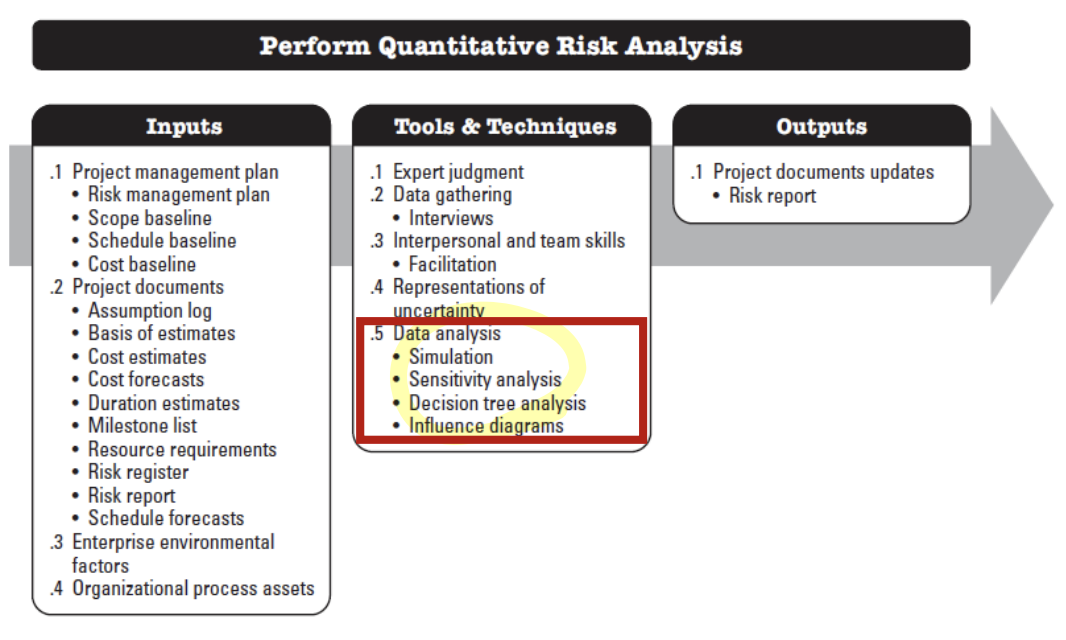
- Perform Quantitative Risk Analysis -> numerically estimating the effect
- Plan Risk Response -> preparing action plan
- Implement Risk Responses
- Monitor Risks
1. Plan Risk Management
Outputs
- Risk Management Plan
Additional Plans
- Contingency Plans : Plan B -> Identified risk event occur 시에 수행 계획
- Fallback Plans : Plan C -> if attempts to reduce the risk are not effective 일 경우 수행 계획
- Contingency Reserves or Allowances (비상 예산 및 허용치) : cost baseline에 포함된 식별된 리스크에 대한 비상 예산
- Management Reserves :식별되지 않은, Unknown risks에 대한 예산
Common Sources of Risk on IT Projects
- Market Risk : Will it be useful to the organization or marketable to others?
- Financial Risk : 비용을 감담할 수 있는가?(afford to undertake the project)
- Technology Risk : Technically feasible
- People Risk : 역량을 가진 인력이 있는가
- Structure / Process Risk : 프로세스를 갖추고 있는가, 조직과 업무에 얼마나 큰 변화를 주는가
2. Identifying Risks
Output
- Risk Register
- Risk Report
Tool
- Braingstorming
- The Delphi Technique
- Interviewing
- SWOT Analysis
Risk Register Component
- Number of ID
- Rank
- Name
- Description
- Category
- Root Cause
- Triggers
- Potential Response
- Risk Owner
- Probability
- Impact
- Status
Risk Report
- Summary information on risk register
3. Performing Qualitative Risk Analysis
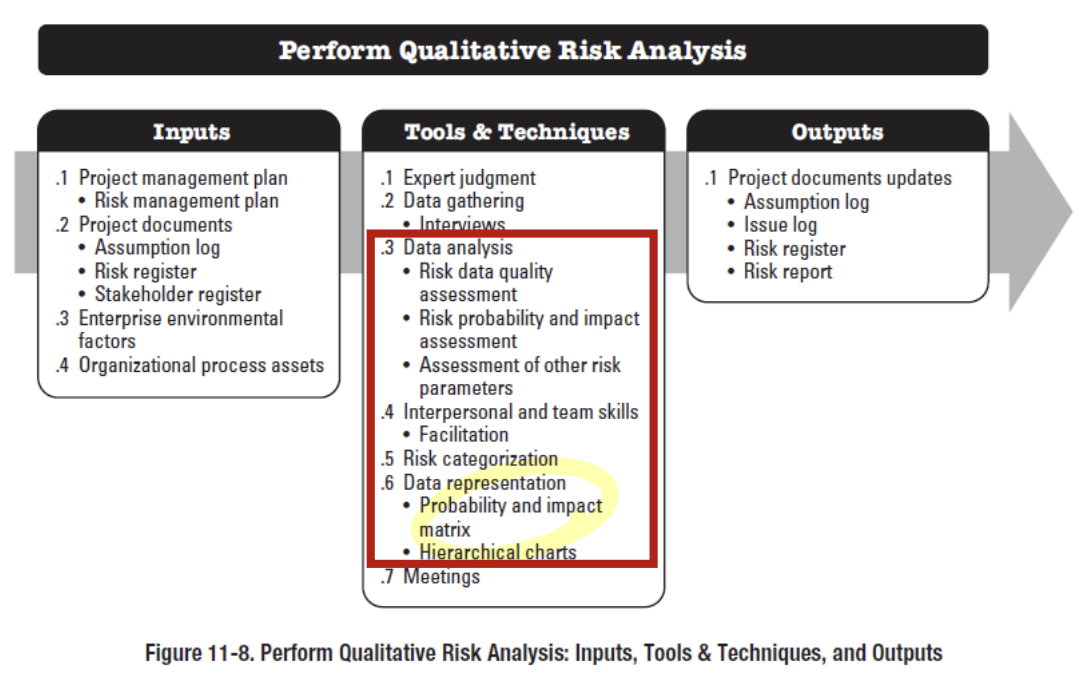
Tools
- Probability and Impact matrix
- The Top Ten Risk Item Tracking
- Expert Judgment
Probabilit and Impact matrix
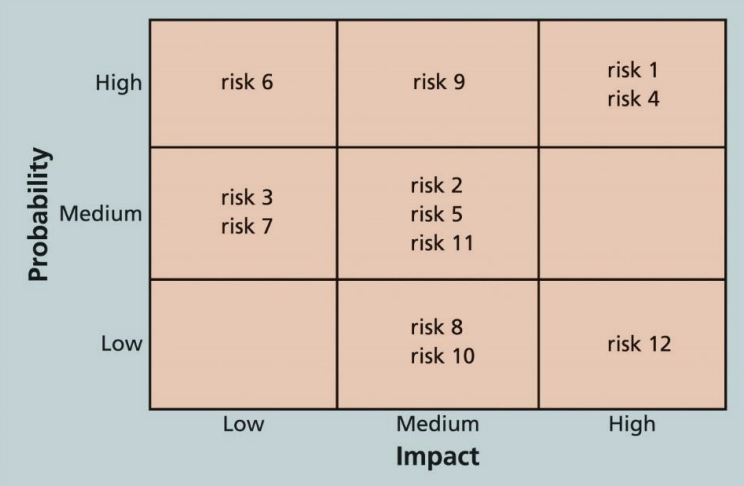
Top Ten Risk Item Tracking
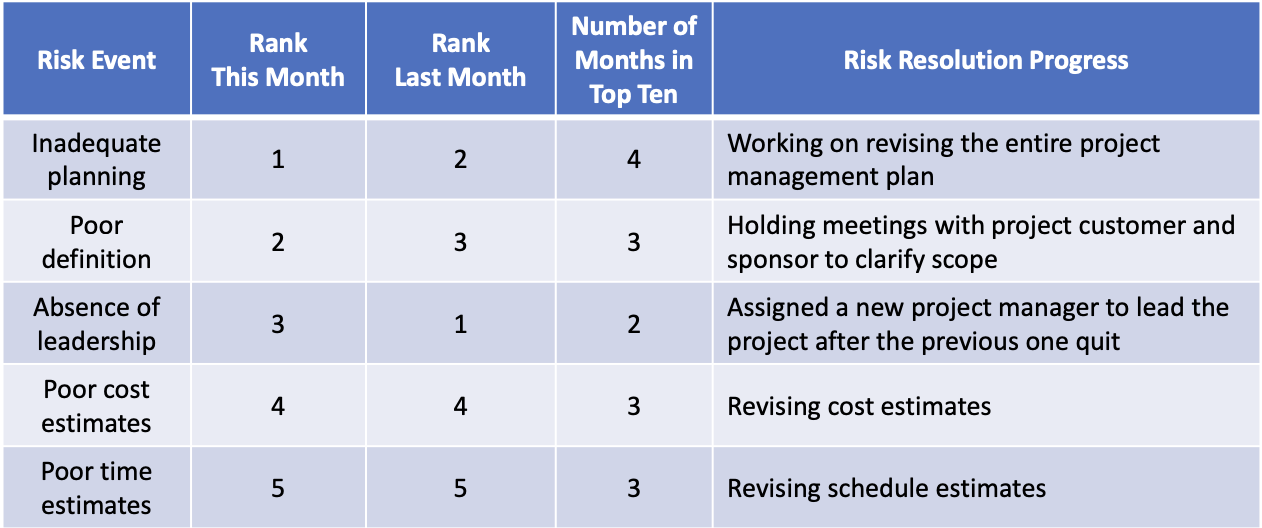
- Periodic Review : 상위 10개 위험 주기적으로 검토
- Component
- Name- Rank in This month
- Rank in Last month
- Number of Months in Top Ten
- Risk Resolution Progress (위험 항목 해결을 위한 진행 요약)
- Watch list : a list of risks that are low priority, but are still identified as potential risks
4. Performing Quantitative Risk Analysis
5. Planning Risk Responses
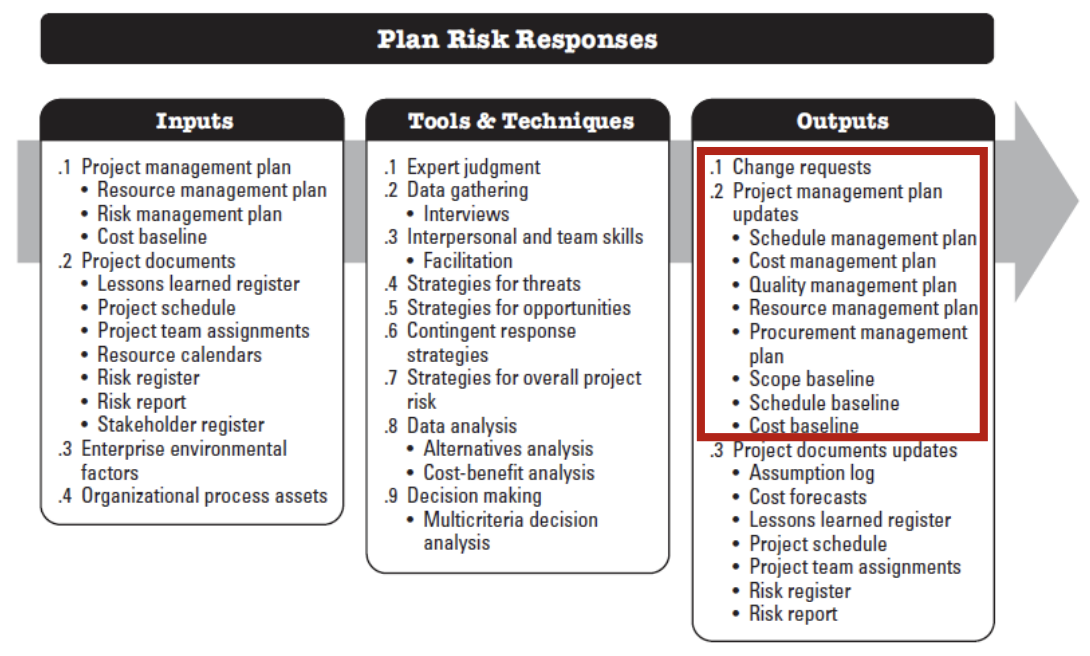
Output
- Change Requests
- Project Management Plan Updates
- Schedule Management Plan- Cost Management Plan
- Quality Management Plan
- Resource Management Plan
- Procurement Management Plan
- Scope baseline
- Schedule baseline
- Cost baseline
Basic Reponse strategies for negative risks
- Risk Avoidance
- Risk mitigation
- risk acceptance
- risk transference
- risk escalation
Basic Reponse strategies for positive risks
- risk exploitation
- risk enhancement
- risk acceptance
- risk sharing
- risk escalation
Identify residual and secondary risks
-
Residual Risk (잔여 위험) : 대응 전략을 모두 실행한 이후에도 남아 있는 리스크, 위험을 줄이기 위해 백업 시스템을 마련했지만 여전히 장애 발생 가능성이 존재
-
Secondary Risks (2차 위험) : 위험 대응 조치의 직접적인 결과로 새롭게 생겨나는 위험, 백업용 서버를 추가했는데 이 서버의 보안 위험이 발생
6. Implement Risk Responses
Output - Change Requests, Project Documents updates
7. Monitoring Risks
- 위험 대응 조치가 제대로 수행되고 있는지 확인
- 계획된 risk response가 실제로 실행되었는지 체크
- 식별된 위험 추적
- 등록된 위험이 발생했는지, 상태가 어떻게 바뀌었는지 지속적으로 관리
- 새로운 위험 식별 및 분석
- 프로젝트가 진행되며 새로운 위험이 나타날 수 있음 → 이를 식별하고 분석해야 함
- 위험 관리 활동의 전체적인 효과성 평가
- 지금까지 위험을 얼마나 잘 관리해왔는지 점검
💡 요점: "위험 관리는 초기 분석에서 끝나는 것이 아니다!"

성장 가능성 만땅 개발블로그