The Rise of Artificial Intelligence in Everyday Life
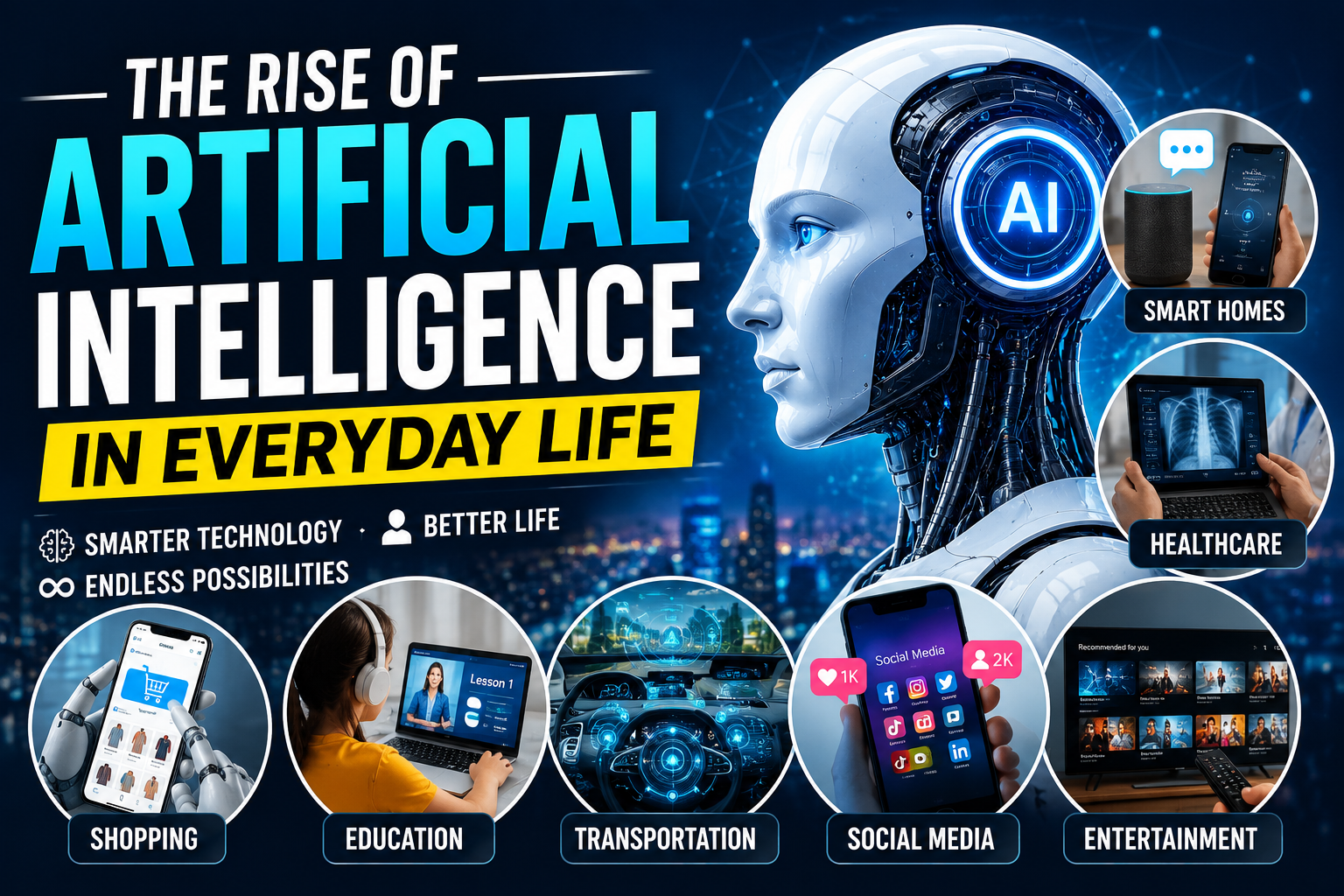
Artificial Intelligence (AI) is no longer a futuristic concept that only exists in science fiction movies. Today, AI has become a major part of everyday life, changing the way people work, communicate, shop, travel, and even entertain themselves. From smartphones to smart homes, AI-powered technologies are helping people complete tasks faster, smarter, and more efficiently than ever before.
Over the past few years, AI technology has developed rapidly. Companies around the world are investing billions of dollars into machine learning, automation, robotics, and data-driven systems. As a result, AI is now influencing almost every industry and becoming deeply integrated into daily routines.
AI in Smartphones and Personal Devices
One of the most common examples of AI in everyday life is the smartphone. Modern smartphones use AI for facial recognition, voice assistants, predictive text, and camera enhancements. Virtual assistants like Siri, Google Assistant, and Alexa help users perform tasks using voice commands.
AI also improves photography by automatically adjusting lighting, focus, and image quality. Features such as spam detection, smart replies, and personalized recommendations are all powered by artificial intelligence.
AI in Healthcare
The healthcare industry has greatly benefited from AI technology. Hospitals and clinics now use AI systems to detect diseases, analyze medical reports, and assist doctors in diagnosis. AI can identify patterns in medical data much faster than humans in some cases.
Wearable devices like smartwatches also use AI to monitor heart rate, sleep quality, and physical activity. These technologies help people maintain healthier lifestyles and provide early warnings about potential health issues.
AI in Education
Artificial Intelligence is also transforming education. Online learning platforms now use AI to create personalized learning experiences for students. AI systems can analyze student performance and recommend lessons based on individual strengths and weaknesses.
Chatbots and virtual tutors are helping students learn more effectively. Teachers are also using AI tools to automate grading and administrative work, allowing them to focus more on teaching.
AI in Business and Workplaces
Businesses are increasingly relying on AI to improve productivity and customer service. AI-powered chatbots can answer customer questions 24/7 without human support. Companies use AI for marketing analysis, sales forecasting, and automation of repetitive tasks.
Remote work has also improved through AI-driven collaboration tools. Video conferencing apps now offer live captions, background noise reduction, and smart scheduling features powered by artificial intelligence.
AI in Entertainment and Social Media
Streaming platforms like Netflix, YouTube, and Spotify use AI algorithms to recommend content based on user interests. Social media platforms also use AI to personalize feeds, detect harmful content, and improve user experiences.
Gaming companies are using AI to create smarter opponents and more realistic gaming environments. AI-generated content, including music, videos, and artwork, is also becoming increasingly popular.
AI in Transportation
Transportation is another sector being transformed by AI. Navigation apps use AI to analyze traffic conditions and suggest the fastest routes. Ride-sharing services use AI for pricing, driver matching, and route optimization.
Self-driving vehicle technology is also developing rapidly. Although fully autonomous cars are still evolving, AI is already assisting drivers through smart parking, collision detection, and lane assistance systems.
Challenges of Artificial Intelligence
Despite its many advantages, AI also raises concerns. Privacy issues, job displacement, and ethical questions remain important topics. Many people worry about how AI systems collect and use personal data.
There are also concerns about overdependence on technology. As AI becomes more powerful, experts continue discussing how to regulate and use it responsibly.
Conclusion
Artificial Intelligence is rapidly becoming an essential part of modern life. It is improving industries such as healthcare, education, business, entertainment, and transportation. AI technologies are making everyday activities more convenient, efficient, and personalized.
As AI continues to evolve, its impact on society will grow even stronger. While there are challenges to address, the benefits of artificial intelligence are undeniable. Understanding AI and adapting to these technologies will be important for individuals and businesses in the future.
FAQs
1. What is Artificial Intelligence?
Artificial Intelligence refers to computer systems that can perform tasks that normally require human intelligence, such as learning, problem-solving, and decision-making.
- How is AI used in daily life?
AI is used in smartphones, healthcare, online shopping, navigation apps, social media, streaming services, and smart home devices.
- Is Artificial Intelligence beneficial?
Yes, AI offers many benefits, including automation, improved efficiency, personalized services, and advanced problem-solving capabilities.
- Can AI replace human jobs?
AI may automate certain repetitive jobs, but it also creates new opportunities in technology, data science, and AI development.
- What are the risks of AI?
Some risks include privacy concerns, data misuse, job displacement, and ethical challenges related to automation and decision-making.