SJF (Shortest Job Fisrt)
- FCFS : 들어온 순서대로 작업을 처리
- SJF : 대기중인 작업들 중에 처리시간이 가장 짧은 작업을 먼저 처리
- FCFS에 비해 response time과 wait time이 줄어든다는 장점
- Non-preempitve : FCFS와 마찬가지로 voluntary yield 없이는 다른 작업들이 도중에 수행될 수 없다. starvation 야기
- Starvation
- 작업시간이 오래걸리는 프로그램은 후순위로 밀려 처리되는데까지 오래 걸린다.
- 오래 기다린 작업에게는 우선순위를 부여해주는 방식으로 해결가능.
SJF scheduling kucpu 구현
- jobTime을 고려해야 하기에 queue node에 jobTime을 추가해줌.
- FCFS와 대부분 비슷하나 queue에서 차이가 존재. 2가지 방식의 구현 가능
- 새로운 대기작업 enqueue시 오름차순이 유지되도록 waiting queue에 삽입
- enqueue는 요청 순서대로 하고, dequeue시 가장 짧은 처리 시간을 가지는 작업을 반환
- 장단점
- 삽입할 때마다 들어갈 자리를 찾아야 하므로 삽입 시 오래 걸림. 하지만 ku_pop 시에는 가장 앞의 작업을 반환하면 되기 때문에 빠름.
- enqueue 시에는 삽입만 하므로 시간이 짧게 걸림. 하지만 ku_pop 시마다 전체 queue를 검색해야 하므로 ku_pop시 오래걸림.
- 작업을 다 처리하고 다음 작업을 빠르게 반환 받는것이 중요하다 생각하기에, ku_pop이 빠른 첫 번째 구현방법으로 구현.
- FCFS는 ku_push를 통해 enqueue, SJF의 경우 ku_push_SJF를 통해 오름차순으로 삽입.
- enqueue하는 코드문장에서 scheduling에 따라 나머지 하나는 주석처리
- ku_push_SJF는 jobTime도 고려해야하기에 추가로 인자로 전달해줌.
/*2024 Fall COSE341 Operating System*/
/*Project 2*/
/*Kim JinHyeong*/
/* If FCFS, use ku_push(int) instead of ku_push_SJF(int, int) in main*/
/* If SJF, use ku_push_SJF(int, int) instead of ku_push(int) in main*/

#include <linux/syscalls.h>
#include <linux/kernel.h>
#include <linux/linkage.h>
#include <linux/sched.h>
#include <linux/slab.h>

# define IDLE -1

typedef struct _job_t {
	int	pid;
	int	jobTime;
} job_t;

int now = IDLE;

typedef struct _node{
	int	pid;	// waiting process pid
	int	jobTime;	// remaining jobTime
	struct _node *	next;	// next node
} NODE;			// queue elements

typedef struct  header {
	int	num;	// number of  waiting queue elements
	NODE* 	first;	// first element
	NODE* 	last;	// last element
} HEADER;

HEADER waiting_header = {0, NULL, NULL};


int ku_pop(void);	// dequeue
int check(int x);	// check whether x is in waiting_queue
void ku_push(int pid);
void ku_push_SJF(int pid, int jobTime);	// enqueue

SYSCALL_DEFINE2(os2024_ku_cpu, char*, name, int, jobTime) {
	// store pid of current process as pid_t type
	job_t newJob = {current->pid, jobTime};

	// register the process if virtual CPU is idle
	if (now == IDLE) now = newJob.pid;

	// If the process that sent the request is currently using virtual CPU
	if (now == newJob.pid) {
		// If the job has finished
		if (jobTime == 0) {
			printk("Process Finished: %s\n", name);
			// if queue is empty, virtual CPU becomes idle
			if (waiting_header.num == 0) now = IDLE;
			// if not, get next process from queue and load
			else now = ku_pop();
		}
		else printk("Working: %s\n", name);
		// request accepted
		return 0;
	}
	else {
		// if the request is not from currently handling process
		// if (check(newJob.pid)) ku_push(newJob.pid);	// enqueue pid b
y FCFS if process is not in waiting queue
		if (check(newJob.pid)) ku_push_SJF(newJob.pid, jobTime);
// enqueue pid by SJF if process is not in waiting queue
printk("Working Denied:%s \n", name);
	}
	//request rejected
	return 1;
}

int ku_pop() {			// dequeue from waiting queue and return dequeue
d pid valud
	NODE* temp = waiting_header.first;
	int res = temp->pid;
	waiting_header.first = waiting_header.first->next;
	waiting_header.num--;
	if (waiting_header.num == 0) waiting_header.last == NULL;
	kfree(temp);
	return res;
}

int check(int new_pid) {		// check whether or not the pid of newJo
b is in waiting queue. If it doesn't exist, return 1.
	NODE* temp;
	int i;

	if (waiting_header.num == 0) return 1;

	temp = waiting_header.first;
	for (i = waiting_header.num; i > 0; i--) {
		if (temp->pid == new_pid) return 0;
		temp = temp->next;
	}
	return 1;
}

void ku_push(int pid) {			// enequeue the pid of newJob into waiti
ng queue
	NODE* new_node = (NODE *)kmalloc(sizeof(NODE), GFP_KERNEL);
	new_node->pid = pid;
	new_node->next = NULL;

	if (waiting_header.num == 0) {
		waiting_header.first = new_node;
		waiting_header.last = new_node;
		waiting_header.num++;
		return;
	}

	waiting_header.last->next = new_node;
	waiting_header.last = new_node;
	waiting_header.num++;

	return;
}

void ku_push_SJF(int pid, int jobTime) {			// enequeue the
pid of newJob into waiting queue by ascending order
	NODE* pPre = NULL;	// former location of ploc
	NODE* pLoc;		// searching location
	NODE* new_node = (NODE *)kmalloc(sizeof(NODE), GFP_KERNEL);
	new_node->pid = pid;
	new_node->jobTime = jobTime;
	new_node->next = NULL;

	if (waiting_header.num == 0) {
		waiting_header.first = new_node;
		waiting_header.last = new_node;
		waiting_header.num++;
		return;
	}

	pLoc = waiting_header.first;
	while (pLoc) {
		if (pLoc->jobTime > new_node->jobTime)	break;
		pPre = pLoc;
		pLoc = pLoc->next;
	}

	new_node->next = pLoc;
	if (pLoc == NULL) waiting_header.last = new_node;	// last

	if (pPre == NULL) waiting_header.first = new_node;	// first
	else	pPre->next = new_node;

	waiting_header.num++;
	return;
}
run
run file
./kucpu_run 7 0 A &
./kucpu_run 5 1 B &
./kucpu_run 3 2 C &
console log
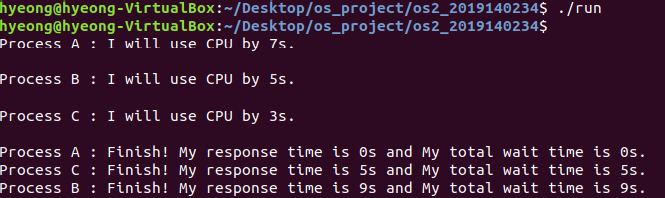
user process log
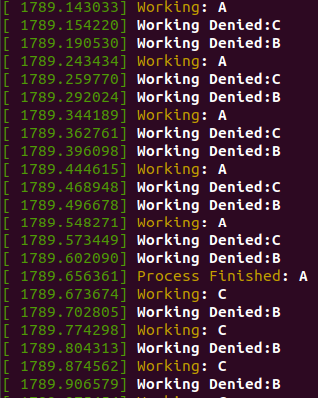
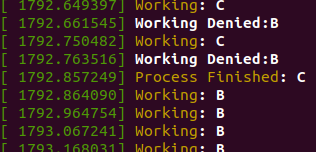
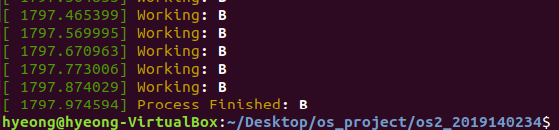
kernel process log

결론
- 원하는대로 가장 먼저 작업 요청한 A가 먼저 실행됨.
- B가 먼저 작업 요청을 했으나 작업시간이 더 짧았던 C가 먼저 실행됨.
- C가 끝나고 남은 B가 실행됨.
- average response time : (0 + 5 + 9) / 3 = 4.67
- FCFS보다 average response time이 짧음
구현 개선점
- check 함수의 개선
- queue가 오름차순으로 정렬되어 있기에 check 함수를 통해 해당 pid가 queue에 있는지를 확인함과 동시에 삽입되어야 할 위치를 알 수 있음.
- 그러므로 ku_push 없이 check 함수 내에서 push까지 이루어질 수 있고, queue의 순회를 2번에서 1번으로 줄이며 시간복잡도도 훨씬 줄일 수 있다.
- Header last
- enqueue의 위치가 맨 마지막이 아니므로 정렬된 queue에서의 삽입에는 last의 위치가 필요하지 않다.

반갑습니다