TN vs IPS vs VA: Choosing the Right TFT Panel Technology
When designing a product that relies on a TFT LCD—whether it is a consumer device, an industrial HMI, or an embedded control system—the choice of panel technology plays a major role in the final user experience. TN, IPS, and VA panels may all fall under the umbrella of TFT LCDs, but their behavior in terms of viewing angle, color performance, contrast, response speed, and cost is fundamentally different.
This article takes a practical, engineering-oriented look at TN, IPS, and VA panels, helping developers and product designers select the most appropriate option for their specific use case.
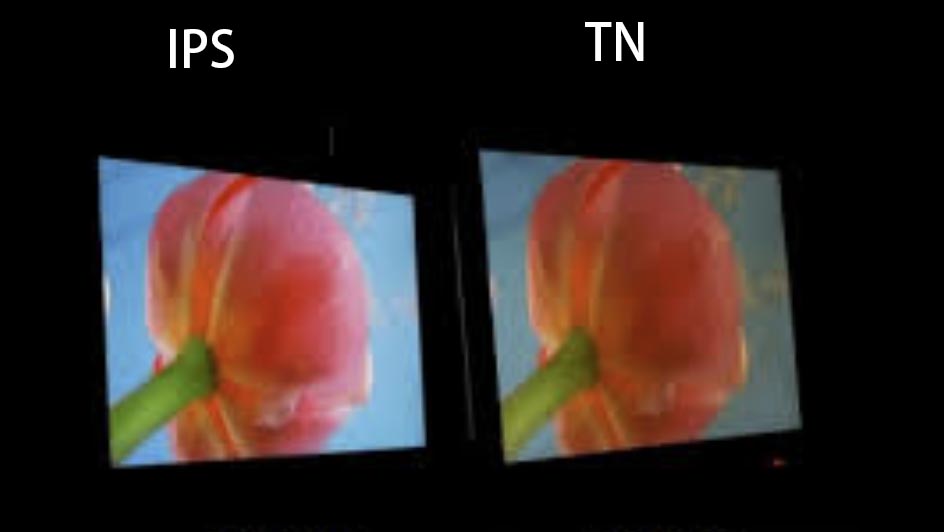
Understanding the Three Panel Types
Before comparing performance, it is useful to understand what differentiates these panel technologies at a structural level.
TN (Twisted Nematic) panels twist liquid crystal molecules when voltage is applied, allowing light to pass through quickly. This simple structure enables fast switching and low cost.
IPS (In-Plane Switching) panels rotate liquid crystals within the same plane as the glass substrate. This alignment greatly improves color consistency and viewing angles.
VA (Vertical Alignment) panels align liquid crystals vertically when no voltage is applied, blocking light more effectively. When voltage is applied, the crystals tilt, creating strong contrast and deep blacks.
These structural differences directly influence how each panel behaves in real-world applications.
Viewing Angle Performance
Viewing angle is critical for devices that may be seen from multiple positions, such as kiosks, control panels, or shared displays.
TN panels have the narrowest viewing angles. Vertical viewing is particularly limited, and color inversion or brightness loss is common when the screen is viewed from above or below. This limits TN panels to applications where the user position is fixed.
IPS panels offer the widest viewing angles, typically up to 178 degrees both horizontally and vertically. Color and brightness remain stable even when viewed off-axis, making IPS the preferred choice for collaborative environments and consumer electronics.
VA panels sit between TN and IPS. They provide better viewing angles than TN, but color and contrast may still degrade at extreme angles. For many industrial or automotive interfaces, this trade-off is acceptable.
Color Accuracy and Consistency
Color reproduction requirements vary widely depending on application.
TN panels generally offer limited color depth and rely on dithering techniques. This can result in visible banding or inaccurate gradients, making TN unsuitable for color-critical applications.
IPS panels excel in this area. They commonly support true 8-bit color and, in some cases, higher. Color accuracy and consistency make IPS panels ideal for medical displays, professional tools, and advanced HMIs.
VA panels provide better color performance than TN and can approach IPS quality in some implementations. However, color consistency may vary more noticeably with viewing angle.
Contrast Ratio and Black Levels
Contrast affects readability, especially in low-light environments.
TN panels typically have the lowest contrast ratios, leading to grayish blacks and less depth in darker content.
IPS panels improve on TN but still struggle to achieve deep blacks. In dark environments, black areas may appear slightly washed out, although newer IPS variants continue to improve.
VA panels are the clear winner in contrast. Their high contrast ratios produce deep blacks and strong separation between dark and bright areas, which is valuable for dashboards, control rooms, and automotive displays.
Response Time and Motion Performance
Response time matters in fast-moving interfaces or dynamic visual content.
TN panels are known for extremely fast response times and minimal motion blur. This makes them popular in gaming monitors and interfaces where rapid updates are required.
IPS panels have improved significantly over time. While still slower than TN, modern IPS panels offer response times that are sufficient for most embedded and industrial applications.
VA panels generally have the slowest response times. Some VA panels may exhibit ghosting in fast transitions, but this is rarely an issue in static or semi-static interfaces like control panels.
Cost and Market Availability
Budget constraints often influence panel selection.
TN panels are the most cost-effective option and are widely available. They are suitable for high-volume products where price is a primary concern.
IPS panels cost more than TN but have become increasingly affordable due to widespread adoption in smartphones, tablets, and monitors.
VA panels are typically priced between TN and IPS. They are commonly found in televisions, automotive displays, and mid-range embedded systems.
Power Consumption Considerations
While backlight design and panel size have a larger impact on power usage than panel type, some trends can still be observed.
- TN panels generally consume the least power.
- IPS panels may draw slightly more power due to their crystal alignment.
- VA panels often fall in between, and their high contrast can sometimes allow lower backlight brightness.
For battery-powered or thermally constrained devices, these differences may influence the final decision.
Typical Use Cases by Panel Type
| Application Type | Recommended Panel |
|---|---|
| Gaming or fast UI | TN or IPS |
| Smartphones and tablets | IPS |
| Smart home control panels | IPS or VA |
| Industrial HMI | IPS or VA |
| Budget embedded systems | TN |
| Medical equipment | IPS |
| Automotive dashboards | VA |
Embedded System Design Considerations
Selecting the panel technology is only part of the display design process in embedded systems. Engineers must also consider resolution, timing parameters, interface standards (such as RGB, LVDS, or MIPI-DSI), backlight control methods, and touch integration.
A well-chosen panel paired with correct electrical and software configuration can significantly improve system stability, visual quality, and product lifespan.
Final Thoughts
There is no universally “best” TFT panel technology—only the best choice for a given application. TN panels prioritize speed and cost, IPS panels focus on color accuracy and viewing angles, and VA panels deliver superior contrast.
By clearly defining your project’s priorities—whether they are visual fidelity, responsiveness, durability, or budget—you can select the panel technology that aligns best with your product goals and delivers a reliable, high-quality user experience.