Outdoor Readability and Optical Bonding: A Practical Guide for Embedded Displays
As embedded systems move beyond controlled indoor environments and into outdoor, semi-outdoor, and high-ambient-light applications, display readability becomes a critical design challenge. Whether it is an industrial HMI, an EV charging terminal, a smart kiosk, or an outdoor control panel, the display must remain clear, legible, and reliable under direct sunlight and changing environmental conditions.
This guide explains what outdoor readability really means, why traditional display assemblies struggle in bright environments, and how optical bonding has become one of the most effective solutions for improving visibility and durability in modern embedded displays.
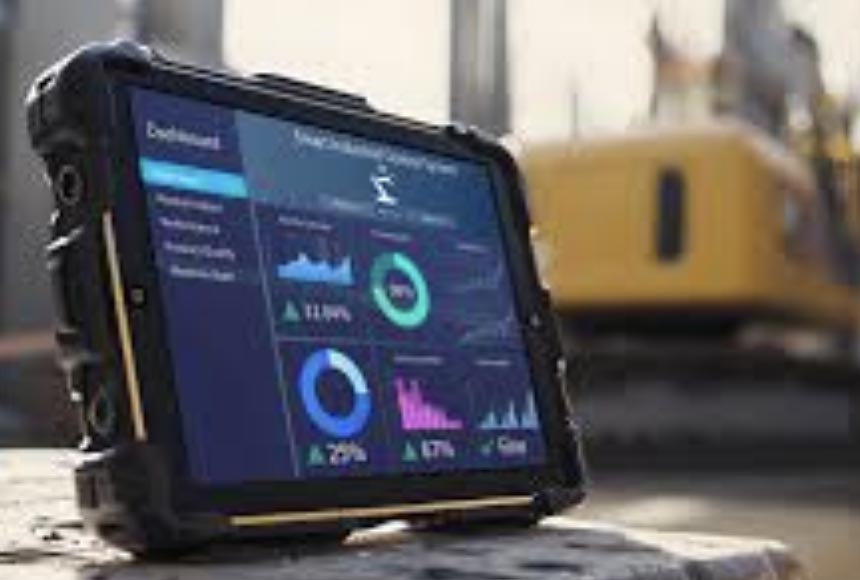
What Is Outdoor Readability?
Display outdoor readability is not defined by a single parameter. It is the combined result of multiple optical and mechanical factors that determine whether on-screen content can be clearly seen under strong ambient light.
Key contributors to outdoor readability include:
- Display brightness (nits)
- Contrast ratio under ambient light
- Surface reflection and glare
- Viewing angle stability
- Internal light loss within the display stack
Simply increasing brightness is often not enough. In many cases, reflection and internal scattering degrade readability more than insufficient luminance.
Why Standard Display Assemblies Fail Outdoors
Most conventional TFT display modules are assembled with an air gap between the display panel and the cover glass or touch sensor. While this structure is inexpensive and adequate for indoor use, it introduces several problems in outdoor environments.
Internal Reflections
Light entering the display stack is reflected multiple times at air-to-glass and glass-to-panel interfaces. These internal reflections reduce contrast and create a washed-out appearance, especially under sunlight.
Increased Glare
The air gap acts as a reflective cavity. Even with high brightness, reflected ambient light can overpower the displayed image, making text and icons difficult to read.
Condensation and Aging
Temperature changes can cause moisture condensation inside the air gap. Over time, this can lead to fogging, optical degradation, and reduced reliability.
What Is Optical Bonding?
Optical bonding is a process in which the cover glass or touch panel is permanently bonded to the display surface using a transparent adhesive, eliminating the air gap entirely.
Instead of air, the space between layers is filled with:
- Optical clear adhesive (OCA), or
- Liquid optical clear adhesive (LOCA)
The refractive index of these materials is carefully matched to glass and display surfaces, significantly reducing reflection and light loss.
How Optical Bonding Improves Outdoor Readability
Reduced Reflection
By removing the air gap, optical bonding minimizes internal reflections. Ambient light no longer bounces between layers, resulting in a clearer image with higher perceived contrast.
Improved Contrast Ratio
Even without increasing backlight brightness, bonded displays appear sharper and more vivid outdoors. Dark areas remain dark, and text edges are more distinct.
Enhanced Viewing Angles
Optical bonding stabilizes image quality when viewed from off-axis angles, which is essential for wall-mounted panels, kiosks, and shared interfaces.
Better Touch Performance
For touch-enabled displays, optical bonding improves touch accuracy and responsiveness by:
- Reducing parallax
- Improving signal consistency
- Enhancing user perception of direct interaction
Optical Bonding vs. Increasing Brightness
A common misconception is that outdoor readability can be solved simply by using higher brightness panels. In practice, this approach has limitations.
Brightness-Only Approach
- Higher power consumption
- Increased thermal load
- Reduced backlight lifetime
- Marginal improvement if reflection remains high
Optical Bonding Approach
- Significant readability improvement without extreme brightness
- Lower power requirements
- Better long-term stability
- Improved mechanical strength
In many designs, moderate brightness combined with optical bonding outperforms ultra-high brightness displays with air gaps.
Mechanical and Environmental Benefits
Beyond optical performance, optical bonding provides important mechanical advantages.
Increased Structural Strength
Bonded displays form a single solid assembly, making them more resistant to vibration and impact. This is especially valuable in:
- Industrial machinery
- Transportation systems
- Outdoor kiosks
Improved Environmental Resistance
Optical bonding reduces the risk of:
- Dust ingress
- Moisture penetration
- Internal condensation
This makes bonded displays better suited for high-humidity, outdoor, and temperature-cycling environments.
Optical Bonding and Surface Treatments
Optical bonding is often combined with additional surface treatments to further enhance outdoor performance.
Common combinations include:
- Anti-reflection (AR) coatings to reduce surface glare
- Anti-glare (AG) treatments to diffuse reflected light
- Anti-fingerprint (AF) coatings for cleaner appearance
When properly designed, these layers work together to maximize readability under real-world lighting conditions.
Typical Applications That Benefit from Optical Bonding
Optical bonding is widely adopted in applications where readability and reliability are critical:
- Outdoor HMIs and control panels
- EV charging stations
- Smart city kiosks
- Marine and transportation displays
- Agricultural and construction equipment
- Medical devices used near windows or bright lighting
In these scenarios, optical bonding is no longer considered a premium option—it is often a baseline requirement.
Design Considerations and Trade-Offs
While optical bonding offers significant benefits, it also introduces design considerations.
Cost and Manufacturing
- Higher upfront manufacturing cost
- More stringent quality control requirements
- Rework and repair are more complex
Thermal Management
Bonded assemblies can trap heat more effectively, requiring proper thermal design to maintain long-term stability.
Despite these factors, the total cost of ownership is often lower due to improved reliability and reduced field failures.
Future Trends in Outdoor Display Design
As embedded systems continue to evolve, optical bonding is becoming standard rather than optional. Future developments include:
- Bonding combined with mini-LED backlights
- Advanced adhesives with higher UV resistance
- Automated bonding processes for higher consistency
- Integration with edge AI and vision-based interfaces
Outdoor readability will increasingly be addressed as a system-level design challenge rather than a single component choice.
Conclusion
Outdoor readability is one of the most demanding challenges in embedded display design. Optical bonding addresses this challenge at its root by eliminating internal reflections, improving contrast, and enhancing mechanical reliability.
For engineers and product designers, the key takeaway is clear: achieving reliable outdoor visibility is not just about brightness. By combining appropriate luminance levels, optical bonding, and surface treatments, modern embedded displays can deliver clear, durable, and energy-efficient performance in even the harshest lighting conditions.
In outdoor and high-ambient-light applications, optical bonding is no longer an enhancement—it is a necessity.