https://www.bradyneal.com/causal-inference-course
Introduction to Causal Inference라는 강의를 듣고 정리했습니다.
5. Identification
5-1. RCT 장점
- Comparability and covariate balance
- Comparability : treatment group과 control group은 모든 aspect에 대하여 같다.
- Covariate balance definition
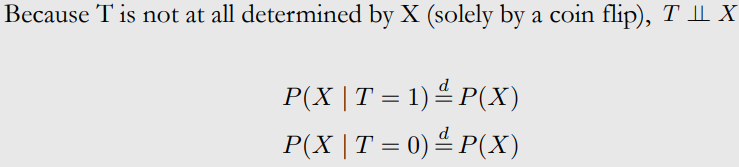
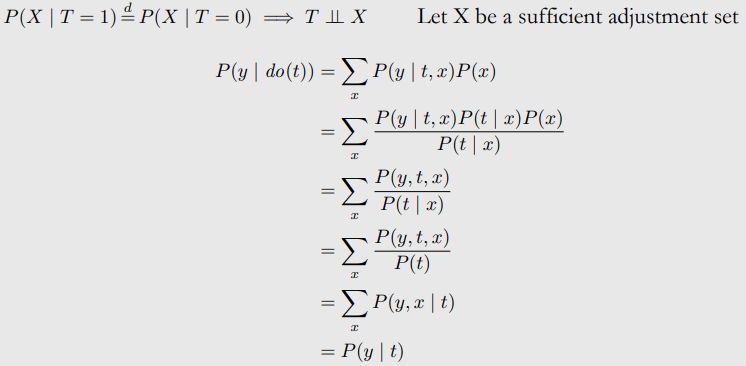
- 위 식과 같이 identification 된다.
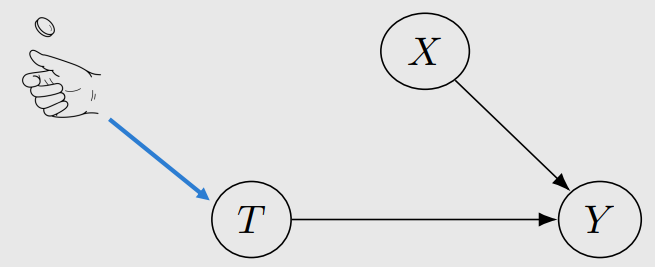
- Exchangeability
- association = causation
- No backdoor paths
SS
5-2. Frontdoor adjustment
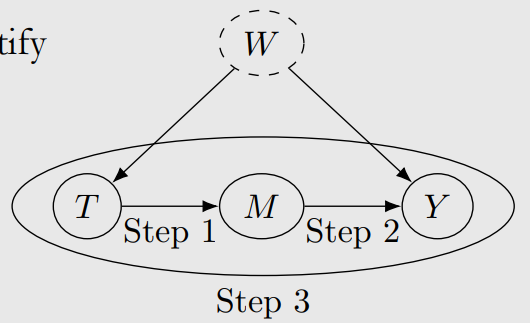
1. T → M 의 causal effect를 identify

2. M → Y 의 causal effect를 identify

3. 2와 3을 결합하여 T → Y의 causal effect를 identify
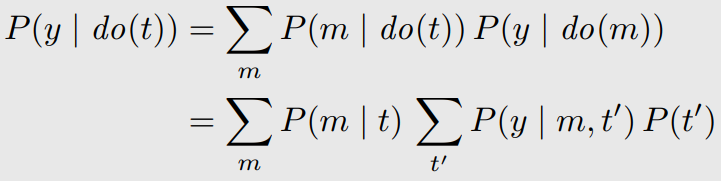
5-2-1. Frontdoor adjustment

5-2-2. Frontdoor criterion
- T에서 Y로 모든 causal paths는 M을 통과해야 한다.
- T에서 M로 가는 backdoor path는 모두 block되어야 한다.
- M에서 Y로 가는 backdoor path는 모두 T로 인해 block되어야 한다.
5-3. Pearl's do-calculus
: X로 부터 나오는 path block
: X로 부터 들어오는 path block
- The rules of do-calculus
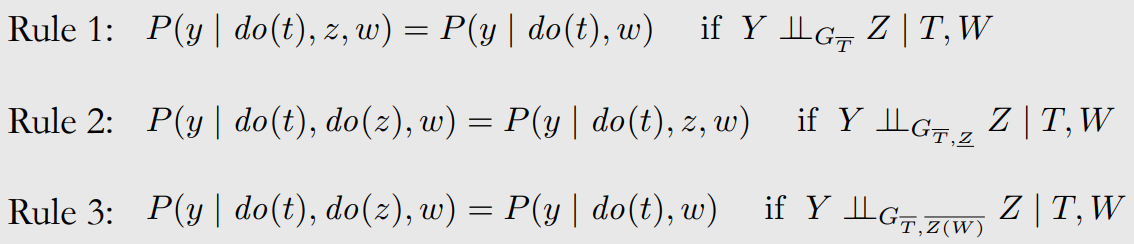
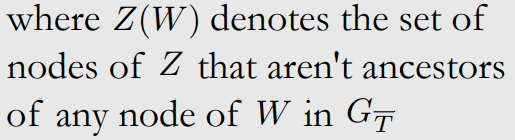
- Rule1은 Generalization of d-separation to interventional distributions

- W를 conditioning 했을 때, Y랑 Z가 independent
- Rule2는 Generalization of backdoor adjustment/criterion

- Z에서 나가는 path를 block한 그래프에서 W를 conditioning 했을 때, Y랑 Z가 independent
- Rule3
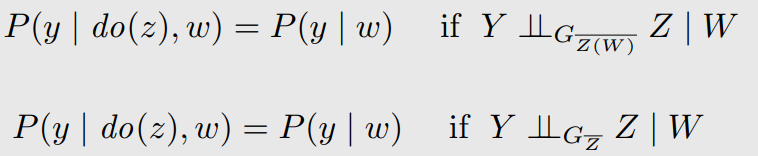
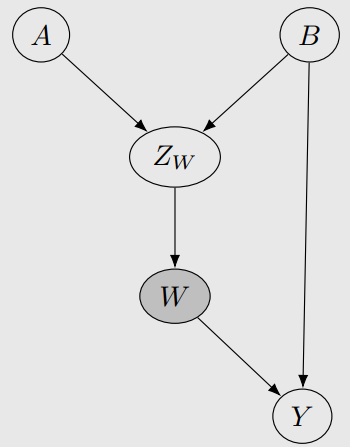
- Rule1은 Generalization of d-separation to interventional distributions
이해안됨. 다시볼것
- Completeness of do-calculus : do-calculus로 모두 identification 할 수 있다.
5-4. Determining identifiability from the graph
5-4-1. Unconfounded children criterion
- T에서 Y의 ancestor의 M으로 가는 모든 backdoor path를 single conditioning set로 block할 수 있을 때
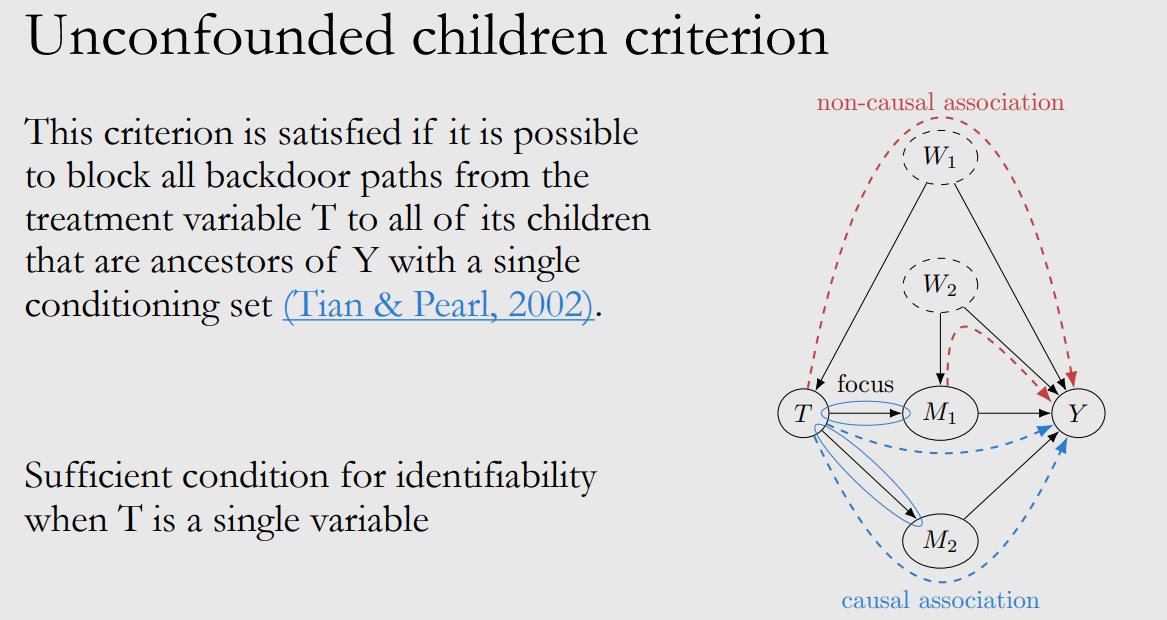
이해 안됨.
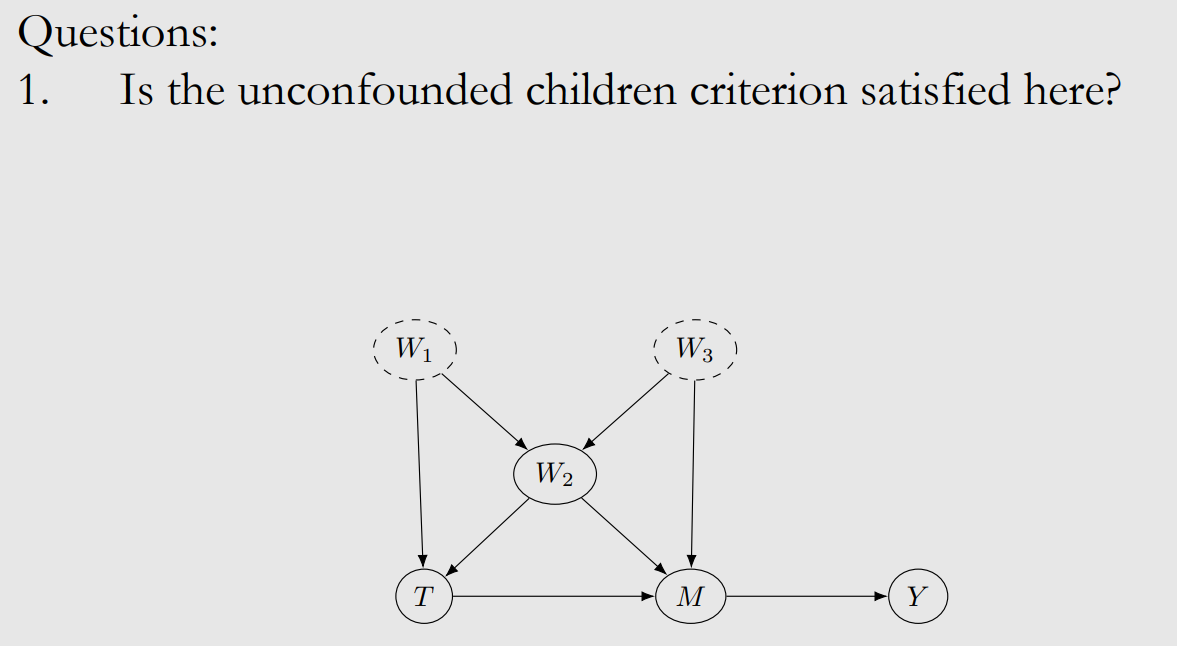
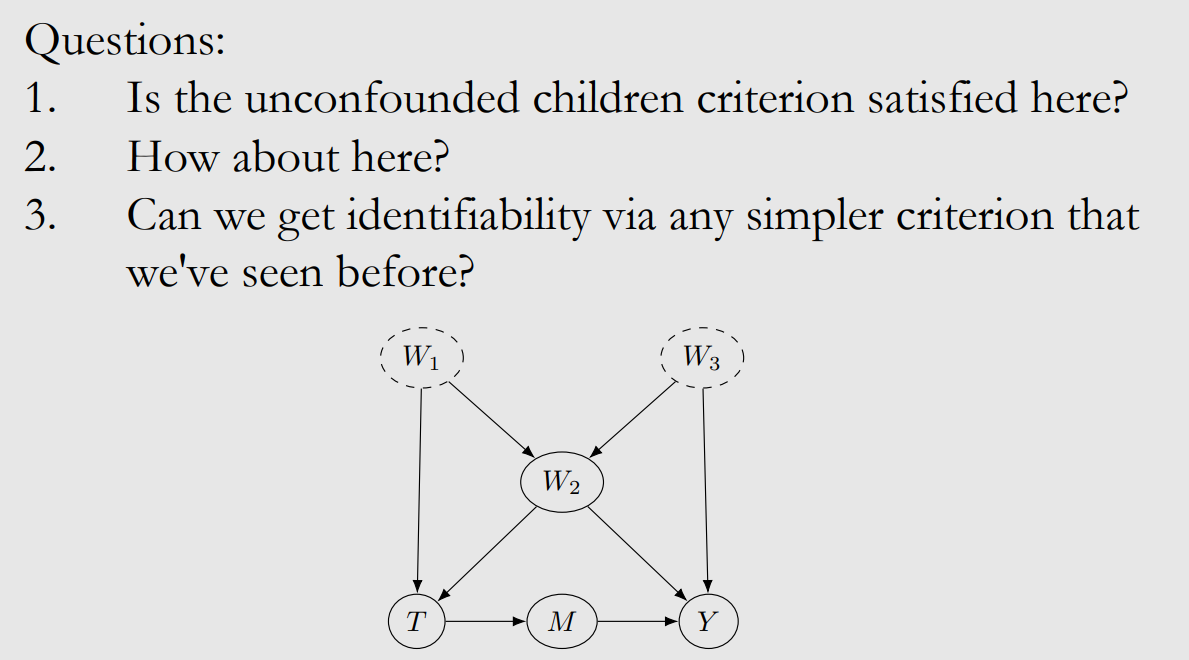
이해 안됨.