역전파 (屰전파; backpropagation) 는 딥러닝에서 신경망을 학습시키는데 사용되는 테크닉이다.
모델 학습은 크게 2가지 phase로 구성되는데, 1) 주어진 input, weight, bias를 그대로 계산하여 output을 예측하는 과정인 forward pass, 2) 그 후 예측과 정답 값 사이의 loss를 계산하여 그를 바탕으로 원하는 값이 출력되도록 weight 등을 조정하는 backpropagation이다.
역전파 진행 과정
역전파에서는 weight를 조정하기 위해서 loss에 대해 각 단계의 변수로 미분을 한다. 아래 그림은 역전파의 과정을 잘 보여준다.
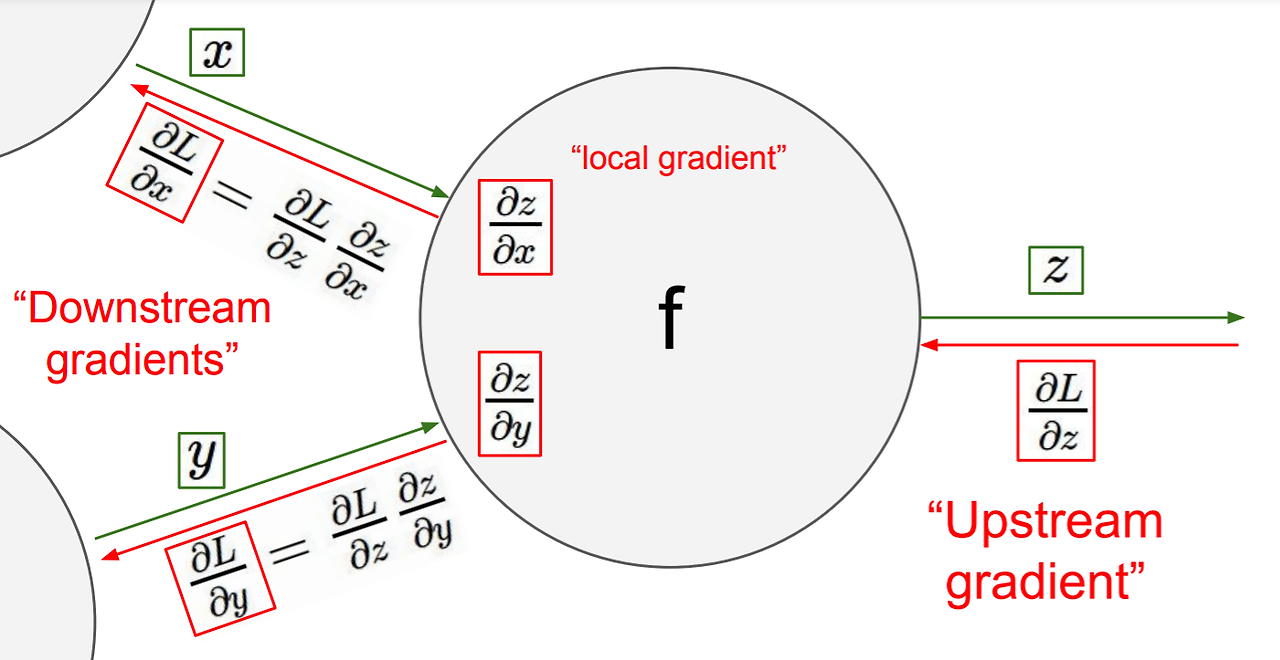
- upstream gradient : predicted z와 groundtruth z 사이의 차이인 Loss 을 output variable z로 미분한 것
- local gradient : output z를 input x, y로 미분한 것
- downstream gradient : upstream gradient와 local gradient의 곱. 결국 loss를 각 input parameter x, y로 미분한 것
역전파 연산의 패턴
- add gate (→ gradient distributor)
더하기 연산자를 지나면 upstream gradient 값이 그대로 downstream gradient로 흘러간다. - mul gate (→ swap multiplier)
곱하기 연산자를 지나면 downstream gradient 값이 upstream 상대방의 변수 값이 된다. - copy gate (→ gradient adder)
copy 연산자를 지나면 downstram gradient 값이 upstream gradient들의 합이 된다. - max gate (→ gradient router)
maximum 연산자를 지나면 operation이 일어나는 방향으로만 (여러 input 값들 중 가장 큰 input값이 있는 방향으로만) upstream gradient에서 downstream gradient로 흘러간다.
References
Let it code