🧑💻Introduction
Pipeline 이란?
-> 데이터 전처리 및 모델링 코드를 체계적으로 정리할 수 있는 간단한 방법
특히 Pipeline은 전처리와 모델링 단계를 묶어서 하나의 단계처럼 사용할 수 있도록 전체 번들을 제공
Pipeline의 이점
-
더 깔끔한 코드: 전처리 각 단계에서 데이터를 설명하는 것은 지저분해질 수 있음
파이프라인을 사용하면 각 단계에서 학습 및 유효성 검사 데이터를 수동으로 추적할 필요가 없음 -
버그 감소: 단계를 잘못 적용하거나 전처리 단계를 잊어버릴 가능성이 줄어듬
-
더 쉬운 프로덕션화: 프로토타입에서 대규모 배포가 가능한 모델로 전환하는 것은 의외로 어려울 수 있음
여기서는 이와 관련된 많은 문제를 다루지는 않겠지만Pipeline이 도움이 될 수 있음 -
Model validation을 위한 더 많은 옵션: 다음 튜토리얼에서 교차 유효성 검사를 다루는 예제를 볼 수 있음
Example
Melbourne Housing dataset을 사용
import pandas as pd
from sklearn.model_selection import train_test_split

data = pd.read_csv(filepath)

# Separate target from predictors
y = data.Price
x = data.drop(['Price'], axis=1)

# Divide data into training and validation subsets
X_train_full, X_valid_full, y_train, y_valid = train_test_split(X, y, train_size=0.8, test_size=0.2, random_state=0)

# "Cardinality" means the number of unique values in a column
# Select categorical columns with relatively low cardinality (convenient but arbitrary)
caregorical_cols = [cname for cname in X_train_full.columns if X_train_full[cname].nunique() < 10 and X_train_full[cname].dtype == "object"]

# Select numerical columns
numerical_cols = [cname for cname in X_train_full.columns if X_train_full[cname].dtype in ['int64', 'float64']]

# Keep selected columns only
my_cols = categorical_cols + numerical_cols
X_train = X_train_full[my_cols].copy()
X_valid = X_valid_full[my_cols].copy()
아래서 head() 를 사용하여 학습 데이터를 살펴보면, 데이터에 categorical data와 결측값이 있는 열이 모두 포함되어있음을 알 수 있다.
pipeline을 사용하면 이 두 가지(categorical data, 결측값)를 모두 쉽게 처리할 수 있음
X_train.head()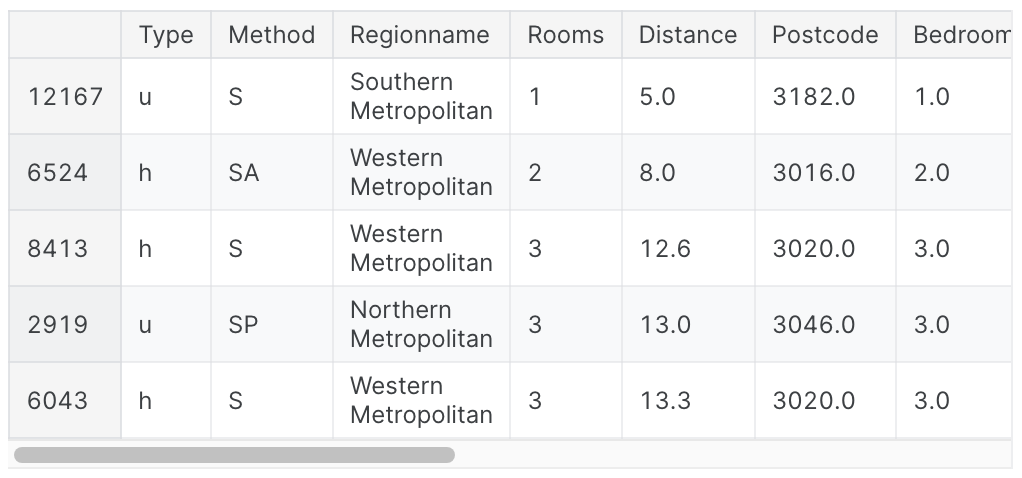
Step 1: Define Preprocessing Steps
pipeline이 전처리 및 모델링 단계를 함께 묶는 방식과 유사하게, columnTransformer 클래스를 사용하여 다양한 전처리 단계를 함께 묶는다.
아래의 코드는
- numerical data에서 결측값을 대입하고
- categorical data에 one-hot encoding을 적용한다
원핫인코딩이 기억이 안나면 여기로
from sklearn.compose import ColumnTransformer
from sklearn.pipeline import Pipiline
from sklearn.impute import SimpleImputer
from sklearn.preprocessing import OneHotEncoder

# numerical data를 전처리
numerical_transformer = SimpleImputer(strategy='constant')

# categorical data를 전처리
categorical_transformer = Pipeline(steps=[
	('imputer', SimpleImputer(strategy='most_frequent')),
    ('onehot', OneHotEncoder(handle_unknown='ignore'))
])

# Bundle preprocessing for numerical and categorical data
preprocessor = ColumnTransformer(
	transformers=[
    	('num', numerical_transformer, numerical_cols),
        ('cat', categorical_transformer, categorical_cols)
])
Step 2: Define the Model
RandomForestRegressor class를 사용
from sklearn.ensemble import RandomForestRegressor

model = RandomForestRegressor(n_estimators=100, random_state=0)
Step 3: Create and Evaluate the Pipeline
마지막으로 pipeline class를 사용하여 전처리 & 모델링 단계를 번들로 묶는 pipeline을 정의함
중요한 사항
- pipeline을 사용하면 training data를 한 줄의 코드에 맞출 수 있음
- 반면 파이프라인이 없으면 전치(imputation), one-hot encoding, model training을 별도의 단계로 수행해야 함. numerical variables와 categorical variables를 모두 처리해야하는 경우 특히 복잡해짐 - pipeline을 사용하면 predict()의 X_valid의 처리되지 않은 특징을 제공하면 pipeline이 예측을 생성하기 전에 자동으로 특징을 전처리함.
- 하지만 pipeline이 없으면 예측을 하기 전에 validation data를 전처리해야 함
from sklearn.metrics import mean_absolute_error

# Bunde preprocessing and modeling code in a pipeline
my_pipeline = Pipeline(steps=[('preprocessor', preprocessor), ('model', model)])

# Preprocessing of training data, fit model
my_pipeline.fit(X_train, y_train)

# Preprocessing of validation data, get predictions
preds = my_pipeline.predict(X_valid)

# Evaluate model
score = mean_absolute_error(y_valid, preds)
print('MAE: ', score)
Conclusion
pipeline은 ML 코드를 정리하고 오류를 방지하는데 유용하고, 정교한 데이터 전처리가 있는 workflow에 중요하다.